

The annual celebration of ursine girth and survival resilience, Fat Bear Week, has advanced to Round 2, delivering a slate of high-stakes matchups featuring heavyweight champions, historic family rivalries, and dramatic wildlife dynamics along the Brooks River in Alaska’s Katmai National Park. Following a competitive opening round that saw reigning 2025 champion Bear #32 (Chunk) dethroned by innovative fisherbear #164 (Bucky Dent), voters face a series of increasingly difficult choices between some of the ecosystem’s most iconic and robust brown bears.
Managed jointly by explore.org, Katmai National Park and Preserve, and the Katmai Conservancy, Fat Bear Week has grown from a local educational initiative into a global phenomenon. The tournament highlights the remarkable adaptability, foraging efficiency, and ecological health of the brown bears inhabiting the Brooks River. As these apex predators consume massive quantities of nutrient-rich salmon to build critical fat reserves ahead of their winter hibernation, voters worldwide participate in a single-elimination bracket to determine which bear has most successfully prepared for the lean months ahead.
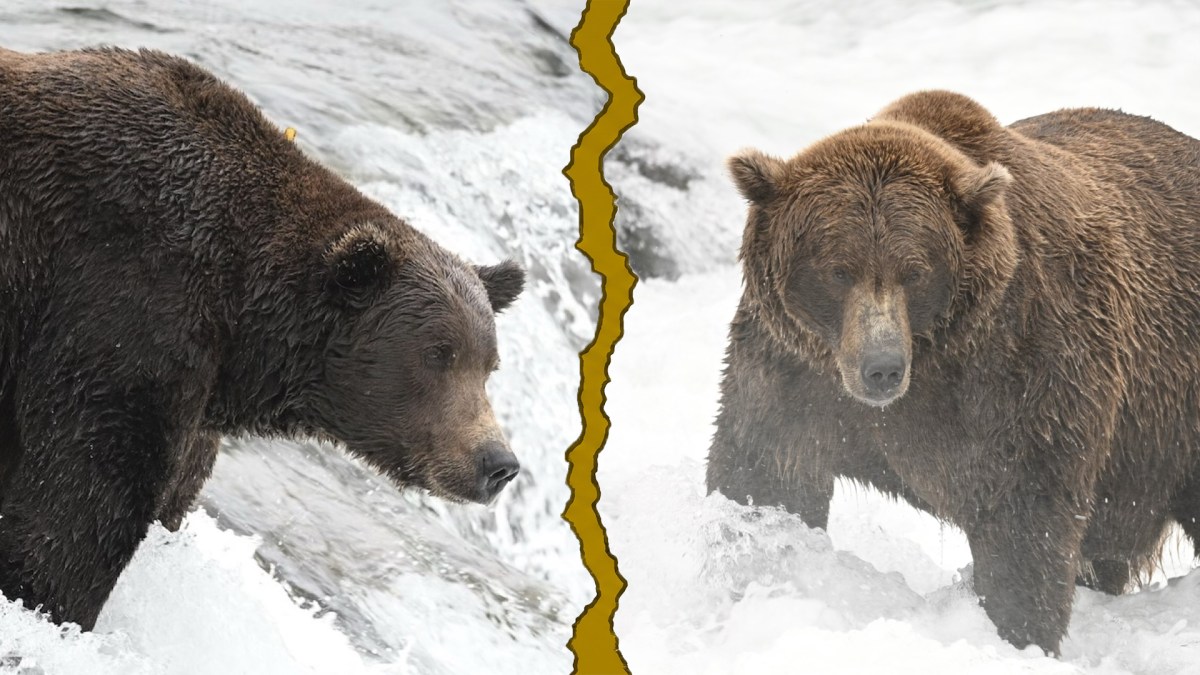
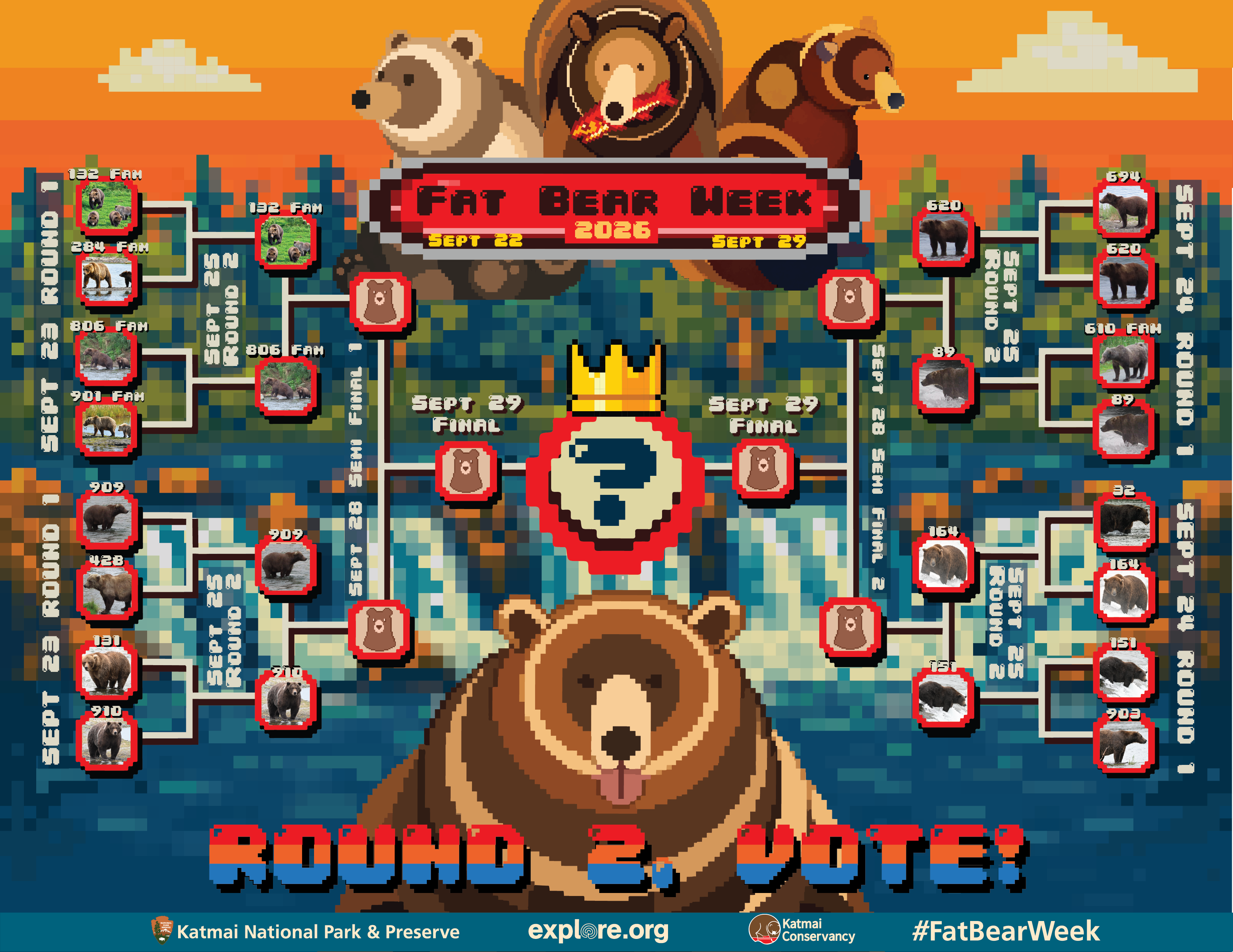
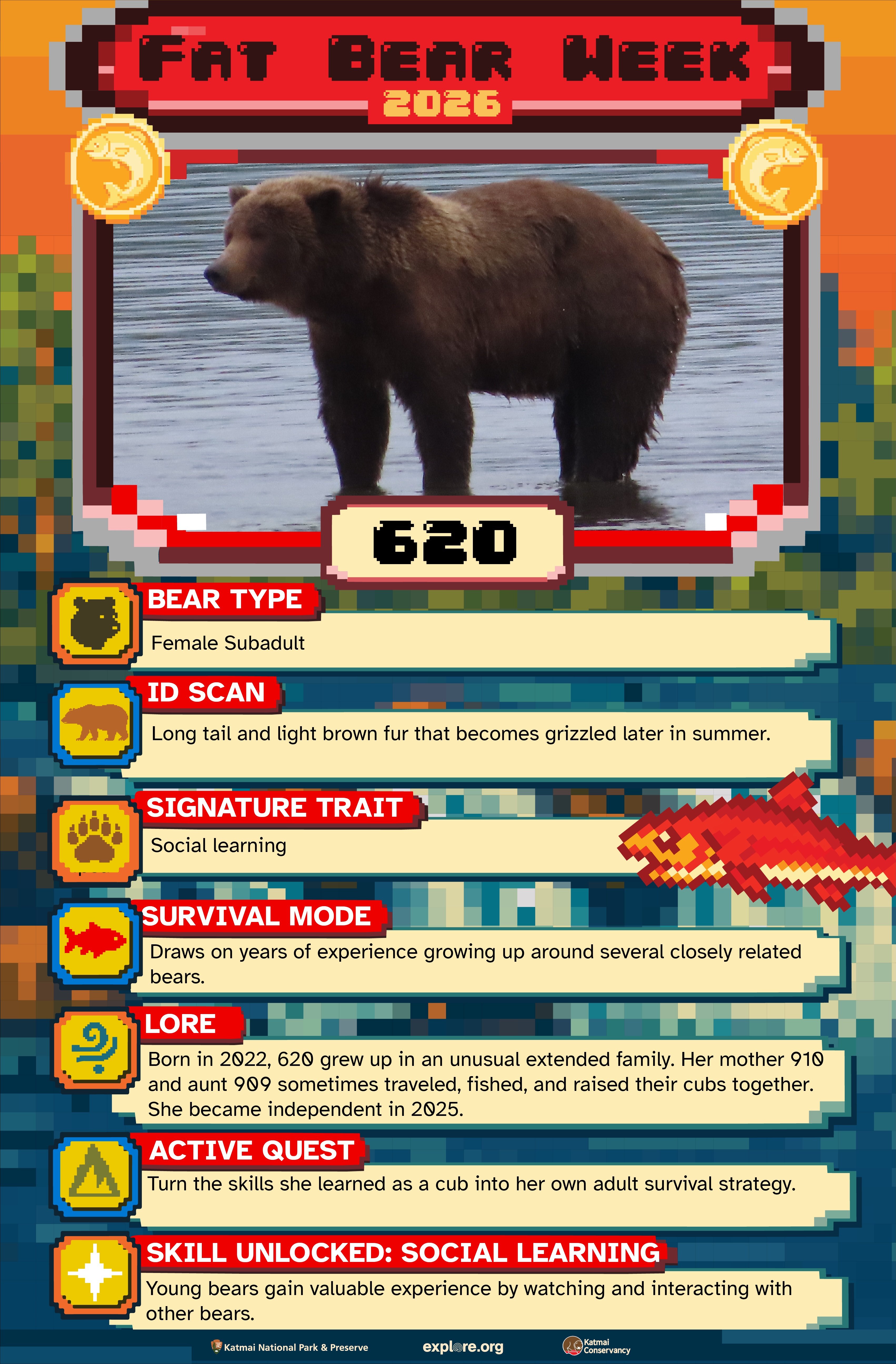
Recent results from the tournament underscore the fierce competition defining the 2026 event. Bear #164 (Bucky Dent) secured a decisive victory over Bear #151 (Walker) in the bracket’s largest physical clash. Meanwhile, family legacies clashed as Bear #132’s lineage triumphed over Bear #806’s family unit, and Bear #910 emerged victorious in a direct battle against her sister, Bear #909. In the most lopsided contest of the round, subadult Bear #89 (Backpack) easily dominated Bear #620, capturing over 95 percent of the total vote. Round 2 voting opens at 12:00 PM EDT and concludes at 9:00 PM EDT, with the ultimate tournament winner scheduled to be crowned on September 29.
The Anatomy of Fat Bear Week and Ecological Significance
Fat Bear Week serves as both a public engagement campaign and an informal census of the Brooks River ecosystem’s health. Established over a decade ago, the event educates the public on the complex life history of brown bears (Ursus arctos), their seasonal feeding behaviors, and the critical role salmon runs play in sustaining the local wildlife population.
During the summer and autumn months, Katmai National Park experiences one of the world’s largest sockeye salmon migrations. The cascading waters of the Brooks Falls create a natural bottleneck where brown bears congregate to feast. For these animals, rapid weight gain is a biological necessity rather than a mere luxury; bears must accumulate enough adipose tissue to sustain themselves through months of winter denning, during which they neither eat nor drink. Pregnant females must also sustain fetal development and produce milk for newborn cubs while in hibernation.
Park rangers and biologists emphasize that the physical transformations observed during the summer—often resulting in bears doubling or tripling their body weight—are direct indicators of individual foraging skill, dominance hierarchy navigation, and overall ecosystem productivity. The competition asks voters to evaluate which bear has maximized its biological potential, taking into account the distinct environmental challenges each individual faced throughout the active season.
High-Stakes Family Dynamics and Survival Narratives
Round 2 of the 2026 tournament highlights complex social structures and unprecedented behavioral events observed by park rangers and live-cam viewers along the Brooks River.
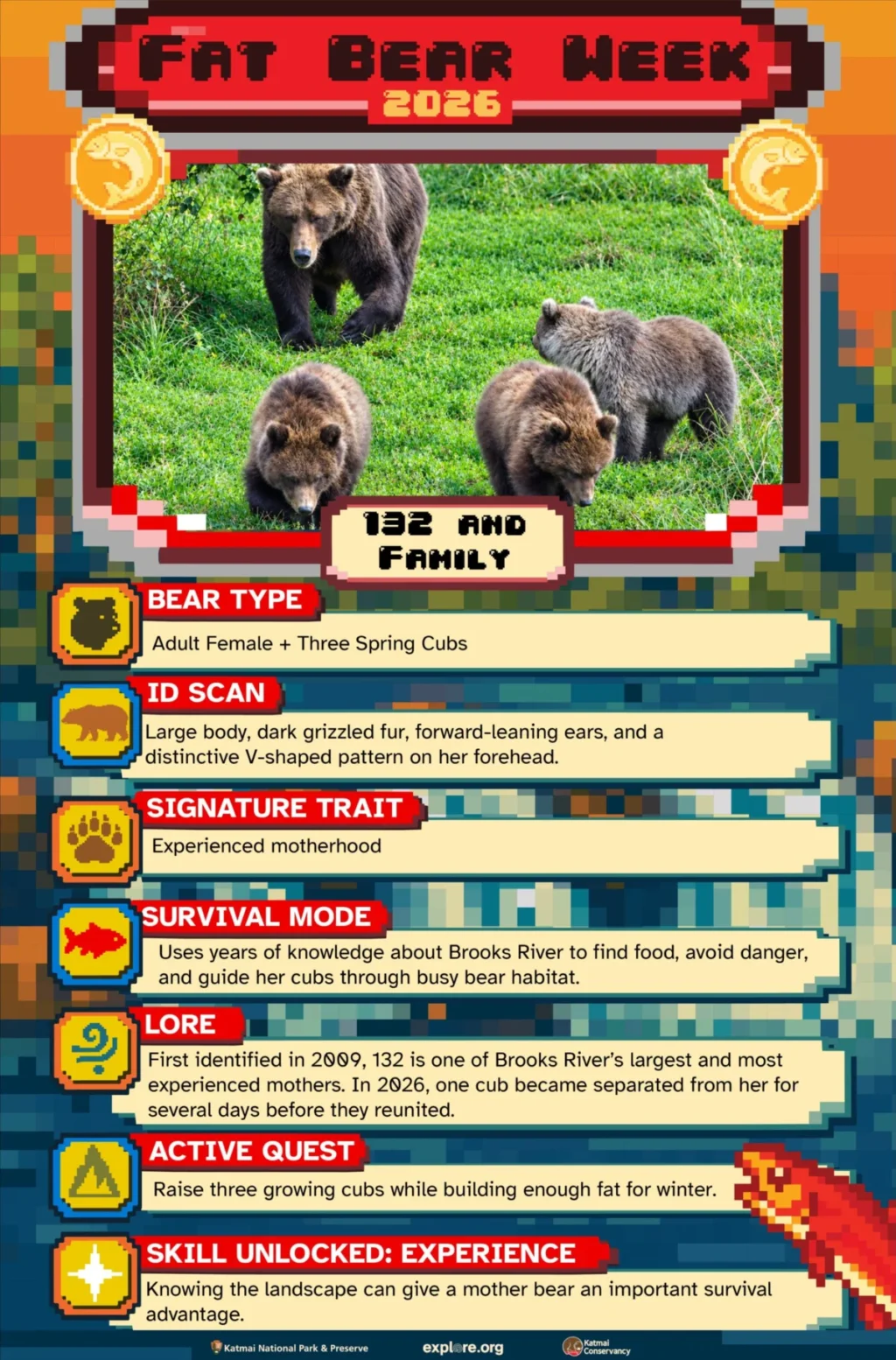
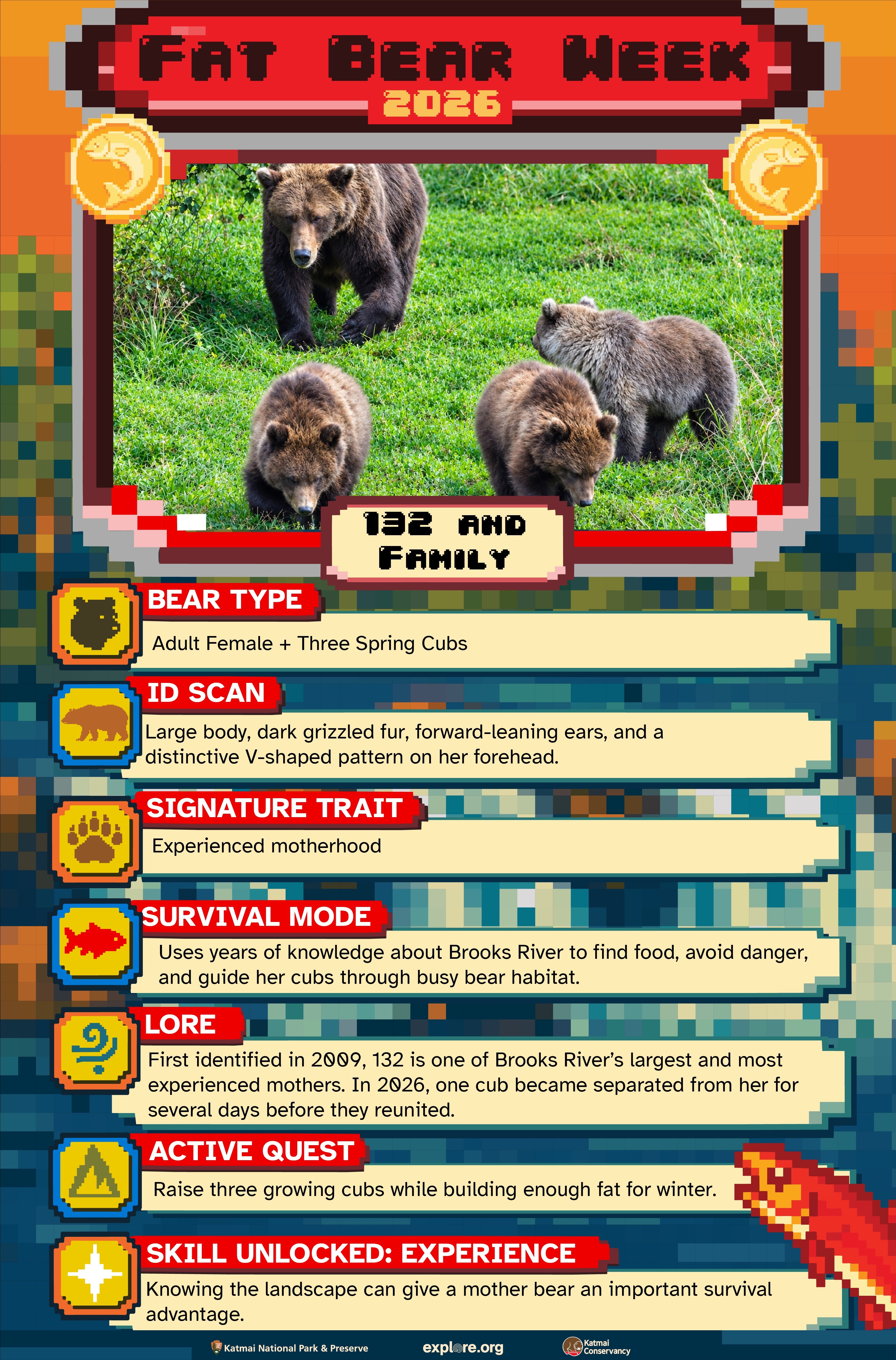
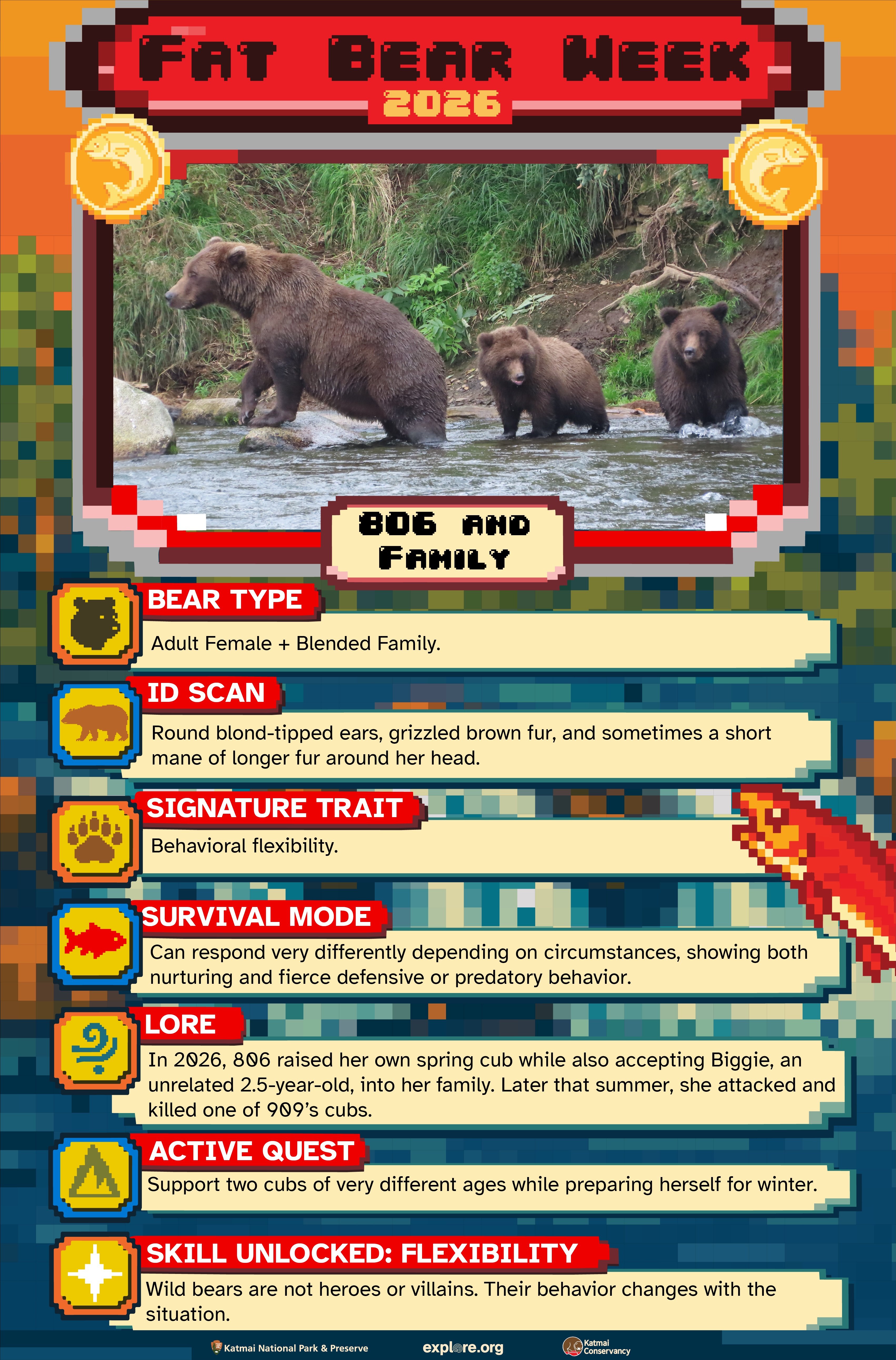
In the matchup between Bear #132 and her cubs versus Bear #806 and her cubs, voters are confronted with two of the season’s most compelling and dramatic survival narratives. Mama Bear #132 entered the season with a litter of three spring cubs—her fourth known litter. In mid-July, one of the vulnerable cubs became separated from the family group, wandering the Brooks River area unaccompanied. Without maternal protection, lone cubs face severe threats, including predation by adult bears, starvation, and accidental injury. Despite being ignored or chased off by other bears, the resilient cub managed to survive independently for several days before successfully reuniting with Bear #132. This marks Bear #132’s inaugural appearance in the Fat Bear Week bracket.
Opposing Bear #132 is Bear #806, whose summer was marked by a rare and scientifically significant wildlife event. On July 28, live-cams captured Bear #806 attacking, killing, and consuming an unrelated spring cub belonging to Bear #909. Park rangers noted that this incident represents the first documented case of infanticide by an adult female brown bear at the Brooks River. At the time of the attack, Bear #806 was accompanied by her own two offspring: a 1.5-year-old cub and a 2.5-year-old adopted male affectionately known as "Biggie" (Junior #128). Biggie was adopted by Bear #806 earlier in the spring after being abandoned by his biological mother, two-time Fat Bear Week champion Grazer.
Sister vs. Sister: The Lineage of Beadnose
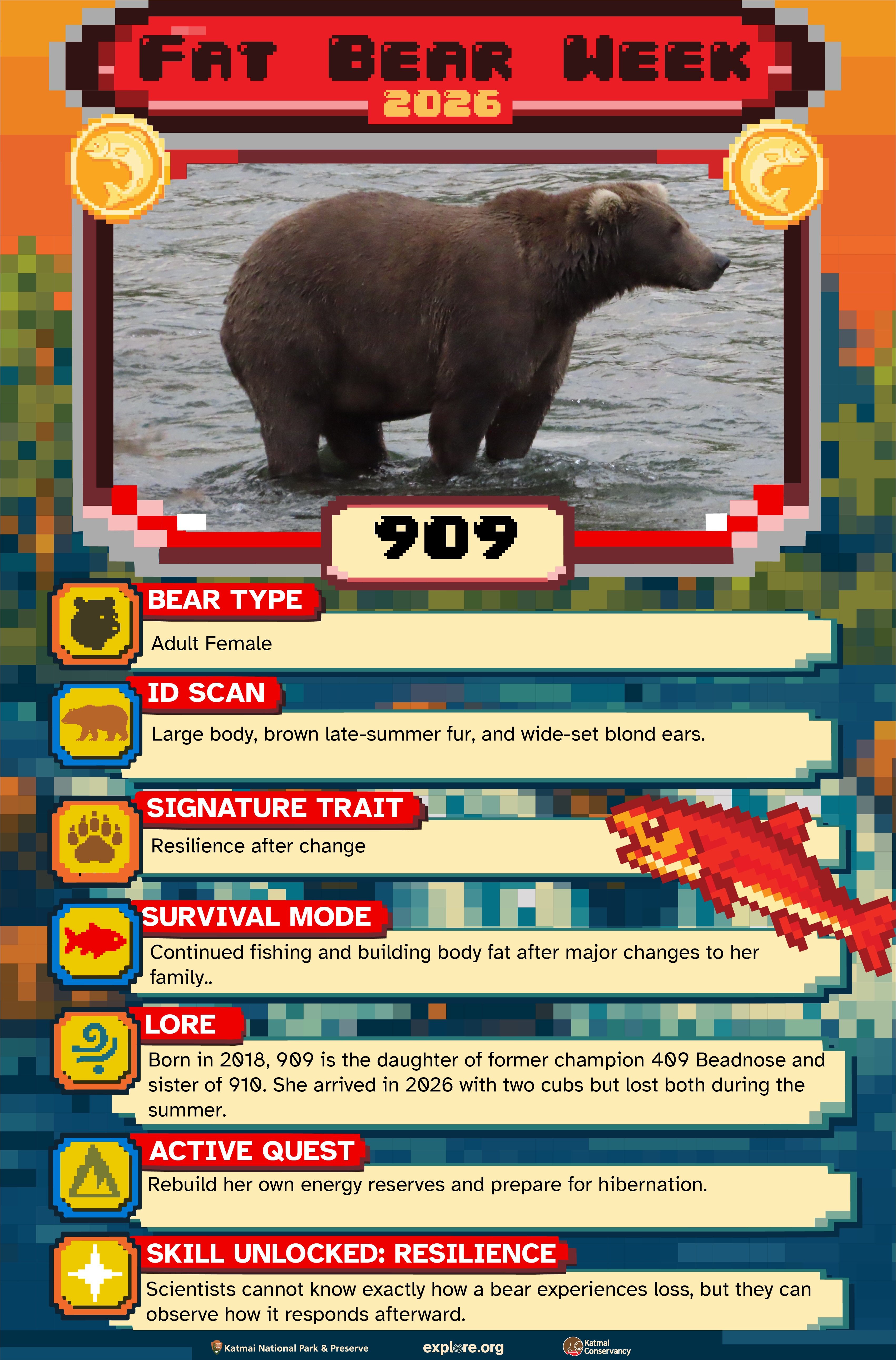
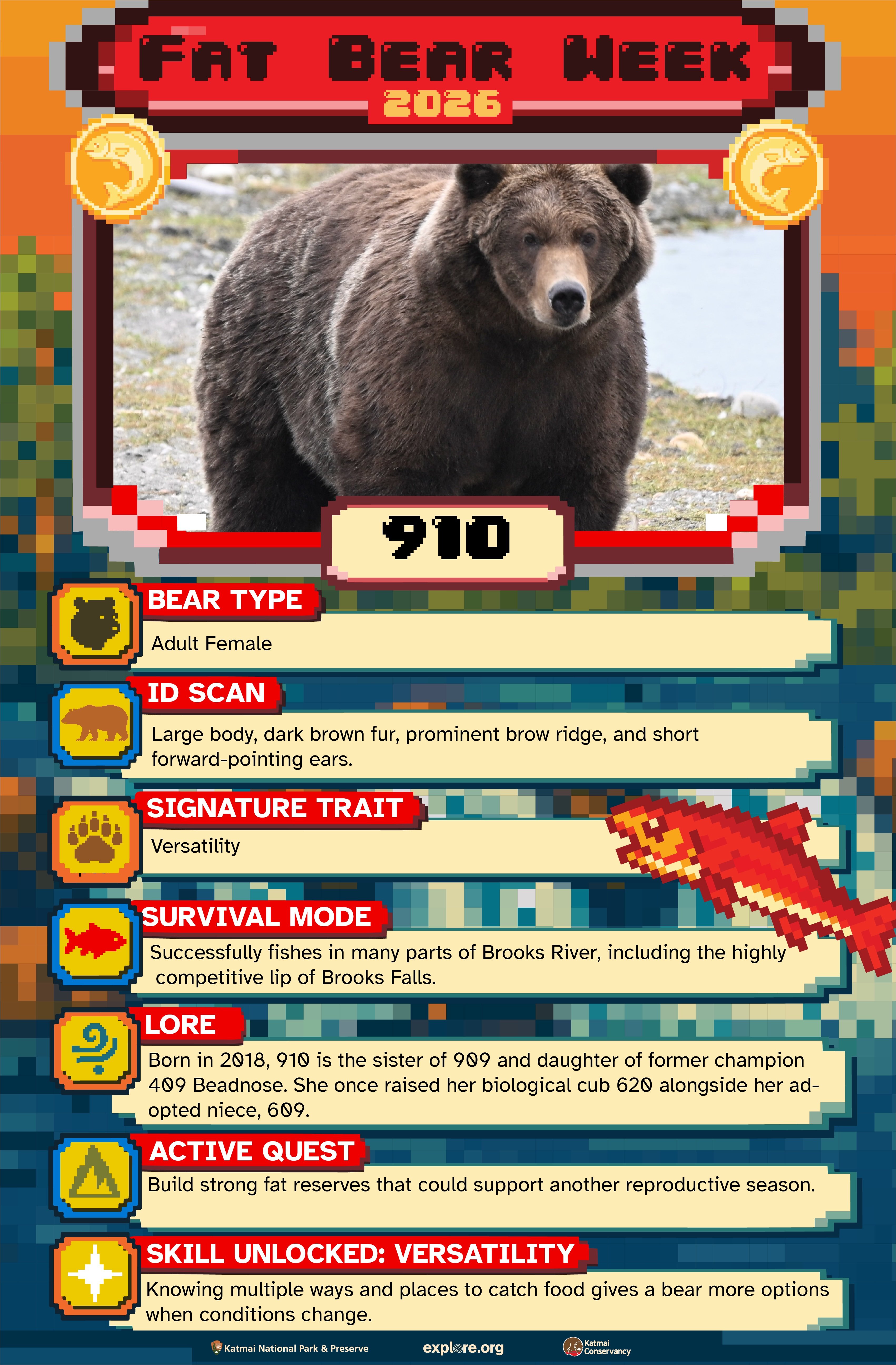
Another focal point of Round 2 is the sibling rivalry between Bear #909 and Bear #910, both offspring of legendary two-time Fat Bear Week champion Bear #409 Beadnose (victor in 2015 and 2018).
Bear #909 endured profound loss during the season, starting with two spring cubs and ultimately losing her final surviving cub during the July 28 attack by Bear #806. Despite this tragedy, wildlife observers noted her extraordinary resilience, as she fiercely defended her territory and channeled her energy into foraging, resulting in substantial pre-hibernation body fat.
Her sister, Bear #910, shares a deeply intertwined family history. In 2022, Bear #910 engaged in a rare cross-family adoption, blending her household with Bear #909’s family by adopting her sister’s yearling cub while simultaneously rearing her own spring cub. Such cooperative rearing behaviors are exceptionally rare among brown bears and represent only the second documented occurrence of its kind within Katmai National Park. The fallout from these family ties extends further into the bracket, as subadult Bear #620—a member of this extended "Brady Bunch" family unit raised alongside cousin Bear #690 (Bean)—also competed in the early rounds before facing elimination.
The Ascendancy of Innovators: Bucky Dent and Backpack
The bracket also showcases younger, highly specialized males who have carved out distinct niches along the Brooks River.
Bear #89, widely known as Backpack, is the 10.5-year-old son of 2019 Fat Bear Week champion Bear #435 (Holly). Backpack earned his moniker due to his juvenile habit of climbing onto his mother’s back while navigating river currents. His survival was severely tested in 2007 when he emerged from his winter den as a yearling with a debilitating leg injury that impeded his mobility. Park rangers initially doubted his long-term survival, but maternal support allowed him to recover fully, and he has since matured into a reliable river resident with a dedicated following.
Meanwhile, Bear #164 (Bucky Dent)—a 7.5-year-old adult male of unknown parentage—has revolutionized fishing strategies at Brooks Falls. Facing intense competition as a smaller subadult in 2021, Bucky invented a novel foraging technique by stationing himself directly in the deep plunge pool beneath the cascade. Rather than competing for prime real estate on the lip of the falls, he intercepts salmon as they vault through the air or tumble from the rushing water above. No other bear has systematically replicated this technique. Having now attained massive physical proportions, Bucky Dent commands a dominant position in the local hierarchy, underscoring how behavioral innovation directly translates to biological success.
Conservation Impact and Community Engagement
Beyond the entertainment value of the digital voting bracket, Fat Bear Week serves as a critical engine for conservation advocacy and park funding. The event brings international attention to the pristine wilderness of Katmai National Park and the delicate balance required to maintain a thriving Pacific salmon fishery alongside a dense population of large carnivores.
Organizers emphasize that financial support plays a vital role in protecting these habitats. Donations can be directed to the Katmai Conservancy’s Otis Fund, established in honor of Bear #480 (Otis), a four-time Fat Bear Week champion who passed away in 2024. To amplify public contributions, explore.org has committed to matching all donations made to the Otis Fund between September 22 and October 3. These funds directly support wildlife monitoring, educational programming, and preservation efforts within Katmai National Park.
As voting for Round 2 proceeds through the afternoon and evening, online participants continue to dissect the physiological transformations, survival histories, and behavioral adaptations of each candidate. The winner of the current matchups will advance closer to the final showdown, where one bear will ultimately be awarded the coveted title of Fat Bear Week Champion for 2026.