



Microsoft has announced the launch of its "Hour of AI" initiative, a comprehensive educational program designed to integrate artificial intelligence literacy into global classrooms during Computer Science Education Week (CS Ed Week) 2025. In collaboration with CSforALL and a coalition of prominent organizations including Code.org, the technology giant aims to reach 25 million learners of all ages, providing them with the foundational skills necessary to navigate and shape a world increasingly defined by generative technology. This initiative marks a significant evolution in digital education, shifting the focus from traditional syntax-based coding to the broader, more complex concepts of machine learning, algorithmic problem-solving, and human-AI collaboration.
The program arrives at a critical juncture in the global labor market. For decades, the primary objective of computer science education was to prepare students for a predictable career path in software development or information technology. However, the rapid proliferation of large language models and autonomous systems has fundamentally altered the professional landscape. According to Microsoft’s internal analysis and broader industry trends, the "new world of work" requires a workforce that is not only digitally literate but also capable of directing AI tools to solve unprecedented challenges. The Hour of AI is positioned as a gateway for students, educators, and communities to transition from being passive consumers of technology to active creators and ethical supervisors of AI systems.
The Evolution of Computer Science Education: From Code to Intelligence
The Hour of AI serves as the modern successor to the "Hour of Code," a movement launched in 2013 that successfully demystified computer programming for hundreds of millions of students worldwide. While the Hour of Code focused on the "how" of software—teaching the logic of loops, variables, and functions—the Hour of AI focuses on the "what" and "why" of intelligent systems. This transition reflects a broader shift in the tech industry, where natural language is increasingly becoming the primary interface for complex computation.

Computer Science Education Week, held annually in recognition of computing pioneer Admiral Grace Hopper’s birthday, has historically served as a rallying point for digital advocacy. By introducing the Hour of AI during the 2025 cycle, Microsoft and its partners are addressing a growing "skills gap" identified by the World Economic Forum. Recent data suggests that while AI could automate certain tasks, it is simultaneously creating a massive demand for roles that require AI fluency. The initiative is designed to ensure that this technological dividend is accessible to all, regardless of socioeconomic background or prior technical expertise.
Interactive Learning Modules: Bridging Theory and Play
At the core of the Hour of AI initiative are three distinct, age-appropriate activities developed by Microsoft to engage students through familiar platforms. These modules are designed to be completed within a single class period, requiring no prior experience from either the student or the facilitator.
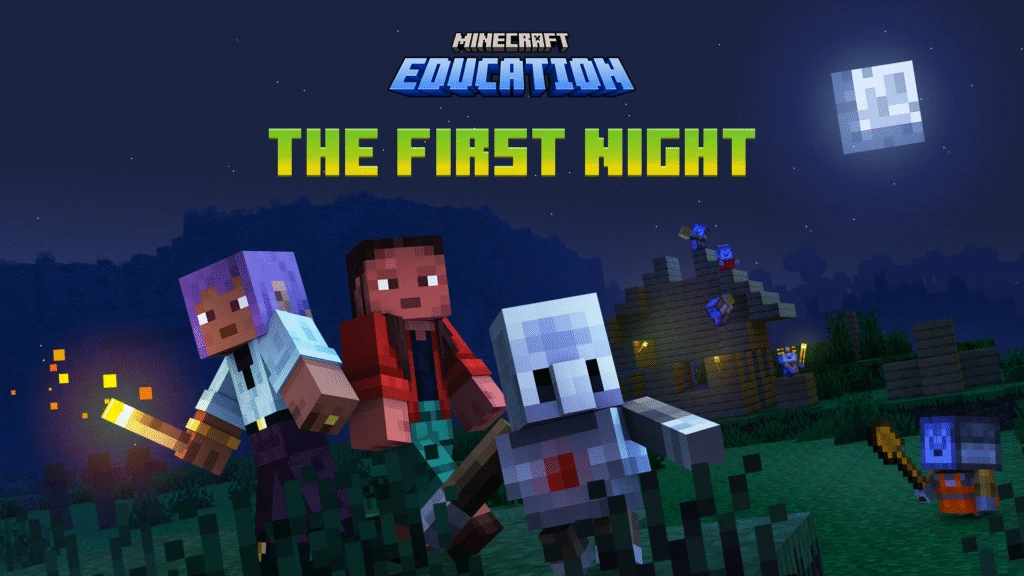
Minecraft Education: The First Night
Minecraft, one of the most popular educational tools in the world, serves as the primary vehicle for younger learners. The "Hour of AI: The First Night" activity challenges students to survive their initial encounter in the game’s sandbox environment with the assistance of an AI agent. Unlike traditional gameplay where the player performs all manual labor, this module requires students to "program" their agent to gather resources and construct shelter before sunset.
The pedagogical value of this activity lies in its introduction of pathfinding algorithms and environmental sensing. Students learn how AI perceives data from its surroundings to make decisions, mirroring how real-world autonomous robots navigate physical spaces. The activity is available in 29 languages, ensuring global reach, and includes comprehensive lesson plans that align with international computer science standards.
Microsoft MakeCode: Bug Arena
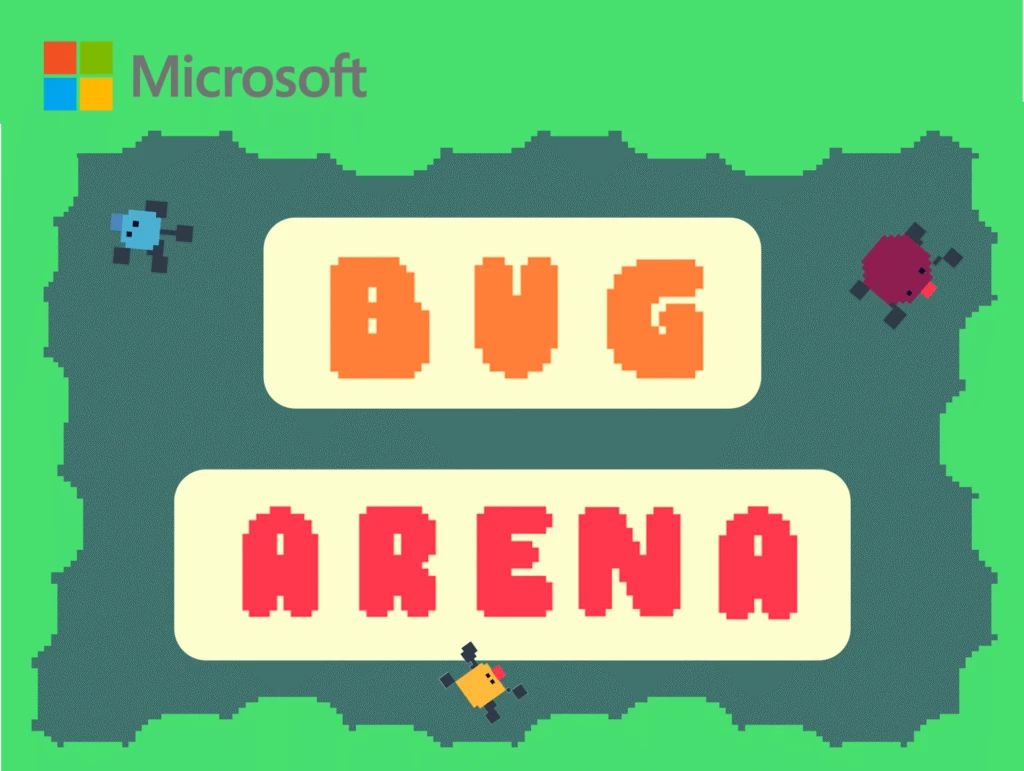
For middle-school learners (grades 3–8), Microsoft has introduced "Bug Arena" via the MakeCode platform. This game-based tutorial introduces foundational AI concepts through a competitive lens. Students design algorithms for a digital "bug," instructing it on how to move, react, and compete against other AI-powered entities in a virtual arena.
Bug Arena emphasizes the iterative nature of AI development. Students write simple code, observe their bug’s performance in real-time, and then refine their instructions based on the outcomes. This "feedback loop" is essential for understanding how machine learning models are trained and optimized. As a web-based activity, Bug Arena is highly accessible, requiring only a browser to run, which lowers the barrier to entry for under-resourced school districts.
Visual Studio Code for Education: Slither Slam
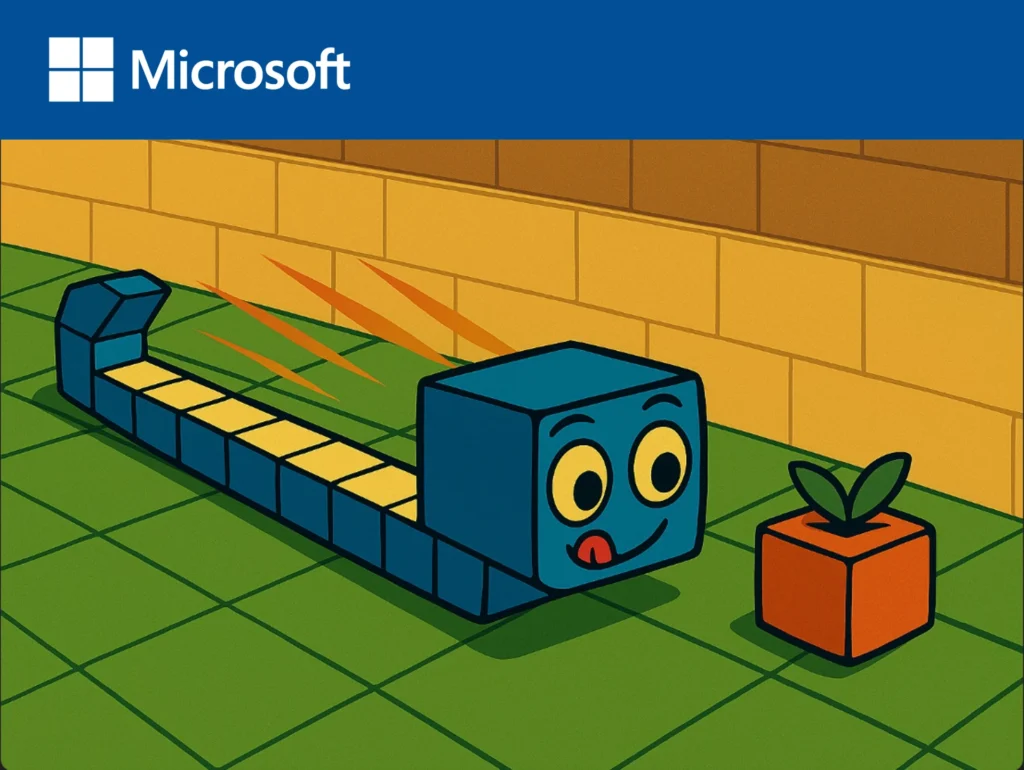
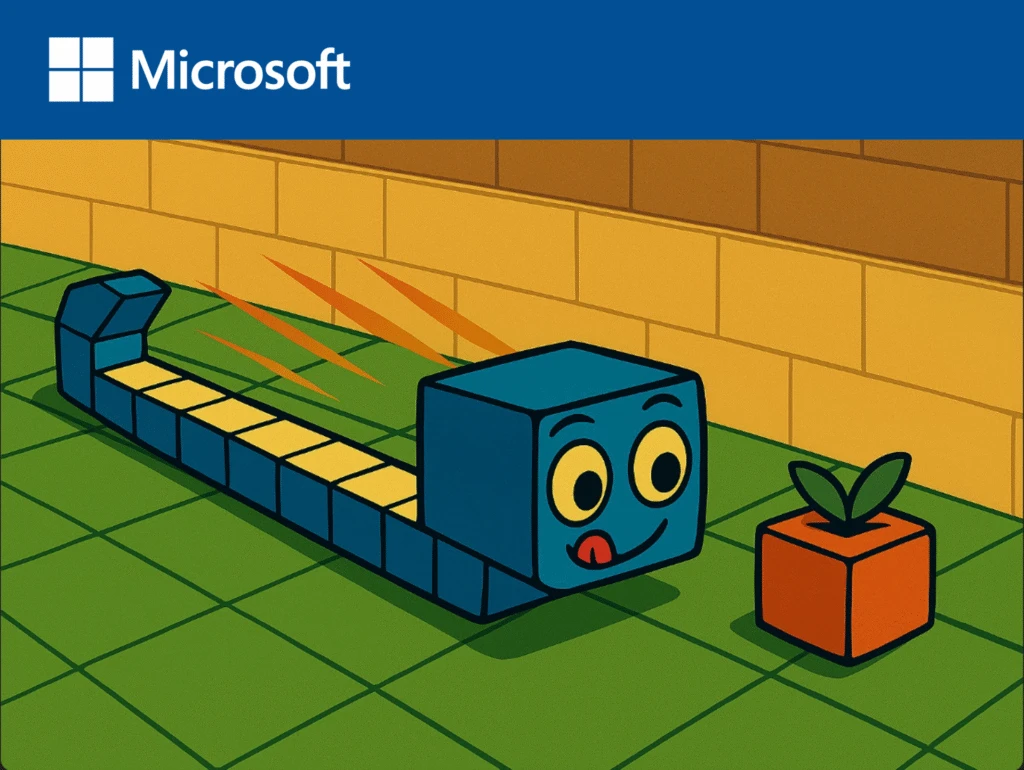
Targeting high school students (grades 9–12), "Slither Slam" utilizes Visual Studio (VS) Code for Education to introduce more sophisticated concepts, such as AI-assisted code generation and natural language prompting. In this module, students use AI prompts to generate the functional code for a classic "Snake" game.
The primary learning objective of Slither Slam is "prompt engineering"—the art of crafting precise instructions for an AI to interpret. By observing how the AI interprets their natural language commands into Python or JavaScript, students gain a deeper understanding of the role of AI in modern software development. This prepares them for a future where developers act more as architects and reviewers than manual coders.
Strategic Partnerships and Global Objectives
The success of the Hour of AI is predicated on a multi-stakeholder approach. Microsoft’s partnership with CSforALL is particularly significant, as the organization serves as a central hub for the computer science education ecosystem. By aligning with Code.org, the initiative leverages a massive existing network of educators who have already integrated digital literacy into their curricula.
"The goal of the Hour of AI is not just to teach students about technology, but to empower them to lead it," a spokesperson for the coalition noted during a preliminary briefing. The target of 25 million learners is a specific metric intended to track the democratization of AI skills. To support this goal, Microsoft has launched "Microsoft Elevate," a year-round program that provides educators with continuous training and resources. This ensures that the momentum generated during CS Ed Week 2025 does not dissipate, but rather evolves into a permanent fixture of the academic year.
Data-Driven Analysis of AI in Education
The push for AI literacy is supported by compelling economic data. A 2024 study on the global workforce indicated that approximately 80% of jobs will have at least 10% of their tasks affected by the introduction of Large Language Models (LLMs). Furthermore, industries ranging from healthcare to finance are reporting a shortage of personnel who understand the ethical and functional implications of AI.
Microsoft’s initiative addresses these concerns by focusing on "inclusive AI." By providing free, multi-language resources, the program seeks to prevent a "digital divide" where only students in affluent regions gain access to AI training. The inclusion of educator materials—such as step-by-step facilitator training—is a direct response to data showing that many teachers feel unprepared to discuss AI in the classroom. By equipping the teachers, Microsoft is creating a scalable model for long-term educational reform.
Broader Impact and Future Implications
The long-term implications of the Hour of AI initiative extend beyond the classroom. By fostering curiosity and a foundational understanding of AI at a young age, the program is essentially "future-proofing" the next generation of the global workforce. The emphasis on problem-solving and critical thinking ensures that students are prepared for a labor market that will likely undergo several more technological shifts before they enter it.
Furthermore, the initiative promotes a "human-centric" view of technology. The activities are designed to show that AI is a tool meant to augment human capability, not replace it. Whether it is a student using an AI agent to build a shelter in Minecraft or a high schooler using VS Code to debug a game, the focus remains on the human’s role as the director of the machine.
As CS Ed Week 2025 approaches, the global educational community is being called to participate in this transformative movement. Microsoft has made all resources, including lesson plans, demo versions of games, and facilitator guides, available for download. By dedicating just one hour to AI exploration, educators can ignite a lifelong interest in the technologies that will define the 21st century. The Hour of AI is more than a series of lessons; it is a strategic investment in the intellectual capital of the future, ensuring that as AI continues to rewrite the world, no student is left without the pen.