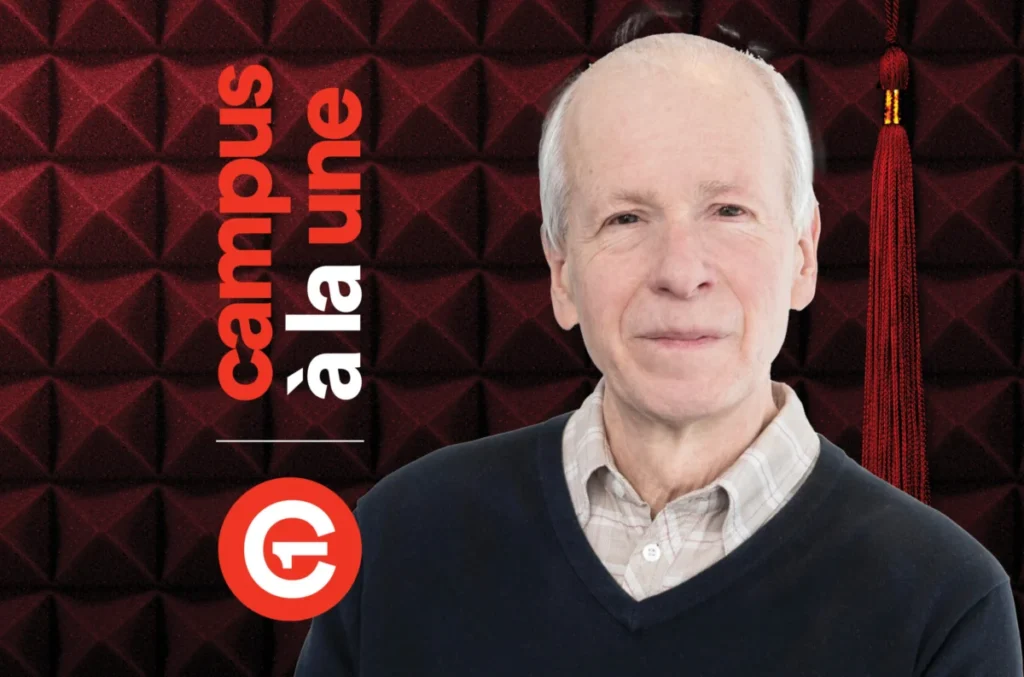
Days after a severe freezing-rain storm blanketed the city in a treacherous layer of ice, the Université de Montréal campus began a gradual return to its customary rhythm. Amidst the quiet of the weekend, students were already reclaiming their study carrels within the hushed halls of the law faculty library, a testament to the resilience of academic pursuit even in the face of natural disruption. It was in this setting that University Affairs had the opportunity to speak with Stéphane Dion, a figure whose distinguished career in academia and public service has now brought him back to his alma mater in a unique capacity. As is his wont, Dr. Dion was accompanied by a book, a tangible symbol of his lifelong intellectual engagement, a theme that would resurface repeatedly throughout the conversation.
Having previously served as a professor of political science, the federal Minister of Foreign Affairs, and an ambassador to Germany and France, Dr. Dion, who holds a PhD from the Institut d’études politiques de Paris, has returned to the Université de Montréal as its diplomat-in-residence. This pivotal appointment, detailed in an episode of the French-language podcast Campus à la une, marks a new chapter in his career, one focused on bridging the gap between the theoretical insights of academia and the practical realities of international diplomacy. The initial conversation quickly gravitated towards Dr. Dion’s profound perspective on the fundamental role of universities in contemporary society.
"A university is, and always will be, a forum for debate," Dr. Dion stated emphatically, articulating a core tenet of his philosophy. "When ideas collide, knowledge and science move forward." This assertion underscores his belief in the generative power of intellectual exchange, a process he sees as vital for both academic advancement and societal progress.
Bridging Academia and Diplomacy: A New Mandate
Dr. Dion expressed his satisfaction at being back on campus, a familiar environment after years spent navigating the complex landscape of international relations as a Canadian diplomat. He views his new role as a valuable resource, eager to share his extensive experience and expertise with students, researchers, and academic departments seeking to comprehend the intricate workings of global affairs. "I have experience and expertise. I’m eager to see how that responds to the interests of students, researchers and teachers," he explained, highlighting his commitment to fostering a mutually beneficial exchange of knowledge.
A significant aspect of his mandate, as assigned by the university president, is to actively facilitate a closer connection between the academic community and the practical world of diplomacy. Reporting to the dean of the faculty of arts and sciences, Dr. Dion aims to serve as a crucial conduit, fostering understanding and collaboration between scholars and practicing diplomats. "If the university offered me this position, no doubt it’s because they think I can be a resource person for connecting the academic world to actual hands-on diplomacy," he remarked, acknowledging the strategic importance of his appointment.
Dr. Dion firmly believes that universities play an indispensable role in cultivating the next generation of specialists equipped to understand and negotiate the intricate web of rules and agreements that govern international relations. Despite the prevailing headlines dominated by global tensions and crises, he remains resolute in his rejection of any notion that international law has become obsolete. "There are thousands of international and bilateral agreements that continue to govern relations between countries," he asserted, underscoring the continued relevance of legal frameworks in shaping global interactions. "We need jurists and other experts who can understand, improve and negotiate those agreements." This perspective is supported by the sheer volume of international treaties and conventions ratified annually, each requiring expert interpretation and implementation to maintain global stability and facilitate cooperation. For instance, the United Nations Treaty Collection alone lists over 50,000 treaties, a testament to the pervasive influence of international agreements across diverse fields, from trade and environmental protection to human rights and security.
Navigating the Digital Age: Universities and Evolving Technologies
Reflecting on the evolution of higher education, Dr. Dion observed the profound changes that have swept through universities since his time as an educator, particularly with the transformative impact of new technologies. The integration of digital tools has fundamentally reshaped pedagogical approaches and assessment methods. While acknowledging the potential benefits of these advancements, he also cautioned against complacency, noting the imperative for careful adaptation. "The danger is that students will start letting the machines do all the work," he mused, voicing a concern shared by many educators about the potential for over-reliance on technology to the detriment of critical thinking.
To mitigate this risk, Dr. Dion advocates for the evolution of evaluation strategies. He suggested that written assignments could be complemented by oral examinations, a practice designed to ascertain students’ genuine comprehension of the material rather than mere proficiency in information retrieval. This approach aligns with pedagogical research that emphasizes the importance of active learning and deep understanding over passive information absorption. Studies on student engagement consistently show that interactive learning experiences, such as debates, presentations, and one-on-one discussions, lead to greater retention and a more profound grasp of complex subjects.
Despite the undeniable influence of technology, Dr. Dion remains convinced that certain foundational teaching methodologies possess enduring value. "A good lecture given by a knowledgeable professor, with students taking notes and having a discussion afterwards — I think it’s an old method with a lot of staying power," he affirmed, championing the continued relevance of traditional pedagogical approaches that foster direct engagement and intellectual dialogue. The effectiveness of well-delivered lectures, particularly when combined with active note-taking and subsequent discussion, has been documented in educational psychology research, which highlights the cognitive benefits of organizing information and processing it through multiple channels.
Cultivating Analytical Minds: The Power of Comparison and Deep Reading
At the heart of a university’s mission, Dr. Dion posits, lies the imperative to cultivate minds capable of rigorous analysis of the world. Central to this endeavor is the skill of comparison, a cognitive tool he deems indispensable for understanding the multifaceted forces shaping contemporary global dynamics. By comparing countries, political systems, and societies, individuals can gain a more nuanced perspective, enabling them to critically evaluate public policies and economic decisions. "Saying you can’t compare apples to oranges is nonsense," he argued, challenging a common misconception that hinders analytical progress. "It’s precisely the fact that things are different, which allows us to compare them." This emphasis on comparative analysis is a cornerstone of disciplines such as political science, sociology, and economics, where understanding variations and similarities across different contexts is crucial for theory building and policy formulation. For example, comparative economic studies often analyze the growth trajectories of different nations to identify common factors contributing to development or stagnation, providing valuable insights for policymakers.
As the conversation neared its conclusion, Dr. Dion returned to a practice he considers paramount for students: reading. In an era saturated with fleeting digital content, he expressed concern about a potential decline in the appreciation for long-form reading, a habit he views as critical for intellectual development. "Stay home and engage with a writer’s work," he advised, urging a deliberate immersion in the written word. "Tell your friends you can’t go out tonight; you have to read another chapter." This passionate advocacy for deep reading resonates with findings from cognitive science, which indicate that sustained engagement with complex texts enhances comprehension, critical thinking, and the development of sophisticated argumentation skills. The neurological processes involved in reading long-form narratives, for instance, stimulate more extensive brain activity compared to scanning short-form content, leading to improved memory and analytical capabilities.
Dr. Dion views reading, travel, and exposure to diverse cultures as complementary pathways to global understanding. In a world increasingly characterized by instability and rising geopolitical tensions, he firmly believes that universities must continue to fulfill their vital role in equipping individuals with the analytical tools, critical thinking skills, and capacity for debate necessary to navigate complex challenges and devise effective solutions. And, he concluded with a characteristic smile, one habit remains utterly indispensable for this critical mission: the simple, yet profound, act of reading books. The enduring value of deep reading, he suggests, is amplified in times of uncertainty, providing individuals with the historical context, diverse perspectives, and analytical frameworks needed to understand and address the complexities of the modern world. The recent surge in interest in historical fiction and in-depth biographies, for example, could be seen as a societal response to a need for deeper understanding and context amidst rapid change.