


Scientists at the Mark and Mary Stevens Neuroimaging and Informatics Institute (Stevens INI) at the Keck School of Medicine of USC have uncovered evidence that two neighboring types of brain tissue may work together to support thinking abilities later in life. Their findings suggest that the condition of the brain’s local communication pathways could influence how strongly gray matter loss affects cognition, providing a potential roadmap for understanding why cognitive decline manifests differently across the aging population. The study, published in Alzheimer’s & Dementia: The Journal of the Alzheimer’s Association, represents a significant pivot in neuroscience, moving away from a singular focus on gray matter volume toward a more integrated model of brain health.
The Anatomy of Localized Communication
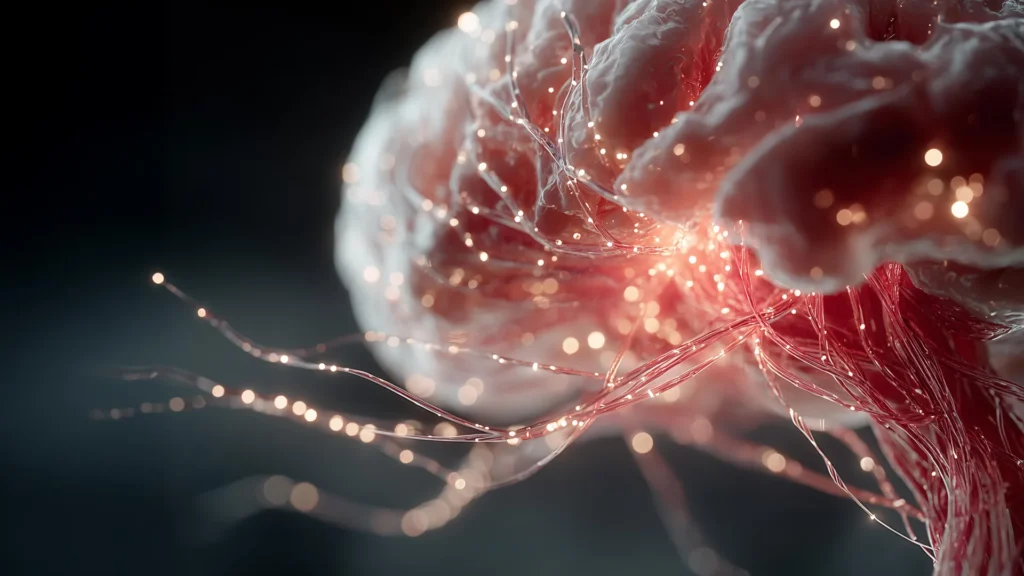
To understand the significance of this research, one must first distinguish between the two primary players in the brain’s architecture. Gray matter, the outer layer of the brain, is the command center, teeming with neuronal cell bodies responsible for processing information, memory, and executive function. Directly beneath this layer lies superficial white matter, a complex, thin, and curved network of nerve fibers. If gray matter is the processor, superficial white matter is the high-speed, local infrastructure that connects adjacent cortical regions.
The research team, led by postdoctoral scholar Yingxu Liu and assistant professor of research neurology Leon Aksman, hypothesized that the integrity of these "local roads" is as critical as the volume of the "processor" itself. Using advanced diffusion MRI—a sophisticated imaging modality that tracks the movement of water molecules through brain tissue—the researchers were able to visualize microscopic features of these fibers that remain invisible to standard clinical scans. They specifically analyzed neurite density and the volume of free water within the tissue. A decline in neurite density or an increase in free water typically serves as a clinical biomarker for neurodegeneration, inflammation, or the loss of myelin, the protective sheath surrounding nerve fibers.
Chronology and Methodology of the LASI-DAD Study
The study utilized data from the Harmonized Diagnostic Assessment of Dementia for the Longitudinal Aging Study in India (LASI-DAD). This longitudinal project is critical for global health research because it captures data from a demographic that has been historically marginalized in neurological literature. The study cohort comprised 459 participants, all 60 years of age or older.
The methodology followed a rigorous structure:
- Recruitment and Baseline Assessment: Between 2017 and 2020, participants were enrolled from diverse regions across India, ensuring a mix of urban and rural backgrounds.
- Clinical and Cognitive Profiling: Participants underwent comprehensive neuropsychological testing, focusing on executive function, memory, visuospatial skills, and language acquisition.
- Advanced Neuroimaging: Each participant underwent high-resolution diffusion MRI to quantify the integrity of the superficial white matter fibers.
- Statistical Correlation: Researchers mapped imaging data against cognitive performance metrics to identify whether white matter health modulated the impact of gray matter atrophy.
Key Findings: The Language Connection
Perhaps the most striking finding of the study was the specific relationship between superficial white matter health and language processing. Data revealed that participants with higher white matter integrity performed significantly better on standardized language tests. This correlation was particularly pronounced in the frontotemporal regions, which are responsible for word retrieval, fluency, and working memory.
While gray matter atrophy remained the strongest primary predictor of overall cognitive impairment, the study uncovered a "cushioning" effect. In individuals where superficial white matter was robust, the deleterious effects of gray matter loss on cognitive performance were measurably mitigated. Conversely, in individuals where this local wiring was compromised, even moderate gray matter loss led to profound cognitive deficits. This suggests that the brain possesses a form of structural resilience, where healthy white matter can, to some extent, compensate for the loss of neurons in the processing centers.
A Diverse Perspective on Brain Aging
A defining feature of this study is its departure from "WEIRD" (Western, Educated, Industrialized, Rich, and Democratic) participant pools. The LASI-DAD population is markedly different: over 50% of the cohort possesses low literacy, and approximately 60% reside in rural areas.
The analysis found that the association between white matter integrity and cognitive resilience was even stronger in participants with lower formal education or those residing in rural settings. While the researchers cautioned that these social factors are not direct biological causes of brain tissue changes, they emphasized that the brain is shaped by a lifelong trajectory of environmental, social, and educational exposures. This inclusive approach provides a more holistic view of human neurobiology, suggesting that brain health in later life is a reflection of a complex interaction between genetics and life circumstances.
Implications for Future Clinical Research
The implications of the Stevens INI study are broad, particularly regarding the diagnosis and treatment of neurodegenerative conditions like Alzheimer’s disease. For decades, clinical trials have focused heavily on the buildup of amyloid-beta plaques and tau tangles, or the simple measurement of gray matter volume loss via MRI. By highlighting the role of superficial white matter, the researchers have opened a new front for potential therapeutic intervention.
"Two people with a similar degree of gray matter loss may not experience the same cognitive effects if the local connections surrounding that gray matter differ in health," noted Dr. Leon Aksman. This perspective suggests that future treatments could potentially focus on preserving white matter integrity through lifestyle modifications, pharmacological agents that reduce neuroinflammation, or vascular health management.
If the "local wiring" can be maintained or protected, it might be possible to delay the onset of dementia even if some gray matter loss is already present. This would redefine the clinical goal from "prevention of all tissue loss" to "maintenance of neural connectivity," a more achievable and pragmatic objective for aging populations.
Limitations and the Path Forward
Despite the study’s contributions, the researchers acknowledged clear limitations. Because the study was cross-sectional, it represents a single "snapshot" in time. Consequently, it cannot definitively prove a causal sequence—specifically, whether superficial white matter decay precedes gray matter atrophy or if they occur simultaneously as part of a broader degenerative process.
"A fuller understanding of brain aging requires research that reflects the world’s social, cultural, and geographic diversity," said Dr. Arthur W. Toga, director of the Stevens INI. "By studying an underrepresented population and looking beyond gray matter alone, this work brings us closer to identifying the biological and social factors that may protect cognition across the lifespan."
Future research, according to the study authors, must involve longitudinal tracking of the LASI-DAD cohort to observe how these structural changes evolve over several years. Furthermore, the researchers aim to incorporate vascular health markers, inflammatory indices, and Alzheimer’s-related protein biomarkers to create a multi-dimensional model of the aging brain.
Conclusion: The Road Ahead
The study serves as a necessary reminder that the brain is not merely a collection of isolated processing centers, but a dynamic, interconnected network. As the global population continues to age, understanding the nuances of cognitive resilience—and why some individuals remain mentally sharp despite structural brain changes—will become one of the most pressing challenges in public health.
The involvement of a multi-disciplinary team, including experts in neurology, psychiatry, and computational data science, underscores the complexity of this work. Supported by the National Institute on Aging and other NIH branches, this project sets a new standard for how neurological research can be integrated with global social science. By shifting the focus toward the "hidden wiring" of the brain, the scientific community may finally have the tools required to address the biological basis of resilience, offering new hope for preserving cognitive independence well into later life. As the scientific community continues to digest these findings, the focus remains on transforming these observations into actionable clinical strategies that respect both the biological and environmental diversity of the aging human experience.