


Sony has officially expanded its high-end portable audio lineup with the announcement of three next-generation Walkman Digital Audio Players (DAPs). Designed for discerning audiophiles and high-resolution music enthusiasts, the newly unveiled trio—the NW-ZX900, the NW-WM1AM3, and the flagship NW-WM1ZM3—blend vintage-inspired aesthetics with state-of-the-art digital signal processing (DSP), advanced acoustic architecture, and modern wireless connectivity. While the consumer market continues to lean heavily toward convenience-driven wireless earbuds and smartphones, Sony’s continued investment in dedicated, ultra-premium DAPs signals a steadfast commitment to uncompromising sound quality.
The introduction of these new devices highlights a fascinating paradox in the modern consumer electronics landscape. Even as smartphones have largely supplanted standalone music players for the average listener, high-end portable audio has carved out a passionate, resilient niche. Consumers are increasingly seeking out dedicated devices free from notifications, cellular interference, and processing compromises. Sony’s latest Walkman release demonstrates the company’s dual strategy: honoring its rich 1980s heritage—complete with an optional, nostalgic cassette tape screensaver—while pushing the absolute boundaries of digital-to-analog audio conversion, circuitry design, and material science.
Chronology and Evolution of the Modern Walkman
To understand the significance of the 2026 Walkman refresh, one must look at the steady evolution of Sony’s portable audio strategy over the past decade. Following the decades-long dominance of the cassette and CD-based Walkman, Sony pivoted in the 2010s toward high-resolution digital audio players, culminating in the critically acclaimed WM1 series.
In subsequent years, Sony refined its internal components, shifting toward Android-based operating systems to accommodate the explosive growth of high-resolution streaming services like Tidal, Qobuz, and Apple Music. The previous generations, such as the ZX700 and earlier WM1 models, successfully bridged local file storage with cloud streaming. However, critics frequently noted limitations in power output, thermal management, and physical footprint.
The 2026 release represents a generational leap. Building on a year that has already seen Sony launch flagship noise-cancelling earbuds, powerful party systems, and spatial microphones, the new Walkman lineup serves as the crown jewel of the company’s audio hardware calendar. By addressing historical power caps, refining the digital-to-analog signal paths, and upgrading structural materials, Sony has recalibrated what portable audiophile gear can achieve.

Anatomy of the Lineup: Specifications and Engineering
The entry point to this elite tier is the NW-ZX900, priced at $1,899. Built to offer a balance of portability and high-end audio performance, the ZX900 features a hybrid chassis constructed from milled aluminum and press-formed oxygen-free copper (OFC) components. Under the hood, it incorporates an ultra-low-noise LDO regulator and crystal oscillators derived directly from Sony’s cost-no-object flagship models, ensuring stable, clean voltage delivery to the sensitive audio block.
The device is fronted by a responsive 5-inch 1920×1080 TFT color display running an Android 16-based system, making library management and streaming app navigation seamless. Audio specs include a frequency response of 20 to 40,000 Hz, an 11.2MHz DSD Remastering Engine, and S-Master HX digital amplifier technology. Crucially, the ZX900 addresses user feedback from previous iterations by incorporating a balanced 4.4mm output with a robust 250mW+250mW High Gain Mode, offering vastly improved driving power for demanding wired headphones and in-ear monitors (IEMs). Battery performance remains respectable, offering up to 40 hours of lower-bitrate MP3 playback or approximately 35 hours when streaming via Wi-Fi.
Stepping up into the heavy-duty tier brings buyers to the NW-WM1AM3, retailing at $2,999 and weighing in at 425 grams. This model introduces a significantly upgraded low-resistance oxygen-free copper chassis designed to maximize grounding stability. It houses a larger 5.5-inch 1920×1080 Full HD display and incorporates a direct OFC audio power supply, OFC internal cabling, and an OFC copper-wound large coil.
Internal enhancements on the WM1AM3 include dual large solid polymer capacitors, gold vapor-deposited ultra-low phase-noise clocks, and a 10-layer low-dielectric printed circuit board (PCB). Driven by a high-performance, low-power System-on-Chip (SoC), the device powers advanced audio suites such as the DSD Remastering Engine, DSEE Ultimate signal upscaling, and a newly developed look-ahead Noise Shaper featuring Light, Balance, and Deep modes. Storage is handled via 128GB of internal flash memory, supplemented by a microSD card slot.
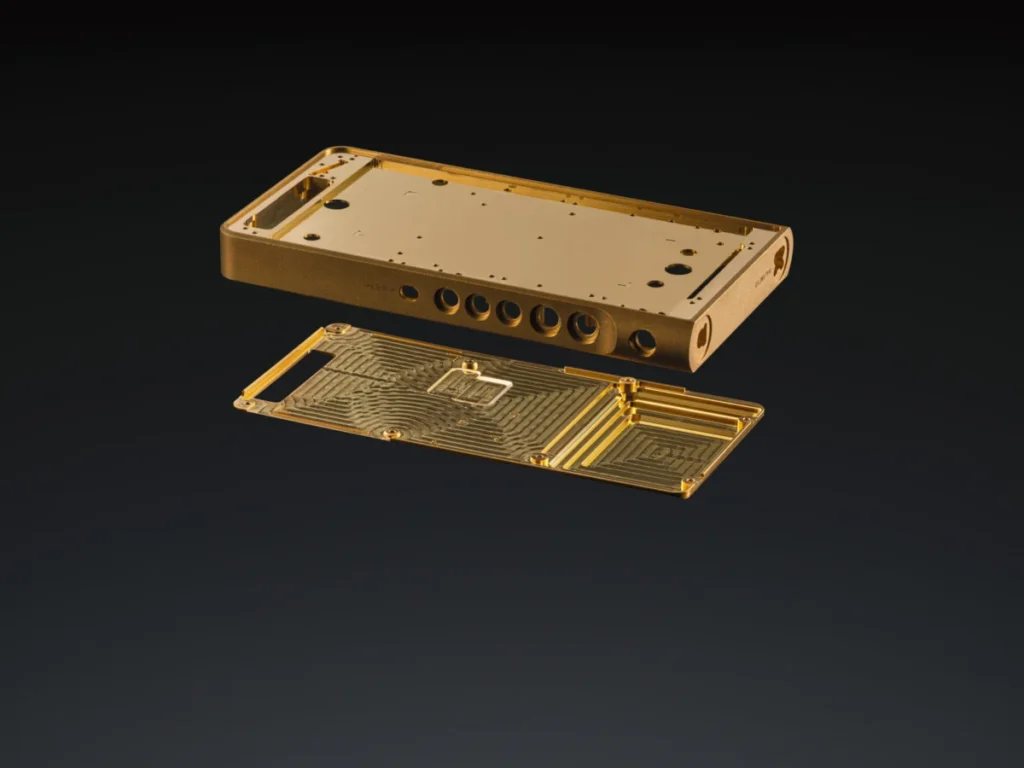
At the absolute apex of the portfolio sits the cost-no-object NW-WM1ZM3 flagship, commanding a staggering price tag of $5,899 and weighing a substantial 670 grams. The WM1ZM3 is a masterclass in mechanical and material engineering. It abandons press-formed components in favor of a precision-milled 99.99% (4N) OFC main chassis paired with a precision-machined 99.96% pure OFC rear chassis featuring direct gold plating to optimize ground impedance.
The entire acoustic assembly is fastened with low-resistance, direct-coupled gold-plated screws to shorten the mechanical signal path. In the analog output stage, Sony utilizes 4-wire braided KIMBER KABLE for the balanced headphone connection. Internal storage is doubled to 256GB. According to Sony’s acoustic engineers, this heavily reinforced, isolated architecture yields a noticeably wider soundstage, deeper and more authoritative low-frequency response, and micro-detailing that rivals elite desktop audio setups.

Important Operational Caveats
Despite featuring modern USB Type-C connectivity across all three models, users should note a specific architectural limitation: the USB-C port is strictly designated for power delivery, battery charging, and file transfers. It does not support native audio output. Consequently, private listening sessions must be conducted exclusively through the physical 3.5mm single-ended or 4.4mm balanced headphone jacks, or via supported high-resolution wireless Bluetooth codecs such as LDAC, aptX Adaptive, AAC, and LC3. The devices can, however, function as high-grade external USB DACs when connected to a personal computer.
Industry Implications and Market Impact
The launch of the NW-ZX900, NW-WM1AM3, and NW-WM1ZM3 arrives at a pivotal time for the high-fidelity audio sector. While mainstream consumers have largely embraced compressed, lossy Bluetooth streaming, a dedicated sub-culture of audiophiles continues to invest heavily in uncompressed, high-resolution master formats.
Market analysts point out that products in this price tier are not designed for mass-market volume. Instead, they serve as halo products that showcase a brand’s engineering prowess, pushing technological trickle-down effects into more accessible consumer audio gear over time. By combining cutting-edge digital processing with traditional material science—such as oxygen-free copper and custom Kimber Kable wiring—Sony is actively courting high-net-worth enthusiasts and professional mastering engineers who demand absolute fidelity away from the studio or living room.
Pricing and Availability
Pre-orders for the new Sony Walkman lineup are open immediately through official channels, including the Sony direct store, B&H Photo Video, and Crutchfield. The NW-ZX900 is priced at $1,899, the mid-tier NW-WM1AM3 commands $2,999, and the flagship NW-WM1ZM3 tops out at $5,899. Shipments are expected to begin later in the season, giving holiday shoppers and dedicated audiophiles a monumental new tier of portable sound to anticipate.