



The Evolution of Collaborative AI: Introducing Copilot Cowork
The unveiling of Copilot Cowork marks a strategic shift in Microsoft’s approach to AI-powered productivity tools. While previous iterations of Copilot primarily focused on generating content, summarizing information, or answering queries within a conversational framework, Cowork represents a leap towards agentic AI – systems capable of understanding high-level goals and executing a series of actions to achieve them. Charles Lamanna, president of Business Applications and Agents at Microsoft, articulated this shift, stating, "Copilot Cowork is built for that: It helps Copilot take action, not just chat." This sentiment highlights a crucial progression from reactive AI assistance to proactive, task-oriented collaboration.
Cowork is engineered to interpret a user’s overarching objective and translate it into a structured, executable plan. This plan operates discreetly in the background, drawing upon a vast reservoir of contextual information from across the Microsoft 365 suite. This includes data from Outlook emails, Teams chats, Excel spreadsheets, various files stored in OneDrive or SharePoint, and scheduled meetings. Microsoft refers to this intricate retrieval and synthesis process as "Work IQ," an intelligent framework that gathers relevant details to inform Copilot’s actions. Before implementing any significant changes or completing tasks, Cowork surfaces "checkpoints" for user approval, ensuring transparency and user control over the automated processes. This human-in-the-loop design is critical for maintaining trust and preventing unintended consequences, especially in sensitive business environments.
The practical applications of Copilot Cowork are broad and impactful. Microsoft has demonstrated its capability to handle diverse administrative and analytical tasks that typically consume significant employee time. Examples include resolving calendar conflicts by intelligently rescheduling meetings based on participant availability and preferences, preparing comprehensive meeting briefs by synthesizing relevant documents and communications, and compiling detailed research memos complete with citations from both internal workplace sources and external web data. Such capabilities promise to significantly reduce the manual effort involved in information gathering, synthesis, and coordination, thereby freeing up knowledge workers to focus on more strategic and creative endeavors.

Security and governance remain paramount in Microsoft’s enterprise AI strategy. Cowork operates entirely within the robust security and governance framework of Microsoft 365. This means that existing identity management, permissions, and compliance policies are enforced by default, ensuring that Copilot only accesses information that the user is authorized to view and manipulate. Furthermore, all actions performed and outputs generated by Cowork are auditable, providing a transparent record for compliance and accountability purposes. This adherence to enterprise-grade security protocols is crucial for widespread adoption in regulated industries and for organizations handling sensitive data.
A notable aspect of Cowork’s architecture is its "multi-model advantage," allowing it to tap into various large language models (LLMs) to optimize task execution. Specifically, Cowork can route work to Anthropic’s Claude, a leading AI model known for its advanced reasoning capabilities. This strategic integration exemplifies a growing trend in the AI industry where platforms leverage the strengths of different models to achieve superior performance for specific tasks. As Lamanna described, this approach allows Copilot to dynamically select the model best suited for a given task, enhancing both efficiency and accuracy. This flexibility ensures that Copilot can adapt to the evolving landscape of AI models, incorporating new advancements as they emerge.
Copilot Cowork is currently accessible to a select group of customers through a Research Preview, allowing Microsoft to gather crucial feedback and refine the feature in real-world scenarios. Microsoft anticipates a broader rollout through its Frontier program in late March 2026. The Frontier program, introduced earlier this year, serves as an early-access channel for emerging Copilot features, enabling interested organizations to pilot cutting-edge AI capabilities before general availability. This phased rollout strategy is characteristic of complex enterprise software deployments, allowing for iterative improvements and scalability testing.
Fortifying Digital Defenses: Agentic Secret Finder in Security Copilot
In the realm of cybersecurity, Microsoft announced the general availability of Agentic Secret Finder (ASF) within Microsoft Security Copilot. This feature addresses a critical and persistent vulnerability in corporate networks: exposed credentials hidden within unstructured data. In an era where data breaches are increasingly common and costly – with the average cost of a data breach reaching $4.45 million in 2023, according to IBM Security – the ability to proactively identify and neutralize such threats is invaluable. Traditional security tools often struggle with the sheer volume and diverse formats of unstructured data, leading to a high rate of false positives or missed detections.
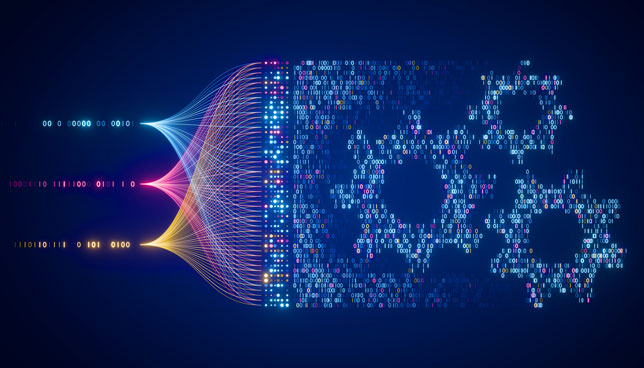
ASF is specifically designed to detect exposed credentials that are deeply embedded in various forms of unstructured data, including emails, chat logs, corporate documents, and even screenshots. Unlike conventional regex-based scanners, which rely on predefined patterns and often generate numerous false positives, ASF employs a sophisticated multi-step, multi-agent reasoning process. This advanced AI methodology allows ASF to not only identify suspicious strings but also to determine whether they constitute valid credentials and, crucially, the level of access those credentials could potentially provide. This contextual understanding is vital for security teams, as it helps them prioritize threats and allocate resources more effectively.
Microsoft emphasized the qualitative leap ASF represents: "Unlike regex-based scanners, ASF uses reasoning to identify not just credentials, but the systems they unlock, helping security teams understand exposure and respond faster." This distinction is critical. By understanding the potential impact of an exposed credential – for instance, whether it grants access to a critical database, a cloud storage account, or a development environment – security professionals can make more informed decisions regarding incident response and remediation. This intelligent triage significantly improves the efficiency of security operations centers (SOCs), which are often overwhelmed by alerts.
The effectiveness of ASF has been demonstrated in benchmark testing using synthetic datasets. Across various data types, including emails, chats, notes, and documents, Microsoft reported that ASF achieved an impressive 98.33% credential recall with zero false positives. In stark contrast, traditional regex-based tools detected approximately 40% of the same credentials, highlighting ASF’s superior accuracy and efficiency. This drastic reduction in false positives is a game-changer for security teams, allowing them to focus on genuine threats rather than sifting through irrelevant alerts. The ability to identify credentials that do not fit known formats also provides a crucial advantage against novel attack techniques.
ASF currently supports more than 20 credential types, encompassing a wide range of common authentication tokens and keys. These include Azure Storage Keys, AWS Access Keys, OAuth tokens, SSH private keys, and various database connection strings. This broad coverage ensures comprehensive protection across diverse IT environments. Looking ahead, Microsoft is actively exploring GitHub integration to extend ASF’s capabilities into source code analysis, a critical area where sensitive credentials can often be inadvertently committed. This expansion would further solidify Security Copilot’s role in securing the entire software development lifecycle, from code inception to deployment.
Empowering Developers: Fireworks AI Integration in Microsoft Foundry

The third significant announcement involves the public preview of Fireworks AI’s integration into the Microsoft Foundry model catalog. This move is designed to empower developers by providing access to Fireworks AI’s cloud-based inference engine directly within their Foundry projects, offering low-latency inference for a selection of cutting-edge open-source models. The rapid pace of innovation in the open-source AI community has created a demand for robust platforms that can efficiently deploy and scale these models. Microsoft Foundry, positioned as a comprehensive platform for building, training, and deploying AI models, aims to meet this need by integrating best-in-class third-party services.
Microsoft articulated the value proposition of this integration: "For customers needing the latest open source models from emerging frontier labs, break-neck speed, or the ability to deploy their own post-trained custom models, Fireworks delivers best-in-class inference performance." Low-latency inference is crucial for applications that require real-time responses, such as conversational AI agents, personalized recommendation systems, and dynamic content generation. By providing optimized inference capabilities, Microsoft Foundry with Fireworks AI aims to accelerate the development and deployment of high-performance AI applications, democratizing access to powerful open-source models for a wider developer audience.
At launch, the public preview supports both serverless pay-per-token deployments and provisioned throughput across four prominent models: Minimax M2.5, OpenAI’s gpt-oss-120b, MoonshotAI’s Kimi-K2.5, and DeepSeek-v3.2. This flexibility in deployment options caters to various use cases and budget considerations, allowing developers to scale their AI inference needs efficiently. Furthermore, Microsoft has introduced a new Custom Models workflow in Foundry, enabling customers to import and deploy their own fine-tuned versions from these model families, including Qwen3-14B and DeepSeek v3.1. This capability is vital for organizations that need to tailor general-purpose models to specific industry contexts or proprietary datasets, enhancing their relevance and accuracy.
The Fireworks integration is an opt-in feature during the preview phase and must be enabled through the Azure portal’s Preview features panel. Additionally, customers utilizing the pay-per-token option must be located in one of six supported U.S. regions. These geographical restrictions are common during initial rollouts of cloud services, often due to infrastructure availability, regulatory compliance, or performance optimization strategies. As the service matures, broader regional availability is typically introduced.
Broader Implications and Microsoft’s Strategic Position

These comprehensive AI updates from Microsoft collectively underscore the company’s aggressive strategy in the global AI arms race. By enhancing productivity, bolstering cybersecurity, and empowering developers, Microsoft is strengthening its position against formidable competitors such as Google, Amazon Web Services (AWS), and a growing ecosystem of AI startups like OpenAI and Anthropic, with whom it also strategically partners. The integration of agentic AI, advanced security tools, and high-performance inference capabilities across its core product lines positions Microsoft as a holistic AI provider, offering end-to-end solutions for the modern enterprise.
The impact on enterprise productivity is profound. Tools like Copilot Cowork promise to transform routine workflows, shifting the focus of human workers from repetitive tasks to more creative, strategic, and human-centric activities. This could lead to significant efficiency gains, potentially boosting overall organizational output and fostering innovation. Similarly, the advancements in Security Copilot with Agentic Secret Finder represent a critical leap forward in digital defense. In an era of escalating cyber threats, an AI-powered security assistant that can accurately identify and prioritize hidden vulnerabilities can dramatically reduce the risk of costly data breaches and enhance the resilience of digital infrastructures.
For the developer community, the integration of Fireworks AI into Microsoft Foundry signifies a commitment to fostering innovation and providing cutting-edge tools. By making high-performance, open-source AI inference more accessible and manageable, Microsoft is empowering developers to build more sophisticated and responsive AI applications, further accelerating the adoption and integration of AI across various industries. This aligns with Microsoft’s broader vision of democratizing AI, making powerful technologies available to a wider range of users and use cases.
However, the rapid deployment of such advanced AI tools also brings forth important considerations. Ethical AI development, data governance, and the need for continuous user education remain paramount. Organizations must carefully consider the implications of AI-driven automation on workforce dynamics and ensure that AI systems are used responsibly and ethically. Microsoft’s emphasis on security, compliance, and human-in-the-loop validation within its AI offerings attempts to address some of these concerns, but ongoing dialogue and robust frameworks will be essential as these technologies become more pervasive.
In conclusion, Microsoft’s latest suite of AI updates – from the proactive task management of Copilot Cowork to the enhanced threat detection of Agentic Secret Finder and the developer empowerment offered by Fireworks AI in Foundry – represents a concerted effort to deepen the integration of artificial intelligence across its vast ecosystem. These advancements are not merely incremental improvements; they signify a strategic push towards a future where AI acts as a more intelligent, collaborative, and secure partner in both daily work and advanced technological development, fundamentally reshaping the landscape of enterprise computing.