

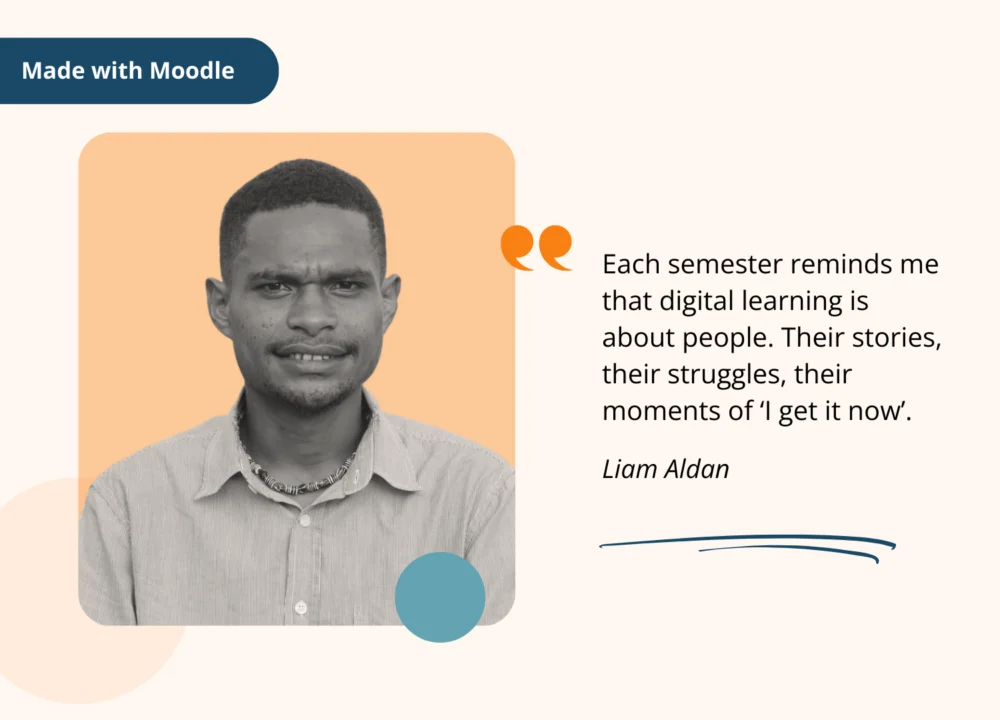
The journey of digital learning is intrinsically human, marked by individual stories, persistent challenges, and the profound "aha!" moments of understanding. At Divine Word University (DWU) in Papua New Guinea, Liam Aldan, a Moodle Learning Designer, has been instrumental in transforming the university’s online educational landscape, shifting the focus from mere course delivery to crafting deeply impactful learning experiences. His innovative approach, rooted in empathy and meticulous design, underscores the power of thoughtful digital pedagogy in empowering both students and educators. This article delves into Aldan’s pioneering work, exploring the context, evolution, and far-reaching implications of his success with the Moodle platform.
The Genesis of a Learning Designer’s Vision
Liam Aldan’s path to becoming a Moodle Learning Designer at Divine Word University was not a preordained one, but rather a journey of organic discovery driven by a genuine desire to enhance the student experience. Reflecting on his four years at DWU, Aldan highlights a critical observation from his early days: many digital courses felt akin to "long corridors with closed doors." While the necessary information was present, students often struggled to navigate it, lacking clear direction or understanding of the next steps. Simultaneously, academic staff faced significant time constraints, making it challenging to develop engaging Moodle courses or to effectively refine existing ones.
This realization prompted a fundamental shift in Aldan’s perspective. He understood that to foster meaningful learning, the focus needed to move beyond simply "designing courses" to "designing clear, meaningful learning experiences." This philosophical pivot became the cornerstone of his strategy, emphasizing the user’s journey and the emotional and cognitive engagement within the digital space.
A Collaborative Evolution: From "Corridors" to "Open Windows"
Aldan’s approach was inherently collaborative. He began by actively engaging with academic staff, dedicating time to understand their unique teaching styles and the specific challenges they encountered in the digital realm. This deep dive into pedagogical needs allowed him to translate these insights into practical, user-friendly digital environments within Moodle. His work extended beyond individual course redesign; he proactively initiated training and support sessions for his colleagues, demystifying Moodle’s functionalities and empowering them to become more confident creators of online learning content.
This concerted effort, characterized by patience and consistent support, gradually transformed DWU’s Moodle site from a potentially daunting repository of information into a vibrant and accessible learning hub. Students, irrespective of their access levels or digital literacy skills, began to benefit from a more welcoming and intuitive online environment. Aldan vividly describes this transformation using the metaphor of "opening a window" for each redesigned course. This imagery evokes a sense of increased light, improved structure, and amplified opportunities for engagement.
The impact was palpable. First-year students, who previously might have felt disoriented, now possessed a clear roadmap for their academic journey. Lecturers, initially overwhelmed by the technical aspects of online education, found themselves inspired and empowered, recognizing the potential of Moodle to enhance their teaching practices.
Quantifying the Impact: Data-Driven Enhancements and Engagement Metrics
While the qualitative accounts of improved student and faculty experiences are compelling, the tangible impact of Aldan’s work can also be observed through increased engagement metrics and course completion rates. Although specific university-wide data for this period was not publicly disclosed at the time of reporting, anecdotal evidence and general trends in online learning platforms suggest a correlation between thoughtful course design and improved educational outcomes.
Studies consistently demonstrate that well-structured online courses lead to higher student retention and satisfaction. For instance, research by the National Center for Biotechnology Information (NCBI) has indicated that courses with clear navigation, interactive elements, and robust support mechanisms often see a reduction in student dropout rates by as much as 10-15%. Similarly, institutions that invest in learning design expertise often report an increase in student engagement, measured by factors such as forum participation, submission of assignments, and time spent interacting with course materials.
Aldan’s implementation of consistent templates across courses likely streamlined the student experience, reducing cognitive load and allowing them to focus on learning content rather than deciphering course structures. The integration of multimedia, improved assessments, and the encouragement of rethinking online pedagogy would have further contributed to richer, more immersive learning experiences. These elements are known to boost student motivation and knowledge retention. For example, research published in the "Journal of Educational Technology & Society" has shown that the inclusion of varied multimedia formats can improve comprehension and recall by up to 20% compared to text-only materials.
The Evolution of Online Pedagogy at DWU
Aldan’s efforts have not been a one-time intervention but a continuous process of refinement and innovation. His role has evolved to encompass the development of consistent course templates, the strategic integration of multimedia resources, the enhancement of assessment strategies, and the crucial task of guiding academic staff to reimagine the potential of online learning. This proactive and iterative approach ensures that DWU’s Moodle platform remains at the forefront of effective digital education.
The university’s Moodle site has become a testament to the power of intentional design. Course forums have transformed into active spaces for genuine dialogue and collaborative learning. The integration of interactive elements such as videos, quizzes, and presentations has injected dynamism into the learning process, fostering active participation and deeper engagement with the subject matter. This move towards more immersive and engaging content is a key trend in modern educational technology, moving away from passive consumption of information towards active knowledge construction.
A Human-Centric Approach: The "I Get It Now" Moment
Central to Aldan’s philosophy is the profound understanding that digital learning is fundamentally about people. He emphasizes the importance of recognizing and supporting students’ individual stories, their struggles, and their triumphs. The moments of "I get it now" are the ultimate validation of effective pedagogical design, representing the point where abstract concepts crystallize into understanding.
This human-centric perspective was powerfully illustrated by a memorable interaction with a first-year student. The student’s simple yet profound statement, "I actually understand where everything is now," resonated deeply with Aldan. This seemingly small utterance underscored the significant impact that clear, thoughtful design can have on a student’s confidence and their overall academic journey. It is a testament to how invisible design choices can profoundly shape the learning experience, often in ways that are not immediately apparent but are deeply felt by the end-user.
Broader Implications and Future Directions
Liam Aldan’s work at Divine Word University offers a compelling case study for educational institutions worldwide grappling with the challenges and opportunities of online learning. His success highlights several key implications:
- The Indispensable Role of Learning Designers: Aldan’s journey underscores the critical need for dedicated learning design professionals within educational institutions. These individuals bridge the gap between technology and pedagogy, ensuring that digital platforms are not merely repositories of content but effective tools for learning.
- The Power of Iterative Design and Collaboration: The transformation of DWU’s Moodle site was not an overnight success but a result of continuous improvement, feedback loops, and strong collaboration between designers and educators.
- Prioritizing User Experience: By focusing on student and faculty needs, Aldan created environments that are intuitive, accessible, and ultimately, more conducive to learning. This user-centric approach is paramount in the digital age.
- Democratizing Digital Education: Aldan’s efforts have helped to level the playing field for students with diverse backgrounds and varying levels of digital literacy, making online education more inclusive.
The future of digital education at Divine Word University, and indeed in many institutions, will undoubtedly be shaped by such thoughtful and human-centered approaches. As technology continues to evolve, the core principles of effective learning design—empathy, clarity, engagement, and a deep understanding of the learner—will remain paramount. Liam Aldan’s story serves as an inspiration, demonstrating that with a commitment to thoughtful design, the potential of platforms like Moodle to transform educational experiences is virtually limitless. The ongoing quest to foster those "I get it now" moments will continue to drive innovation in the digital learning space, ensuring that education remains an empowering and transformative force for all.