



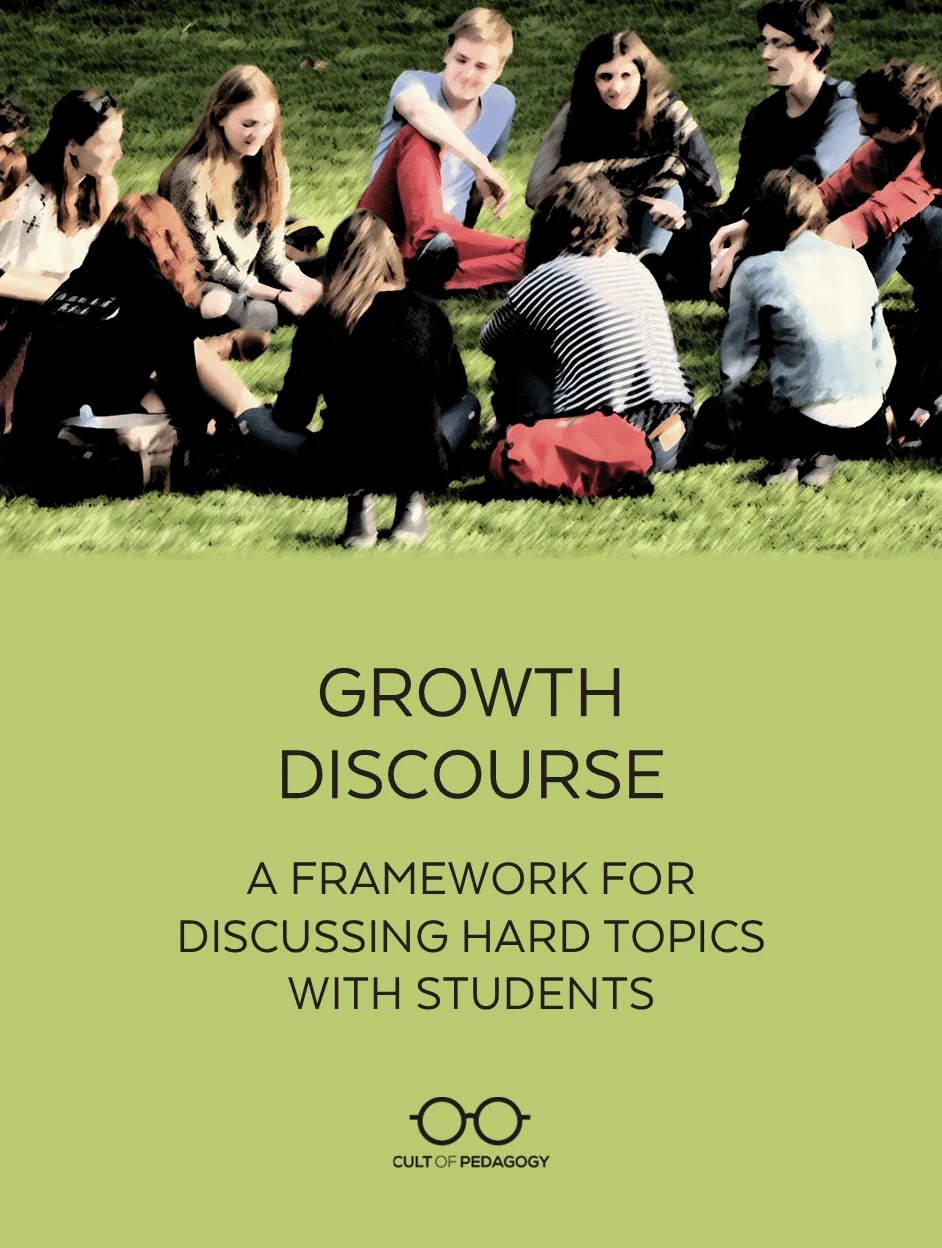
In an era increasingly characterized by polarization and fractured communication, the ability to engage in meaningful, productive dialogue across differing viewpoints has become an urgent societal need. What was once a fundamental aspect of civic life—the robust exchange of ideas—has, for many, devolved into a "minefield of hurt feelings, emotional outbursts, and severed relationships," as one observer notes. This pervasive challenge underscores the critical importance of pedagogical frameworks designed to cultivate constructive conversations, particularly among the next generation of leaders. One such innovative approach, gaining traction for its efficacy, is the "growth discourse" framework developed at the School for Ethics and Global Leadership (SEGL).
SEGL, established in 2009 by Noah Bopp, is a distinctive semester-long residential program tailored for high school juniors from across the United States. Its curriculum is meticulously crafted to imbue students with advanced ethical thinking skills, robust leadership capabilities, and a deep understanding of international affairs. The overarching mission is to equip these young individuals to become catalysts for positive change in the world. Central to achieving this ambitious goal is SEGL’s foundational concept of growth discourse—a structured methodology that empowers students to navigate and engage productively with complex, often contentious topics that many adults shy away from in group settings.
The imperative for such a framework is evident in current societal trends. Data from various research institutions, including the Pew Research Center, consistently highlight a deepening partisan divide and a corresponding decline in civil discourse. A 2023 study, for instance, found that a significant majority of Americans believe political discussions have become more negative and less respectful over the past decade. This environment not only stifles intellectual growth but also undermines democratic processes and community cohesion. Against this backdrop, SEGL’s growth discourse model presents a timely and practical solution, offering a clear pathway for fostering empathy, critical thinking, and mutual understanding.
Upon reviewing SEGL’s comprehensive growth discourse guidelines, educators and policy makers alike commend its thoughtful construction. The framework explicitly acknowledges the profound influence of emotions and vulnerability in high-stakes conversations, creating space for authentic human responses. Simultaneously, it prioritizes the cultivation of courage and honesty, essential virtues for advancing difficult dialogues. Its straightforward and adaptable nature suggests that it is a model readily replicable by any educational institution or teacher committed to improving classroom discussions and fostering a more engaged, thoughtful student body.
Noah Bopp, SEGL’s founder and Head of School, recently elaborated on the origins and practical application of the growth discourse model in a detailed interview. He recounted the inspiration behind founding SEGL, driven by a vision to cultivate ethical leaders, and meticulously outlined the growth discourse methodology, complete with illustrative classroom examples designed to guide educators in its implementation.
The Philosophy of Growth Discourse: Beyond Mere Civility
Bopp emphasizes that the primary objective of SEGL’s growth discourse model is not to simplify discussions or ensure superficial politeness, but rather to challenge students toward genuine intellectual and personal development. "The motivation for doing it is in the title," Bopp states. "A lot of people are talking about civil discourse these days. But some people are asking, ‘Why do I need to be civil in a time like this?’ We believe discourse that helps you grow is essential to our meaningful lives and is also central to a functioning civic ensemble."

This distinction between "civil discourse" and "growth discourse" is crucial. While civility might imply a superficial adherence to polite conduct, growth discourse explicitly targets personal and intellectual transformation. For students, the mindset shifts from merely "being nice" to actively seeking opportunities for personal growth through engagement with diverse perspectives. For teachers, the focus transcends classroom management, centering instead on designing and facilitating conversations that genuinely expand students’ understanding and capabilities.
Navigating Nuance: Avoiding "Bothsidesism"
A core tenet of SEGL’s mission is to "convene and mentor students who have different values, viewpoints, experiences, and identities," and the growth discourse model is intrinsically designed to encourage and value these differences. However, a common pitfall in facilitating discussions on controversial topics is "bothsidesism"—the erroneous practice of presenting opposing viewpoints as equally valid, even when one side lacks factual basis or ethical grounding. SEGL carefully navigates this challenge.
Bopp clarifies SEGL’s position: "SEGL is nonpartisan. SEGL is not neutral." This distinction is paramount. He explains, "We don’t say, ‘The Holocaust, good or bad, you decide,’ right? We don’t say in our science classrooms, ‘Climate change, is that real or not real?’" Instead, for topics where "reasonable, educated people are disagreeing," SEGL equips students with advanced critical thinking skills to evaluate arguments rigorously. The program then introduces students to representatives of the strongest arguments from different sides, prompting students to critically assess and articulate their own informed positions.
The pedagogical rationale behind this approach is profound. "We’re trying to teach students how to think, not what to think," Bopp asserts. He warns that teaching students what to think—a common and often easier educational path—shortcuts the critical thinking process, leaving individuals susceptible to manipulation by "demagogues," of whom, he notes, "there are a lot… in this world right now." By fostering the ability to critically evaluate, synthesize information, and form independent judgments, SEGL aims to inoculate students against intellectual complacency and manipulative rhetoric. This approach aligns with contemporary educational research emphasizing the development of metacognitive skills and media literacy in an age of abundant, often misleading, information.
Foundational Pillars: The Growth Discourse Principles
The growth discourse framework is built upon several interconnected principles designed to create an environment conducive to deep, challenging, and ultimately transformative discussions:
-
Begin with Belonging: The bedrock of any successful challenging conversation is a shared sense of belonging among all participants. SEGL intentionally cultivates this through direct affirmation, explicit inclusion in discourse guidelines, and activities that encourage students to share their personal identities and histories. The program also prioritizes a diverse student body and faculty, ensuring a wide array of backgrounds and viewpoints are represented. Bopp explains the necessity: "If we have a really homogenous group of students, it’s very hard for us to address a difficult topic like Trump’s immigration policy, right? Because we’re going to get similar views and some students are going to feel excluded. But if I can set up an environment where I have students who represent many different backgrounds and many different points of view, and I show those students that they all belong here, then I can create an environment where those students are not on edge when we’re having these conversations." This emphasis on psychological safety is supported by extensive research in social-emotional learning, which demonstrates that individuals are more likely to take risks, express dissenting opinions, and engage deeply when they feel secure and valued within a group.

-
Value Intent and Impact: Conversations on sensitive issues inevitably carry the risk of unintentional harm. The dilemma of whether to prioritize the speaker’s intent or the listener’s experienced impact often arises. Growth discourse mandates that "both of those things matter." Bopp cautions against using "Oh, I’m so sorry, that wasn’t my intent," as a "get out of jail free card," noting that such a response often indicates a need for personal reflection on the impact of one’s words. Conversely, he advises against "assign[ing] a motive to another human being solely based on what that person made me feel," describing it as "unreflective and incurious." This principle encourages participants to engage in empathetic listening, seek clarification, and take responsibility for both their communicative intentions and the real-world effects of their expressions, fostering a culture of accountability and mutual respect.
-
Avoid Echo Chambers: Human beings naturally gravitate towards those who share similar beliefs, a phenomenon exacerbated by algorithmic social media feeds. While seeking common ground with like-minded individuals can be comforting, exclusive reliance on such "echo chambers" severely limits intellectual and personal growth. SEGL explicitly challenges this tendency. Bopp explains, "at SEGL, we go to those conversations not to disengage, but to figure out how do we re-engage." The program encourages students to step outside their comfort zones, actively seek out diverse perspectives, and learn how to re-engage constructively with those holding different views. This practice is vital for developing intellectual humility and resisting confirmation bias, skills crucial for navigating a complex, interconnected world.
-
Follow the STAR Model: Inspired by and adapted from Harvard’s Project Zero Thinking Routines, the STAR model is a critical thinking framework designed to ensure comprehensive understanding precedes judgment. This four-part model is integrated into SEGL’s curriculum through practical lesson plans, providing students with a tangible tool for ethical decision-making and thoughtful engagement.
-
SEE: This initial phase is deemed the most critical. It emphasizes observing and understanding a situation as fully as possible before forming an opinion or making a judgment. Key questions guide this process: "What can I see? What can I understand before I judge? What do the experts say? What voices are missing from this conversation? How can we find those voices before we decide what we think?" This stage encourages rigorous information gathering, source evaluation, and a deliberate search for diverse perspectives, effectively combating premature conclusions.
-
THINK: After thorough observation and understanding, the "THINK" stage requires individuals, particularly aspiring leaders, to form their own reasoned judgment. This involves synthesizing information, weighing ethical considerations, and deciding whether a situation is "good? Is it bad? Is it right? Is it wrong?" This stage emphasizes the responsibility of intellectual autonomy and the formation of well-supported opinions.
-
ACT: A significant addition to the original Project Zero framework, the "ACT" stage underscores the practical dimension of ethical leadership. Once a judgment is formed, leaders must decide on a course of action. "Do we vote for or do we vote against? Do we cheat on the test? Do we not cheat on the test? Do we lie to protect our friend or do we tell the truth?" Bopp illustrates. This phase transitions theoretical understanding into tangible engagement, emphasizing that ethical thinking must culminate in responsible action in the world.
-
REFLECT: The final stage, "REFLECT," encourages a critical review of the actions taken. "Did we like it? Did we not like it? What was the response that we got? What might we do next time?" This iterative process allows for continuous learning and refinement. Crucially, the "R" in STAR feeds back into the "S" for the next similar situation, creating a continuous cycle of learning, adaptation, and growth. This meta-cognitive practice reinforces the dynamic nature of ethical decision-making and leadership development.
-
Implementing Growth Discourse: Advice for Educators

For teachers inspired to integrate growth discourse into their own classrooms, Bopp offers practical guidance, emphasizing a gradual, intentional approach:
- Start Small and Build Trust: Educators should not immediately tackle the most divisive national issues. Instead, begin with less emotionally charged topics to allow students to practice the framework and build trust within the group. Establishing a foundation of psychological safety and shared understanding of the process is paramount before venturing into more complex, sensitive subjects.
- Model the Behavior: Teachers are the primary role models. It is crucial for educators to actively demonstrate the principles of growth discourse—listening empathetically, acknowledging vulnerability, seeking understanding before judgment, and reflecting on their own contributions. An educator’s willingness to engage authentically and admit uncertainty can significantly lower barriers for students.
- Explicit Instruction and Practice: The STAR model and other growth discourse principles should not be implicitly assumed but explicitly taught. Dedicate class time to breaking down each component, providing examples, and offering opportunities for structured practice. Role-playing, case studies, and guided discussions can help students internalize the framework.
- Prioritize Process Over Outcome: While reaching conclusions is valuable, the emphasis in growth discourse should be on the quality of the engagement process. Teachers should assess students not just on the "correctness" of their final opinion, but on their ability to listen, articulate reasoning, consider counterarguments, and demonstrate growth in their understanding and communication skills. This shifts the focus from winning a debate to collaborative learning.
- Cultivate an Inclusive Environment: Continuously reinforce the "Begin with Belonging" principle. Ensure that classroom norms promote respect for diverse identities and viewpoints. Regularly check in with students to gauge their sense of safety and inclusion, and address any instances of exclusion or discomfort promptly and constructively.
Cultivating the Potential for Good: An Optimistic Vision
When confronted with the pervasive societal division, a common sentiment is one of pessimism. However, Bopp maintains a resolute optimism regarding humanity’s capacity to navigate and overcome this era of intense fragmentation. His perspective is deeply rooted in an educational philosophy articulated by Plato in The Republic: "Education is not about putting sight into blind eyes."
Bopp elaborates on this profound insight: "The effective educator assumes that the power to learn is already present in the soul of the learner." This fundamental belief informs SEGL’s entire pedagogical approach. It suggests that the educator’s role is not to impart knowledge into an empty vessel, but rather to create an environment that facilitates the learner’s inherent capacity for wisdom and ethical understanding. "The goal of the educator is to give the learner places to look and questions to ask," he explains.
This philosophy translates into a powerful conviction in the inherent goodness of individuals. "I have enormous faith that if we can give students places to look—the current challenges that face our world—and questions to ask, which are the classic ethical questions that cross culture and time and age and and language, that the goodness that is already present in the learner will be uncovered," Bopp affirms. He acknowledges that such a belief "Maybe that’s naive. But it sure helps me as a teacher and it sure helps me these days." This optimistic outlook is not merely idealistic; it is a driving force that empowers educators to engage with difficult realities, trusting in the transformative potential of well-structured dialogue and critical inquiry.
The growth discourse framework, therefore, is more than a set of discussion guidelines; it is a philosophy for civic education. It offers a structured, replicable path for developing individuals who are not only intellectually agile but also ethically grounded and courageously engaged—qualities essential for navigating the complexities of the 21st century and fulfilling the promise of a more unified, thoughtful society.
For educational institutions and individual teachers seeking to implement or adapt this transformative framework, the SEGL faculty stands ready to offer support. Further information and direct contact options are available through their official website, or by reaching out to Noah Bopp directly via email at [email protected]. In a world yearning for connection and understanding, the principles of growth discourse offer a beacon of hope for fostering the essential conversations that will shape a more positive future.