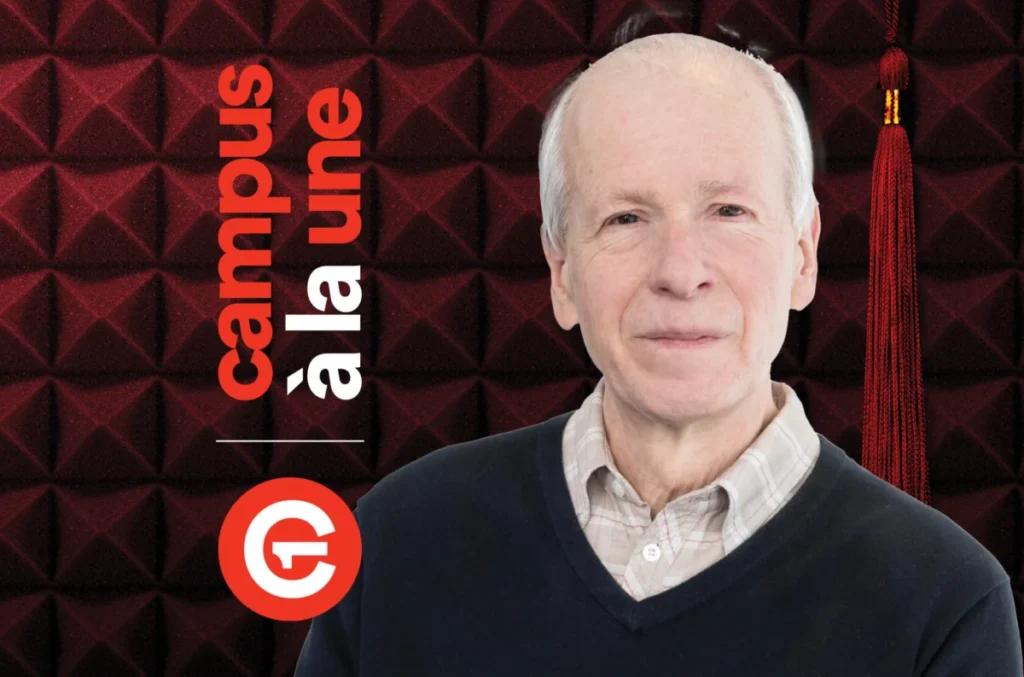

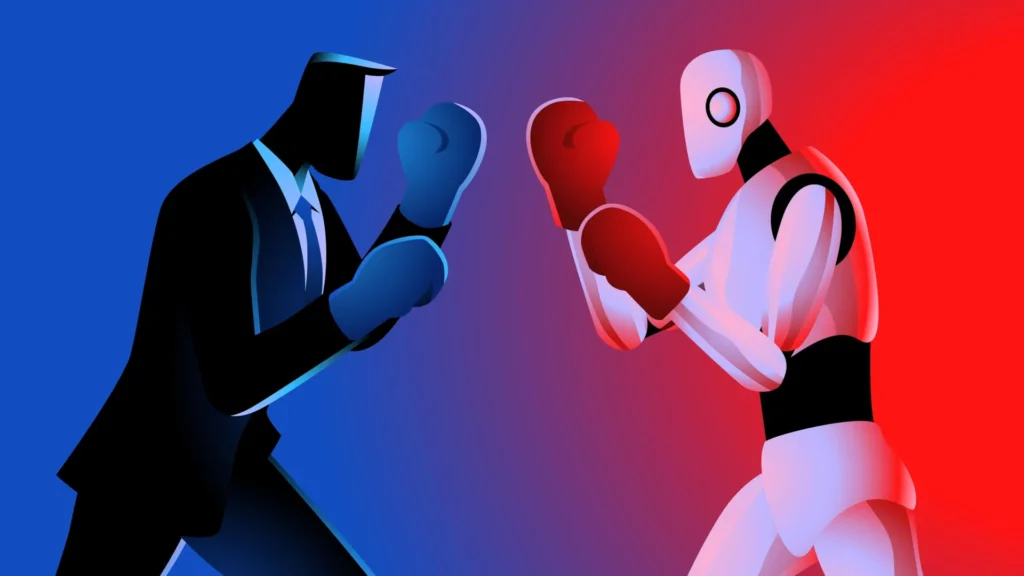
A groundbreaking study spearheaded by Professor Karim Jerbi from the Department of Psychology at the Université de Montréal, featuring the invaluable participation of pioneering AI researcher Yoshua Bengio, has unveiled unprecedented insights into the comparative creative capabilities of artificial intelligence systems and humans. This comprehensive research, representing the largest direct comparison ever undertaken between human creativity and that of large language models (LLMs), addresses the fundamental question of whether systems like ChatGPT can genuinely originate novel ideas. The findings mark a significant turning point in the understanding of AI’s evolving cognitive landscape, indicating that while generative AI has achieved a level where it can surpass the average human in certain creative measures, the pinnacle of creative ingenuity remains firmly within the human domain.
The Study’s Core Revelations and Methodology
Published in the esteemed Scientific Reports (Nature Portfolio), the research meticulously evaluated several prominent large language models, including OpenAI’s ChatGPT (specifically GPT-4), Anthropic’s Claude, and Google’s Gemini, against the performance of over 100,000 human participants. This extensive dataset provides a robust foundation for the study’s conclusions, highlighting a clear bifurcation in creative performance. While some advanced AI systems demonstrated the capacity to exceed average human scores on tasks designed to gauge divergent linguistic creativity, the most exceptionally creative individuals consistently maintained a distinct and substantial advantage over even the most sophisticated AI models tested.
Professor Karim Jerbi articulated the nuanced implications of these findings, stating, "Our study shows that some AI systems based on large language models can now outperform average human creativity on well-defined tasks. This result may be surprising — even unsettling — but our study also highlights an equally important observation: even the best AI systems still fall short of the levels reached by the most creative humans." This dual insight underscores both the remarkable progress in AI development and the enduring, irreplaceable value of peak human cognitive faculties. Further analysis by the study’s co-first authors, postdoctoral researcher Antoine Bellemare-Pépin from the Université de Montréal and PhD candidate François Lespinasse from Concordia University, reinforced this pattern, emphasizing that despite AI’s advancements, the apex of creativity remains a distinctly human characteristic. Indeed, when researchers isolated the most creative half of the human participants, their average scores consistently surpassed those of every AI model examined. This gap widened considerably when focusing on the top 10 percent of the most creative individuals, illustrating a significant qualitative difference in creative output.
To ensure a fair and consistent evaluation across both human and machine intelligence, the research team, in collaboration with Jay Olson from the University of Toronto, devised a rigorous framework utilizing the Divergent Association Task (DAT). This widely recognized psychological test is a standard measure of divergent creativity, assessing an individual’s ability to generate a broad spectrum of original and varied ideas from a single prompt. The DAT, specifically developed by study co-author Jay Olson, instructs participants – whether human or AI – to list ten words that are as semantically unrelated as possible. A particularly creative response, for instance, might feature an eclectic mix of words such as "galaxy, fork, freedom, algae, harmonica, quantum, nostalgia, velvet, hurricane, photosynthesis." The effectiveness of the DAT lies in its strong correlation with outcomes from other established creativity assessments used in diverse fields, including creative writing, ideation, and complex problem-solving. While fundamentally language-based, the task transcends mere vocabulary, engaging deeper cognitive processes essential for creative thinking across numerous domains. Its practical advantages, including its brevity (two to four minutes to complete) and online accessibility, made it an ideal tool for large-scale comparative analysis.
Beyond Wordplay: AI in Complex Creative Endeavors
The study extended its inquiry beyond the relatively simple word association task, investigating whether AI’s success in divergent thinking could translate to more intricate and realistic creative activities. To this end, AI systems and human participants were challenged with tasks such requiring the composition of haikus, the crafting of concise movie plot summaries, and the creation of short stories. The results from these more complex creative challenges mirrored the pattern observed with the DAT: while AI systems occasionally exceeded the performance of average humans, the most adept human creators consistently produced work characterized by superior originality and artistic merit. This suggests that while AI can generate plausible and even novel outputs, the deeper wellsprings of human experience, emotional intelligence, and nuanced understanding often remain crucial for truly exceptional creative expression in complex forms.
The Adjustable Nature of AI Creativity: Temperature and Prompt Engineering
A particularly intriguing aspect of the study explored whether AI creativity is a fixed attribute or a malleable one. The research conclusively demonstrated that AI’s creative output can be significantly influenced by adjusting technical parameters, most notably the "temperature" setting of the model. This parameter effectively controls the degree of predictability or adventurousness in the AI’s generated responses. At lower temperature settings, AI tends to produce more conventional, safer, and predictable outputs, adhering closely to learned patterns. Conversely, higher temperature settings encourage more varied, less predictable, and exploratory responses, allowing the system to venture beyond familiar conceptual boundaries and generate more novel associations.
Furthermore, the study highlighted the profound impact of prompt engineering – the art and science of crafting effective instructions – on AI creativity. Researchers found that prompts specifically designed to encourage models to delve into the etymological origins and structural nuances of words led to a greater number of unexpected associations and, consequently, higher creativity scores. These findings underscore a critical insight: AI creativity is not an autonomous phenomenon but is heavily dependent on human guidance and interaction. The quality and specificity of human prompts thus become a central, defining element in unlocking and directing the creative potential of AI systems. This interaction paradigm shifts the discussion from AI replacing human creativity to AI augmenting and extending it.
Historical Context: AI’s Creative Journey and the Human Element
The debate surrounding AI’s capacity for creativity is not new, but its intensity has surged with the advent of generative models. For decades, AI research primarily focused on rule-based systems, expert systems, and symbolic AI, which struggled with tasks requiring genuine originality or intuitive leaps. Early attempts at AI creativity often involved algorithms generating music or art based on pre-defined rules, leading to outputs that were often technically correct but lacked the spark of human ingenuity.
The mid-2010s marked a significant shift with the rise of deep learning, particularly neural networks and later, the Transformer architecture. This foundational innovation, introduced in 2017, paved the way for the development of Large Language Models (LLMs) like GPT-3 and its successors. These models, trained on vast corpora of internet data, demonstrated an unprecedented ability to generate coherent and contextually relevant text, code, and even creative content. The public launch of ChatGPT in late 2022 democratized access to this technology, igniting both excitement and apprehension about its potential to disrupt various industries, including the creative arts.
Prior to this study, discussions often revolved around whether AI merely "plagiarized" or "remixed" existing human creations rather than generating truly original ideas. Critics argued that AI lacked consciousness, intent, or the lived experience necessary for genuine creativity. This Montreal-led study provides empirical evidence to navigate these complex philosophical and practical questions, offering a data-driven framework to differentiate between AI’s advanced pattern recognition and generation capabilities and the unique cognitive processes underpinning peak human creativity. The involvement of Yoshua Bengio, a Turing Award laureate and one of the "Godfathers of AI," lends immense weight to the study’s findings, linking it directly to the cutting edge of deep learning research that has powered this revolution. Bengio’s participation underscores the importance of understanding the fundamental capabilities and limitations of the very technology he helped bring to fruition.
Implications for the Future: AI as an Amplifier, Not a Replacement
The study offers a nuanced and balanced perspective on widespread anxieties regarding artificial intelligence potentially displacing creative professionals. While the findings confirm that AI systems can now match or even exceed average human creativity in certain, well-defined tasks, they also unequivocally highlight the clear limitations of current AI and its inherent reliance on human direction. Professor Karim Jerbi insightfully reframes the narrative: "Even though AI can now reach human-level creativity on certain tests, we need to move beyond this misleading sense of competition. Generative AI has above all become an extremely powerful tool in the service of human creativity: it will not replace creators, but profoundly transform how they imagine, explore, and create — for those who choose to use it."
This perspective shifts the focus from a zero-sum game to one of collaboration and augmentation. Rather than signaling the demise of creative careers, the study suggests a future where AI functions as a powerful creative assistant. By efficiently expanding the scope of ideas, generating diverse preliminary concepts, and opening novel avenues for artistic and intellectual exploration, AI possesses the potential to significantly amplify human imagination and productivity. For example, a graphic designer might use AI to generate hundreds of logo variations in minutes, an author might brainstorm plot points or character dialogues, or a musician might explore new melodic structures. The human creator then curates, refines, and imbues the AI-generated output with the unique emotional depth, intentionality, and narrative coherence that remains the hallmark of human artistry.
The broader impact extends to how society defines and values creativity itself. "By directly confronting human and machine capabilities, studies like ours push us to rethink what we mean by creativity," Professor Jerbi concludes. This ongoing dialogue between technological advancement and human ingenuity will undoubtedly shape educational curricula, redefine professional roles, and foster new interdisciplinary fields. It prompts a re-evaluation of the skills that will be most valuable in a future where routine creative tasks can be automated, elevating the importance of critical thinking, emotional intelligence, strategic direction, and the uniquely human capacity for empathy and subjective interpretation.
The Collaborative Power Behind the Research
The seminal paper, "Divergent creativity in humans and large language models," was officially published in Scientific Reports on January 21, 2026. This extensive research endeavor was the result of a collaborative synergy among leading scientific institutions and experts, bringing together minds from the Université de Montréal, Université Concordia, the University of Toronto Mississauga, Mila (Quebec AI Institute), and Google DeepMind. The interdisciplinary nature of the team, encompassing psychology, computer science, and AI research, was crucial for developing a robust framework capable of addressing such a complex, multifaceted question.
Professor Karim Jerbi, also an associate professor at Mila, served as the principal investigator, guiding the overall direction and scientific rigor of the study. The primary analytical and investigative work was spearheaded by Antoine Bellemare-Pépin of the Université de Montréal and François Lespinasse of Université Concordia, who were recognized as co-first authors for their significant contributions. Crucially, the research team benefited from the profound expertise of Yoshua Bengio, the visionary founder of Mila and LoiZéro, whose pioneering work in deep learning laid the very groundwork for the sophisticated AI systems, such as ChatGPT, that were at the heart of this comparative study. This blend of psychological insight, computational prowess, and foundational AI expertise ensured that the study’s design, execution, and interpretation were both scientifically sound and deeply informed by the state-of-the-art in artificial intelligence.
In conclusion, the Montreal-led study does not signal an end to human creativity but rather a transformative new chapter. It firmly establishes AI’s capability to augment and redefine creative processes, while simultaneously reaffirming the enduring and distinct power of the most imaginative human minds. The future of creativity, as this research suggests, is likely to be a collaborative one, where the unique strengths of humans and machines converge to unlock unprecedented levels of innovation and artistic expression.