


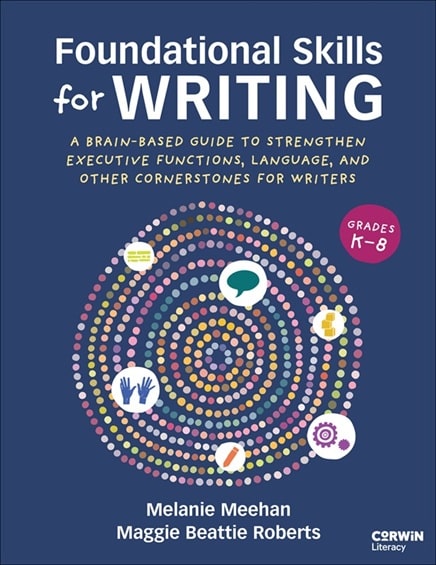
For years, literacy has dominated educational conversations, with intense focus on decoding, phonics, fluency, and reading comprehension. However, the foundational discipline of writing, despite its undeniable reciprocity with reading, has remained largely absent from these critical discussions. This glaring omission prompted Meehan, who recently launched her own in-person writing center, and Roberts, a former middle school teacher with nearly two decades of experience supporting educators, to collaborate on a resource that meticulously unpacks the cognitive demands of writing. Their new book delves into the intricate neural processes involved in writing and identifies common barriers that hinder students’ development, offering practical strategies to overcome them.
The Neglected Pillar: Rebalancing the Literacy Equation
The emphasis on reading, particularly in the wake of movements like the "Science of Reading," has undeniably led to significant advancements in understanding how children learn to read. Yet, this intense focus has inadvertently overshadowed writing, often relegating it to a secondary status or assuming that writing skills will naturally develop once reading proficiency is achieved. This assumption, research consistently demonstrates, is flawed. Reading and writing are not merely related but are deeply symbiotic processes; improvements in one invariably bolster the other. Strong writing skills contribute to better reading comprehension by enhancing students’ understanding of text structure, vocabulary, and grammatical conventions, while extensive reading provides models for effective writing.

Data from national assessments, such as the National Assessment of Educational Progress (NAEP), often highlight concerning trends in student writing proficiency across various grade levels. These findings frequently indicate that a substantial percentage of students struggle with producing clear, coherent, and grammatically sound written work. This struggle is not merely an academic concern; it has profound implications for students’ future success in higher education and the workforce, where strong communication skills are paramount. Employers consistently report a need for graduates who can articulate ideas effectively in writing, from crafting professional emails to preparing detailed reports. The current educational landscape, therefore, faces an urgent need to elevate writing instruction to a level commensurate with its importance.
Meehan and Roberts’ book serves as a timely intervention, providing educators with the tools to systematically cultivate writing abilities. Their approach is grounded in the understanding that writing is not a monolithic skill but rather a complex interplay of several foundational cognitive and motor functions.
Deconstructing the Writing Process: A Brain-Based Perspective
The authors categorize the broader task of writing into three primary skill areas, each critical for developing a proficient writer:
-
Transcription Skills: These are the mechanical aspects of writing, including handwriting, keyboarding, spelling, and both large and small motor development. When these skills are not automatized, they consume a disproportionate amount of a writer’s cognitive energy, diverting mental resources away from higher-order tasks such as idea generation, organization, and sophisticated expression. For instance, a student struggling with letter formation or basic spelling will expend significant effort on these mechanics, leaving little cognitive capacity for crafting compelling arguments or developing rich narratives.
-
Oral Language: This category encompasses the speaking and listening skills that serve as crucial precursors to written expression. The ability to construct coherent sentences orally, to articulate thoughts clearly, and to understand complex spoken language forms the bedrock upon which written language is built. Children who have robust oral language skills typically transition more smoothly to writing, as they already possess an internalized understanding of sentence structure, vocabulary, and narrative flow. Conversely, deficits in oral language can manifest as difficulties in organizing thoughts on paper or constructing grammatically correct sentences.
-
Executive Functioning: These are the brain’s control and management functions, vital for planning, problem-solving, and self-regulation. Key executive functions for writing include:
- Working Memory: The ability to hold and manipulate information in the mind over short periods, essential for remembering writing goals, planning sentence structures, and revising on the fly.
- Cognitive Flexibility: The capacity to shift perspectives, adapt to new information, and consider alternative approaches, crucial for brainstorming, revising drafts, and responding to feedback.
- Inhibitory Control: The ability to suppress irrelevant thoughts or impulses, allowing writers to focus on the task at hand and resist distractions.
Meehan and Roberts argue that for students to become truly proficient writers, they must systematically develop and practice all these foundational skills. Their book provides teachers with concrete strategies to nurture these abilities, ensuring that students build a robust framework for written communication.

"Minute Moves": High-Impact Strategies for Skill Automatization
Central to the book’s methodology is a collection of practical, time-efficient activities called "Minute Moves." These are short, flexible exercises designed to be seamlessly integrated into daily classroom routines—as warm-ups, transition activities, or brief interludes. The core purpose of "Minute Moves" is to help students automatize foundational writing skills, thereby reducing the cognitive load associated with the mechanics of writing and freeing up mental resources for the more complex, creative aspects of composition. The authors shared eight such strategies during a recent podcast interview, categorized by the skill area they target.
Building Linguistic Foundations: Spelling Minute Moves
Effective spelling is not merely about memorizing word lists; it involves understanding the underlying structure and history of words. The book offers three "Minute Moves" to cultivate this deeper understanding:

-
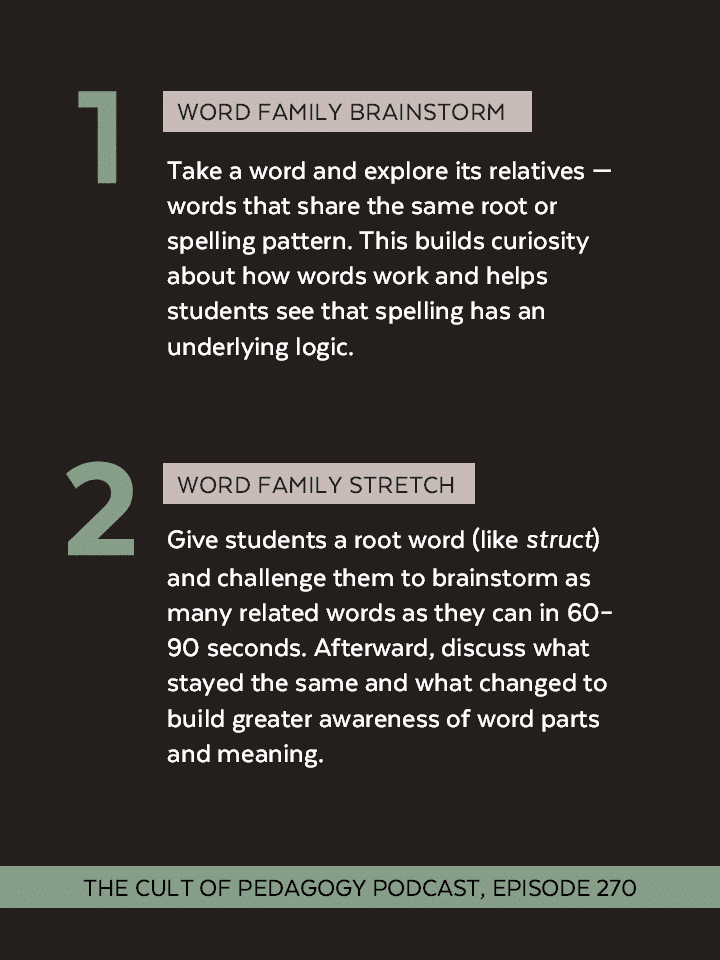
Word Family Brainstorm: Inspired by spelling researcher Rebecca Treiman, this activity encourages students to explore the etymological and morphological connections between words. Instead of rote memorization, students investigate how words relate to each other through shared roots or patterns. For example, considering the homophone two (the number) in conjunction with words like twin, twine, and twenty reveals a consistent "TW" pattern associated with duality. Similarly, linking decision to decide, incision, and even scissors (all tracing back to a Latin root meaning "to cut") illuminates a deeper semantic and orthographic logic. This approach fosters curiosity and helps students internalize spelling patterns rather than perceiving them as arbitrary.
-
Word Family Stretch: This exercise builds on the concept of word families by challenging students to generate as many related words as possible from a given root within a timed interval (e.g., 60-90 seconds). Using a root like struct ("to build"), students might brainstorm structure, destruction, construct, structural, instruct, and instruction. The crucial follow-up is a debriefing session where students discuss what remained consistent and what changed in meaning with the addition of prefixes or suffixes. This discussion reinforces the concept that word parts carry meaning, a fundamental aspect of morphological awareness that significantly aids vocabulary acquisition and spelling for all learners, particularly multilingual students. Roberts highlights the distinction between "bound" roots (like struct, which cannot stand alone) and "free" roots (like form, which functions independently but also forms words like reform, transform, inform), deepening students’ understanding of word construction.
-
Prefix Swap: Directly extending the previous activities, this strategy focuses specifically on the transformative power of prefixes. Students are given a base word and tasked with generating variations by changing its prefix. For instance, form can become reform, transform, inform, or deform. Each swap prompts a discussion about the shift in meaning, reinforcing the semantic contributions of prefixes. This activity is particularly beneficial for multilingual learners, who often recognize Latin or Greek prefixes from their native languages, such as bene and mal in benevolent and malevolent. These minute moves collectively build the neurological pathways necessary for rapid word recognition and retrieval, reducing the cognitive burden of spelling and allowing students to focus on higher-level writing tasks.
Mastering Syntax: Sentence Construction Minute Moves
Beyond individual words, the ability to construct varied and sophisticated sentences is a hallmark of skilled writing. Meehan and Roberts offer three strategies to develop this crucial skill:
-
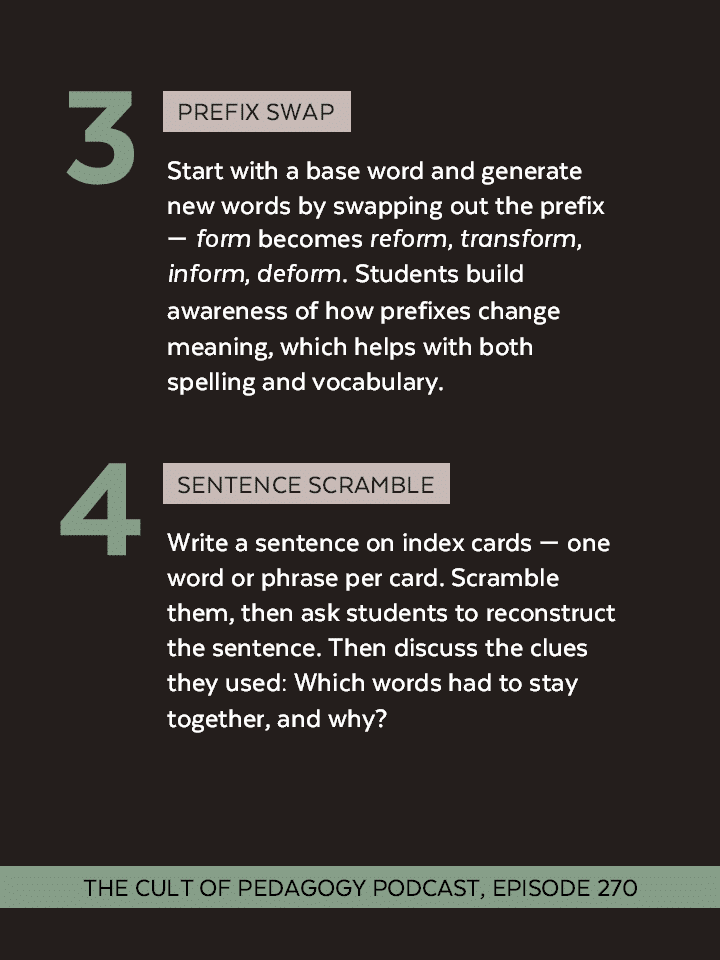
Sentence Scramble: This hands-on activity involves breaking a sentence into its component words or phrases, typically written on individual index cards. Students then work to reassemble the sentence. The physical manipulation of cards allows for experimentation and problem-solving. Post-assembly, students are prompted to reflect on their process: How did they determine the correct order? What clues did they use? Which words or phrases were inseparable? To increase complexity, teachers can remove punctuation, add a distracting word, or challenge students to extend the reconstructed sentence. This exercise helps students internalize sentence patterns and develop an intuitive understanding of syntax, which they can then apply to their own writing.
-
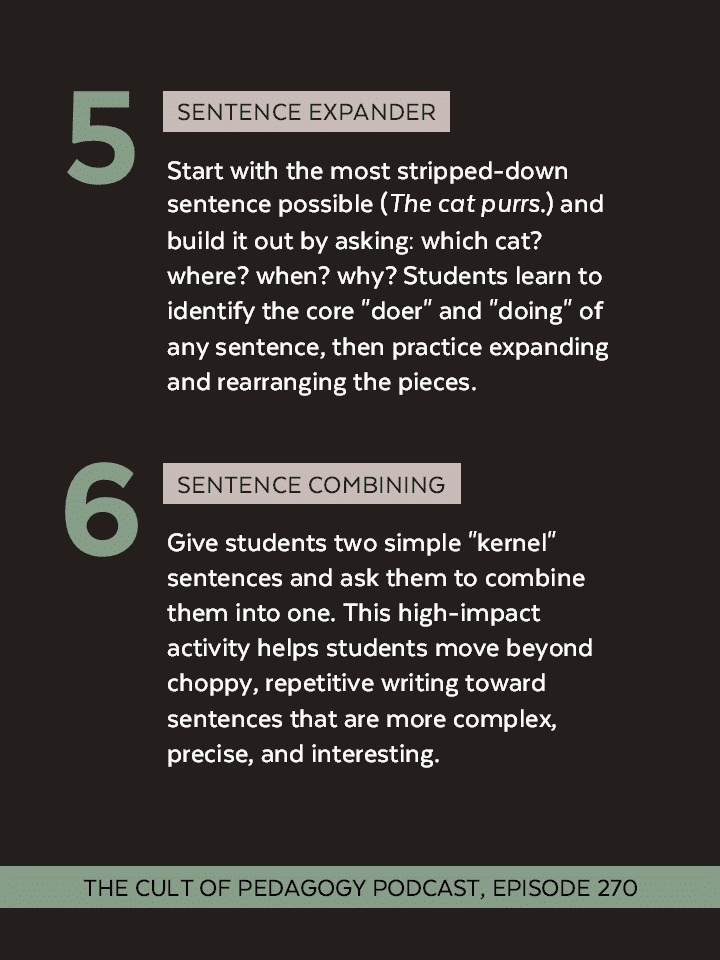
Sentence Expander: Starting with a simple "kernel sentence" (e.g., The cat purrs), students collaboratively expand it by answering a series of questions: Which cat? What color? Where? When? Why? Meehan advocates for using more accessible terms like "doer" and "doing" instead of abstract grammatical terms like "subject" and "predicate." Once students can reliably identify these core elements, they better understand why overly long or complex sentences can be difficult to follow, especially when the "doer" and "doing" are separated by excessive detail. After expanding a sentence (e.g., The fluffy orange cat is sleeping soundly on the plush couch in the sunny afternoon because he is utterly exhausted), students experiment with rearranging phrases to create different emphases and variations. This playful manipulation helps them develop the flexibility needed to craft richer, more complex sentences.
-
Sentence Combining: Roberts emphasizes sentence combining as a "high-impact, quick way" for students to transition from writing a series of simple sentences to constructing more syntactically complex, engaging, and precise ones. Students are given two short, basic sentences (e.g., My cat is orange. My cat is big.) and tasked with merging them into a single, more sophisticated sentence (My big orange cat…). For beginners, scaffolding can involve underlining words to be "harvested" from one sentence and inserted into another. As proficiency grows, students can combine three or more sentences, experimenting with various conjunctions (e.g., because, although, while, therefore) to alter meaning and introduce nuanced relationships between ideas. Regular practice with sentence combining naturally leads to its transfer into students’ independent writing, transforming choppy prose into more fluid and sophisticated expression.
Cultivating Cognitive Control: Executive Functioning Minute Moves
The ability to manage one’s thoughts, adapt strategies, and critically evaluate one’s own writing is rooted in strong executive functions. The book focuses on cognitive flexibility with two key activities:
-
What’s Another Way?: This minute move directly targets cognitive flexibility, the crucial ability to shift approaches, consider alternatives, and revise thinking. Students are given a sentence and challenged to rewrite it in multiple ways. This could involve starting with a dependent clause instead of an independent one, replacing a noun with a pronoun, or intentionally making the sentence shorter for impact. Meehan highlights that effective writing isn’t solely about complexity; sometimes, a concise sentence carries the most weight. The goal is to equip students with a versatile skillset, allowing them to intentionally vary sentence length and structure to achieve specific effects. Importantly, Meehan notes that explicitly naming "cognitive flexibility" as the skill being practiced can be incredibly empowering for students, especially those who have historically struggled with writing, helping them view themselves as capable of sophisticated cognitive work.
-
New Angle: This strategy also develops cognitive flexibility but operates at the narrative level, expanding beyond individual sentences. Students are asked to retell a familiar scene—from a class text, a book, or a short film—from the perspective of a different character. Roberts vividly illustrates this with a personal anecdote of retelling a high school cafeteria food fight from the perspective of a teacher who got applesauce in her hair. This exercise demands that students hold multiple viewpoints simultaneously, make deliberate choices about voice, select pertinent details, and interpret events through a different lens. Meehan frequently uses short videos, such as Pixar’s Snack Attack, which depicts the same event from two distinct points of view, to facilitate this activity. In one instance, she and a student each wrote a character’s perspective, then swapped documents to continue writing from the other’s viewpoint. This competitive yet collaborative approach not only honed writing skills but also fostered empathy and critical thinking, demonstrating how events can be perceived differently based on individual experiences. As Meehan aptly puts it, this practice extends far beyond the writing classroom, contributing to skills essential for democracy and understanding diverse perspectives.
Implications for Education and Beyond
The release of Foundational Skills for Writing marks a significant step toward a more balanced and effective approach to literacy education. By providing a brain-based rationale and concrete, manageable strategies, Meehan and Roberts offer a compelling argument for the explicit and systematic instruction of writing skills.
For educators, the book offers an invaluable professional development resource. It provides a roadmap for integrating high-impact writing instruction into daily routines without requiring extensive curriculum overhauls. Teachers can immediately implement "Minute Moves" to address specific skill deficits, fostering automatization and confidence in their students. This approach is particularly beneficial in diverse classrooms, where students may arrive with varying levels of foundational skills.
For curriculum developers and school administrators, the book serves as a powerful call to action to re-evaluate existing literacy programs. It underscores the need to move beyond a reading-centric model and ensure that writing receives equitable attention and dedicated instructional time. This might involve revising curriculum guides, allocating resources for teacher training in writing pedagogy, and adopting assessment practices that genuinely measure writing proficiency across its various dimensions.
At a broader level, the book’s emphasis on executive functions and cognitive flexibility highlights the profound connection between writing instruction and the development of essential 21st-century skills. The abilities to think critically, solve problems, adapt to new information, and communicate effectively are not only vital for academic success but are also indispensable for navigating an increasingly complex world. By explicitly teaching these "cornerstones for writers," educators are not just cultivating better writers; they are fostering more adaptable, thoughtful, and articulate individuals.
In conclusion, Melanie Meehan and Maggie Roberts’ Foundational Skills for Writing is more than just a collection of strategies; it is a foundational text that challenges the status quo in literacy education. It provides a robust framework for understanding the cognitive demands of writing and offers practical, research-informed solutions to ensure that every student develops the essential skills to become a confident, capable, and cognitively flexible communicator. Its timely arrival could significantly influence how writing is taught, valued, and integrated into the holistic development of literacy across educational settings.