

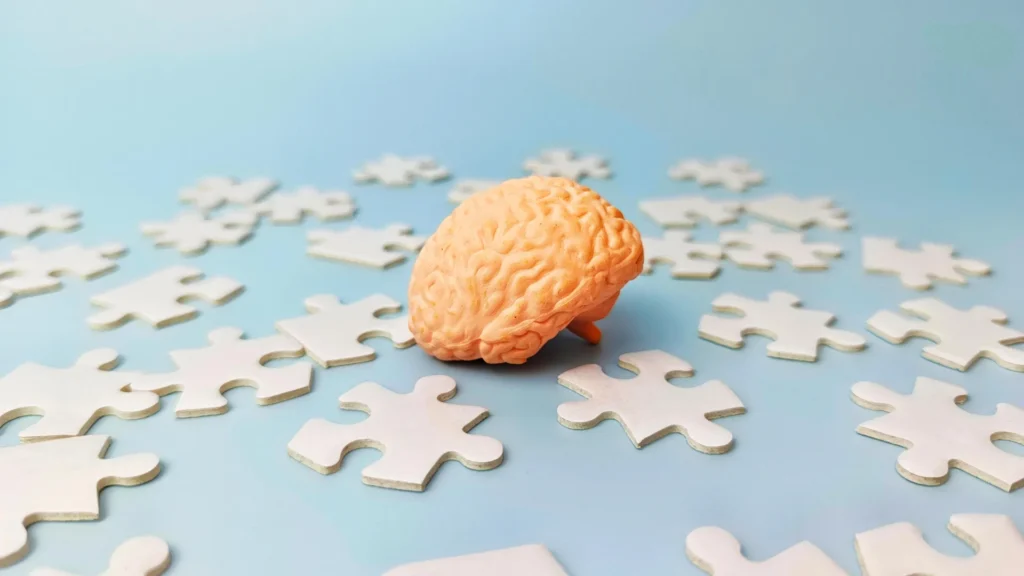
For memories to be useful, the brain must intricately connect what happened with the specific situation in which it occurred. Researchers at the University of Bonn have now uncovered how the human brain masters this complex task, revealing a sophisticated architecture where two distinct groups of neurons store content and context separately, coordinating their activity to form complete, retrievable memories. This groundbreaking discovery, published in the esteemed journal Nature, challenges previous assumptions by demonstrating that the human brain prioritizes separation and linkage over blending, thereby enabling a highly flexible and adaptable memory system.
The Intricate Dance of Memory Formation
The human brain possesses an extraordinary capacity to navigate and recall experiences, effortlessly distinguishing between a casual dinner with a friend and a formal business meeting involving the same individual. This ability underscores a fundamental challenge in neuroscience: how does the brain encode specific information (content) while simultaneously anchoring it to its environmental or situational backdrop (context)? Previous research has established the existence of "concept neurons" deep within the brain’s memory centers, particularly in the medial temporal lobe, which respond to specific individuals or objects irrespective of their surrounding environment. Professor Florian Mormann from the Clinic for Epileptology at the University Hospital Bonn (UKB), and a member of the Transdisciplinary Research Area (TRA) "Life & Health" at the University of Bonn, notes, "We already know that deep in the memory centers of the brain, specific cells, called concept neurons, respond to this friend, regardless of the environment in which he appears."
However, a crucial unanswered question persisted: how does the brain then integrate this content with its associated context to forge a coherent and meaningful memory? Studies in animal models, particularly rodents, often suggested a more integrated approach, where individual neurons frequently combined both types of information. This led to a significant hypothesis for the Bonn team. Dr. Marcel Bausch, working group leader at the Department of Epileptology and also a member of TRA "Life & Health," articulated the core inquiry: "We asked ourselves: Does the human brain function fundamentally differently here? Does it map content and context separately to enable a more flexible memory? And how do these separate pieces of information connect when we need to remember specific content according to context?" The prevailing understanding of memory formation, particularly episodic memory—the recollection of specific events, including their context—has long pointed to the hippocampus as a critical hub. Yet, the precise neural mechanisms underpinning the flexible binding of ‘what’ with ‘where’ and ‘when’ remained elusive.
A Unique Window into Human Brain Activity
To address these profound questions, the research team embarked on a highly specialized study, leveraging a unique opportunity presented by patients undergoing clinical evaluation for drug-resistant epilepsy. These individuals, for therapeutic purposes, had electrodes surgically implanted directly into their brains, specifically within the hippocampus and adjacent regions known to be vital for memory processing. This invasive but clinically necessary procedure offered an unparalleled chance to record electrical signals from individual neurons in conscious human subjects—a level of resolution typically unattainable in non-clinical research settings. While doctors meticulously monitored their seizures to assess potential treatment options, the patients voluntarily participated in computer-based cognitive tasks, providing invaluable real-time data on neuronal activity.
During these experiments, participants were shown pairs of images and subsequently asked to answer different types of questions about them. For instance, they might be presented with an image of a biscuit and then prompted with the question "Bigger?" This ingenious experimental design allowed the researchers to manipulate the context (the question asked) while keeping the content (the image shown) constant, or vice versa. Professor Mormann explained the methodology’s strength: "This allowed us to observe how the brain processes exactly the same image in different task contexts." The ability to observe neuronal firing patterns with millisecond precision as subjects engaged with these tasks provided direct evidence of how content and context were encoded at the cellular level. This methodology represents a significant advancement over functional magnetic resonance imaging (fMRI) or electroencephalography (EEG), which offer broader, less granular views of brain activity.
Two Distinct Neuron Systems: The Neural Libraries
The meticulous analysis of electrical signals from over 3,000 neurons yielded a seminal discovery: the identification of two largely separate and specialized groups of neurons. One group, termed "content neurons," consistently responded to specific images, such as a photograph of a biscuit, irrespective of the question being posed or the task being performed. These neurons acted as dedicated identifiers for particular pieces of information or objects. Conversely, the second group, labeled "context neurons," showed activity primarily in response to the type of question being asked – for example, firing specifically when the prompt was "Bigger?" – regardless of the specific image displayed. These neurons, therefore, encoded the situational or task-related context.
Crucially, and in stark contrast to prior findings in rodent models where individual neurons often exhibit mixed selectivity, simultaneously encoding both content and context, the Bonn study found that only a minimal number of human neurons performed both roles at once. This functional segregation marks a fundamental difference in how the human brain processes information for memory. Dr. Bausch highlighted the significance of this separation and its efficiency: "A key finding was that these two independent groups of neurons encoded content and context together and most reliably when the patients solved the task correctly." This suggests that the separation isn’t merely a passive division of labor, but an active, efficient mechanism for accurate memory formation. The implication is that human memory might achieve its renowned flexibility by avoiding the "blending" seen in simpler systems, instead opting for a more modular approach.
The Dynamic Linking of Memory Fragments
The research further illuminated the dynamic interaction between these two distinct neuronal groups. As the experimental tasks progressed and the patients engaged more with the stimuli, the interaction between content and context neurons became noticeably stronger. A fascinating observation was made: activity in a content neuron began to predict the response of a context neuron just tens of milliseconds later. This rapid, almost instantaneous, influence suggests a sophisticated neural communication pathway. Professor Mormann vividly described this phenomenon: "It seemed as if the ‘biscuit’ neuron was learning to stimulate the ‘Bigger?’ neuron."
This predictive interaction is not merely a curiosity; it represents a critical control system for memory recall. It ensures that when a specific piece of information (content) needs to be retrieved, only the relevant context is activated and brought back into conscious awareness. This process is known as "pattern completion," a cornerstone of memory function that allows the brain to reconstruct a full memory even when only partial information or a specific clue is available. For instance, seeing a biscuit might trigger the memory of having been asked if it was "Bigger?" in a specific experimental session.
The researchers posit that this separation of roles and subsequent dynamic linking fundamentally explains the remarkable adaptability and flexibility of human memory. By storing content and context in what they metaphorically term "neural libraries," the brain can efficiently reuse the same conceptual knowledge across an infinite array of situations without needing to dedicate a unique neuron for every conceivable combination of content and context. This modularity is a hallmark of complex systems, allowing for efficiency and robustness. Dr. Bausch underscored this point: "This division of labor probably explains the flexibility of human memory: the brain can reuse the same concept in countless new situations without needing a specialized neuron for each individual combination, by storing content and context in separate ‘neural libraries’." Professor Mormann added, "The ability of these neuronal groups to link spontaneously allows us to generalize information while preserving the specific details of individual events."
Broader Implications and Future Horizons
This discovery carries profound implications for our understanding of human cognition and offers new avenues for research into neurological disorders. The brain’s strategy of separating and then linking content and context provides a neural basis for the incredible flexibility of human memory, distinguishing it from simpler forms of memory observed in other species. This modularity may contribute to higher cognitive functions such as reasoning, imagination, and problem-solving, where the ability to recontextualize information is paramount.
From a clinical perspective, understanding this precise mechanism could be transformative. Many neurological and psychiatric conditions, including Alzheimer’s disease, various forms of amnesia, and post-traumatic stress disorder (PTSD), involve significant disruptions to memory. If the process of linking content and context is impaired, it could explain why individuals struggle to form new memories, recall existing ones accurately, or differentiate between past events and their current reality. For instance, in PTSD, the inappropriate retrieval of traumatic context with neutral content can lead to debilitating flashbacks. New therapeutic strategies could potentially target the modulation of these specific neural linking mechanisms to restore memory function or mitigate distressing intrusive memories.
The study also opens doors for advancements in artificial intelligence and machine learning. Current AI systems often struggle with flexible context-dependent reasoning and associative memory. The brain’s elegant solution of separate "neural libraries" and dynamic linking could inspire novel architectures for AI that are more adept at learning, generalizing, and applying knowledge in varied contexts, mimicking human cognitive flexibility.
The Road Ahead for Memory Research
While this study marks a significant milestone, it also paves the way for a new generation of research questions. The current study defined context through explicit questions displayed on a screen. However, real-world contexts are often more subtle and passive, encompassing environmental cues, emotional states, and temporal sequences. Future research will need to determine whether the brain processes these more complex, everyday contexts using the same segregated and linked neural architecture.
Scientists also plan to extend these investigations beyond the confines of clinical settings, utilizing less invasive techniques or animal models where appropriate, to further validate and expand upon these findings. A critical next step involves examining the consequences of intentionally disrupting the interaction between content and context neuron groups. Such experiments, perhaps using advanced neuromodulation techniques, could reveal whether interference with these neural links directly impacts a person’s ability to recall the correct memory in the right context or make accurate, context-appropriate decisions. This could offer direct causal evidence for the proposed mechanism. Further studies might also explore the developmental aspects of this system: how it forms in childhood, evolves through adulthood, and potentially declines with aging.
This pioneering research, supported by vital funding from organizations such as the German Research Foundation (DFG), the Volkswagen Foundation, and the NRW joint project "iBehave," underscores the collaborative and interdisciplinary nature of modern neuroscience. The University of Bonn, through its UKB and TRA "Life & Health," continues to be at the forefront of unraveling the brain’s most profound mysteries, bringing us closer to a comprehensive understanding of human memory – the very fabric of our identity and experience.