

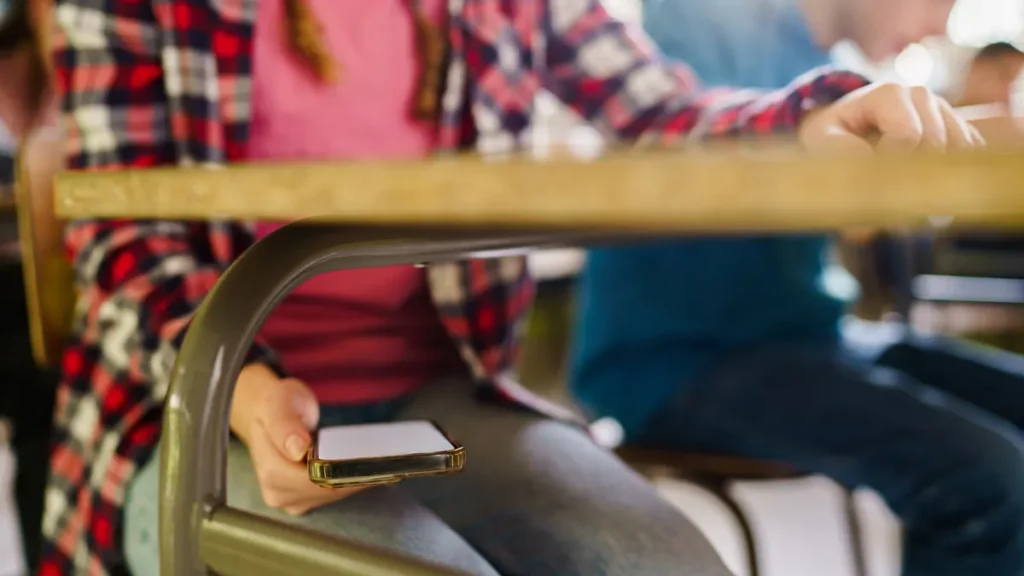
An Education Next paper has revealed a significant increase in suspension rates in the first school year that cellphone limits were in place, with a disproportionate impact on Black students. This finding emerges as a growing number of states and school districts across the United States implement restrictions on student mobile device usage during instructional hours, raising critical questions about the unintended consequences of these policies. The research, which analyzed data from an unnamed Florida district, offers a stark counterpoint to the intended benefits of such bans, suggesting that while the goal is to improve academic focus and reduce distractions, the immediate aftermath can lead to heightened disciplinary issues.
The study’s findings echo those of a separate National Bureau of Economic Research (NBER) paper released the previous month. The NBER research, considered the first comprehensive analysis of student cellphone bans on a national scale, also documented a reduction in overall phone usage alongside an increase in suspension rates during the initial year of implementation. However, that study found limited evidence of improved academic achievement in the three years following the adoption of cellphone pouch policies, with negligible effects on attendance, self-reported classroom attention, and perceptions of online bullying.
The context for these studies is the escalating national debate surrounding the role of smartphones in schools. In 2023, Florida became the first state to mandate a statewide ban on cellphones during instructional time, empowering its school districts to enact further restrictions. As of May 5, 2026, a total of 22 states and the District of Columbia have adopted "bell-to-bell" cellphone bans, meaning devices are prohibited from the start to the end of the school day. An additional 19 states have implemented some form of school cellphone restriction or policy, indicating a widespread trend toward reining in student mobile device use.
The Education Next study, authored by David Figlio, a professor of economics and education at the University of Rochester, and Umut Özek, a senior economist at Rand Corp., delved into student-level data from a specific Florida district. This data encompassed test scores, disciplinary incidents, and attendance records for one year prior to the ban and the first two years of its implementation. To establish a causal link between the policy and its outcomes, the researchers employed geolocated cellphone usage data from Advan. This allowed them to compare schools with high and low pre-ban cellphone activity, providing a more robust analysis of the policy’s impact.
Unforeseen Consequences: A Surge in Disciplinary Actions
The most striking finding from the Education Next paper is the significant uptick in suspension rates following the implementation of cellphone restrictions. While the intention behind such bans is to foster a more focused learning environment, the initial year of the policy in the studied Florida district saw a notable increase in disciplinary referrals that escalated to suspensions. This suggests that students, deprived of their devices, may be finding other ways to engage in behavior that warrants disciplinary action, or that the mechanisms for handling minor infractions have shifted towards more severe consequences.
The disparity in suspension rates, with Black students being disproportionately affected, is a particularly concerning aspect of the study. This racial disproportionality in school discipline is a well-documented issue that predates cellphone bans, but the findings suggest that these new policies may be exacerbating existing inequities. Potential explanations for this disparity could include implicit biases in disciplinary enforcement, differences in how students from various backgrounds interact with technology and the school environment, or a combination of these factors. Further research is needed to fully understand the complex interplay of race, technology, and school discipline in this context.
A Timeline of Policy Shifts and Research Findings
The landscape of student cellphone policies has evolved rapidly in recent years. The widespread adoption of smartphones by students has presented educators and policymakers with a growing challenge: how to harness the potential of technology while mitigating its disruptive influence.
- Early 2020s: Growing concerns about the impact of smartphones on student attention, academic performance, and mental well-being begin to gain traction among educators and researchers.
- 2023: Florida becomes the first state to enact a statewide ban on cellphones during instructional time, prompting other states to consider similar measures.
- Late 2025/Early 2026: The National Bureau of Economic Research releases a study examining the impact of cellphone bans in schools using Yondr pouches, reporting reduced phone use but increased suspensions and little academic improvement.
- May 12, 2026: Education Next publishes its paper, analyzing data from a Florida district and corroborating the NBER findings, with a particular emphasis on the disproportionate rise in suspensions for Black students.
- May 5, 2026: Data indicates that 22 states and the District of Columbia have implemented bell-to-bell cellphone bans, with 19 other states having some form of restriction.
This timeline highlights the swiftness with which both policy and research have responded to the issue of student cellphone usage. However, the emerging research suggests that the immediate outcomes of these policies may not be as straightforward as initially anticipated.
Supporting Data and Contextualizing the Findings
The Education Next study’s reliance on student-level data provides a granular view of the policy’s effects. While the exact numbers for the unnamed Florida district are not detailed in the provided excerpt, the comparison to the NBER study offers a broader perspective. The NBER research, which examined schools utilizing lockable phone pouches, found "significant reductions in phone usage" and an "uptick in suspension rates in the first year of implementation." This suggests a common thread across different approaches to cellphone restriction.

The NBER study’s findings on academic achievement are particularly noteworthy. The lack of significant improvement in test scores, attendance, and classroom attention three years after the adoption of cellphone pouches raises questions about the efficacy of these policies in achieving their primary educational objectives. This suggests that while phones might be a visible distraction, they may not be the sole or even the primary impediment to academic success.
The policy environment is also crucial to understanding these findings. Florida’s statewide ban in 2023 was a watershed moment, signaling a national shift. The fact that 22 states now have comprehensive bans indicates a broad consensus among policymakers that something needs to be done about student cellphone use. However, the research emerging from these policy changes suggests a need for a more nuanced approach.
Official Responses and Expert Analysis
While direct quotes from officials or the study authors are not present in the original content, the implications of the research can be inferred. The study’s concluding sentence, "As states and school districts nationwide seek a reset on student cellphone use, the challenge is to minimize short-term adverse effects until a new cellphone-free status quo is established," points to a recognition by the researchers that immediate disruptions are a natural part of policy implementation.
This statement suggests a call for patience and continued monitoring. It implies that the initial surge in suspensions might be a transitional phase, and that over time, schools may adapt and develop strategies to manage disciplinary issues arising from cellphone bans more effectively. It also hints at the possibility that the long-term benefits, if any, will only become apparent after a sustained period of implementation.
The researchers’ use of geolocated cellphone data from Advan is a testament to the sophisticated methodologies employed in modern educational research. This data, combined with academic and disciplinary records, allows for a more comprehensive understanding of student behavior and the impact of policy interventions.

Broader Implications for Educational Policy
The findings from both the Education Next and NBER studies carry significant implications for how educational institutions approach cellphone policies.
- Rethinking Disciplinary Practices: The disproportionate impact on Black students necessitates a critical examination of how disciplinary policies are implemented and enforced. Schools may need to invest in implicit bias training for staff and explore restorative justice practices as alternatives to suspension.
- Focus on Underlying Issues: The limited impact on academic achievement suggests that cellphone bans alone may not address the root causes of poor academic performance. Schools might need to focus more on pedagogical strategies, student engagement, and addressing broader socioeconomic factors that influence learning.
- Long-Term vs. Short-Term Effects: The research highlights the importance of distinguishing between immediate consequences and long-term outcomes. While the initial year may present challenges, a sustained and adaptable approach could yield different results.
- Data-Driven Decision-Making: The studies underscore the value of rigorous research in informing educational policy. As more states implement cellphone bans, ongoing data collection and analysis will be crucial to understanding their true impact and making necessary adjustments.
- Equity Considerations: The racial disparities observed in suspension rates demand proactive measures to ensure that policies designed to improve the learning environment do not inadvertently create or exacerbate inequities.
In conclusion, the research from Education Next and the NBER presents a complex picture of the impact of student cellphone bans. While these policies aim to create more focused learning environments, the initial findings suggest a need for caution and further investigation. The spike in suspensions, particularly for Black students, coupled with limited evidence of academic improvement, indicates that the path to a "cellphone-free status quo" may be fraught with unintended consequences that require careful management and a commitment to equitable educational practices. As more states and districts navigate this evolving landscape, the insights from these studies will be invaluable in shaping more effective and equitable policies for the future.