



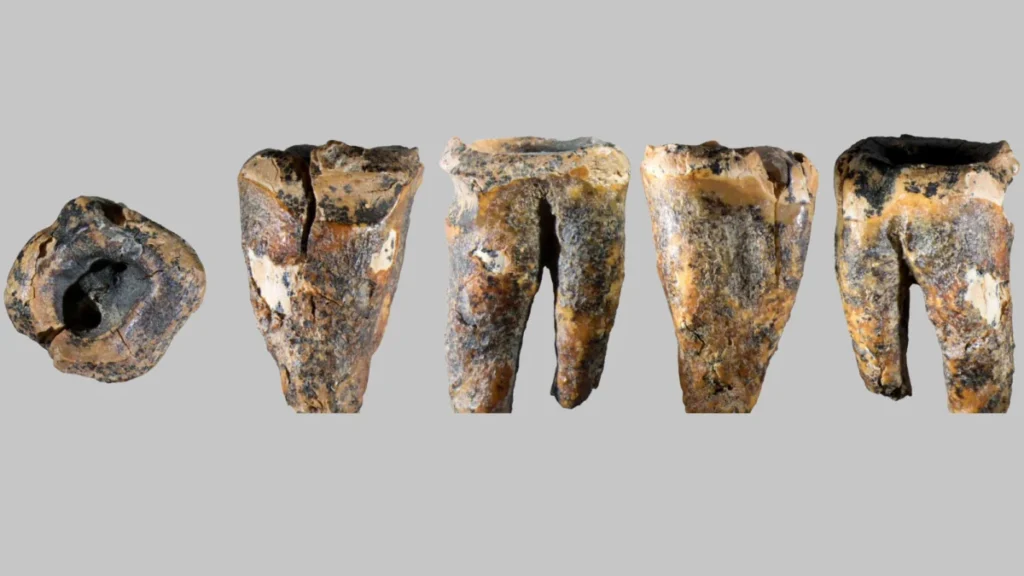
Recent archaeological excavations in the Altai Mountains of southern Russia have yielded evidence that fundamentally alters the historical understanding of Neanderthal cognitive and medical capabilities. Researchers working in the Chagyrskaya Cave have identified a single Neanderthal molar, dated to approximately 59,000 years ago, which bears the unmistakable marks of a deliberate and complex dental intervention. This discovery, detailed in the journal PLOS One, suggests that Neanderthals (Homo neanderthalensis) practiced a form of invasive dentistry at least 40,000 years before the earliest known examples of similar procedures in modern humans (Homo sapiens).
For decades, the prevailing anthropological narrative characterized Neanderthals as primitive, archaic hominids who lacked the abstract reasoning and fine motor skills necessary for complex medical care. However, this molar provides a different perspective, showcasing a level of physical dexterity and causal reasoning previously thought to be unique to our own species. The specimen, a lower third molar, features not only the well-documented "toothpick grooves" associated with oral hygiene but also a deep, artificially created hole reaching into the sensitive pulp cavity.
The Archaeological Context of Chagyrskaya Cave
Chagyrskaya Cave is located in the Altai region of Siberia, an area that has become a focal point for understanding the migration and interaction of ancient hominid species, including Neanderthals and Denisovans. The cave was occupied by Neanderthals during the Late Pleistocene, specifically between 60,000 and 50,000 years ago. Previous excavations at the site have uncovered a wealth of Micoquian-style stone tools, characterized by bifacial thinning and sophisticated shaping, which indicate a high degree of technical skill.
The molar in question was found within a stratigraphic layer rich in faunal remains and lithic artifacts. Initial analysis confirmed the tooth belonged to a Neanderthal adult. While the presence of dental wear and plaque is common in prehistoric remains, the specific morphology of the hole in the center of the tooth immediately drew the attention of the research team. Unlike the gradual erosion seen in dental caries or the accidental fractures caused by chewing hard materials, this cavity appeared to be the result of intentional mechanical removal of dental tissue.
Forensic Analysis and Experimental Archaeology
To confirm that the hole was indeed a result of human intervention, a team led by Andrey Krivoshapkin of the Institute of Archaeology and Ethnography at the Siberian branch of the Russian Academy of Sciences employed a combination of microscopic analysis and experimental archaeology. The researchers scrutinized the internal walls of the cavity, looking for microscopic striations that would indicate the use of a tool.
The team utilized three modern human teeth as a control group to test the hypothesis that stone points could replicate the patterns found on the Neanderthal molar. Using small, sharp stone points similar to the Micoquian tools found in the cave, the researchers attempted to drill into the modern teeth. The results were definitive: the experimental drilling produced the same shape and microscopic groove patterns observed in the 59,000-year-old specimen.
Alternative explanations, such as natural wear, taphonomic damage, or chemical erosion, were systematically ruled out. Natural wear from mastication typically results in smooth, flattened surfaces or exposed pulp chambers with irregular, worn edges. In contrast, the Chagyrskaya molar featured a deep, irregular concavity with polished, rounded edges—characteristics that suggest the tooth was manipulated while the individual was still alive. Furthermore, geological or chemical processes occurring after burial would have affected the entire surface of the tooth, whereas the modifications were localized specifically to the area of the infection.
Medical Intent and Evidence of Survival
One of the most significant aspects of the find is the evidence of "ante-mortem" wear. Microscopic examination revealed that the walls and edges of the drilled hole showed signs of polishing and wear that could only have occurred through continued chewing. This indicates that the Neanderthal survived the procedure and continued to use the tooth for an extended period.
"The wear proves two things: first, the procedure was performed on a living person, and second, the intervention was successful enough that the tooth continued to function," explained Andrey Krivoshapkin. This distinction is critical for anthropologists, as it elevates the act from a "curious modification" to a legitimate medical treatment. The presence of changes in dentin mineralization around the hole further supports the theory that the tooth was suffering from a severe infection or deep cavity, which likely caused significant pain to the individual.
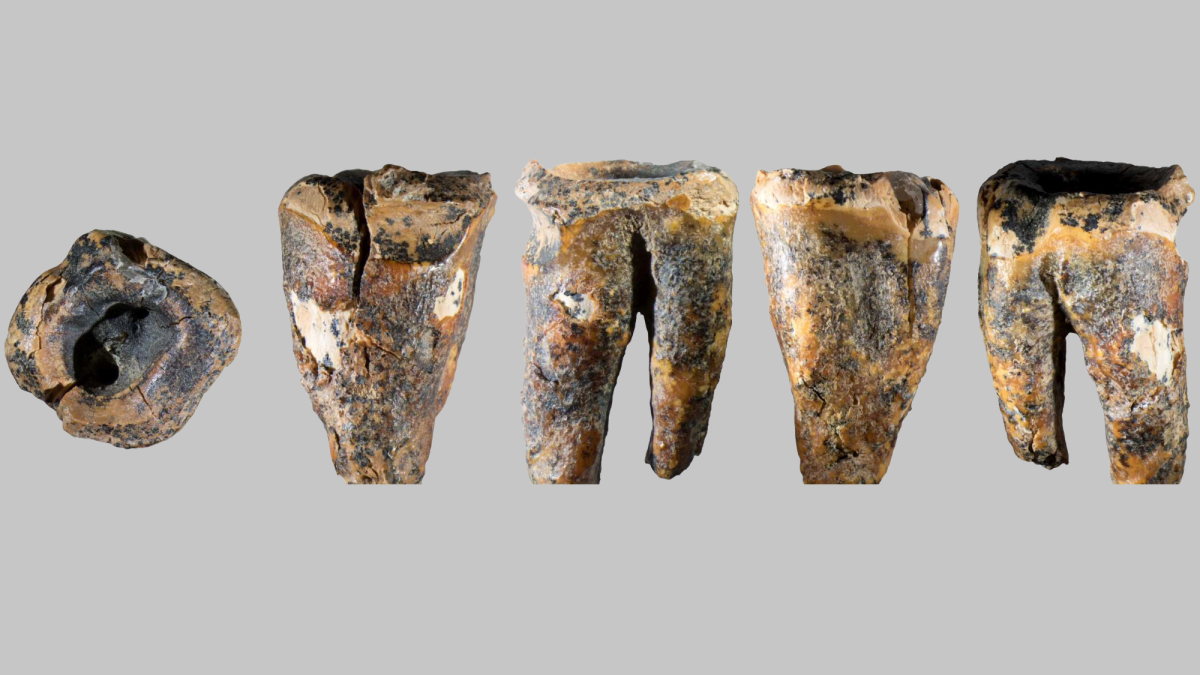
By drilling into the pulp cavity—the area containing blood vessels and nerves—the practitioner would have been able to drain an abscess or remove infected tissue. While the procedure would have been excruciatingly painful without modern anesthetics, the long-term relief provided by removing the source of the infection would have been a powerful incentive for both the "dentist" and the patient.
A Timeline of Hominid Innovation
The discovery at Chagyrskaya Cave significantly pushes back the timeline of medical history. Prior to this finding, the earliest evidence of dental drilling was associated with Neolithic Homo sapiens, dating to approximately 7,000 to 9,000 years ago, found in sites like Mehrgarh in modern-day Pakistan. There are also examples of beeswax fillings in Slovenia dating to roughly 6,500 years ago.
The Neanderthal molar predates these examples by nearly 50,000 years. This gap suggests that the cognitive foundations for medical intervention were present in the common ancestor of Neanderthals and modern humans, or that Neanderthals independently developed these skills in response to their environmental and biological needs.
This finding aligns with other recent discoveries that paint a more sophisticated picture of Neanderthal life:
- Pharmacology: Evidence from dental calculus has shown that Neanderthals consumed poplar bark (containing salicylic acid, the active ingredient in aspirin) and Penicillium mold (a source of natural antibiotics) to treat ailments.
- Tool Use: The use of toothpicks made of bone or wood has been documented across various Neanderthal sites, suggesting a consistent habit of oral hygiene.
- Social Care: Archaeological records show Neanderthal individuals who survived severe trauma and chronic illnesses, implying that their social groups provided long-term care and support for the infirm.
Cognitive and Social Implications
The ability to perform a dental operation requires a complex suite of cognitive traits. First, it requires abstract causal reasoning: the ability to link the sensation of pain to an internal, invisible infection and to hypothesize that mechanical removal of the tooth structure will provide relief. Second, it requires significant manual dexterity and the ability to manufacture specialized tools for a precise task. Third, it implies a level of social trust and cooperation; a patient must remain still and endure pain while another individual performs an invasive task.
This level of behavioral complexity challenges the "cognitive inferiority" model that has dominated paleoanthropology for over a century. Instead of viewing Neanderthals as a failed evolutionary experiment, modern researchers increasingly see them as a resilient and innovative species that successfully inhabited the harsh environments of Eurasia for hundreds of thousands of years.
The implications of this study extend beyond the field of dentistry. They suggest that the impulse to heal and the capacity for innovation are deeply rooted in the hominin lineage. The practice of medicine, in its most basic form, appears to be an ancient trait shared by multiple members of the genus Homo.
Future Research and Concluding Analysis
The research team intends to continue their analysis of the Chagyrskaya Cave remains, looking for further evidence of medical practices. The Altai region remains one of the most promising areas for such discoveries, as the cold climate provides excellent preservation of organic material and dental remains.
As genomic and proteomic analyses become more advanced, scientists may eventually be able to identify the specific pathogens that plagued Neanderthals, providing even greater context for their medical interventions. For now, the 59,000-year-old molar stands as a testament to the ingenuity of our extinct cousins.
In conclusion, the evidence from Chagyrskaya Cave provides a profound update to the Neanderthal story. It moves the conversation from simple survival to a nuanced understanding of quality of life and healthcare. It reminds the scientific community that the drive to mitigate suffering and solve complex biological problems is not a modern invention of Homo sapiens, but a legacy of our shared ancient heritage. The Neanderthals were not merely "brutes" of the Ice Age; they were individuals capable of identifying disease, performing surgery, and caring for the members of their community in ways that feel remarkably familiar even today.