


Microsoft Corporation has unveiled a comprehensive suite of artificial intelligence tools and professional development initiatives designed to integrate generative AI into the global education sector. At the center of this announcement is Microsoft Elevate for Educators, a strategic program aimed at connecting teaching professionals with a global community, advanced pedagogical resources, and specialized AI tools. This initiative coincides with the launch of new software solutions, including the "Teach" application within Microsoft 365 Copilot, the "Study and Learn Agent" for students, and the "Microsoft Learning Zone" for specialized hardware. These developments represent a significant expansion of Microsoft’s 50-year commitment to the education sector, positioning the company as a primary architect of the AI-driven classroom.
The announcement comes as the education industry faces a dual challenge: a growing global teacher shortage and a rapidly widening digital skills gap. By focusing on "Trustworthy AI," Microsoft aims to automate administrative and preparatory tasks, theoretically allowing educators to dedicate more time to direct student engagement. The program is part of a broader corporate commitment to skill 20 million people in AI over the next two years, ensuring that the benefits of machine learning are distributed across diverse socioeconomic landscapes.
A Strategic Framework for AI Skilling and Community
Microsoft Elevate for Educators is not merely a software update but a global skilling framework. It serves as a bridge between Microsoft’s technological infrastructure and the practical needs of school leaders and classroom teachers. The program offers access to one of the world’s largest peer educator networks, providing a platform for the exchange of best practices regarding AI integration.
A key component of Elevate for Educators is the provision of free professional development resources and industry-recognized credentials. This initiative is designed to address "AI anxiety" among teaching staff by providing clear pathways for certification and competency. In higher education, the initiative extends to faculty through the AI Skills Navigator and "Microsoft Learn for Educators," which provides ready-to-use official courseware. These resources are intended to help universities keep pace with the rapid evolution of technology, ensuring that curricula remain relevant to the needs of the modern workforce.

Chronology of Microsoft’s AI Integration in Education
The current rollout is the culmination of a multi-year strategy to embed artificial intelligence into the Microsoft Education ecosystem. The timeline of these developments reflects an accelerating pace of innovation:
- July 2025: Microsoft announces the "Elevate" commitment, a company-wide initiative to democratize AI skills and expand economic opportunities globally.
- December 2025: Release of the IDC White Paper, "A Blueprint for AI-Ready Schools," which analyzed early adoption patterns in school districts across Australia, Canada, and the United States. This research provided the empirical foundation for the current toolset.
- January 2026: Official launch of Microsoft Elevate for Educators and the suite of specialized AI tools at Bett UK 2026, the world’s leading education technology exhibition.
- Late 2026 (Projected): Expansion of Microsoft Learning Zone to include Learning Management System (LMS) integration and support for additional languages, including Portuguese, French, and German.
This progression suggests a move away from general-purpose AI toward "purpose-built" agents that understand the specific constraints and requirements of the educational environment, such as curriculum standards and student privacy regulations.
Technical Innovations: Teach and the Study and Learn Agent
The software centerpiece of the announcement is "Teach," an AI assistant now integrated into the Microsoft 365 Copilot app. Designed specifically for lesson preparation, Teach allows educators to generate lesson plans aligned with regional academic standards. The tool can also create quizzes and rubrics and, perhaps most critically, adapt existing materials to different reading levels with simple natural language prompts. By reducing the time required for these "back-office" tasks, Microsoft claims educators can refocus on student-centric instruction.
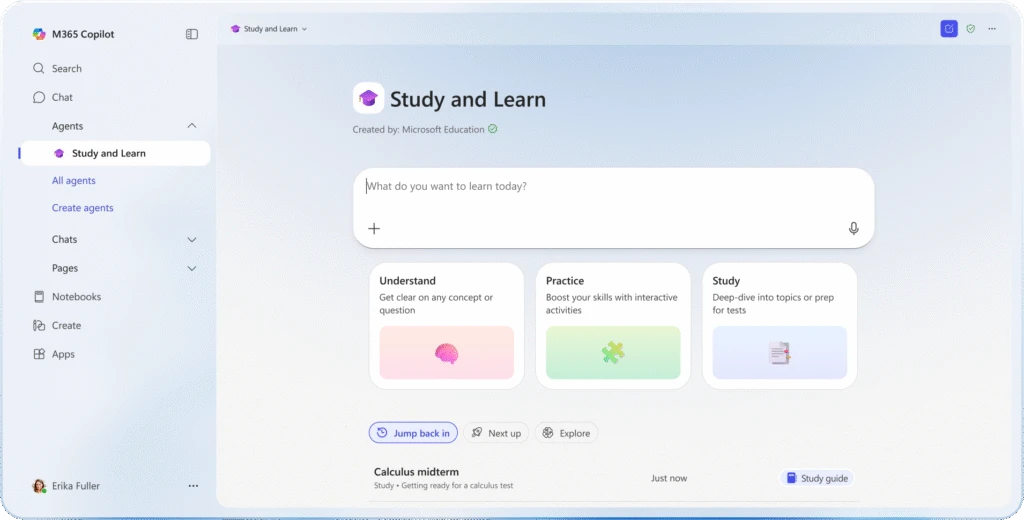
For students, the "Study and Learn Agent" introduces a personalized learning companion built on established principles of learning science. Targeting students aged 13 and older, the agent is designed to foster critical thinking rather than simply providing answers. It features adaptive exercises, guided study modules, and interactive tools such as flashcards and matching games. This tool represents a shift toward "scaffolded" AI, where the technology supports the student’s journey toward independence rather than acting as a shortcut for assignments.
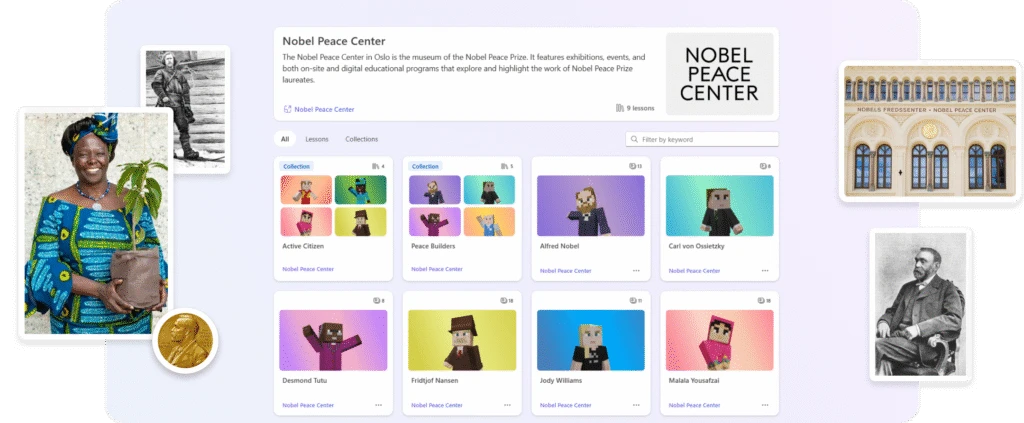
Furthermore, the "Microsoft Learning Zone" leverages the hardware capabilities of Copilot+ PCs. Using on-device Neural Processing Units (NPUs), the app provides high-bandwidth, interactive experiences that do not rely entirely on cloud connectivity. The Learning Zone features content from prestigious partners, including NASA, the Nobel Peace Center, and the World Wildlife Fund. For example, the Nobel Peace Center collection allows students to explore human rights through the stories of laureates like Malala Yousafzai, integrated with interactive activities in Minecraft Education.
Supporting Data and Institutional Insights
The development of these tools was informed by research conducted by IDC and sponsored by Microsoft. The resulting white paper, "A Blueprint for AI-Ready Schools," highlighted that early adopters of AI in K-12 education—such as Brisbane Catholic Education in Australia and Broward County Schools in the U.S.—have seen measurable improvements in administrative efficiency.
According to global educational data, teachers currently spend approximately 50% of their time on non-teaching activities, including grading and lesson planning. Microsoft’s internal projections suggest that tools like "Teach" could reduce this administrative burden by up to 30%, potentially mitigating the burnout that has led to high turnover rates in the profession. Additionally, the commitment to skill 20 million people reflects the growing demand for AI literacy; LinkedIn data indicates a 70% increase in the mention of "AI" or "Generative AI" in job postings over the past year, highlighting the urgency for students to gain these skills before entering the workforce.
To facilitate this transition for higher education students, Microsoft is offering 12 months of free access to Microsoft 365 Premium and LinkedIn Premium Career for eligible students. This package is designed to assist with both academic success—such as organizing research and notes—and career readiness, providing tools for internship searches and professional networking.
Security, Governance, and Official Responses
Recognizing the sensitive nature of student data, Microsoft has concurrently released the "Microsoft Education Security Toolkit." This resource is intended to help institutional leaders strengthen their cybersecurity posture amidst the increasing threat of ransomware and data breaches in the education sector. The toolkit provides strategic guidance on compliance and implementation, ensuring that AI adoption does not come at the cost of student privacy.
Microsoft leadership has emphasized that these tools are intended to augment, not replace, the human element of teaching. "AI can be a powerful complement to educator expertise," the company stated during the launch. "Our goal is to help educators reclaim time for what matters most: inspiring students and nurturing the next generation of thinkers."
Institutional leaders have echoed the need for structured AI adoption. Representatives from the Coquitlam School District in Canada noted that a clear framework for responsible AI use is essential for maintaining community trust. The "Microsoft Education AI Toolkit" addresses this by providing real-world case studies and snapshots of AI usage across different demographics, serving as a practical starting point for schools that are just beginning their digital transformation.
Broader Implications for the Future of Pedagogy
The long-term impact of Microsoft’s latest initiative extends beyond the classroom walls. By integrating AI into the core of the educational experience, Microsoft is effectively setting a new standard for "AI-ready" campuses. The move toward on-device intelligence via Copilot+ PCs suggests a future where high-performance AI is accessible even in environments with intermittent internet connectivity, potentially narrowing the digital divide in underserved regions.
Furthermore, the integration of professional platforms like LinkedIn with academic tools like Microsoft 365 suggests a blurring of the lines between "learning" and "working." As AI continues to reshape the global economy, the ability to fluently navigate these tools will likely become a fundamental requirement for social mobility.
As the educational community gathers at Bett UK 2026 to explore these innovations, the focus will remain on the balance between technological efficiency and pedagogical integrity. Microsoft’s Elevate for Educators program represents a significant bet that AI, if deployed responsibly and with a focus on skilling, can revitalize education systems that are currently under immense pressure. The success of this initiative will be measured not just by software adoption rates, but by the tangible improvements in student outcomes and teacher retention over the coming decade.