



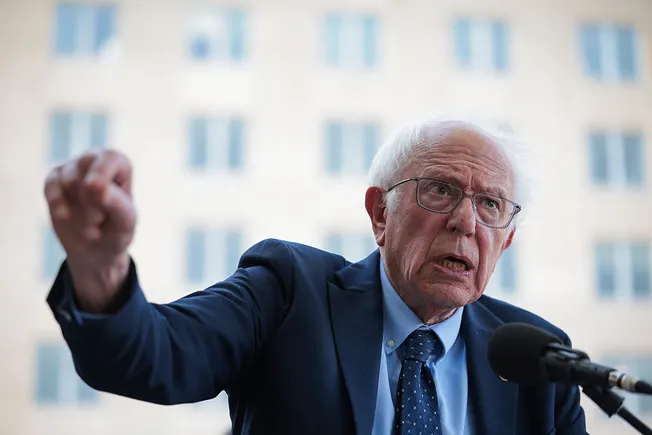
The U.S. Department of Education’s Office for Civil Rights (OCR) reached resolution agreements with schools and colleges in a mere 1% of pending cases in fiscal year 2025, marking the lowest percentage in over a decade. This significant decline, detailed in a recent report by Senator Bernie Sanders, I-Vt., paints a stark picture of the agency’s reduced capacity to address student discrimination at a time when the number of complaints has surged to record highs.
The report, titled "Justice Denied: How Trump’s Office for Civil Rights Reached a 12-Year Low in Protecting Students from Discrimination," highlights a dramatic decrease in the OCR’s effectiveness in resolving critical discrimination cases. In 2025, the OCR failed to reach any resolution agreements for major discrimination categories including sexual harassment or sexual violence, seclusion and restraint, racial harassment, and discrimination in school discipline. These are areas where the OCR has historically entered into resolution agreements annually, signifying a substantial departure from established practices.
Resolution agreements are legally binding accords between the OCR and educational institutions. They are designed to ensure that schools and colleges implement necessary policy changes and operational adjustments to eradicate discrimination. These agreements can mandate a range of actions, such as conducting comprehensive climate surveys to gauge the prevalence of discrimination, increasing the hiring of qualified staff to support students, or providing specialized training for educators and administrators on civil rights issues.
The precipitous drop in resolution agreements in 2025 follows a period of gradual decline. In fiscal year 2024, the OCR resolved approximately 5% of its pending cases. While the overall number of resolution agreements fell significantly, the report notes that the Department of Education did refer a number of expedited cases to the U.S. Department of Justice. These referrals primarily concerned the restriction of transgender students’ access to facilities and athletic teams that align with their gender identities. Concurrently, the department initiated actions against numerous state and district-level diversity, equity, and inclusion (DEI) policies and practices, including those aimed at enhancing academic success for Black students.
In total, only 112 resolution agreements were finalized in 2025, according to Senator Sanders’ report. This occurred during a year when the OCR was reportedly impacted by significant layoffs within the U.S. Department of Education. Adding to the concerns raised by the report, none of these 112 agreements specifically addressed antisemitism, Islamophobia, or other forms of national origin discrimination through the OCR’s standard investigation and resolution process. This finding is particularly striking given the Trump administration’s stated emphasis on combating antisemitism.
The report also points out that the OCR’s budget remained relatively stable in 2025, approximately $140 million, similar to its allocation in 2024. This suggests that the reduced output was not primarily a consequence of financial constraints, but rather due to internal operational shifts and potential policy changes.
Senator Sanders’ Condemnation of OCR’s Performance
Senator Bernie Sanders issued a strong statement on April 28, 2025, denouncing the report’s findings and labeling the staff reductions as "a disaster for students and families across this country." He articulated the critical role of the OCR in safeguarding vulnerable students: "When a child with a disability is denied the education they are entitled to, when a student faces racial or sexual harassment – they turn to the Office for Civil Rights for help. Yet the Trump administration has decimated this office. As a result, tens of thousands of students facing discrimination have been left with no recourse. That is beyond unacceptable."
The Senator’s remarks underscore the profound impact of the OCR’s diminished capacity on students seeking redress for discriminatory treatment. The office serves as a crucial avenue for recourse for students facing issues ranging from denial of educational services for students with disabilities to experiencing pervasive harassment based on race or gender. The report’s data suggests a significant breakdown in this system of support.
Department of Education’s Rebuttal and Defense
Responding to the findings presented in Senator Sanders’ report, Amelia Joy, a spokesperson for the Department of Education, offered a starkly contrasting perspective in an email statement. Joy asserted that the Biden administration had engaged in "pandering to an extreme ideology, illegally rewriting the law, and letting the safety and wellbeing of students fall to the wayside."
Joy further elaborated on the challenges faced by the Trump administration upon its return to office. "When the Trump Administration returned to a staggering 5-digit OCR case backlog, we focused on restoring OCR to its original purpose – enforcing the law to ensure all students can receive an education free from discrimination," she stated. "The prior Administration failed our students, but we are utilizing every tool at our disposal to resolve the backlog and return common-sense to our schools." This defense suggests a narrative of inherited problems and a proactive effort to rectify them.
Budgetary Proposals and Operational Realities
Adding another layer to the evolving narrative, Education Secretary Linda McMahon, during a Senate subcommittee hearing on April 28, 2025, advocated for a 35% reduction in the OCR’s budget as part of the administration’s fiscal year 2027 budget request. This proposal comes even as Secretary McMahon acknowledged the OCR’s lagging output in the preceding year.
However, she also provided context for the agency’s challenges, citing a backlog of 19,000 OCR complaints at the beginning of 2025. Secretary McMahon indicated that the agency was actively engaged in rehiring many of the lawyers who had been laid off, suggesting an effort to rebuild capacity. "There was a time when we were not processing cases as quickly as we should, but we are now focused on doing that and moving forward," McMahon commented. "We expect to see progress." This statement reflects an acknowledgement of past performance issues and a commitment to future improvement, albeit juxtaposed with a proposed budget cut.
A Detailed Look at OCR’s 2025 Performance Metrics
The following data, extracted from Senator Sanders’ April 28 report, provides a detailed statistical snapshot of the OCR’s operations in 2025, a year marked by significant staffing adjustments and the implementation of the Trump administration’s revised priorities:
Record Complaint Volume Amidst Declining Resolutions
- 23,879: The total number of discrimination complaints received by the OCR in fiscal year 2025. This figure represents another record-breaking year, continuing a trend of increasing complaint volume observed under previous administrations.
- 1%: The percentage of pending cases in which the OCR reached resolution agreements in 2025. This translates to a mere 112 agreements out of thousands of complaints.
Geographic and Case Type Breakdown
- 25: The number of states, plus Puerto Rico, where OCR regional offices were closed in March 2025. These closures likely contributed to a reduced geographic reach and potentially hindered accessibility for complainants in affected regions.
- 0: The number of sexual harassment cases and sexual violence cases resolved via resolution agreement in 2025. In stark contrast, 777 sexual harassment cases and 334 sexual violence cases remained pending. This indicates a complete halt in formal resolutions for these serious issues.
- 0: The number of resolution agreements reached in 15 states and Puerto Rico in 2025. This highlights a significant void in formal dispute resolution across a substantial portion of the country.
- 0: The number of racial harassment cases resolved through resolution agreement. Meanwhile, 949 racial harassment cases were pending. This represents a failure to address a pervasive form of discrimination.
- 1: The number of cases involving English learners’ access to education resolved through a resolution agreement. With 123 such cases pending, this signifies a critical gap in ensuring equitable educational opportunities for a vulnerable student population.
- 2: The number of cases resolved out of approximately 1,180 cases filed in Texas, the state with the highest caseload in 2025. This low resolution rate in a state with a high volume of complaints raises serious concerns about the adequacy of the OCR’s response in populous regions.
- 83: The number of disability discrimination resolution agreements reached in 2025. This represents a staggering 78.7% decrease compared to the previous year, with a particular absence of agreements related to restraint and seclusion, a critical area of concern for students with disabilities.
Analysis of Implications and Broader Context
The data presented in Senator Sanders’ report suggests a potential systemic shift in the OCR’s approach to civil rights enforcement. The dramatic reduction in resolution agreements, coupled with the failure to resolve cases involving key areas of discrimination, raises questions about the administration’s commitment to protecting students’ civil rights. The report implies that a combination of factors, including staffing reductions, a potential redirection of enforcement priorities, and perhaps a more adversarial stance towards certain types of discrimination claims, have contributed to this outcome.
The closure of regional offices could also be interpreted as a move to centralize operations and potentially reduce overhead, but it may also create barriers for individuals seeking assistance, particularly those in underserved or geographically remote areas. The emphasis on referring some cases to the Department of Justice and cracking down on DEI initiatives suggests a focus on specific legal interpretations and policy objectives, which may have come at the expense of a broader, more proactive approach to resolving a wide array of discrimination complaints.
The stark contrast between the number of complaints received and the number of resolution agreements reached underscores the immense backlog and the potential for prolonged periods of unresolved discrimination for students. This situation can have profound and lasting negative impacts on students’ educational experiences, their well-being, and their overall academic trajectory. The report’s findings will likely fuel further debate about the appropriate level of resources and the strategic direction for the Office for Civil Rights, particularly as the nation grapples with ongoing challenges related to equity and inclusion in education. The administration’s defense, emphasizing a need to correct past issues and restore OCR to its "original purpose," presents a competing narrative that centers on law enforcement and backlog reduction, but the data from 2025 indicates a significant decline in the very mechanisms designed to achieve those goals through negotiated agreements.