



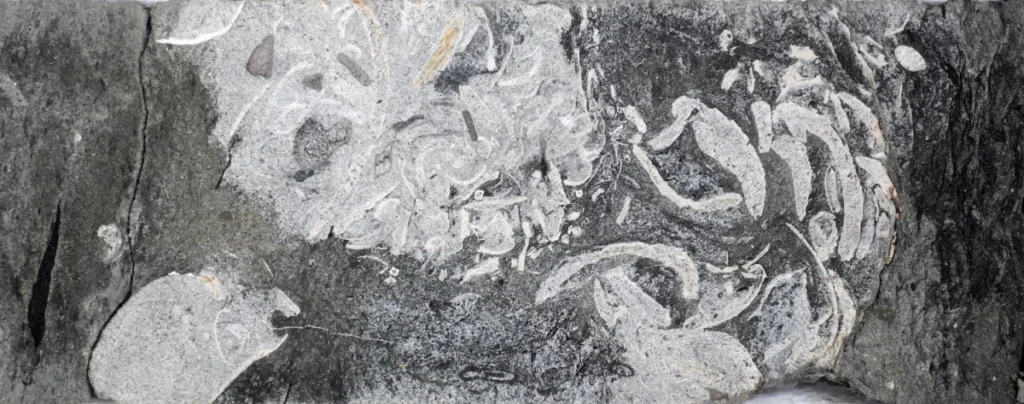
The historical record of ancient ecosystems has long relied on the preservation of structural remains, such as skeletal bones, teeth, and occasional impressions of soft tissue. However, a growing subfield of palaeontology focuses heavily on trace fossils—palaeontological artifacts that capture animal behavior rather than anatomical build. Among these are coprolites (fossilized feces) and regurgitalites (fossilized vomit). A recent study published in the journal Geological Magazine has pushed this scientific pursuit into uncharted territory by analyzing more than 20 mango-sized regurgitalites recovered from North Sea drill sites. These preserved clumps of indigestible debris, dated to approximately 160 million years ago during the Jurassic Period, offer rare behavioral insights into one of the era’s most successful marine predators: the long-necked plesiosaur.
The findings, spearheaded by palaeontologist Dirk Knaust, suggest that these iconic marine reptiles frequently navigated away from open-ocean hunting grounds into shallow river deltas. There, they engaged in a specialized biological purge, expelling the unyielding hard parts of benthic prey they could not digest. This behavior draws striking parallels to modern marine predators, providing researchers with a clearer understanding of how ancient ecosystems functioned and how apex predators managed their physiological needs.
Unraveling the Mystery of the North Sea Regurgitalites
For decades, Dirk Knaust’s primary academic focus centered on invertebrate fossils retrieved from deep-sea drilling cores. However, routine examination of core samples from the North Sea revealed unusual clusters of debris that did not align with standard sedimentary or invertebrate fossil profiles.
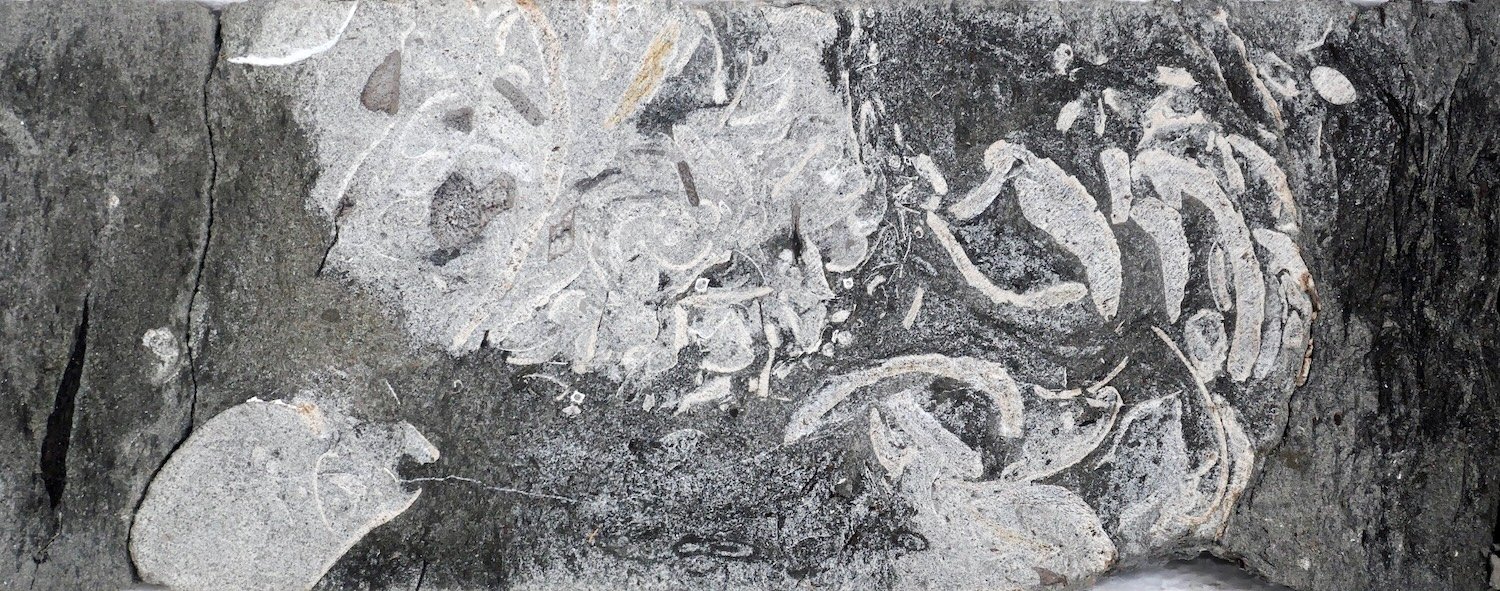
Upon closer inspection, Knaust amassed a collection of over 20 distinct regurgitalites, some reaching dimensions comparable to a mango. Unlike vertebrate-focused regurgitalites discovered in previous decades—which typically contained the crushed bones of rival fish or smaller marine vertebrates—these specimens were devoid of skeletal material. Instead, they comprised dense matrices of bivalve fragments, cephalopod remnants, and tubular worm casings.
A significant geographical contradiction immediately complicated the analysis. The sedimentary context of the drill cores indicated that the fossils were deposited within an ancient river delta. Yet, the specific species of bivalves, cephalopods, and worms identified within the clusters were strictly inhabitants of deeper, significantly saltier open-ocean environments. These creatures could not have lived within the brackish, shallow waters of a river delta. This realization sparked a multi-variable investigation to determine how deep-water organic matter ended up centralized in shallow-water sediment.
Comparative Anatomy and the Process of Elimination
Determining the origin of trace fossils is rarely straightforward. Ancient marine environments supported a vast array of predatory species, each leaving distinct chemical, physical, and anatomical signatures. To pinpoint the producer of the North Sea regurgitalites, Knaust systematically evaluated alternative candidates through comparative analysis.
Initial clues materialized from a fossilized ichthyosaur bone and nearby coprolites discovered in close stratigraphic proximity to the regurgitalites. Ichthyosaurs were dolphin-like marine reptiles characterized by rapid swimming speeds and high-metabolism lifestyles. However, a deeper examination of the coprolites’ density, chemical composition, and physical dimensions suggested they originated not from an ichthyosaur, but from an ancient marine crocodile.
Because ancient marine crocodiles possessed dietary profiles unsuited for heavy bottom-feeding on deep-water shellfish, they were immediately ruled out as the source of the shell-packed regurgitalites. Through a rigorous process of elimination based on size, anatomical feeding apparatus, and metabolic requirements, the plesiosaur emerged as the most viable candidate.
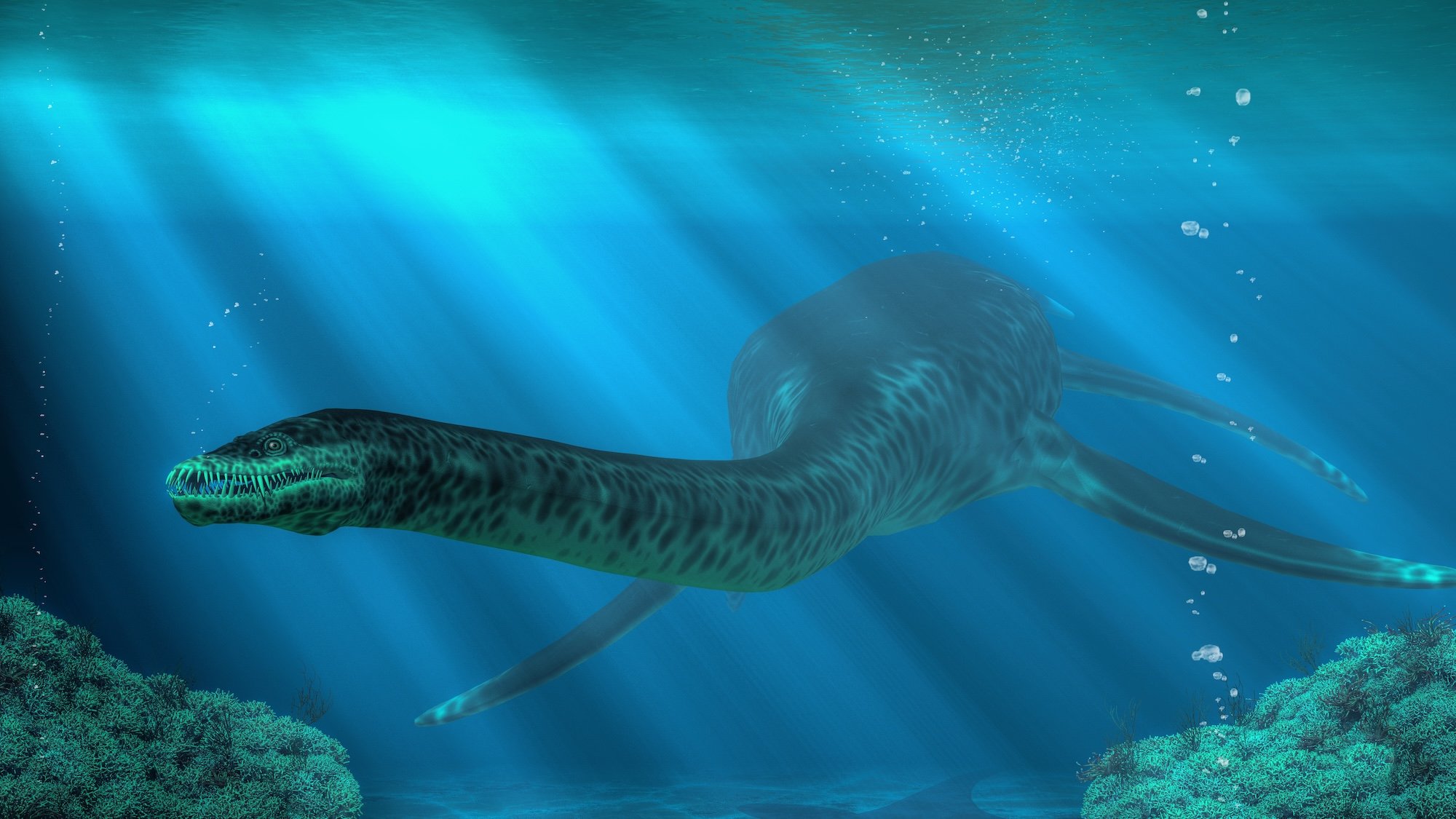
Plesiosaurs were large marine reptiles that populated Earth’s oceans for over 140 million years, spanning from the Middle Jurassic through the end of the Cretaceous period. Ranging anywhere from 6.5 feet to over 43 feet in length, these creatures featured distinctively long necks, streamlined torsos, and four powerful flippers. While their anatomy made them exceptionally efficient at capturing pelagic fish and swimming cephalopods, palaeontologists have long theorized that their anatomy also permitted them to forage along the ocean floor, craning their necks downward to vacuum up shellfish and benthic organisms.
Comparative Behavior Across Evolutionary Time
The habit of purging indigestible material is well-documented in the natural world. Modern avian species, most notably owls, regularly produce pellets containing the fur, feathers, and bones of small mammals that their digestive tracts cannot break down. However, avian regurgitation is typically passive and can occur anywhere the animal happens to be resting.
Among marine and semi-aquatic species, the physiological process requires deliberate behavioral adaptations. Modern fur seals and marine crocodiles routinely ingest hard-shelled prey or accidental stones that serve as ballast or resist enzymatic breakdown. To rid themselves of this unwanted mass, these modern species exhibit a specific behavioral pattern: they haul their bodies entirely out of the water, traveling onto land before expelling the stomach contents.
The new study indicates that plesiosaurs engaged in a similar purging ritual, albeit with a biomechanical twist dictated by their sheer size and skeletal structure. Weighing several tons and possessing specialized flippers rather than weight-bearing limbs, a fully grown plesiosaur would have struggled immensely to navigate terrestrial terrain. Consequently, researchers hypothesize that these apex predators utilized shallow river deltas and nearshore environments as specialized resting and regurgitation stations. By swimming into calmer, shallower waters close to the shoreline, the reptiles could find respite from open-ocean currents and safely clear their gastrointestinal tracts of abrasive, indigestible shell debris without needing to haul their massive bulk onto land.
Broader Implications for Palaeontological Research
The formal documentation of these Jurassic regurgitalites represents a significant methodological step forward for trace-fossil research. Historically, taphonomy—the study of how organisms decay and become fossilized—has prioritized skeletal remains and primary trace fossils like tracks and trails. The systematic categorization of regurgitalites broadens the scope of palaeontological investigation, allowing scientists to reconstruct ancient food webs and predator-prey dynamics with unprecedented granularity.
Furthermore, analyzing the contents of fossilized vomit provides direct empirical evidence of trophic interactions that leave no mark on skeletal bones. Because soft-bodied organisms and the crushed shells of invertebrates are rarely preserved in standard fossil beds, regurgitalites act as time-capsules, capturing exact snapshots of an individual animal’s last few meals prior to the purge event.
Industry experts and academic researchers have noted that this discovery opens multiple avenues for future study. By applying similar micro-analytical techniques to core samples from other global geological formations, palaeontologists may uncover widespread behavioral patterns among other extinct marine megafauna.
As Knaust noted following the publication of the findings, the academic community has only scratched the surface of what can be learned from the dietary waste of ancient organisms. The continued analysis of trace fossils promises to refine our understanding of Mesozoic marine ecosystems, demonstrating that even the most unglamorous aspects of prehistoric life hold profound value for modern science.