



This March 9-12, the highly anticipated SXSW EDU Conference & Festival returns to Austin, TX, poised to serve as a pivotal nexus for celebrating innovation, experimentation, and progressive learning across every stage of education. Attendees from around the globe will converge to tackle education’s most pressing issues and emerging trends through a rich tapestry of sessions, interactive workshops, hands-on experiences, and networking opportunities. A particularly prominent theme dominating this year’s agenda is the transformative impact of artificial intelligence in higher education, with an unprecedented proliferation of sessions dedicated to exploring its multifaceted implications. The conference offers a robust framework for educators, technologists, policymakers, and industry leaders to engage deeply with this rapidly evolving domain.
The rapid advancement of artificial intelligence (AI) has dramatically reshaped industries globally, and education is no exception. From enhancing administrative efficiencies to revolutionizing pedagogical approaches and student support systems, AI’s potential in higher education is vast and largely untapped. However, its integration also presents complex challenges related to ethics, equity, data privacy, and the fundamental redefinition of learning and assessment. SXSW EDU, renowned for its forward-thinking approach, has strategically curated a comprehensive program that delves into these opportunities and challenges, offering attendees diverse avenues to engage with the topic. The following 12 sessions represent a curated selection of offerings that promise to provide deep insights and actionable strategies for navigating the AI era.
The AI Imperative in Education: A Global Context
The global education technology market, already valued in the hundreds of billions, is seeing an accelerating infusion of AI-driven solutions. Projections indicate significant growth in AI’s role, driven by demands for personalized learning, automated administrative tasks, and data-driven insights. Educational institutions are grappling with how to prepare students for an AI-powered workforce while simultaneously leveraging AI to enhance their own operations and instructional efficacy. This dual challenge forms the bedrock of many discussions at SXSW EDU, reflecting a widespread recognition that AI is not merely a tool but a foundational shift in how knowledge is acquired, disseminated, and applied. The dialogue at the conference underscores a collective urgency to move beyond theoretical discussions to practical, responsible implementation strategies.
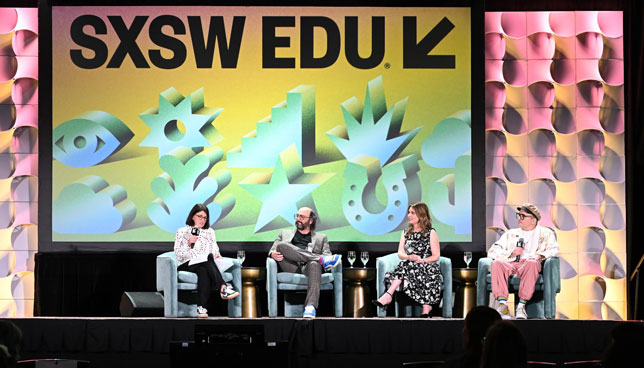
SXSW EDU: A Hub for Educational Innovation and Dialogue
SXSW EDU, an extension of the iconic South by Southwest festival, has established itself over more than a decade as a premier event for education stakeholders. It brings together a diverse community, from K-12 educators and university faculty to ed-tech entrepreneurs and government officials. The conference is known for fostering interdisciplinary collaboration and showcasing cutting-edge ideas that often predict future trends in the educational landscape. In recent years, discussions have naturally progressed from initial explorations of digital learning and online education to more sophisticated analyses of emerging technologies like virtual reality, augmented reality, and now, prominently, artificial intelligence. The increased focus on AI this year is a testament to its current impact and anticipated trajectory within the sector, moving from niche interest to mainstream imperative in a remarkably short period. The event serves as a critical platform for sharing best practices, challenging assumptions, and collectively charting a course for education’s future in an increasingly AI-centric world.
Deep Dive into AI: A Curated Selection of Sessions
Here are 12 of the most anticipated sessions, offering a comprehensive look at how AI is shaping, and will continue to shape, the educational ecosystem:
1) Community Colleges & AI Success for Students & Communities
California Community Colleges Chancellor Sonya Christian is set to highlight how her expansive institution, serving millions of students, is proactively preparing its diverse student body for AI-powered careers. This session will delve into strategic industry partnerships designed to align curriculum with real-world AI workforce needs, foster faculty collaboration to integrate AI literacy across disciplines, and develop AI curricula tailored to ensure students possess the skills demanded by an evolving job market. The discussion is expected to emphasize the critical role of community colleges as agile engines of workforce development, bridging the gap between emerging technological demands and accessible education. Data from economic forecasts consistently indicate a growing demand for AI-related skills across various sectors, making this proactive approach vital for economic competitiveness and social mobility.
2) Teaching on the Frontier: Skills for the AI Era
Rachel Wortman Morris, director of Microsoft’s NextGen Learning Lab, will articulate a compelling vision: the next generation of learners will not merely use AI, but will lead with it. Her session will focus on practical strategies for equipping learners with essential, future-proof skills. This includes fostering critical thinking to evaluate AI outputs, developing effective prompting techniques to maximize AI’s utility, and cultivating collaborative skills to work synergistically with AI agents. The premise is that human-AI collaboration will be a cornerstone of future productivity, necessitating a pedagogical shift towards competencies that complement, rather than compete with, artificial intelligence. This aligns with broader industry trends emphasizing "human-in-the-loop" AI systems and the need for new forms of digital literacy.

3) Experiencing Learning: Hedging Against AI Disruption
A distinguished panel featuring experts from London Business School, MIT Sloan School of Management, Carnegie Mellon University, and Symplicity will explore how AI can augment experiential learning to cultivate uniquely human skillsets crucial for the future of work. The session will address how AI tools can simulate complex scenarios, provide personalized feedback in real-time, and automate routine tasks, thereby freeing up human educators and learners to focus on higher-order thinking, creativity, emotional intelligence, and complex problem-solving. This approach aims to leverage AI not as a replacement for human experience, but as a powerful enhancer, ensuring that graduates possess the adaptability and innovation capabilities that AI currently cannot replicate. The discussion is anticipated to draw on cutting-edge research in educational psychology and AI ethics, considering how to design learning experiences that truly prepare individuals for dynamic professional environments.
4) Institutional AI Adoption: Moving from Hype to Habit
This practical workshop, led by experts from the Learning Design Alliance, WGU Labs, and Axio AI, will tackle the significant challenges and effective strategies involved in integrating AI into existing organizational ecosystems within higher education. Moving beyond initial pilot programs, the session will focus on scalable adoption models, change management processes, and fostering a culture of continuous AI integration. Participants will gain insights into developing robust AI governance frameworks, addressing infrastructure requirements, and ensuring faculty and staff buy-in. The discussion will likely underscore that successful AI adoption requires a holistic institutional strategy, moving beyond siloed initiatives to systemic transformation, touching on areas like data security, ethical guidelines, and budget allocation.
5) Making AI Work for Higher Ed: A Leadership Conversation
A crucial leadership conversation will feature panelists from the Gates Foundation, Every Learner Everywhere, and T3 Advisory, focusing on what responsible AI implementation truly entails in practice. This session is expected to delve into the ethical considerations, equity implications, and practical challenges of deploying AI at scale. Key topics will include ensuring algorithmic fairness, protecting student data privacy, preventing bias in AI-driven decision-making, and fostering equitable access to AI tools and opportunities. The conversation will provide a high-level strategic overview for institutional leaders, emphasizing the importance of proactive policy development and stakeholder engagement to harness AI’s benefits while mitigating its risks, particularly for underserved student populations. The Gates Foundation’s involvement highlights the philanthropic sector’s interest in ensuring AI serves as a tool for educational equity rather than exacerbating existing disparities.
6) Navigating AI Ethics and Bias in Educational Applications
As AI tools become more prevalent, the ethical implications and potential for algorithmic bias are paramount concerns. This session will bring together ethicists, data scientists, and educational technologists to discuss methodologies for identifying, mitigating, and preventing bias in AI algorithms used in learning analytics, adaptive tutoring systems, and automated assessment tools. Speakers will present case studies of unintended consequences and propose best practices for developing transparent, accountable, and fair AI systems. The dialogue is expected to cover the importance of diverse data sets, human oversight, and continuous auditing to ensure that AI serves all students equitably and ethically, aligning with principles of social justice in education.

7) AI-Powered Personalized Learning: Promise and Pitfalls
Personalized learning has long been an aspiration in education, and AI offers unprecedented capabilities to realize this goal. This session will explore how AI-driven platforms are adapting content, pacing, and feedback to individual student needs, learning styles, and progress. Experts will showcase innovative adaptive learning systems, intelligent tutoring, and AI-powered recommendation engines that tailor educational pathways. Concurrently, the discussion will critically examine the pitfalls, including the risk of over-reliance on algorithms, potential for reduced human interaction, and challenges in maintaining a holistic view of student development beyond quantifiable metrics. The session will seek a balance between technological enhancement and the essential human element of teaching and learning.
8) Faculty Development for the AI Era: Upskilling Educators
The integration of AI fundamentally redefines the role of educators. This workshop-style session will focus on practical strategies and resources for faculty development, empowering educators to effectively leverage AI in their teaching, research, and administrative tasks. Topics will include training on AI literacy, developing AI-enhanced assignments, understanding AI’s capabilities and limitations, and adapting pedagogical approaches for an AI-integrated classroom. The session will underscore that successful institutional AI adoption hinges on robust support and training for faculty, transforming them from passive observers to active innovators in the AI landscape. This proactive approach aims to alleviate technophobia and foster a culture of experimentation and informed integration.
9) Rethinking Assessment in an AI World: Challenges and Innovations
AI tools, particularly generative AI, pose significant challenges to traditional assessment methods, raising questions about academic integrity and authentic evaluation. This session will address how educators and institutions are rethinking assessment strategies in response. Discussions will include the development of AI-resistant assignments, the use of AI for formative feedback and grading efficiency, and innovative approaches to assessing higher-order skills that AI cannot easily replicate. Panelists will explore methods for designing assessments that leverage AI as a collaborative tool rather than a bypass mechanism, emphasizing critical thinking, creativity, and the application of knowledge in complex scenarios. The session will likely feature examples of portfolio-based assessment, project-based learning, and oral examinations as more robust alternatives.
10) AI for Research and Discovery: Enhancing Academic Inquiry
Beyond teaching and administration, AI is rapidly transforming the landscape of academic research. This session will highlight how AI tools are accelerating scientific discovery, enabling new forms of data analysis, automating literature reviews, and facilitating complex simulations across various disciplines. Researchers will share case studies of AI’s application in fields ranging from medicine and environmental science to humanities and social sciences. The discussion will also touch upon the ethical considerations unique to AI in research, such as data provenance, algorithmic transparency in scientific findings, and the implications for intellectual property. The session aims to showcase AI as a powerful partner in advancing the frontiers of human knowledge.
11) The Global Impact of AI in Education: Bridging Digital Divides
While AI offers immense potential, its equitable distribution and access remain critical global challenges. This session will explore the global implications of AI in education, examining how different regions and socio-economic contexts are adopting and adapting to AI. Discussions will focus on strategies to bridge digital divides, ensure access to AI literacy for underserved populations worldwide, and promote international collaboration in AI development for educational purposes. Experts will share insights from initiatives in developing countries and discuss policy frameworks that can foster inclusive AI adoption, preventing the technology from exacerbating existing inequalities in educational opportunity.
12) Policy and Governance of AI in Schools: Crafting Future Frameworks
The rapid evolution of AI necessitates clear policy and governance frameworks to ensure responsible and beneficial integration into educational institutions. This session will bring together policymakers, legal experts, and educational administrators to discuss the development of institutional policies regarding AI use by students, faculty, and staff. Topics will include data privacy regulations, guidelines for AI in grading and feedback, intellectual property considerations, and ethical review processes for AI tool adoption. The session aims to provide practical guidance for creating robust, adaptable policies that balance innovation with accountability, setting a precedent for future regulatory landscapes in education.
Broader Implications and Future Outlook
The comprehensive slate of AI-focused sessions at SXSW EDU underscores a pivotal moment in education. The discussions are not merely about technology adoption but about a fundamental re-evaluation of educational paradigms. The implications extend far beyond the classroom, touching upon workforce development, economic competitiveness, and the very nature of human intelligence in an augmented world. The emphasis on responsible implementation, ethical considerations, and equitable access highlights a collective recognition that the power of AI must be guided by human values.
The insights gleaned from SXSW EDU are likely to inform institutional strategies for years to come. Universities and colleges are under increasing pressure to adapt their curricula to prepare students for jobs that may not yet exist, requiring a nimble and forward-thinking approach to technological integration. The conversations around personalized learning, faculty upskilling, and ethical AI deployment signal a mature understanding of the challenges and opportunities at hand. As AI continues its rapid development, the education sector’s ability to critically engage with, thoughtfully integrate, and responsibly govern these technologies will be paramount to shaping a future where AI serves as a powerful catalyst for human flourishing and societal progress.

The Road Ahead
The SXSW EDU Conference & Festival serves as more than just an event; it’s a barometer for the evolving landscape of education. The overwhelming focus on artificial intelligence this year signifies its undeniable ascendancy as a transformative force. As attendees depart Austin, they will carry not only new knowledge and connections but also a renewed sense of purpose and a clearer roadmap for navigating the complexities of AI in education. The ongoing dialogue, ignited and enriched at events like SXSW EDU, will continue to shape how educational institutions worldwide prepare their students, support their faculty, and ultimately redefine learning for generations to come. The journey from "hype to habit" for AI in education is well underway, and conferences like this are indispensable for guiding that crucial transition.