

Peter Duker, a doctoral candidate in Geography at the University of Guelph, has completed extensive fieldwork in Northern Thailand, illuminated by a 2024 IDRA scholarship. His research, conducted over eighteen months, delves into the intricate and often overlooked Indigenous approaches to environmental governance, focusing specifically on the Pgakenyaw communities. Duker’s work, which concluded in 2025, aims to document and understand the vital riverine practices and traditional ecological knowledge of the Pgakenyaw people, areas that have historically received limited scholarly and organizational attention. This comprehensive investigation has yielded profound insights into the multifaceted role of rivers in Indigenous life, extending far beyond mere resource provision.
The Genesis of a Groundbreaking Study
Duker’s doctoral research was not an isolated endeavor but built upon a decade of prior engagement with Thailand. His cross-cultural competencies, honed through years of working in the country, provided a crucial foundation for establishing trust and rapport with the Pgakenyaw communities. The groundwork for this intensive fieldwork was laid during two significant preliminary visits: a two-month immersion in 2023 and a four-month stay in 2024. These extended periods were instrumental in forging strong relationships with community members and staff at a local Indigenous-led NGO, which became a vital partner in the research. This sustained engagement ensured that the subsequent fieldwork was not only methodologically robust but also deeply respectful of the communities’ protocols and priorities.
Community-Engaged Fieldwork: A Multi-Layered Approach
The core of Duker’s fieldwork was a community-engaged methodology, fostering a collaborative partnership with an Indigenous Pgakenyaw-led NGO and four distinct Pgakenyaw communities across Northern Thailand. This approach was designed to ensure that the research was not an extractive process but a co-creation of knowledge. The project’s objective was to meticulously document and understand the Pgakenyaw’s traditional practices and knowledge systems concerning their rivers, recognizing their intrinsic value and ecological significance.
A diverse array of mixed methods was employed to capture a holistic understanding of these complex relationships. Duker made four visits to each of the four partner communities throughout the year, engaging in in-depth qualitative research. These methods included participant observation, where he immersed himself in daily life, individual interviews to gather personal narratives and perspectives, focus groups to explore collective understandings, and participatory activities such as walking meetings, livelihood mapping, and the creation of food calendars. These latter activities allowed community members to visually and experientially share their knowledge and connect it to their environment.
Crucially, Duker recognized the importance of empowering local capacity. He trained two youth leaders in each community to undertake quantitative data collection over the course of the year. This involved weekly monitoring of fish catches, a key indicator of riverine health and community sustenance, and 24-hour dietary recalls to understand food consumption patterns. This dual approach, combining qualitative depth with quantitative rigor, allowed for a comprehensive and nuanced understanding of Pgakenyaw riverine practices and their ecological and social dimensions.
A testament to the collaborative nature of this research is a nine-minute documentary video, co-created with Pgakenyaw creator Thinnaphat Phattharakiatthawee of Pokwa Productions. This film serves as a powerful tool for disseminating the project’s findings and messages. It has been instrumental in reaching a wider audience, both within other Pgakenyaw communities and across broader Thai society, amplifying the voices and knowledge of the participating communities.
Highlights and Unexpected Discoveries
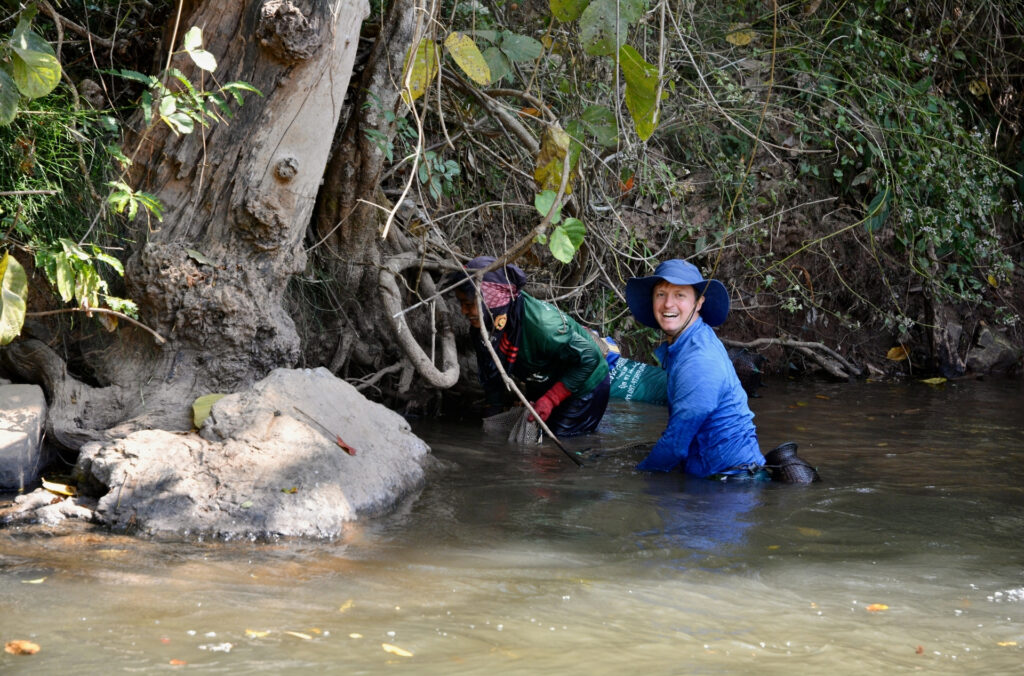
One of the most profound highlights of Duker’s fieldwork was the deep personal connections he forged with community members. These relationships, cultivated through shared experiences, particularly during fishing activities, transcended the purely academic. Duker actively participated in traditional fishing methods, not just as an observer but as a learner. He humorously recounts an early fishing attempt in one community where he "infamously only caught a single tiny fish on my first day – a result they will never let me forget." These moments, while personally challenging, fostered genuine camaraderie and a sense of shared endeavor. The appreciation from community members, such as one woman who expressed, "I love to go fishing, but I love it even more when you are with us," underscored the intangible, often surprising, positive outcomes of research that prioritizes human connection.
Navigating Challenges and Embracing Surprises
The fieldwork presented both unexpected revelations and significant challenges. Duker initially anticipated that his research would primarily focus on the material benefits of inland fisheries, such as food security. However, he was surprised to discover the substantial non-material benefits derived from these activities. He frequently observed people fishing in groups, their collective endeavors punctuated by sounds of enjoyment, including laughter and shouts of encouragement. These observations led him to recognize the significant contributions of fishing activities to mental well-being and the strengthening of community bonds. Furthermore, while fishing was a widespread practice, he noted that it was often undertaken by women, youth, and the elderly, highlighting the specific importance of these activities for these demographic groups, who may have different social roles and access to other resources.
The most considerable challenge faced by Duker was the demanding physical and mental toll exacted by frequent travel. The necessity of leaving his base in Chiang Mai nearly every other week to engage with partner communities, coupled with additional trips for his NGO partner’s work, led to persistent fatigue. Despite these demanding conditions, Duker views these experiences as ultimately enriching and worthwhile, emphasizing the invaluable lessons learned and the strength of the relationships built.
Reshaping Research Perspectives
The immersive, on-the-ground nature of this PhD fieldwork fundamentally reshaped Duker’s understanding of his research topic and his methodological approach. His earlier master’s research, conducted during the COVID-19 pandemic, necessitated a pivot to remote data collection via a local research assistant. While this provided valuable insights, the direct, in-person engagement of his doctoral project revealed discrepancies between stated intentions and actual practices.
For instance, while community members might articulate the importance of fish for their diets, Duker’s direct observations and weekly data collection indicated that fish were not consumed as frequently as they once were. He clarifies that this was not a matter of dishonesty but rather a reflection of participants’ understandings being rooted in historical truths rather than contemporary realities. This realization led him to emphasize the broader contributions of fish beyond immediate consumption, including their role in fostering mental health, community cohesion, and as a vital part of cultural identity. This nuanced understanding is critical for informing policy-makers and empowering communities to better manage human activities in ways that promote ecological well-being.
Disseminating Knowledge: Beyond Academia
Duker has proactively engaged in knowledge mobilization, ensuring that the insights gained from his fieldwork benefit the participating communities and broader society. In February 2026, he organized a significant knowledge-sharing gathering that brought together the four partner communities, along with other interested communities, academic allies, and NGO partners. This event marked a celebration of the project’s culmination and provided a platform for participants to share their findings and experiences.
During the gathering, research assistants presented findings from their respective communities, and Duker shared broader research insights. A key component of the event was an exploration of how river conservation practices could be leveraged for ecotourism opportunities, providing potential income streams for the communities. The evenings were dedicated to cultural exchange, with elders from each community sharing traditional stories and poems, reinforcing the cultural significance of their relationship with the rivers.
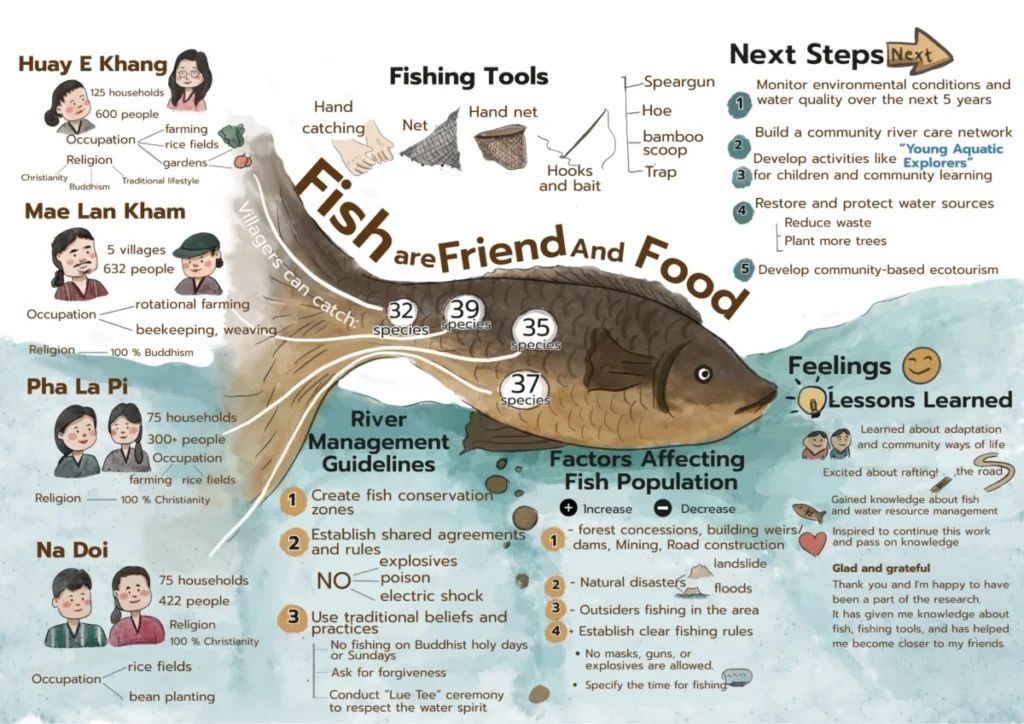
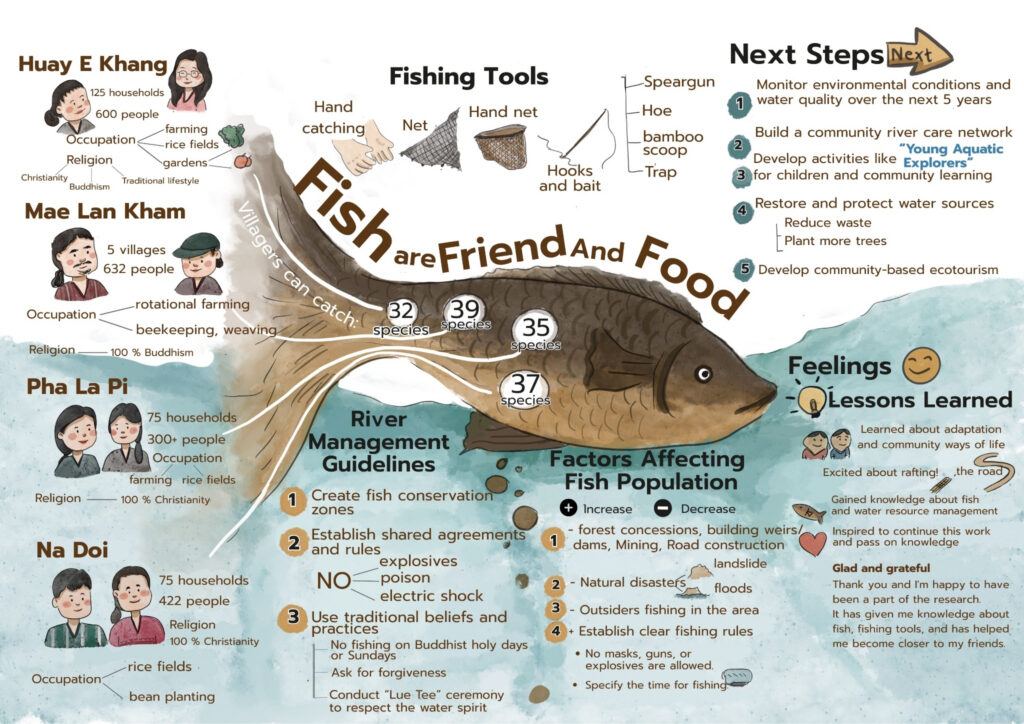
The visual documentation of the event, including graphic summaries by Indigenous Hmong illustrator Oranee Saewan, captured key project findings and participant discussions. These visuals underscored the deep interconnectedness between the riverine livelihoods of Pgakenyaw communities, their intimate ecological knowledge, and their effective environmental management strategies. The project highlighted the crucial role of women and their knowledge in these processes. It also demonstrated the communities’ adeptness at strategically integrating traditional knowledge with modern scientific approaches to maintain riverine ecological health amidst evolving environmental and social landscapes. This project served not only to remind communities of the enduring importance of their traditional knowledges and practices but also to provide a foundation for their future development.
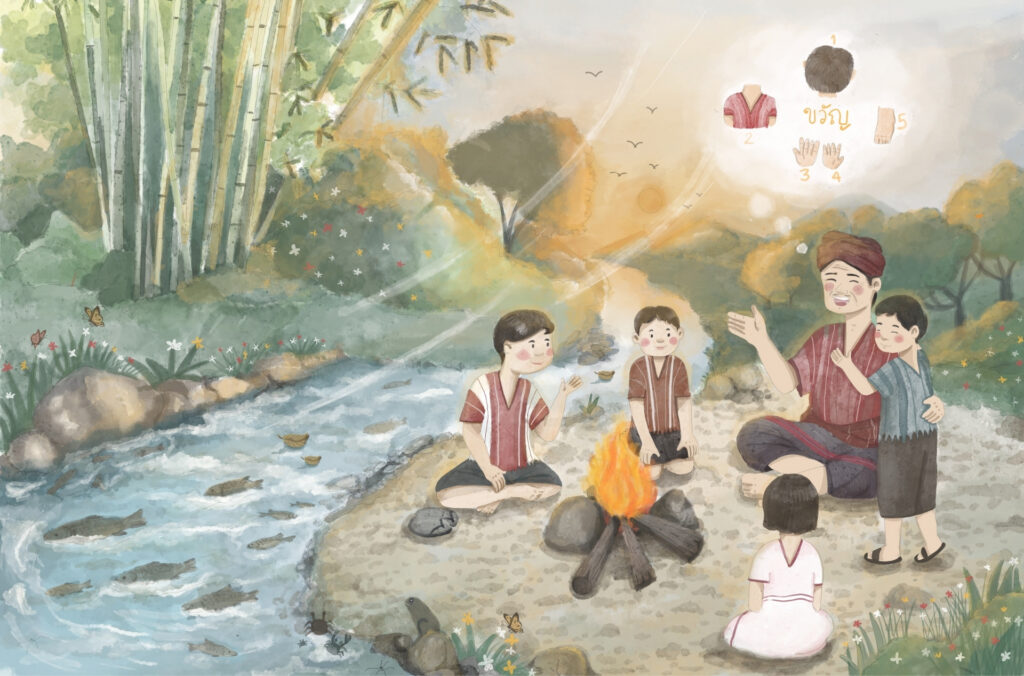
Furthermore, Duker has created educational books for Pgakenyaw youth, weaving project findings and elder teachings into narratives that illuminate the historical and contemporary relationships between the communities and their rivers. These books, also featuring illustrations by Oranee Saewan, include suggested survey activities and ecological data collected by the research assistants, equipping the communities with tools for ongoing river monitoring.
Academically, Duker is planning three journal articles as part of his dissertation. These publications will focus on how Indigenous Peoples and Local Communities (IPLCs), particularly women, employ multiple knowledge systems for effective environmental stewardship in the face of political, economic, and environmental changes. These articles will advocate for increased power for IPLCs and women in environmental governance, aiming to address historical injustices and better prepare societies for impending environmental crises.
Future Directions: Building Transnational Networks
Duker’s immediate next step is to complete his dissertation within the next year. Looking ahead, he aspires to develop an international research program focused on how IPLCs across multiple countries manifest environmental governance through diverse knowledge systems. He believes that IPLCs possess invaluable lessons for mainstream society and aims to establish a new transnational IPLC community network through this research agenda.
The program will maintain its focus on riverine ecosystems, recognizing their inherent interconnectedness and their capacity to foster pan-community dialogue. Building on his experience leading an 11-person research team, Duker plans to establish research teams within each partner community. This initiative will enable community research teams to forge connections with other participating communities, creating a novel network dedicated to advocating for IPLCs’ leadership in effective environmental governance, ultimately fostering positive social and environmental outcomes. This ambitious research agenda aims to contribute significantly to both community capacity-building and the production of vital knowledge for sustainable futures.