

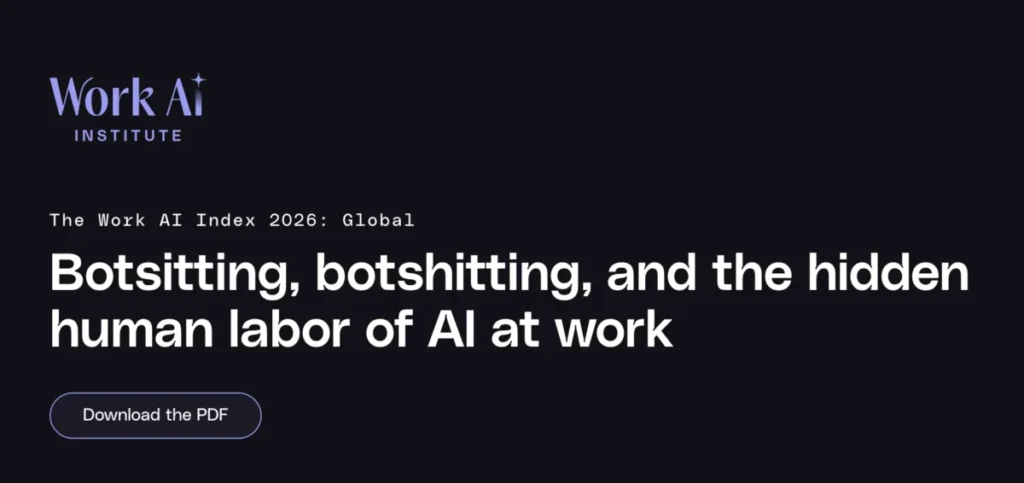
A recent report by the Financial Times, featuring an interview with Rebecca Hinds, head of the Work AI Institute, has unveiled a perplexing paradox regarding the impact of artificial intelligence on modern workplaces. The findings, derived from a comprehensive survey of 6,000 digital workers, reveal a significant disconnect: while respondents claimed an average saving of 11 hours per week due to AI utilization, a mere 13% reported any discernible improvement in overall company performance. This arresting statistic suggests that the much-touted productivity gains of AI may not be translating into tangible organizational benefits, prompting a critical re-evaluation of both AI implementation strategies and the fundamental health of contemporary work environments.
This revelation comes at a particularly sensitive juncture for the burgeoning AI industry, with major players like OpenAI and Anthropic reportedly eyeing initial public offerings (IPOs) in the coming months. The narrative of AI as a revolutionary force for efficiency and growth is central to their market valuations. However, the survey’s results, as articulated by Hinds, point to deeper, systemic issues within organizational structures that AI, rather than solving, appears to be magnifying.
The Paradox Unpacked: Deconstructing AI’s Disconnect
Rebecca Hinds offers several compelling explanations for this counterintuitive outcome, which resonate strongly with long-standing criticisms of modern work practices. While the specific explanations were not detailed in the original article, drawing from the insights of authors like Cal Newport, who has extensively critiqued digital-era productivity, we can infer the core issues at play. These likely include:
-
Ineffective Integration and Workflow Friction: AI tools are frequently adopted as standalone solutions, often failing to integrate seamlessly into existing, and frequently inefficient, organizational workflows. This piecemeal adoption can lead to new forms of "digital wrangling," where workers spend time managing and toggling between AI tools and traditional systems, rather than experiencing true automation. The initial setup, fine-tuning, and oversight required for AI can introduce its own set of administrative burdens, negating potential time savings. For instance, an AI tool might draft an email perfectly, but if the process of getting the draft, reviewing it, and integrating it into a complex communication approval chain is cumbersome, the overall efficiency gain is minimal.
-
Amplification of Pseudo-Productivity: A concept famously explored by Cal Newport as "workplace theater," pseudo-productivity refers to the illusion of busyness or output without genuine impact on strategic objectives. AI, by automating tasks, can inadvertently enable individuals to generate more low-value output faster. If an employee is primarily engaged in tasks that do not contribute meaningfully to core business goals, AI simply allows them to perform more of these non-essential tasks at an accelerated pace. This creates a perception of increased activity, but without corresponding improvements in key performance indicators or strategic outcomes. For example, AI might quickly generate reports or summaries, but if these reports are not acted upon or are part of an overly complex bureaucratic process, the efficiency gain is moot.
-
Lack of Strategic Alignment and Training: Many organizations implement AI without a clear, overarching strategy for how these tools will contribute to specific business objectives. The focus often remains on individual task automation rather than systemic process improvement or strategic outcome generation. Furthermore, employees may lack the necessary training to effectively leverage AI beyond its basic functionalities, failing to understand how to steer these powerful tools towards high-impact, value-generating activities. Without a clear strategic roadmap and adequate training, AI adoption becomes a scattershot approach, yielding fragmented results rather than holistic performance enhancements.
A Historical Perspective: Digital Tools and Pre-Existing Dysfunctions
What makes these findings particularly insightful is their resonance with a broader critique of contemporary work culture, a critique that predates the widespread adoption of AI. As Cal Newport highlights in his 2024 book, Slow Productivity, many of the issues now attributed to AI are, in fact, long-standing pathologies of the digital age. Earlier generations of digital tools – email, Slack, video conferencing, and mobile computing – introduced similar challenges that fragmented attention, fostered constant context switching, and blurred the lines between genuine productivity and mere activity.
The rise of email, for instance, promised efficiency but quickly devolved into an unending stream of interruptions and demands, forcing workers into a reactive mode rather than allowing for proactive, deep work. Collaboration platforms like Slack, while facilitating rapid communication, often created an expectation of constant availability and immediate response, leading to chronic attention residue and a diminished capacity for focused concentration. Video conferencing, especially during the pandemic, intensified meeting fatigue and the pressure to perform "always on" professionalism.
Newport’s concept of "pseudo-productivity" directly addresses this phenomenon, describing how modern work environments often reward visible busyness – sending emails, attending meetings, managing multiple projects – over the sustained, concentrated effort required for truly impactful creative or strategic work. This culture has inadvertently trained workers to equate activity with accomplishment, making it difficult to distinguish between essential tasks and busywork.
In this context, AI isn’t introducing entirely new problems; rather, it’s acting as a powerful magnifying glass, exposing and accelerating the types of dysfunctions that have long plagued digital workplaces. If workers were already struggling with context switching, AI tools that demand rapid iteration or constant oversight only intensify this fragmentation. If organizations were already prone to pseudo-productivity, AI can enable the generation of even more low-value output at an unprecedented speed, creating an illusion of hyper-efficiency without corresponding strategic gains.
Timeline of Digital Transformation and Its Unintended Consequences:
- 1990s: Emergence of email as a primary business communication tool. Initial promise of efficiency and faster communication.
- Early 2000s: Proliferation of personal computers, internet access, and early mobile devices in the workplace. Increased connectivity and access to information.
- Mid-2000s: Rise of smartphones and widespread mobile computing. The "always-on" culture begins to take root, blurring work-life boundaries.
- Late 2000s – Early 2010s: Dominance of social media and the introduction of enterprise social networks. Increased informal communication channels.
- Mid-2010s: Explosion of team collaboration tools (Slack, Microsoft Teams). Further fragmentation of attention, context switching becomes endemic.
- Late 2010s – Early 2020s: Widespread adoption of video conferencing (Zoom, Google Meet), exacerbated by the COVID-19 pandemic. "Meeting fatigue" becomes a recognized phenomenon.
- 2023-Present: Rapid integration of generative AI tools into workflows. Initial hype focuses on task automation and significant time savings.
- Recent Reports (e.g., FT/Work AI Institute): Initial data emerges, revealing a disconnect between reported time savings from AI and actual improvements in company performance, highlighting pre-existing systemic issues.
Industry Reactions and Expert Commentary
The findings from the Work AI Institute survey are likely to elicit varied responses across the industry:
-
AI Developers and Companies (e.g., OpenAI, Anthropic): While the report poses a challenge to the prevailing narrative of AI as an unmitigated productivity booster, these companies are likely to frame it as an opportunity for refinement. Spokespersons might emphasize the need for "responsible AI deployment," "user education," and "strategic integration." They may highlight ongoing efforts to make AI tools more adaptable, user-friendly, and capable of deeper workflow integration, moving beyond mere task automation to truly transform business processes. The pressure for successful IPOs will undoubtedly push these companies to demonstrate not just technological prowess but also tangible, quantifiable business value.
-
Workplace Consultants and Academics: For those who have long critiqued the fragmentation and pseudo-productivity of modern work, this report serves as vindication. Experts like Cal Newport would likely reiterate their call for a fundamental rethinking of work design, emphasizing principles like "deep work," "slow productivity," and "attention management." Workplace strategy firms might advocate for holistic "digital transformation" initiatives that prioritize workflow redesign, employee training in AI literacy, and a clear articulation of AI’s role in achieving strategic objectives, rather than simply adopting tools for their own sake. They would stress that technology is merely an enabler, and its impact is determined by the organizational context and human practices it operates within.
-
Business Leaders and Organizations: For many executives, the report might serve as a wake-up call, prompting a re-evaluation of their significant investments in AI technologies. Initial AI adoption has often been driven by a fear of being left behind or a simplistic belief in technological fixes. The survey’s data suggests that a more nuanced and strategic approach is required. Leaders may begin to demand clearer metrics for AI’s impact on performance, invest more heavily in change management and employee training, and critically assess whether their current workflows are truly optimized for leveraging AI’s potential. This could lead to a shift from "AI adoption for adoption’s sake" to a more outcome-driven implementation strategy.
Implications for the Future of Work
The Work AI Institute’s findings carry profound implications for the future of work, compelling organizations to move beyond superficial technological upgrades and address the foundational issues that hinder genuine productivity:
-
Reframing Productivity: The report underscores the urgent need to redefine productivity, shifting the focus from mere activity or task completion to tangible outcomes and strategic impact. Organizations must develop clearer metrics that measure the value generated by AI, not just the hours saved or tasks automated. This requires a deeper understanding of what constitutes "high-value" work within each role and how AI can genuinely augment human capabilities in those areas.
-
Strategic AI Implementation: A haphazard approach to AI adoption is clearly insufficient. Companies must develop robust AI strategies that are tightly integrated with their overall business objectives. This involves identifying specific pain points, designing workflows that intelligently incorporate AI, and ensuring that AI tools serve to amplify human expertise rather than simply replace or complicate existing processes. Investment in AI must be accompanied by investment in process re-engineering and organizational change management.
-
The Resurgence of Deep Work: If AI handles more routine or administrative tasks, the human workforce’s value increasingly lies in complex problem-solving, creativity, strategic thinking, and emotional intelligence – activities that require sustained, uninterrupted focus. This report reinforces the argument for cultivating environments that support "deep work," minimizing interruptions and creating dedicated time for focused, high-cognitive tasks.
-
Organizational Redesign is Paramount: Technology alone cannot fix deeply ingrained organizational issues such as bureaucratic processes, unclear objectives, or a culture of pseudo-productivity. The current AI paradox highlights that the "brokenness" lies not just in the tools, but in the systems and cultures within which they are deployed. True productivity gains will necessitate organizational redesign, re-evaluating reporting structures, communication protocols, and performance incentives to align them with genuine value creation.
-
Upskilling and Reskilling the Workforce: Employees need more than just technical proficiency in using AI tools. They require critical thinking skills to discern when and how to apply AI effectively, the ability to interpret and validate AI outputs, and the strategic acumen to identify opportunities for AI to drive significant impact. This necessitates comprehensive training programs that go beyond basic tool usage to foster "AI fluency" and strategic thinking.
The Silver Lining and Path Forward
Despite the sobering statistics, the report from the Work AI Institute, viewed through the lens of Cal Newport’s analysis, offers a crucial silver lining. The very novelty and transformative potential of AI have captured the attention of business leaders in a way that previous digital tools often failed to. This heightened scrutiny presents an unprecedented opportunity.
By seeking to understand why AI isn’t delivering its promised productivity dividends, organizations might finally be forced to confront and rectify the systemic inefficiencies and cultural dysfunctions that have long existed within their operations. AI, in essence, is serving as a powerful diagnostic tool, illuminating the underlying cracks in the foundation of modern work.
The path forward involves a conscious and deliberate effort to reform work itself, rather than simply layering new technologies onto old, inefficient structures. This means:
- Prioritizing outcomes over activity.
- Designing workflows around human cognition and deep work.
- Implementing AI strategically, with clear objectives and robust training.
- Fostering cultures that value quality, focus, and genuine impact over mere busyness.
If organizations embrace this moment of revelation, moving beyond superficial fixes to undertake fundamental workplace reform, the promise of AI—true productivity, enhanced creativity, and a more fulfilling work experience—may yet be realized. The challenge is not in the technology itself, but in our collective willingness to mend what has long been broken.