

The question of whether generative artificial intelligence systems, such as OpenAI’s ChatGPT, are capable of genuine originality has long captivated researchers, technologists, and the public alike. A groundbreaking new study, spearheaded by Professor Karim Jerbi from the Department of Psychology at the Université de Montréal and featuring the esteemed participation of renowned AI pioneer Yoshua Bengio, has confronted this profound query on an unprecedented scale. Published in Scientific Reports (Nature Portfolio) on January 21, 2026, this research stands as the largest direct comparison ever conducted between the creative capacities of human beings and those of large language models (LLMs), offering insights that are both illuminating and thought-provoking.
A Turning Point in AI’s Creative Journey
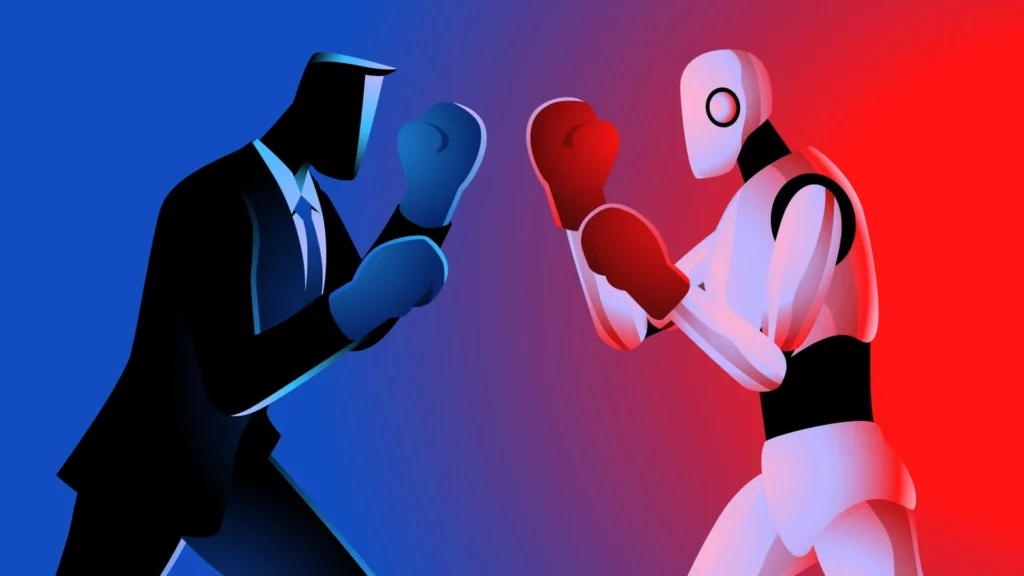
The study’s findings mark a significant inflection point in the narrative of artificial intelligence. Generative AI systems have demonstrably reached a developmental stage where they can now surpass the average human on specific, well-defined measures of creativity. This revelation, while potentially unsettling to some, is tempered by an equally crucial observation: the most creative individuals within the human population consistently maintain a clear and substantial advantage over even the most advanced AI models currently available. This nuanced outcome challenges simplistic notions of AI either completely replacing or entirely failing to replicate human creativity, instead painting a picture of evolving capabilities and enduring human distinctiveness.
Researchers meticulously evaluated a diverse array of leading large language models, including prominent platforms like OpenAI’s ChatGPT (specifically GPT-4), Google’s Gemini, Anthropic’s Claude, and others. Their performance was then rigorously benchmarked against the responses collected from an expansive cohort of more than 100,000 human participants from various demographics. The results presented a definitive turning point: several sophisticated AI systems, particularly GPT-4, demonstrated the ability to exceed average human scores on tasks specifically designed to gauge divergent linguistic creativity.
"Our comprehensive study provides compelling evidence that some AI systems, rooted in the architecture of large language models, can now indeed outperform average human creativity when applied to carefully defined tasks," explained Professor Karim Jerbi. He acknowledged the potential for surprise—and even a degree of apprehension—at this outcome. Yet, Professor Jerbi quickly underscored the equally vital second half of their discovery: "Even with these remarkable advancements, our research unequivocally shows that the very best AI systems still fall short of the elevated levels achieved by the most creatively gifted humans."
Further in-depth analysis, meticulously conducted by the study’s co-first authors, postdoctoral researcher Antoine Bellemare-Pépin from Université de Montréal and PhD candidate François Lespinasse from Université Concordia, illuminated a striking and consistent pattern. While a subset of AI models have now ascended to surpass the creative output of the average person, the zenith of creative expression and innovation remains firmly within the human domain. This granular examination revealed that when researchers focused on the most creative half of the human participants, their collective average scores consistently eclipsed those of every single AI model put to the test. The disparity in performance became even more pronounced and undeniable when the comparison was narrowed to the top 10 percent of the most creative individuals, solidifying the notion that peak creativity is, for now, a uniquely human frontier.
Professor Karim Jerbi, who also holds an associate professorship at Mila, the Quebec AI Institute, elaborated on the methodological robustness of their work: "We invested significant effort in developing a rigorous, uniform framework that allowed for an equitable and direct comparison of human and AI creativity. This framework leveraged an immense dataset derived from over 100,000 participants, a collaborative endeavor that included crucial input from Jay Olson at the University of Toronto." This commitment to a standardized and large-scale approach ensured the validity and generalizability of their groundbreaking conclusions.
Deconstructing Creativity: The Methodology Behind the Comparison
To ensure a fair and scientifically sound evaluation of creativity across such disparate entities as humans and machines, the research team employed a multi-faceted methodological approach. The primary instrument utilized for this monumental comparison was the Divergent Association Task (DAT). The DAT is a widely recognized and validated psychological test specifically engineered to measure divergent creativity—that is, the cognitive ability to spontaneously generate a multitude of diverse, original, and often unexpected ideas or concepts from a single, open-ended prompt.
Conceptualized and developed by study co-author Jay Olson, the DAT presents a seemingly simple yet profoundly insightful challenge: participants, whether human or AI, are instructed to list ten distinct words that are as semantically unrelated in meaning as possible. The power of the DAT lies in its simplicity and its ability to elicit genuinely novel associations. An exemplary response, showcasing high levels of divergent creativity, might include an eclectic and seemingly disparate collection of words such as "galaxy, fork, freedom, algae, harmonica, quantum, nostalgia, velvet, hurricane, photosynthesis." The intrinsic lack of obvious connections between these words is precisely what signals a high degree of creative ideation.
The effectiveness and validity of the DAT are well-established within psychological literature. Performance on this particular task has been shown to correlate strongly with results obtained from other long-standing and respected creativity tests, including those used in assessing creative writing abilities, general idea generation, and inventive problem-solving scenarios. While the DAT is inherently language-based, its demands extend far beyond mere vocabulary recall or linguistic fluency. It actively engages broader, more complex cognitive processes fundamentally involved in creative thinking across a wide spectrum of domains, making it an excellent proxy for general creative aptitude. Moreover, the DAT boasts significant practical advantages for large-scale research: it typically requires only two to four minutes to complete, minimizing participant fatigue, and its online accessibility facilitates data collection from a vast and diverse public audience.
Beyond Lexical Play: Extending AI Creativity to Complex Narrative Forms
Having established the capabilities of AI in the foundational realm of word association, the researchers were keen to explore whether this success on a relatively simple linguistic task could effectively translate to more intricate and realistic creative activities. To address this critical question, they further challenged the AI systems and human participants with a series of complex creative writing tasks. These included the composition of haiku, a traditional Japanese poetic form characterized by its strict three-line, 5-7-5 syllable structure; the creation of concise yet compelling movie plot summaries; and the development of original short stories. These tasks demand not only linguistic dexterity but also imaginative narrative construction, thematic coherence, and emotional resonance.
The results gleaned from these more advanced creative challenges largely echoed the pattern observed with the Divergent Association Task. While AI systems demonstrated intermittent success, sometimes surpassing the performance benchmarks set by average human participants in terms of structural adherence or basic plot generation, the most skilled and imaginative human creators consistently delivered work that was not only structurally sound but also significantly stronger, more original, more emotionally resonant, and conceptually richer. This further underscored the idea that while AI can mimic and generate, true innovation and profound artistic expression still largely reside with human intellect and emotion.
The Modulability of Machine Imagination: Can AI Creativity Be Tuned?
The intriguing findings regarding AI’s creative output naturally led to another pivotal question: Is AI’s creativity a fixed attribute, or can it be deliberately shaped and adjusted? The study provided compelling evidence that creativity in AI systems is indeed highly modulable, capable of being significantly influenced by altering specific technical settings, most notably the model’s "temperature" parameter. This parameter, often misunderstood by casual users, fundamentally controls the predictability versus the adventurousness of the generated responses.
At lower temperature settings, the AI system is programmed to produce outputs that are generally safer, more conventional, and more statistically probable based on its training data. Such settings prioritize coherence and adherence to established patterns. Conversely, when the temperature is elevated, the AI’s responses become markedly more varied, less predictable, and increasingly exploratory. This increased "randomness" allows the system to venture beyond familiar ideas and common associations, potentially leading to more novel and divergent outputs. The researchers demonstrated a clear correlation between higher temperature settings and improved creativity scores on tasks like the DAT, suggesting that AI’s imaginative range can be actively expanded through technical calibration.
Furthermore, the study illuminated the profound influence of human-crafted instructions, or "prompts," on AI creativity. The way a prompt is formulated can significantly steer the AI’s creative trajectory. For instance, prompts that explicitly encouraged the models to engage with word origins and structural etymology led to the generation of more unexpected associations and, consequently, higher creativity scores. These results powerfully emphasize that AI creativity is not an autonomous process but rather one that depends heavily on astute human guidance and interaction. This makes the art of prompt engineering and thoughtful human-AI collaboration a central and indispensable component of unlocking and directing the machine’s creative potential.
The Historical Context: AI’s Long Road to Creative Expression
The journey of artificial intelligence attempting to emulate or even surpass human creativity is not a new one. For decades, the concept of a "creative machine" was relegated to the realm of science fiction or theoretical discussions, often dismissed as an impossibility due to the perceived uniqueness of human consciousness and imagination. Early AI systems, typically rule-based and deterministic, could perform complex calculations or logical deductions but struggled with tasks requiring genuine novelty or divergent thought.
The advent of deep learning, a revolutionary paradigm spearheaded by pioneers like Yoshua Bengio (a key participant in this very study and founder of Mila, the Quebec AI Institute), fundamentally shifted this landscape. Deep learning models, particularly large neural networks, learned to identify intricate patterns and relationships within vast datasets, enabling them to generate entirely new content—be it images, text, or music—that often bore a startling resemblance to human-created works. The mid-2010s saw the emergence of generative adversarial networks (GANs) and later transformer models, which laid the groundwork for the current generation of large language models like ChatGPT, DALL-E, and Midjourney.
These LLMs, trained on unimaginable volumes of text and code from the internet, have demonstrated an astonishing ability to understand context, generate coherent narratives, and even mimic diverse writing styles. This rapid progression has sparked intense public fascination, often accompanied by both awe and anxiety regarding the future of human creativity and employment. The timing of the Université de Montréal study, published in early 2026, reflects the urgency and importance of rigorously quantifying these newly acquired AI capabilities in an era where generative AI has moved from a niche research topic to a ubiquitous technological force. It provides an essential, empirical anchor in a sea of speculation, establishing clear benchmarks for what AI can and cannot yet achieve creatively.
Beyond Competition: AI as a Catalyst for Human Imagination
The study offers a refreshingly balanced and nuanced perspective on the pervasive anxieties that artificial intelligence might ultimately render creative professionals obsolete. While the findings unequivocally demonstrate that AI systems can now indeed match or even exceed average human creativity on specific, well-delineated tasks, they simultaneously highlight the enduring limitations of AI and its continued reliance on human direction and purpose. The narrative, therefore, shifts from one of outright replacement to one of powerful augmentation.
"Even though AI has now reached a demonstrable level of human-level creativity on certain benchmark tests, it is imperative that we move beyond this potentially misleading sense of competition," urged Professor Karim Jerbi. He articulated a vision of collaborative synergy rather than adversarial struggle. "Generative AI has, above all, evolved into an extraordinarily powerful tool designed to serve and enhance human creativity. It is not destined to replace human creators, but rather to profoundly transform the fundamental ways in which they conceive, explore, and ultimately bring their creative visions to life—especially for those creators who choose to embrace and strategically leverage its capabilities."
Rather than signaling the demise of creative careers or the end of human ingenuity, the compelling findings of this study strongly suggest a future where AI functions as an indispensable creative assistant. By efficiently expanding the palette of available ideas, offering diverse perspectives, and opening entirely new pathways for artistic and intellectual exploration, AI possesses the unique potential to amplify, rather than diminish, the boundless scope of human imagination. It could act as a sophisticated brainstorming partner, a rapid prototyping engine, or a tool for overcoming creative blocks, allowing human creators to focus on higher-level conceptualization, emotional depth, and unique artistic vision.
"By directly confronting and rigorously comparing human and machine capabilities in the realm of creativity, studies such as ours compel us to critically re-evaluate and redefine what we truly mean by the complex and multifaceted concept of creativity itself," Professor Karim Jerbi concluded, inviting a deeper philosophical inquiry into the nature of human and artificial intelligence.
Collaborative Excellence: The Team Behind the Discovery
The seminal paper, aptly titled "Divergent creativity in humans and large language models," officially debuted in Scientific Reports on January 21, 2026. This comprehensive research effort was the product of a remarkable collaboration, bringing together a consortium of leading scientists and institutions at the forefront of AI and cognitive science. Participating entities included the Université de Montréal, Université Concordia, the University of Toronto Mississauga, Mila (the globally recognized Quebec AI Institute), and Google DeepMind, demonstrating a cross-institutional commitment to advancing our understanding of intelligence.
Professor Karim Jerbi served as the lead investigator, providing the strategic vision and direction for the ambitious project. He was ably supported by Antoine Bellemare-Pépin from Université de Montréal and François Lespinasse from Université Concordia, who shared the crucial role of co-first authors, contributing significantly to the research design, execution, and analysis. The distinguished research team also included the venerable Yoshua Bengio, a luminary in the field, founder of Mila and LoiZéro, and widely acknowledged as one of the pioneering architects of deep learning—the foundational technology underpinning the sophisticated modern AI systems, including ChatGPT, that were at the heart of this groundbreaking investigation. This powerful convergence of expertise ensured the study’s methodological rigor, theoretical depth, and far-reaching implications for the ongoing dialogue between human ingenuity and artificial intelligence.