



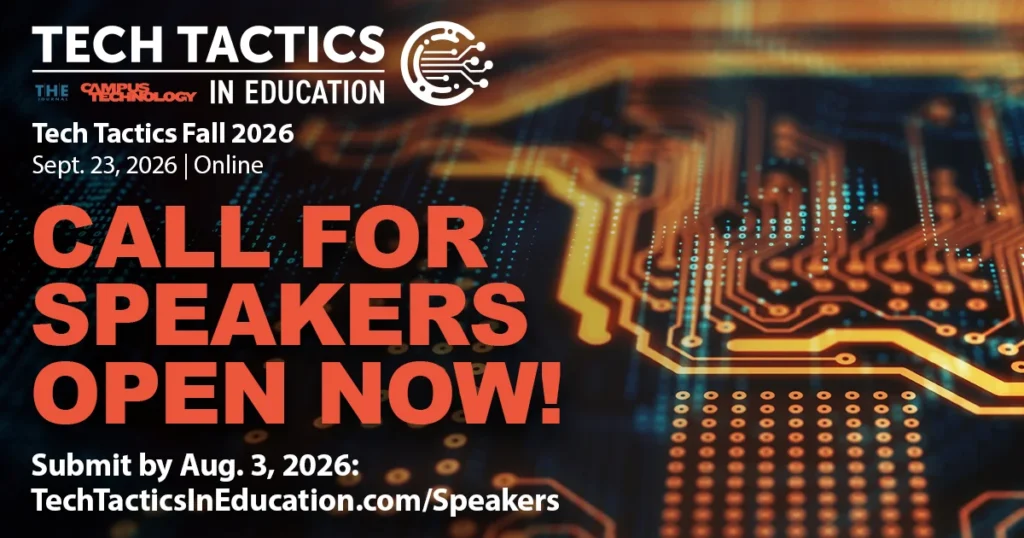
The Tech Tactics in Education Fall 2026 virtual conference, a premier event developed by the seasoned producers of Campus Technology and THE Journal, has officially opened its call for speakers. Scheduled for September 23, 2026, the online gathering is poised to deliver comprehensive, hands-on learning experiences, actionable insights, and strategic discussions crucial for navigating the evolving technological landscape across K-12 and higher education institutions. This year’s conference will place a significant emphasis on the transformative potential and challenges associated with artificial intelligence (AI), cybersecurity, data management, and broader educational technology trends.
About Tech Tactics in Education: A Legacy of Insight
Tech Tactics in Education is a cornerstone event for IT leaders, administrators, and educators seeking to harness technology effectively within their institutions. Organized by 1105 Media’s Education Technology Group, which includes the respected publications Campus Technology and THE Journal, the conference benefits from decades of expertise in covering the intersection of technology and education. Campus Technology has long served as an authoritative voice for higher education IT leaders, offering insights into campus-wide technology initiatives, infrastructure, and innovation. Similarly, THE Journal provides critical intelligence for K-12 technology decision-makers, focusing on digital learning tools, administrative systems, and IT infrastructure for primary and secondary schools.
The synergy between these two publications ensures that Tech Tactics in Education addresses the unique yet often overlapping challenges and opportunities faced by both K-12 and higher education sectors. The virtual format of the conference, which has become a staple for many professional development events, offers unparalleled accessibility, allowing a diverse global audience to participate without the constraints of travel and accommodation. This format not only democratizes access to cutting-edge information but also aligns with sustainable practices, reducing the carbon footprint associated with large-scale in-person gatherings. Previous iterations of Tech Tactics have consistently drawn thousands of attendees, demonstrating a clear demand for practical, expert-led guidance in the rapidly changing field of education technology. The Fall 2026 event is expected to continue this trend, offering a dynamic platform for knowledge exchange and professional growth.
Thematic Focus: Navigating the AI Frontier and Fortifying Digital Defenses

The 2026 program is meticulously designed to address the most pressing technological issues impacting educational institutions today, with a particular focus on artificial intelligence and cybersecurity. Rhea Kelly, editor-in-chief for Campus Technology, THE Journal, and Spaces4Learning, highlighted the critical juncture at which education currently stands. "The rapid advancement of AI is reshaping every facet of education, from how students learn to how institutions operate. Simultaneously, the sophistication of cyber threats demands unwavering vigilance and strategic planning," Kelly noted. "Tech Tactics in Education Fall 2026 aims to equip leaders with the knowledge and tools to not only adapt to these changes but to leverage them responsibly and effectively for institutional success and student well-being."
The conference program will feature concurrent sessions organized into three distinct, yet interconnected, tracks:
1. AI’s Intersection with Students
This track delves into the pervasive influence of artificial intelligence across all aspects of the educational ecosystem, from classroom instruction to administrative functions. The organizers are seeking proposals that demonstrate practical applications of AI to advance institutional missions, offer expert advice on mitigating AI-related risks, identify emerging trends, and establish guidelines for responsible implementation. The goal is to provide attendees with concrete examples and actionable strategies for integrating AI thoughtfully.
Potential topics under this track are extensive and include: AI in educational technology, the transformative impact of generative AI on learning methodologies, the rise of agentic AI systems, frameworks for evaluating AI tools, essential AI skills and training programs for faculty and students, the development and enforcement of AI policies, the role of predictive analytics in student success, the deployment of AI chatbots for student support, and the integration of AI into various student services. Recent market analyses project the global AI in education market to reach over $30 billion by 2030, underscoring the urgency and relevance of this track. Institutions are increasingly exploring AI to personalize learning, automate administrative tasks, and provide data-driven insights into student performance, making practical guidance on these applications invaluable.
2. AI’s Impact on Cybersecurity and Privacy
Educational institutions, from K-12 districts to large universities, remain prime targets for a spectrum of cyberattacks, including ransomware, malware, phishing expeditions, and data breaches. The emergence of AI introduces both new vulnerabilities and advanced defensive capabilities. This track is designed to provide IT leaders with critical information to defend their institutions proactively and facilitate recovery in the aftermath of an incident, with a strong emphasis on how AI is reshaping cybersecurity strategies. The call for speakers in this area seeks best practices, compelling case studies, lessons learned from real-world scenarios, practical tips and tutorials for prevention and recovery, and insights into future trends and predictions in data and network security.
Relevant topics for this crucial track encompass: AI-powered cybersecurity tools, principles of responsible AI development and deployment in security contexts, comprehensive incident response planning, advanced threat detection mechanisms, strategies for combating ransomware, robust network and data security protocols, safeguarding student and staff privacy, optimizing security operations centers, strategic cybersecurity planning, leadership in IT security, funding and budgeting for cybersecurity initiatives, identity management solutions, zero-trust architectures, cloud security best practices, combating sophisticated phishing attacks, cultivating cybersecurity awareness across the institution, understanding cyber liability insurance, securing remote work and learning environments, AI risk management frameworks, disaster recovery planning, and effective staff training programs. The National Center for Education Statistics reported a significant increase in cyberattacks on K-12 schools, with over half experiencing at least one attack in a recent academic year, highlighting the critical need for robust cybersecurity discussions.

3. AI Leadership: From Strategy to Action
This track is tailored for education leaders who are ready to move beyond exploratory discussions of AI to the intentional development and implementation of institution-wide AI strategies. Presentations will focus on practical approaches to harmonizing policy, pedagogical practices, and operational frameworks. Speakers are encouraged to share strategies for supporting diverse stakeholders, regardless of their current AI readiness, and for establishing responsible AI governance structures. Attendees will gain actionable guidance on constructing sustainable AI strategies that skillfully balance innovation with the imperative of academic integrity, ethical usage, and long-term institutional goals.
Key topics within this leadership-focused track include: comprehensive AI strategy development, robust AI governance models, effective data governance, seamless AI integration strategies, the formulation of institutional AI policies, assessing and enhancing AI readiness across departments, implementing change management protocols for AI adoption, designing effective AI professional development programs for faculty and staff, and exploring various leadership strategies for successful AI implementation. The strategic integration of AI requires a holistic approach, considering not just the technology itself but also the organizational culture, ethical frameworks, and human capital development. This track aims to empower leaders to champion this complex but vital transformation.
Speaker Submission Details and Benefits
Prospective speakers are encouraged to submit proposals for a variety of in-depth and interactive session formats designed to maximize attendee engagement and learning. These formats include:
- Panel Discussions: These sessions feature a moderator facilitating a conversational exchange among at least two panelists on a significant topic or issue pertinent to the education community. Proposers must secure all panelists prior to submission.
- Hands-on Tutorials: Led by experienced education practitioners, these workshop-style sessions allow attendees to actively participate in brainstorming, problem-solving exercises, small group activities, or other engagements directly relevant to their institution’s technology needs. These are particularly valued for their practical takeaways.
- Campus/Expert Perspectives: In these sessions, an individual or a team presents first-hand experiences from a technology project implemented at their institution or shares specialized expertise on a particular subject matter. These often serve as compelling case studies or deep dives into specific challenges and solutions.
The organizers are particularly interested in presenters who can offer hands-on exercises or concrete, reproducible takeaways that attendees can immediately utilize to refine IT practices within their own institutions. Submissions will be rigorously evaluated based on their relevance to the education field, the clarity and conciseness of the title and abstract, the potential usefulness of the content to attendees, and the extent to which they cover current issues and emerging trends.
The deadline for proposal submissions is August 3, 2026. Presenters should ideally be higher education and K-12 IT leaders and practitioners, independent consultants, leaders from association or nonprofit organizations, and other experts actively engaged in the field of technology in education. While industry experts are welcome, their presentations must be non-promotional and focus purely on educational value and insights.

A significant benefit for selected speakers is complimentary registration to the Tech Tactics in Education Fall 2026 conference, providing them with full access to all sessions and networking opportunities. This ensures that presenters can also benefit from the collective wisdom and diverse perspectives offered throughout the event.
Broader Impact and Implications for Education Technology
The Tech Tactics in Education Fall 2026 conference arrives at a critical juncture for the global education sector. The acceleration of digital transformation, largely spurred by recent global events, has underscored the indispensable role of technology in ensuring educational continuity and innovation. However, this rapid adoption has also magnified existing challenges related to digital equity, infrastructure disparities, and the ever-present threat of cyberattacks.
Events like Tech Tactics serve as vital platforms for addressing these complex issues head-on. By fostering dialogue around AI’s ethical integration, robust cybersecurity strategies, and effective leadership in technology adoption, the conference contributes significantly to building more resilient, equitable, and future-ready educational institutions. The insights shared by speakers will not only inform immediate operational improvements but also shape long-term strategic planning, helping institutions navigate the complexities of digital transformation with confidence and foresight.
The emphasis on practical, actionable advice reflects a deep understanding of the budgetary and resource constraints often faced by educational entities. By providing models for implementation, best practices, and strategies for effective technology leadership, the conference empowers attendees to make informed decisions that maximize the impact of their technology investments. The virtual format further amplifies this impact, breaking down geographical barriers and making expert knowledge accessible to a broader audience of professionals who might otherwise be unable to attend.
Ultimately, Tech Tactics in Education Fall 2026 is more than just a conference; it is a community-driven initiative aimed at collectively advancing the state of education technology. By convening thought leaders, practitioners, and innovators, it facilitates the exchange of ideas that will define the future of learning and institutional operation in an increasingly digital world.

To submit a proposal and learn more about the speaker guidelines, interested individuals are encouraged to visit the official call for speakers page. Further information about the conference can be found at techtacticsineducation.com.
About the Author
Rhea Kelly is editor in chief for Campus Technology, THE Journal, and Spaces4Learning. She can be reached at [email protected].