


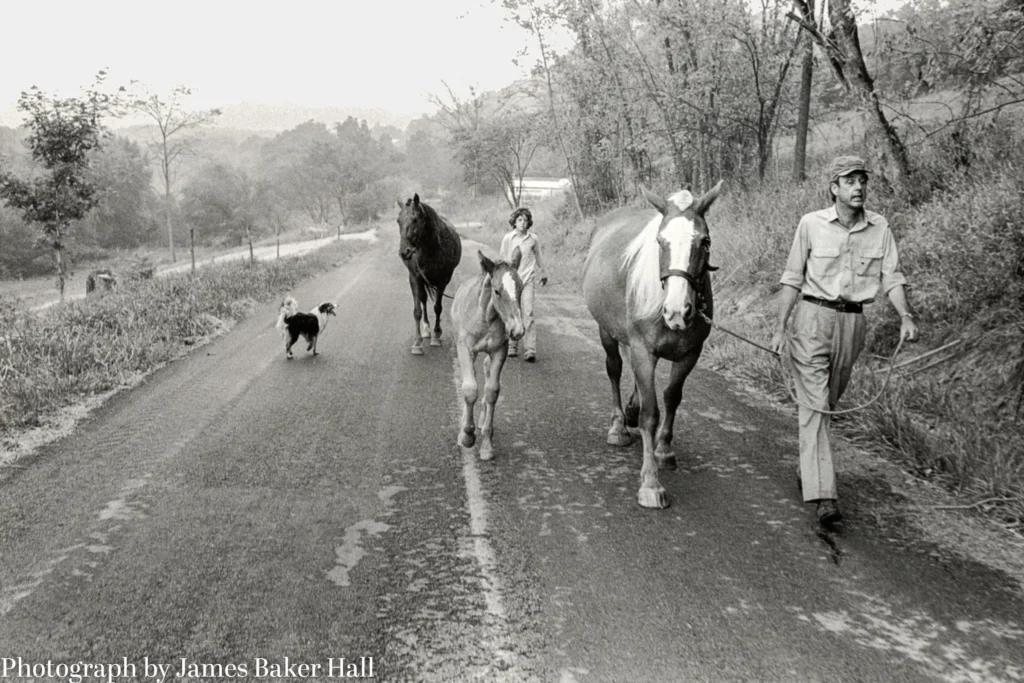
The passing of Wendell Berry at his homestead in Port Royal, Kentucky, at the age of 92 marks the conclusion of a singular life dedicated to agrarianism, environmental advocacy, and literary craftsmanship. Berry, whose career spanned over six decades, spent his final years living much as he had for most of his adult life: working the land of Henry County using traditional farming techniques, writing prose and poetry by hand in a remote cabin devoid of electricity, and maintaining a steadfast commitment to the principles of place-based stewardship. While his death closes a remarkable chapter in American letters and ecological thought, it also prompts a broader cultural reexamination of his philosophy, particularly regarding intentional living in an increasingly digital and automated era.
Main Facts and Biographical Overview
Wendell Erdman Berry was born on August 5, 1934, in Henry County, Kentucky, into a family with deep agrarian roots spanning multiple generations. Despite his rural upbringing, Berry initially pursued a conventional path through the upper echelons of American academia. He earned both his Bachelor of Arts and Master of Arts degrees from the University of Kentucky before attending Stanford University as a creative writing fellow.
His early career trajectory pointed toward elite literary and academic success. A prestigious Guggenheim Fellowship allowed him to travel and write in Europe, specifically in Italy and France, during the early 1960s. Upon returning to the United States, Berry accepted a professorship in the English department at New York University’s Bronx campus. By all conventional metrics of the mid-20th-century American intellectual establishment, Berry had secured a prominent, highly sought-after position.
Yet, in 1964, at the age of 29 and with a young family to support, Berry executed a radical professional and geographic pivot. He resigned from his tenure-track position at NYU, turned his back on the metropolitan literary circles of New York City, and returned permanently to Henry County, Kentucky. There, he purchased a modest hillside farm, re-engaging with the rhythms of manual labor, local community life, and regional conservation. Over the next half-century, Berry authored dozens of books of poetry, fiction, and essays, becoming one of the nation’s most formidable critics of industrial agriculture and corporate consolidation.
Chronology of a Radical Departure
The decision to abandon a promising academic career in favor of rural obscurity was met with profound incomprehension by Berry’s contemporaries. Archival accounts and later reflections by literary historians highlight the dramatic nature of his departure from NYU.
Upon submitting his formal resignation, Berry was summoned to the office of a senior faculty supervisor. The department administrator, operating under the assumption that the young scholar simply miscalculated the value of what he was surrendering, made a final appeal. The supervisor warned Berry that leaving the cultural and intellectual epicenters of the metropolis for the isolation of rural Kentucky was tantamount to "intellectual death." Invoking Thomas Wolfe’s famous dictum, the administrator cautioned Berry that "you can’t go home again," predicting professional irrelevance and obscurity.
Berry, however, remained unmoved. Driven by a burgeoning conviction that an authentic relationship with the land required total immersion and fidelity, he proceeded with the move. In subsequent interviews, Berry reflected on the necessity of this physical and intellectual grounding. Speaking with journalists late in life, he noted that the landscape served as an indispensable check on his observations. By living and working alongside individuals from all walks of life in rural Kentucky rather than pontificating from afar, Berry cultivated a worldview anchored in direct experience rather than abstract theory.
Supporting Data and Literary Output
Berry’s return to Kentucky catalyzed an extraordinary literary and agricultural output. Over his lifetime, he published more than fifty books, establishing himself as a foundational voice in the American environmental movement. His 1977 seminal work, The Unsettling of America: Culture and Agriculture, became a touchstone text for critics of modern agribusiness, warning of the ecological and social degradation wrought by the industrialization of food production.
Statistical metrics from the U.S. Department of Agriculture (USDA) during Berry’s lifetime underscore the urgency of his warnings. Throughout the mid-to-late 20th century, the American agricultural landscape underwent a massive consolidation. The number of U.S. farms peaked at nearly 6.8 million in 1935, declining steadily to approximately 2 million by the early 21st century, while average farm size more than doubled. Berry’s writings meticulously documented the human cost of this structural shift: the erosion of rural communities, the loss of agricultural biodiversity, and the severing of the cultural connection between humans and the natural world.
Official Responses and Cultural Reactions
Following the announcement of Berry’s death, tributes poured in from literary institutions, environmental organizations, and public intellectuals across the political spectrum. Colleagues and admirers lauded his rare consistency—a rare instance of a thinker whose personal lifestyle rigorously matched his public philosophy.
The National Endowment for the Humanities, which awarded Berry the National Humanities Medal in 2010, released a statement recognizing him as a prophetic voice for the American landscape. Environmental advocacy groups emphasized his early warnings regarding soil depletion and water pollution, noting that many of the practices Berry championed in the 1960s—such as rotational grazing, local food economies, and organic land management—have since become mainstream components of sustainable agriculture.
Scholars of American literature noted that Berry’s resistance to industrial capitalism extended far beyond farming. His critiques encompassed the mechanization of human thought, the dangers of centralized economic power, and the spiritual alienation engendered by modern technological progress.
Broader Impact and Implications for Contemporary Society
In the decades following his return to Henry County, the cultural landscape of the United States shifted in ways that render Berry’s critiques increasingly prescient. Contemporary society is defined by unprecedented levels of digital connectivity paired with profound psychological fragmentation.
Modern knowledge work has largely migrated to digital platforms, characterized by perpetual notifications, asynchronous communication loops, and a reliance on artificial intelligence tools designed to minimize cognitive friction. Rather than engaging deeply with complex problems, contemporary office workers frequently navigate a theatrical ecosystem of virtual meetings, instant messaging threads, and automated summaries. Simultaneously, civic discourse has retreated into algorithmically reinforced echo chambers on social media, where complex policy challenges are reduced to binary ideological conflicts.
Berry’s life and work offer a pointed analytical framework for evaluating these modern conditions. His rejection of technological convenience was not rooted in mere nostalgia or anti-modern sentimentality, but in a rigorous defense of human agency. Berry argued that the intentional embrace of physical difficulty—whether through manual labor, land stewardship, or deep, uninterrupted concentration—builds psychological and moral resilience.
While the average citizen today cannot realistically abandon urban life to farm in rural Kentucky, cultural analysts suggest that Berry’s broader lesson lies in the pursuit of the "deep life." This paradigm encourages individuals to reject the superficiality of hyper-connected, automated routines in favor of purposeful engagement with their immediate surroundings, communities, and vocations.
As public mourning for Wendell Berry gives way to academic and literary retrospection, his legacy endures not merely as a relic of agrarian romanticism, but as a standing challenge to the foundational assumptions of 21st-century life. His 92 years stand as a testament to the viability of an intentional existence, demonstrating that fidelity to place, community, and purpose can successfully withstand the pressures of a rapidly accelerating world.