


Why do some dreams feel so vivid that they seem almost real, while others unfold as confusing fragments that are difficult to remember or understand? New research suggests the answer may depend on a combination of personality, sleep quality, mental habits, and major events unfolding in the outside world. This complex tapestry of nocturnal cognition has long remained a subjective mystery, but a groundbreaking study led by the IMT School for Advanced Studies Lucca has begun to map the underlying architecture of the dreaming mind, proving that our nighttime narratives are far from random sequences of synaptic firing.
The study, published in the journal Communications Psychology, represents a significant departure from traditional, small-scale dream analysis. By synthesizing data from 287 participants aged 18 to 70 and analyzing over 3,700 individual dream reports, researchers have successfully moved beyond the anecdotal. The investigation utilized sophisticated natural language processing (NLP) to quantify the "semantic structure" of human dreams—how concepts, emotions, and settings are woven together—offering an objective lens into a domain once thought to be purely chaotic.
A Chronology of Discovery: From Lockdown to Data Synthesis
The impetus for this research can be traced back to the onset of the COVID-19 pandemic, a period that acted as a global catalyst for heightened dream vividness and collective anxiety. During the 2020 lockdowns, researchers at the Sapienza University of Rome began collecting extensive dream reports, observing that the forced confinement and societal disruption were being directly mirrored in the psychological landscape of participants’ sleep.
Following this initial observation, the team at the IMT School for Advanced Studies Lucca expanded the scope of the inquiry. Over a two-week period, participants were tasked with maintaining detailed logs of both their waking lives and their nocturnal experiences. Researchers simultaneously collected granular data on the participants’ cognitive profiles, sleep hygiene, and personality traits. By comparing the structural patterns of these records, the team was able to build a longitudinal dataset that captured how the brain processes, transforms, and stores life events during the rapid eye movement (REM) and non-REM cycles.
The findings suggest that the pandemic-era dreams were not anomalous, but rather an extreme example of a universal phenomenon: the brain’s continuous, dynamic effort to integrate the day’s stressors into an existing mental framework. As the global crisis eased, researchers noted a corresponding shift in dream content, confirming that the sleeping mind is a sensitive barometer for psychological adjustment.
The Mechanism of Transformation: Why Dreams Are Not Replays
One of the most persistent myths in neuroscience is the "replay theory," which posits that dreams are simply a high-definition recording of the previous day’s events. The IMT School study soundly debunks this notion. When comparing daily journals to dream reports, researchers discovered that while the "building blocks" of reality—such as a familiar office, a street, or a specific person—are present in dreams, they are rarely presented with fidelity.
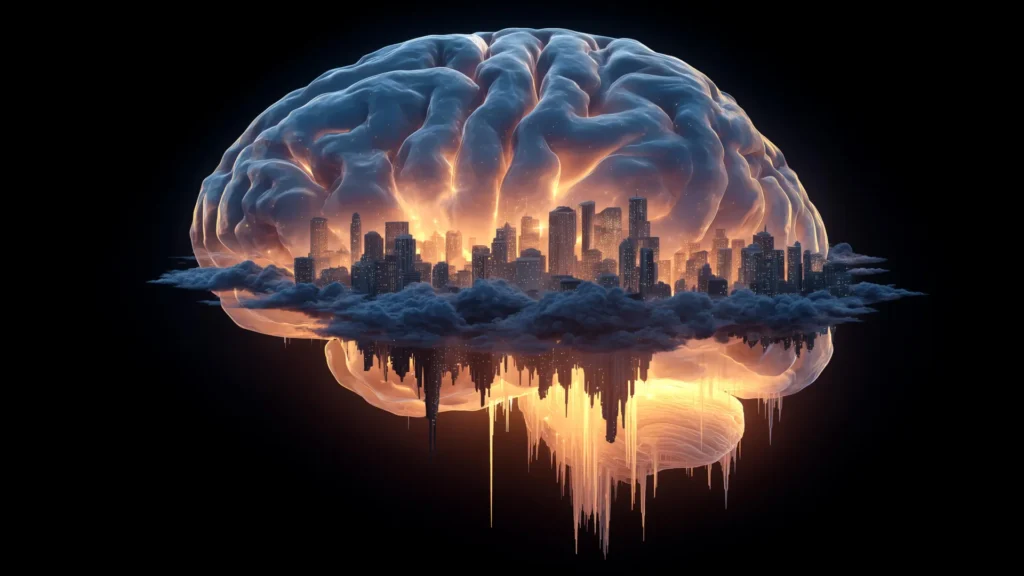
Instead, the brain engages in a process of "associative reorganization." A workplace might be fused with the architecture of a childhood home, or a social interaction might be stripped of its original context and placed in a surreal, dream-logic setting. This suggests that the sleeping brain is not a passive recording device, but an active architect. It extracts themes, emotions, and unresolved tensions from reality, reassembling them into novel scenarios. This process may serve an evolutionary purpose, allowing the mind to simulate future possibilities, rehearse social strategies, or consolidate long-term memory in a safe, controlled environment.
Personality as a Determinant of Dream Narrative
The study’s most intriguing contribution lies in its analysis of individual differences. Why does one person experience a cinematic, immersive dream while another reports a fleeting, fragmented haze? The researchers identified two primary drivers: cognitive style and subjective valuation.
Participants who displayed a high propensity for "mind-wandering"—the ability to let thoughts drift during waking hours—reported dreams that were characterized by rapid, erratic scene changes and high levels of narrative fragmentation. For these individuals, the boundary between wakefulness and sleep appears more porous, leading to a dream structure that mirrors the associative leaps of an unfocused mind.
Conversely, individuals who placed a high value on their dreams—those who kept dream journals or treated their nighttime experiences as a source of self-reflection—consistently reported richer, more vivid, and emotionally resonant dream states. While the researchers caution against a direct causal link, the data suggests that an intentional focus on one’s inner life fosters a "dream-recall feedback loop." By paying attention to dreams, the brain may prioritize their consolidation, making them feel more tangible and significant upon waking.
The Role of Artificial Intelligence in Decoding Consciousness
The use of NLP in this study marks a turning point in the field of oneirology—the scientific study of dreams. Historically, dream research has been hampered by the "interpretive bias" of human researchers, who might see patterns where none exist or project their own psychological theories onto participants’ reports.
By using machine learning models to analyze the semantic structure of thousands of reports, the team removed this subjective bottleneck. The AI was able to map the connections between concepts with a consistency that matched expert human evaluators, but at a speed and scale that allowed for statistical significance. This computational approach confirms that there is a measurable "syntax" to dreaming. This does not imply that dreams are a secret language to be deciphered, but rather that they possess a stable, observable structure that can be analyzed like any other linguistic data.
Broader Implications for Mental Health and Neuroscience
The implications of this research extend far beyond the bedside. If dreams are a reliable indicator of how the brain responds to environmental stress, they could serve as a valuable diagnostic tool in clinical settings.
"Our findings show that dreams are not just a reflection of past experiences, but a dynamic process shaped by who we are and what we live through," said Valentina Elce, the lead author of the study. This perspective aligns with current theories on emotional regulation, suggesting that dreaming is a vital mechanism for "cooling down" the intensity of life’s events. When this mechanism fails—as seen in patients with post-traumatic stress disorder (PTSD), where dreams often become repetitive, vivid, and intrusive—it may indicate a breakdown in the brain’s ability to process and reorganize emotional data.
Furthermore, this study opens new doors for studying consciousness. If we can objectively track how an individual’s dream structure changes in response to trauma, therapy, or medication, we may gain a deeper understanding of the efficacy of mental health interventions. The collaboration between the IMT School for Advanced Studies Lucca, the Sapienza University of Rome, and the University of Camerino highlights the necessity of interdisciplinary work in tackling the mysteries of the human condition.
Looking Toward the Future
As artificial intelligence continues to advance, the ability to decode the "dreaming mind" will likely become more refined. Future research, supported by grants such as those from the BIAL Foundation and the TweakDreams ERC project, will likely focus on larger, more diverse populations to determine if these patterns hold true across different cultural, linguistic, and neurological backgrounds.
The research concludes that the dream is a sophisticated, highly personalized simulation. It is a synthesis of our past, our fears, our aspirations, and our unique cognitive quirks. By utilizing big data and computational power, science is finally beginning to peel back the curtain on the most private of human experiences. We now know that when we dream, we are not merely "sleeping"; we are engaging in a complex, active dialogue with our own consciousness, refining our internal maps of the world to better navigate the complexities of our waking lives.
As we move forward, the integration of AI in dream research suggests that the "confusing fragments" of our nights may soon be understood as the vital, orderly, and deeply meaningful processes they truly are.