

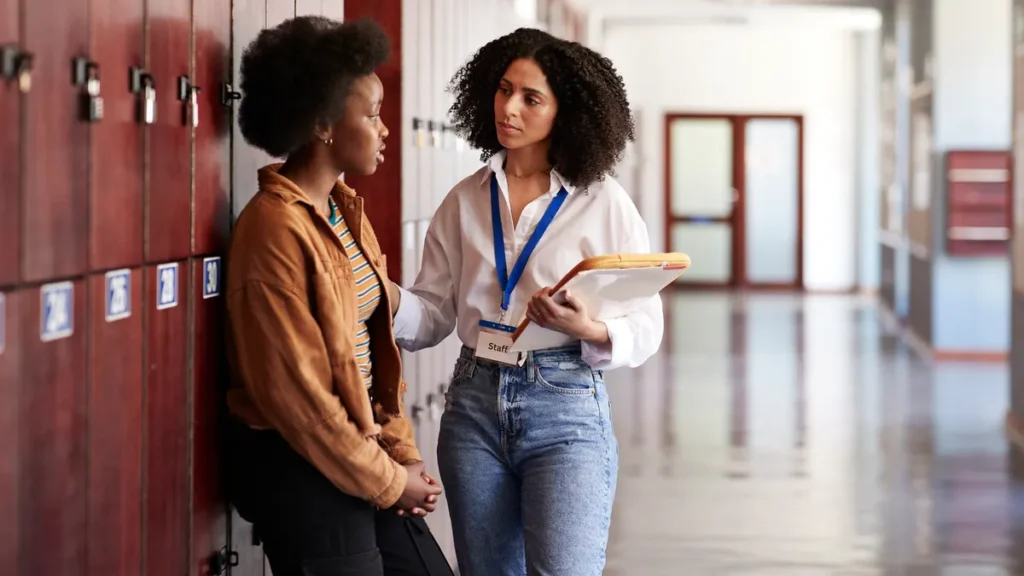
The architecture of student success in modern secondary education relies heavily on academic metrics such as grade point averages, standardized test scores, and attendance records. However, a sweeping new body of educational research suggests that an equally powerful and often overlooked catalyst for student achievement exists in the realm of interpersonal trust. According to a comprehensive analysis released by Equal Opportunity Schools and the Center for Trust and Transformation, the deliberate and strategic cultivation of relationships between students and school staff can profoundly expand access to advanced coursework, combat chronic absenteeism, and re-engage marginalized youth.
Published in September 2026, the findings stem from a massive empirical review encompassing data from more than 1.8 million student records, 77,000 staff records, 1,404 schools, and 450 school districts within the Equal Opportunity Schools network. The core revelation of the study is as simple as it is challenging: while trusted adults act as critical bridges to academic and extracurricular opportunities, access to these vital relationships is deeply unequal, falling along persistent racial and ethnic lines.
Disparities in Trust: The Uneven Landscape of School Connectivity
The analysis revealed stark inequities regarding which students feel they have a trusted adult in their corner. Black, Indigenous, Latinx, and Hawaiian or Pacific Islander students consistently reported having access to a trusted adult at significantly lower rates than their White and Asian peers. Furthermore, the data highlighted a prevailing demographic homophily, with students overall demonstrating a higher statistical likelihood of naming a trusted adult who shared their specific racial or ethnic background.
While the underlying mechanisms driving these patterns are complex and multifaceted—rooted in systemic historical factors, staff demographics, and institutional culture—the practical consequences are profound. Trust-building does not occur in a vacuum; it serves as a primary conduit through which institutional knowledge and encouragement are transferred. When certain student populations experience deficits in trusted connections, they are systematically cut off from the informal networks that guide adolescents toward rigorous academic pathways.
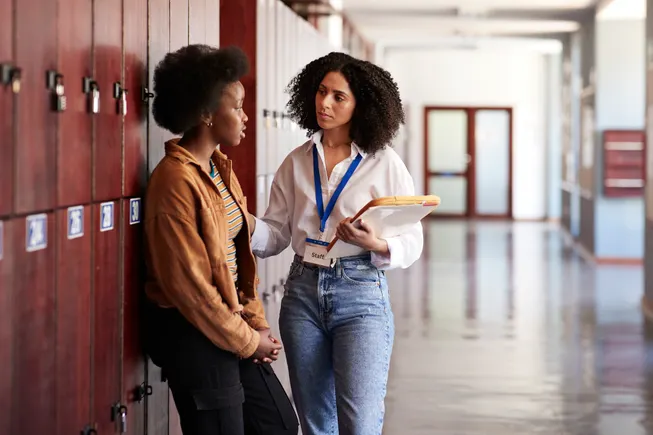
Education researchers note that while building trust can be complicated, schools cannot afford to treat relationships as a matter of serendipity. Instead, the organizations behind the study argue that educational leaders must operationalize trust, transforming interpersonal connections into strategic engines for equity and academic mobility.
The Missing Link: Advanced Placement and the Recommendation Barrier
To understand how the absence of trust directly impacts academic trajectories, the findings from the Equal Opportunity Schools analysis must be viewed alongside a connected study conducted in partnership with the Learning Collider. This separate research initiative focused on human-centered artificial intelligence and technology, examining more than 284,000 observational data points concerning 10th and 11th-grade students enrolled across the Equal Opportunity Schools network.
The focus rested on a specific demographic: students who were not currently enrolled in Advanced Placement (AP) classes but maintained a grade point average of 3.0 or higher, indicating clear academic readiness for rigorous coursework. Despite their proven capability, the data revealed a glaring disconnect. Approximately 45% of these academically qualified students did not receive a teacher recommendation for advanced coursework. Even more concerning, roughly 24% of this high-achieving population neither received a teacher recommendation nor reported having a trusted adult connection within the school building.
These figures illustrate that academic readiness alone is an insufficient predictor of enrollment in advanced classes. When students possess the intellectual capability for rigorous study but lack the advocacy of a trusted teacher, counselor, or coach, the bridge to advanced placement courses collapses. The research underscores that for many students, the transition from potential to participation is far from automatic; it requires an active, relational champion within the faculty or staff.
Voices from the Field: Leadership Perspectives and the Urgency of Scale
AJ Gutierrez, CEO of Equal Opportunity Schools, emphasized the gravity of the findings in an email statement addressing the implications of the research.

"These studies reinforce how much trusted relationships matter in schools," Gutierrez stated. He noted that while the correlation between trust and opportunity is clear, the pressing challenge for educational administration lies in scaling these interventions effectively. "The next step is to explore how to turn trusted school-based relationships into opportunities for students. We still have more to learn about how schools can do that consistently and at scale."
Gutierrez further connected the findings to the broader systemic crises currently plaguing American K-12 education, noting that student disengagement and chronic absenteeism remain at historic highs across numerous districts. In this climate, understanding and intentionally fostering relational connections has transformed from an auxiliary pastoral goal into a core operational necessity.
The organizations involved in the research bring distinct forms of expertise to the table. Equal Opportunity Schools, a national nonprofit organization, has a proven track record spanning more than 900 schools across 250-plus districts, focusing specifically on identifying underrepresented students and enrolling them in advanced courses. Meanwhile, the Center for Trust and Transformation specializes in providing comprehensive coaching, consulting, and research to empower individuals and educational teams to foster cultures of trust. The collaboration between these entities and research partners like the Learning Collider represents an increasingly data-driven, empirical approach to solving long-standing equity challenges in public education.
Practical Implications: Operationalizing Trust in the Modern Classroom
Moving from broad sociological observations to actionable school reform requires a fundamental shift in how educators view their professional roles. Historically, classroom instruction has been compartmentalized strictly into academic delivery, leaving emotional and relational support to guidance counselors or social workers. However, the new data suggests that every school staff member—from AP calculus teachers to athletic coaches—must recognize their role as an opportunity broker.
The report offers concrete examples of how schools can leverage relationships strategically:

- Targeted Professional Development: Training teachers not merely in pedagogical content delivery, but in active listening, cultural competency, and the art of encouraging historically underrepresented students to step into rigorous classes.
- Holistic Staff Integration: Equipping coaches, extracurricular advisors, and paraprofessionals with the tools to identify disengaged students and channel them toward academic and social support systems.
- Institutional Auditing: Regularly assessing school climate and trust networks to identify which student demographics are isolated from faculty mentorship, allowing administrators to intervene proactively.
By intentionally coupling academic tracking systems with relational mapping, schools can begin to dismantle the invisible barriers that prevent capable students from accessing advanced curricula.
Broader Impact on Chronic Absenteeism and Student Engagement
Beyond Advanced Placement enrollment, the broader implications of this research intersect directly with the post-pandemic crisis of chronic absenteeism. Educational experts have long argued that students are unlikely to attend school consistently if they do not feel a sense of belonging, safety, and mutual respect within the building.
When marginalized students consistently report lower rates of trusted relationships with adults, the resulting alienation directly fuels disengagement. Conversely, when schools implement systematic programs to ensure that every student is known well by at least one adult—often referred to in reform circles as "activations of the advisory model"—attendance metrics tend to stabilize.
As school districts nationwide grapple with tightening budgets, shifting demographics, and the long-term academic recovery of a generation of students disrupted by remote learning, the insights from Equal Opportunity Schools and the Center for Trust and Transformation provide a clear roadmap. Trust is not a soft, unmeasurable variable; it is a measurable structural asset. Transforming how schools build, distribute, and utilize trust may well determine whether the next generation of students can fully realize their academic and professional potential.