


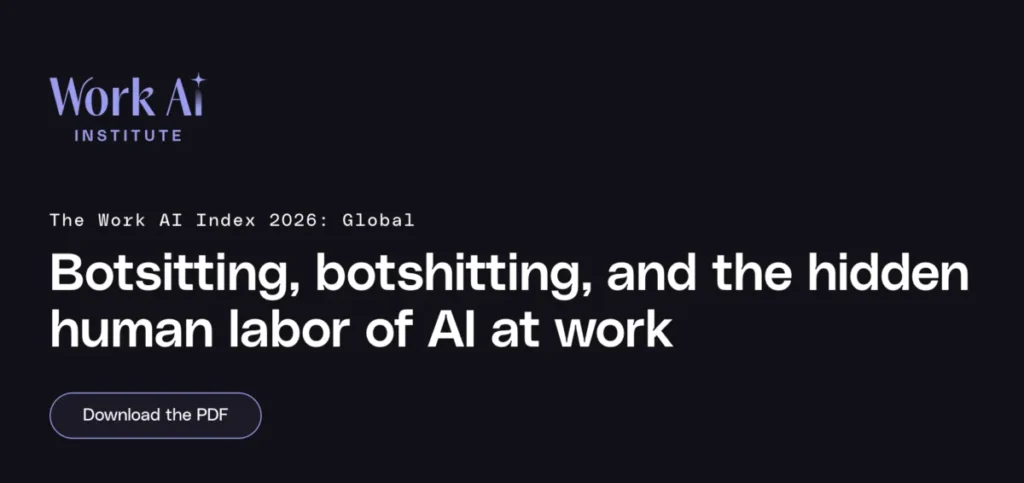
A recent report by the Financial Times, detailing an interview with Rebecca Hinds, head of the Work AI Institute, has illuminated a profound paradox at the heart of modern workplace productivity. Based on a comprehensive survey of 6,000 digital workers, the findings reveal a stark disconnect: while respondents claimed that artificial intelligence tools saved them an average of 11 hours per week, a mere 13% reported any discernible improvement in overall company performance. This discrepancy suggests that the integration of AI, far from being a panacea for efficiency woes, is instead magnifying long-standing, unaddressed structural inefficiencies within the contemporary work environment. As author Cal Newport, whose book Slow Productivity was published in early 2024 and predates the current AI-centric discourse, points out, these emerging challenges are not entirely new; they are echoes of problems that have plagued digital workplaces for decades, now amplified by the latest technological wave.
The Unsettling Paradox of AI Productivity
The promise of artificial intelligence in the workplace has been nothing short of revolutionary. From automating mundane tasks to enhancing analytical capabilities, AI was heralded as the definitive solution to boost efficiency, free up human capital for higher-value work, and ultimately drive corporate growth. The survey data, indicating an average saving of 11 hours per week per digital worker, initially appears to validate these high expectations. Such a figure, extrapolated across a large workforce, should theoretically translate into significant gains in output, innovation, or strategic development. Yet, the reality, as captured by the paltry 13% figure for improved company performance, paints a different, more complex picture.
Rebecca Hinds and other industry experts are grappling with several leading hypotheses to explain this profound paradox. One key factor is the illusion of time savings. While AI may indeed automate specific tasks, the time "saved" might not be strategically reallocated to high-impact activities. Instead, workers might find themselves filling this newly available time with more low-value, reactive tasks, or simply expanding existing administrative burdens. For instance, an AI tool that drafts emails might save minutes, but if those minutes are then spent sifting through an increased volume of AI-generated content or attending more meetings that could have been emails, the net gain to strategic output is negligible.
Another critical hypothesis revolves around strategic misalignment and the absence of holistic integration. Many organizations appear to be adopting AI tools in a piecemeal fashion, focusing on individual task automation without a broader strategy for how these efficiencies should cascade into organizational performance. This often means that while individual tasks become faster, the overall workflow, inter-departmental communication, and decision-making processes remain unchanged or become even more fragmented. The lack of a clear framework for identifying high-value activities and then actively reallocating freed-up time and resources to them is a significant impediment to realizing tangible benefits.
Furthermore, AI, when poorly integrated, can inadvertently contribute to magnified digital distraction and cognitive overload. Instead of simplifying workflows, the proliferation of new AI tools, platforms, and interfaces can add another layer of complexity to an already fragmented digital ecosystem. Workers might find themselves constantly switching between traditional applications and new AI interfaces, leading to increased context-switching costs and reduced capacity for sustained, focused attention. This echoes long-standing issues with digital overload, now compounded by the perceived urgency and novelty of AI.
Finally, a fundamental challenge lies in the lack of organizational adaptation. The underlying structures, incentive systems, and management philosophies of many companies have not evolved to leverage the potential of AI. If employees are still measured by activity rather than outcome, if managers don’t provide clear guidance on how to utilize AI-derived efficiencies for strategic gains, and if the culture prioritizes "busyness" over deep work, then AI will simply accelerate existing inefficiencies rather than solving them.
A Historical Echo: The Legacy of Digital Tools
The observations made by Cal Newport in his book Slow Productivity provide a crucial historical lens through which to understand the current AI paradox. Newport argues that true accomplishment in the modern age requires a deliberate rejection of "pseudo-productivity" – the feeling of being busy and active without actually generating meaningful, high-value output. His work, which deliberately avoids mentioning AI, highlights how many of the issues now being attributed to artificial intelligence are, in fact, long-standing problems exacerbated by an earlier generation of digital tools.
Consider the evolution of workplace technology. Email, once hailed as a revolutionary communication tool, quickly devolved into a constant source of interruption and administrative burden, demanding continuous monitoring and rapid responses. Collaborative platforms like Slack and Microsoft Teams, designed to foster seamless communication, have often led to an "always-on" culture, creating a relentless stream of notifications that fragment attention and disrupt deep work. Video conferencing, while enabling remote collaboration, has contributed to "Zoom fatigue" and an increasing number of often-ineffective meetings. Even mobile computing, by blurring the lines between work and personal life, has made it harder for individuals to disconnect and engage in restorative activities, fueling burnout.
Newport’s concept of "pseudo-productivity" perfectly encapsulates how these tools, despite their initial promise of efficiency, have often led to a state where workers feel constantly busy but struggle to produce impactful results. The endless cycle of checking inboxes, responding to chat messages, and attending back-to-back virtual meetings creates an illusion of productivity, masking a deeper inefficiency where true cognitive work — critical thinking, problem-solving, strategic planning, and creative output — is constantly interrupted and undermined.
This isn’t a new phenomenon. Economists in the 1980s and 90s wrestled with the "productivity paradox" of information technology, noting that despite massive investments in computers and software, national productivity growth remained stubbornly low. It took decades for organizations to fully adapt their processes, training, and structures to truly leverage IT’s potential. AI, as a general-purpose technology, appears to be encountering a similar implementation lag, but on an accelerated timeline, underscoring that technological advancement alone does not guarantee productivity gains without parallel organizational and behavioral shifts.
The Broader Context: The Enduring "Brokenness" of Modern Work
The AI productivity paradox, therefore, is not a novel crisis but rather a spotlight on the inherent "brokenness" that has long characterized modern digital work. Several systemic issues contribute to this fragility:
The Attention Economy and Cognitive Load: The digital environment is inherently designed to capture and sustain attention. This constant barrage of notifications, updates, and demands from multiple platforms fragments cognitive resources, making it exceedingly difficult for employees to engage in sustained, deep work. AI, by introducing new channels of interaction and potentially more information to process, can exacerbate this cognitive overload if not managed thoughtfully.
The Proliferation of Inefficient Meetings: Meeting culture has spiraled out of control in many organizations. Studies consistently show that a significant portion of meetings are unproductive, lacking clear agendas, objectives, or actionable outcomes. The time "saved" by AI automating tasks might simply be absorbed by an increased volume of these inefficient meetings, further eroding true productivity.
The "Always-On" Culture and Burnout: The expectation of immediate responsiveness, fueled by instant messaging and mobile devices, has created an "always-on" work culture. This erodes work-life boundaries, contributes to chronic stress, and ultimately leads to burnout, diminishing long-term productivity and creativity. AI, if perceived as a tool that enables even faster responses or continuous availability, could intensify this pressure.
Lack of Strategic Deep Work Protection: Many organizations fail to recognize the critical importance of protecting uninterrupted blocks of time for employees to engage in high-value, non-interruptible tasks. Instead, schedules are often a reactive mosaic of meetings, emails, and urgent pings, leaving little room for the concentrated effort required for complex problem-solving or innovation.
Flawed Productivity Metrics: A pervasive issue is the reliance on activity-based metrics (e.g., hours worked, emails sent, tasks completed) rather than outcome-based metrics (e.g., project completion, revenue generated, strategic goals achieved). This incentivizes "busyness" and pseudo-productivity, creating an environment where AI’s ability to automate activity might not translate into measurable strategic success.
Economic and Business Implications
The implications of this AI productivity paradox are far-reaching, particularly for the burgeoning artificial intelligence sector and the broader global economy. Companies like OpenAI and Anthropic, on the cusp of significant public offerings, face immense pressure to demonstrate tangible return on investment for their technologies. If the initial widespread adoption of AI does not translate into verifiable improvements in company performance, investor confidence could wane, potentially leading to a re-evaluation of valuation models and future investment strategies in the sector.
For businesses across industries, the imperative to harness AI for genuine productivity gains is critical in a competitive global landscape. Failure to translate AI investments into performance improvements risks not only wasted capital but also a widening "AI washing" phenomenon, where companies adopt AI simply to appear innovative without a clear, strategic path to derive value. This could lead to disillusionment with the technology itself, hindering its long-term potential.
From a talent management perspective, the paradox also raises crucial questions about the future of work. If AI frees up significant employee time, how should organizations reskill, upskill, and redeploy their workforce? Without a strategic vision, this "saved" time could lead to underemployment, disengagement, or simply a shift of existing inefficiencies rather than a genuine elevation of human potential. The challenge is not just about adopting AI, but about redesigning entire roles and organizational capabilities around intelligent automation.
Towards a Solution: Recognizing the "Silver Lining"
Despite the sobering statistics, Cal Newport identifies a potential "silver lining" in the current situation: the sheer novelty and transformative potential of AI are compelling business leaders to pay unprecedented attention to its impacts. This heightened scrutiny, aimed at understanding how to make AI effective, might finally force organizations to confront and rectify the long-standing structural issues that have rendered work "broken" for decades.
Realizing the true potential of AI requires moving beyond superficial adoption to a more profound, strategic integration. This means:
- Redefining Workflows and Roles: Companies must undertake a fundamental rethinking of how work is structured, identifying which tasks are genuinely high-value and which can be automated or eliminated. This involves redesigning roles to leverage AI for augmentation, not just automation, empowering employees to focus on complex, creative, and strategic endeavors.
- Embracing "Slow Productivity" Principles: Organizations can learn from Newport’s work by fostering environments that prioritize deep work. This includes creating dedicated blocks of uninterrupted time, minimizing context switching through deliberate communication protocols (e.g., batching emails, scheduled check-ins), and shifting from activity-based metrics to clear, outcome-oriented performance indicators.
- Investing in Intentional Training and Change Management: Implementing AI successfully requires more than just deploying software. It necessitates comprehensive training for employees on how to effectively use AI tools, how to integrate them into new workflows, and crucially, how to reallocate their "saved" time to higher-value activities. Strong change management strategies are essential to overcome resistance and ensure smooth adoption.
- Leadership for Systemic Change: Business leaders must champion a cultural shift that values thoughtful output over frantic activity. This involves setting clear expectations for AI’s role, promoting work-life balance, and actively protecting time for focused, strategic work. Leaders must be willing to dismantle inefficient processes, even if they are deeply ingrained.
- Focusing on the Human-AI Partnership: The most effective use of AI will likely come from a symbiotic relationship where humans leverage AI for its strengths (data processing, pattern recognition, automation) and focus their own unique human capabilities on areas where AI is still deficient (critical judgment, creativity, emotional intelligence, complex problem-solving).
Expert Perspectives and Forward Outlook
The prevailing sentiment among thought leaders echoes the need for a more deliberate and strategic approach to AI. Industry titans like Satya Nadella of Microsoft and Sundar Pichai of Google, while immensely optimistic about AI’s long-term potential, frequently emphasize the importance of responsible AI development and human-AI collaboration. They acknowledge that the journey to pervasive, impactful AI integration is complex and requires continuous adaptation from both technology providers and user organizations.
Experts in organizational psychology and human resources, often drawing from experiences with previous technological shifts, stress the critical role of people-centric strategies. Consultants from firms like McKinsey and Deloitte highlight that successful AI adoption hinges on effective change management, fostering a culture of continuous learning, and ensuring psychological safety for employees navigating new tools and redefined roles. Without addressing the human element, even the most advanced AI will struggle to deliver its promised value.
Economists specializing in technology and productivity, such as Erik Brynjolfsson and Andrew McAfee, often point to the "implementation lag" associated with general-purpose technologies. They argue that significant productivity gains from such technologies typically materialize years, if not decades, after their initial introduction, as organizations learn to fundamentally reconfigure their operations around them. AI, despite its rapid advancements (exemplified by the explosive growth of large language models like ChatGPT), is unlikely to be an exception. It will require a period of profound organizational learning and adaptation to truly unlock its economic potential.
In conclusion, the current AI productivity paradox serves as a critical inflection point. It is not AI that is fundamentally breaking work; rather, AI is holding up a mirror to the long-standing, unaddressed inefficiencies that have rendered modern work "broken" for decades. The rapid advancements in AI present a unique and compelling opportunity for business leaders to move beyond superficial fixes and finally undertake the systemic organizational reforms necessary to cultivate truly productive, meaningful, and sustainable work environments. The challenge is immense, but the potential reward—a future where technology genuinely augments human potential and drives meaningful progress—is even greater.