

The integration of artificial intelligence into modern scientific research has introduced a complex dynamic into laboratories and academic institutions worldwide. While generative AI tools and large language models are successfully streamlining data processing, accelerating hypothesis generation, and broadening the scope of cross-disciplinary studies, these efficiency gains are increasingly being offset by a hidden operational cost. A landmark empirical study published in September, titled AI in Science: Early Insights and subsequently highlighted in Google’s AI & Economy ATLAS update, reveals that researchers are heavily taxing their newly found free time to meticulously check, audit, and debug the outputs generated by advanced algorithms.
The collaborative research initiative—drawing on resources from Google, Google DeepMind, and the Massachusetts Institute of Technology (MIT)—examines the pragmatic everyday realities of AI adoption in scientific workflows. Rather than focusing on theoretical catastrophic scenarios or hyperbolic debates concerning autonomous, rogue AI systems deceiving researchers, the findings ground the conversation in the mundane yet critical friction points of day-to-day scientific labor. These include the necessity of continuous validation, the proliferation of low-quality automated research, and the emergence of severe bottlenecks in physical experimentation that struggle to keep pace with algorithmic velocity.

Methodology and Empirical Foundations
To understand how AI is truly reshaping the scientific landscape, the authors of the September study compiled three expansive empirical datasets. The first component analyzed approximately 15 million anonymized interactions with Gemini, Google’s multimodal AI model, providing a granular view of how researchers prompt and utilize AI for technical queries and data manipulation. The second component established a comprehensive inventory of 2,690 specialized scientific AI models currently deployed across various disciplines. Finally, the researchers conducted a targeted survey of 637 active scientists based in the United States and the United Kingdom to capture qualitative and quantitative metrics regarding their daily workflows.
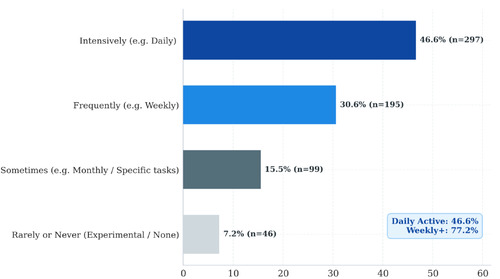
The survey data underscores the deep penetration of artificial intelligence into contemporary research environments. Nearly half of the responding scientists reported utilizing some form of AI on a daily basis. Among those who experienced a net time savings attributable to these technologies, the average reported gain was just under seven hours per week. Broadly speaking, approximately three-quarters of the surveyed cohort noted that AI tools had measurably reduced the duration of routine tasks, freeing up cognitive bandwidth that could theoretically be redirected toward core investigative endeavors. Furthermore, 68 percent of respondents indicated that AI had dramatically enhanced their access to insights and literature from outside their immediate fields of specialization, while 65 percent reported an expansion in the overall breadth and ambition of their research agendas.
The Verification Tax: Quantifying the Cost of Trust
Despite these encouraging productivity metrics, the study uncovered a significant counterweight that the authors term the "verification tax." In high-stakes scientific research, where methodological reproducibility and absolute accuracy are paramount, unverified machine outputs hold zero intrinsic value until proven otherwise. Consequently, among the scientists who reported saving time through AI adoption, approximately 89 percent stated that more than 10 percent of those saved hours were immediately funneled back into verifying, debugging, and fact-checking the technology’s work.
More strikingly, nearly half of these researchers—about 46 percent—reported that more than 25 percent of their saved time was consumed entirely by auditing AI outputs. This verification tax directly undermines the linear translation of algorithmic speed into accelerated discoveries. When a researcher saves six hours on a literature review or data formatting task but must spend two hours double-checking for algorithmic hallucinations, distorted references, or logical gaps, the net efficiency dividend shrinks considerably.

The study points to growing concerns regarding the integrity of the broader research pipeline. As AI models become more adept at rapidly generating plausible-looking hypotheses, papers, and codebases, they risk overwhelming existing institutional structures. Peer-review systems, editorial boards, and validation laboratories are already showing signs of strain under the sheer volume of output. Furthermore, the paper echoes warnings raised by prior researchers concerning "illusions of understanding"—instances where an AI’s fluent and authoritative delivery masks a fundamental lack of underlying factual rigor, leading unwary researchers down unproductive rabbit holes.
The Bottleneck of Physical and Clinical Validation
Google’s September 15 update to its AI & Economy ATLAS further contextualized these findings, emphasizing that digital acceleration does not automatically equate to accelerated physical progress. While a researcher can generate dozens of complex molecular hypotheses or simulation scripts in a matter of minutes using advanced LLMs, the subsequent physical testing of those hypotheses remains bound by the immutable laws of laboratory science, material supply chains, and clinical trial timelines.

Physical experimentation, synthesis, biological assays, and clinical validations cannot be instantly scaled up simply because an AI model drafted a better research proposal. As a result, laboratories are experiencing a new form of operational congestion: an accumulation of unverified hypotheses waiting for physical testing, coupled with a shortage of laboratory infrastructure capable of processing the sheer volume of ideas generated by AI. Google noted that these physical constraints represent a critical threshold in the AI-driven economy, dictating that technological acceleration in silico must be harmonized with robust in vitro and in vivo validation frameworks.
Chronology of AI Integration in Scientific Research
To fully appreciate the significance of the September findings, it is helpful to examine the rapid evolutionary timeline of artificial intelligence within the scientific community over the past decade:

- 2016–2019: Early Machine Learning Adoption. Machine learning algorithms begin finding mainstream utility in niche scientific domains, primarily for pattern recognition in genomics, particle physics, and astronomical data processing. These tools remain highly specialized, requiring advanced programming knowledge to operate.
- 2020–2022: The Deep Learning and Prediction Era. Breakthroughs such as DeepMind’s AlphaFold revolutionize structural biology by accurately predicting protein structures, demonstrating that AI can solve decades-old scientific grand challenges. Concurrently, early large language models emerge, though their utility in direct scientific authoring and hypothesis generation remains limited and prone to frequent errors.
- 2023: The Generative AI Explosion. Following the widespread public release of advanced generative models, scientists across all disciplines begin experimenting with chatbots and generative tools for coding assistance, literature synthesis, and drafting manuscripts. Concerns regarding hallucinations and academic integrity immediately surface in academic discourse.
- 2024–2025: Operational Scaling and Workflow Integration. Laboratories institutionalize AI adoption. Specialized scientific AI models proliferate across academic and industrial sectors. Researchers increasingly rely on AI for daily computational support, prompting widespread discussions regarding workflow efficiency and the changing nature of intellectual labor.
- September 2026: The Release of AI in Science: Early Insights. The joint study by Google, Google DeepMind, and MIT provides the first rigorous, large-scale empirical assessment of AI’s actual net productivity gains, quantifying the "verification tax" and highlighting the friction between digital hypothesis generation and physical validation bottlenecks.
Implications for the Future of Scientific Discovery
The insights generated by the Google, DeepMind, and MIT collaboration offer a sobering yet pragmatic roadmap for the future of science in the age of artificial intelligence. The findings suggest that the integration of AI will not result in an instantaneous, frictionless utopia of automated breakthroughs. Instead, scientific institutions must adapt to a paradigm where human expertise shifts away from raw computation and data collation, reallocating heavily toward critical oversight, rigorous auditing, and methodological verification.
Policy analysts and academic leaders are already evaluating the long-term implications of these findings. Funding agencies may need to factor the verification tax into grant allocations, ensuring that research teams possess adequate personnel and resources dedicated to data auditing and replication studies. Furthermore, software developers and AI creators face mounting pressure to enhance model transparency, implement robust citation mechanisms, and reduce hallucination rates in scientific domains to minimize the auditing burden placed on end-users.

Ultimately, the study affirms that artificial intelligence remains a powerful force multiplier for human intellect rather than an independent substitute for it. The true value of AI in science lies not in eliminating human labor, but in redefining it—challenging researchers to maintain the highest standards of skepticism, verification, and empirical rigor in an increasingly automated world.