
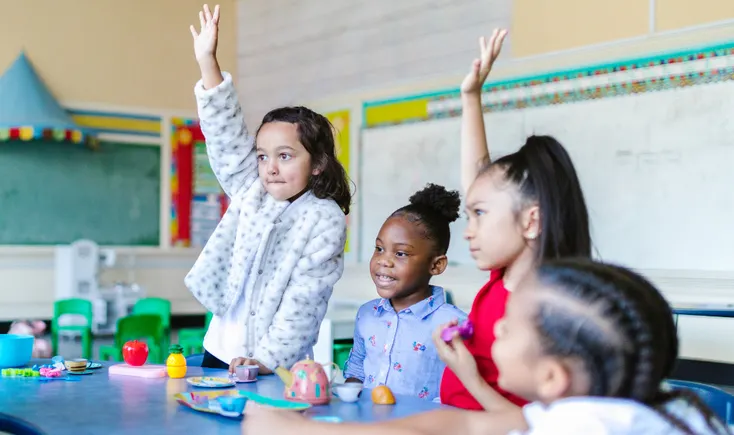
Across school districts nationwide, educators face a persistent and complex post-pandemic crisis characterized by chronic absenteeism, widespread student disengagement, and a reluctance among learners to actively participate in academic routines. While administrative strategies have traditionally focused on punitive measures or automated attendance-tracking alerts, a growing body of educational research suggests a fundamentally different approach. Rather than viewing truancy and apathy as isolated behavioral infractions, educational experts and researchers argue that these trends are often symptoms of a deeper disconnect: a lack of meaningful belonging within the school environment.
To combat this systemic challenge, school leaders, child development specialists, and classroom teachers are increasingly turning to relationship science. By embedding structured social-emotional frameworks into the existing school day, educators are finding that intentional peer-to-peer connection and teacher-student bonding are not optional supplementary activities, but foundational prerequisites for academic and behavioral success.
The Roots of the Disengagement Crisis
The modern landscape of American education has been profoundly altered by the lingering disruptions of the early 2020s. Extended periods of remote learning, coupled with subsequent anxieties surrounding health, economic instability, and shifting social norms, created significant fractures in the social fabric of schools. When students returned to physical classrooms, educators reported an immediate surge in disciplinary issues, social withdrawal, and chronic absenteeism—a metric defined as missing 10 percent or more of the school year.
According to educational analysts, the explanations behind this chronic disengagement are multifaceted. Health challenges, unstable family circumstances, and academic remediation needs all play substantial roles in whether a student physically arrives at school and mentally engages in instruction. However, educators have little direct control over external socio-economic variables. Recognizing this limitation, researchers have pivoted toward factors that schools can actively influence: school climate, interpersonal connectedness, and the structural intentionality of daily routines.
Relationship science proceeds from the premise that healthy interpersonal bonds do not naturally materialize on their own, particularly among a generation of children whose formative social development was disrupted. Instead, students require structured opportunities to connect, explicit instruction in the skills necessary to build and maintain relationships, and institutional environments that actively facilitate these interactions.
A Decade of Research and Measurable Outcomes
To understand the efficacy of structured relationship-building, educational researchers have spent the past decade evaluating programs designed to foster connection within K-12 settings. One prominent framework that has been subjected to rigorous academic scrutiny, including randomized controlled trials, is the Sanford Harmony curriculum.
Longitudinal studies of the program have consistently demonstrated statistically significant improvements across multiple domains of student development, including enhanced peer relationships, increased prosocial behavior, stronger school connection, and elevated academic achievement. Concurrently, these evaluations have documented notable reductions in negative behaviors such as peer aggression and bullying.
Aggregate data from these studies highlight specific quantitative impacts associated with the curriculum. Classrooms utilizing the framework have reported a 10 percent increase in overall student enjoyment of school. Furthermore, data indicates a 6 percent improvement in both class connectedness and academic achievement, alongside an impressive 34 percent reduction in aggressive behaviors among students.
One of the curriculum’s core instructional practices, an intentional peer-connection activity known as "Buddy Up," has yielded particularly striking results. Implementation data reveals that the activity is associated with a 67 percent increase in students voluntarily choosing to play and interact with new classmates whom they would not normally select. Additionally, the practice correlates with a 54 percent decrease in aggressive behaviors, while simultaneously fostering healthier peer interactions and sustained prosocial habits.
These empirical findings challenge the conventional educational assumption that socialization is an organic byproduct of grouping children together in a building. Instead, the research underscores that strong relationships must be intentionally cultivated by school leadership and systematically integrated into daily instructional routines.
Practical Applications in the Modern Classroom
Translating relationship science into daily practice does not require an overhaul of existing academic schedules or the procurement of expensive, standalone curricula. Across the country, innovative educators are weaving connection-building exercises directly into the foundational routines they already execute each morning.
In southeastern Montana, fifth-grade educator Connie Michaels begins each instructional day by gathering her students in a classroom circle. Utilizing conversation cards designed to prompt open-ended, reflective dialogue, Michaels guides her students through structured sharing exercises. According to Michaels, the absolute consistency of this morning ritual helps students build foundational trust with one another, establishing a psychological safety net that gives them a tangible reason to feel invested in their classroom community.
Similar strategies are taking root in diverse educational settings. At a public charter school in Delaware, administrative and instructional staff made a collective, schoolwide commitment to personally greet every student as they transition through the building each morning, transforming hallways from impersonal thoroughfares into welcoming communal spaces. Meanwhile, in a California school district, an educator utilizes a digital matching tool to randomly pair students for collaborative activities, deliberately breaking up insular social cliques and helping learners forge cross-cutting relationships outside their usual friend groups.
These localized successes point to a broader pedagogical philosophy: the primary objective of social-emotional learning tools is not to add yet another administrative burden or initiative for exhausted educators to juggle. Rather, it is to provide teachers with practical, high-impact instruments that seamlessly integrate into the school day they already manage, establishing a cohesive, shared language that carries seamlessly from one classroom to the next.
Rethinking Attendance Through the Lens of Connection
The integration of relationship science into daily schooling also offers educational administrators a paradigm shift in how they conceptualize and combat chronic absenteeism. Historically, school districts have relied on reactive, punitive frameworks to address missed days. Automated warning letters, mandatory truancy hearings, and legal interventions frequently characterize the institutional response once a student’s attendance drops below acceptable thresholds.
Relationship science reframes the inquiry entirely, prompting educators to ask a more proactive question: What specific, lived experience are students having from the moment they walk through the front doors of the school building?
Evidence suggests that children are inherently more likely to attend school when they experience a genuine sense of belonging, safety, and active engagement. By shifting institutional focus away from penalizing absences after the fact and toward proactively building meaningful, trusting relationships with both adults and peers, schools can neutralize attendance barriers before they escalate into chronic problems.
Anecdotal evidence from the field illustrates the profound potential of this proactive stance. Michaels observed a remarkable transformation among a cohort of fifth-grade students in her classroom who had previously averaged a dismal 60 percent attendance rate during their fourth-grade year. Following the systematic implementation of daily community-building circles and intentional connection practices, that same group of students achieved a 90 percent attendance rate over the first two months of the academic year.
While educational researchers caution that a single teacher’s experience does not independently prove direct cause and effect, Michaels’ observations powerfully align with broader national data. When students feel deeply connected, valued, and intellectually engaged by their school environment, showing up ceases to be an arduous daily obligation and instead becomes an organic extension of their community involvement.
Scaling Consistency Across Districts
Initiating cultural change within a school often begins with localized, micro-level interactions: how a child is welcomed at the school entrance, whether they are given opportunities to collaborate with unfamiliar peers, and the frequency of their positive engagements with school staff.
However, education experts emphasize that the true opportunity for systemic reform lies in achieving districtwide consistency. When teachers and administrators across an entire system share practical tools, a unified lexicon, and common relationship-building practices, isolated moments of warmth and connection coalesce into a resilient, institutional culture. Students experience this supportive environment continuously, whether they are transitioning from elementary to middle school or moving from one subject-area classroom to another throughout the day.
Dr. Nick Yoder, Associate Vice President and Head of Innovation and Research at Sanford Harmony, emphasizes that cultivating this type of systemic environment is fundamentally a leadership responsibility. A former first-grade teacher and national expert in child development with a Ph.D. in Education and Psychology, Dr. Yoder works extensively with schools across the United States to embed intentional relationship-building into everyday educational routines.
"Relationships may be built one interaction at a time," Dr. Yoder notes, "but creating the structural conditions for them to happen consistently across a school community is ultimately a leadership decision."
As school boards and educational policymakers continue to grapple with post-pandemic recovery, declining standardized test scores, and chronic absenteeism, the path forward may not lie in longer instructional hours or heavier academic workloads. Instead, empirical research and classroom innovation alike suggest that the key to unlocking student potential rests in creating environments where every child feels known, supported, and unequivocally connected to the world of the school.