



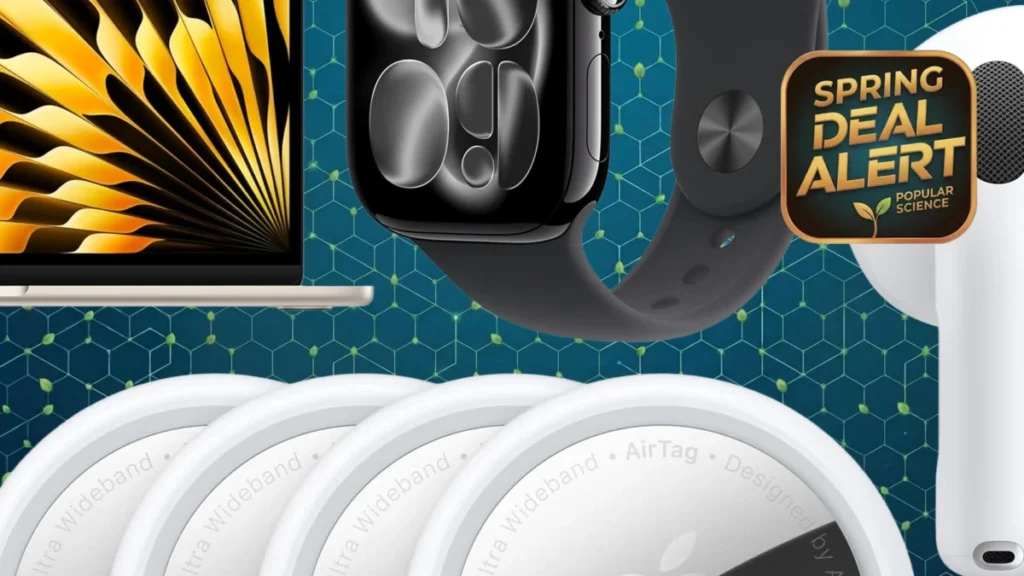
Amazon’s Big Spring Sale, a major retail fixture that has evolved into a cornerstone of the first-quarter consumer electronics market, is currently underway through March 31, 2026. This year’s event has distinguished itself by offering substantial price reductions on Apple’s most recent hardware releases, including the Apple Watch Series 11, the MacBook Air powered by the M4 silicon, and the third-generation AirPods Pro. Notably, these discounts are being applied directly to the list prices, bypassing the traditional requirement for Amazon Prime memberships or digital coupons, marking a shift in how the retailer approaches high-demand tech inventory during the spring season.
Market analysts observe that the 2026 sale represents one of the most aggressive pricing strategies for Apple products outside of the traditional Q4 holiday window. For many of the featured items, including the AirTag 4-pack and the base model MacBook Air M4, the current prices represent genuine historic lows. This pricing suggests a robust inventory level and a strategic push by both the retailer and the manufacturer to maintain momentum following the high-volume release cycle seen in late 2025.
Chronology of the Big Spring Sale and Apple’s Seasonal Integration
The Big Spring Sale was originally conceptualized by Amazon as a means to bridge the gap between the post-holiday lull and the mid-summer Prime Day event. While early iterations focused heavily on home goods and seasonal apparel, the 2025 and 2026 cycles have seen a significant pivot toward premium electronics. This shift coincides with Apple’s adjusted release cadence, which has increasingly utilized late autumn and early winter announcements, leaving consumers eager for price corrections by the following March.
In the previous fiscal year, Apple’s transition to the M4 chip architecture across its laptop and tablet lines created a surge in demand for "Apple Intelligence" compatible devices. As these features reached full maturity in early 2026, the Big Spring Sale has become the primary vehicle for mass-market adoption. The current event follows a series of smaller "flash sales" observed in February, but the scale of the March 31 expiration indicates a coordinated effort to clear Q1 inventory ahead of potential software announcements at the upcoming Worldwide Developers Conference (WWDC).
Wearable Technology: The Apple Watch Series 11 and Ultra 3
The most significant price movement in the wearables category is the $100 discount on the Apple Watch Series 11. Now priced at $299 for the 42mm GPS model, the device has reached a price point previously reserved for the entry-level SE models or refurbished older generations. The Series 11, which serves as the current flagship for the general consumer, introduced several hardware milestones including a high-brightness always-on display and a more refined suite of health sensors.
The inclusion of expanded blood oxygen monitoring and real-time ECG readings in the Series 11 remains a primary selling point. Furthermore, the 2026 model improved upon the crash detection and sleep tracking algorithms introduced in previous iterations. For professional users and outdoor enthusiasts, the Apple Watch Ultra 3 is also seeing its first major price adjustment since its launch, providing a more rugged alternative with extended battery life and dual-frequency GPS capabilities.
Simultaneously, the Apple Watch SE 3 remains the budget-conscious entry point. While it lacks the advanced health sensors of the Series 11, its inclusion in the Spring Sale ensures that the Apple ecosystem remains accessible to new users, a move that retail experts believe is aimed at capturing the student and first-time buyer demographics.
Audio Innovations: AirPods Pro 3 and the Integration of Health Tech
The third-generation AirPods Pro have emerged as a standout item in the current sale, with a $50 reduction bringing the price to $199. Beyond traditional audio improvements, the AirPods Pro 3 represents Apple’s significant move into the health-tech space. The device features a built-in heart rate sensor and a clinically tested Hearing Aid mode, which received regulatory clearance shortly before the product’s launch.
The AirPods Pro 3 also introduced live language translation, utilizing the H2 chip’s improved processing power to provide near-instantaneous audio overlays during conversations. This feature, combined with class-leading active noise cancellation (ANC), has positioned the Pro 3 as a multifunctional tool rather than a simple pair of earbuds.
For consumers who find the in-ear silicone tips of the Pro model uncomfortable, the AirPods 4 with ANC have been discounted to $148.99. This model bridges the gap between the standard earbud design and the noise-canceling capabilities of the Pro line. The standard AirPods 4 (without ANC) have also reached a milestone price of $99, effectively setting a new floor for current-generation Apple audio products.
Computing and Productivity: The M4 MacBook Air and iPad Air
In the computing sector, the MacBook Air 13-inch with the M4 chip is currently retailing for $899, a $100 discount from its $999 MSRP. This model is particularly notable as it is the first base-level MacBook Air to ship with 16GB of unified memory as standard, a change necessitated by the hardware requirements of Apple Intelligence. The M4 chip provides a significant performance delta over the M2 and M3 predecessors, particularly in neural engine tasks and sustained multi-core workloads.
The MacBook Air’s 18-hour battery life and fanless design continue to make it the benchmark for ultraportable laptops. Retail data suggests that the $899 price point is a critical psychological threshold for the "Back to School" and "Graduation" gift markets, which typically begin their research phases in the spring.
The tablet lineup is seeing similar aggressive pricing. The iPad Air 11-inch (M4) is now $559, offering a high-performance alternative to the more expensive iPad Pro. With the M4 chip, the iPad Air supports the full suite of Apple Intelligence features, making it a viable laptop replacement for users focused on creative tasks like photo editing and digital illustration. The Liquid Retina display and the repositioned landscape-oriented front camera have addressed long-standing user feedback regarding video conferencing ergonomics.
Accessories and the Find My Network
One of the highest percentage discounts in the sale applies to the AirTag 4-pack, which is currently 40 percent off, retailing at $59.99. This brings the per-unit cost to approximately $15, the lowest price since the product’s inception. The AirTag’s reliance on the global "Find My" network—which leverages hundreds of millions of active Apple devices—remains its primary competitive advantage over rival trackers from Tile and Samsung.
Additional accessory deals include:
- Apple Pencil (USB-C and Pro): Reductions aimed at new iPad Air and Pro owners.
- MagSafe Chargers: Consistent discounts across the charging ecosystem.
- Apple TV 4K: One of the lowest recorded prices for the 2025/2026 refresh of the streaming hardware.
Market Analysis and Retail Implications
The decision by Amazon to offer these deals without the "Prime" gatekeeper indicates an intensifying competition with other retail giants like Best Buy and Walmart. By making the Apple discounts universal, Amazon is effectively capturing a larger share of the "search-to-purchase" traffic that often fluctuates during spring break and tax refund season.
Industry analysts suggest that Apple’s participation in such widespread discounting through a third-party partner like Amazon allows the company to maintain its "premium" brand image on its own first-party storefront while still benefiting from the high-volume inventory turnover that Amazon provides. This strategy is particularly effective for hardware like the MacBook Air and Apple Watch, where market saturation is high and incremental upgrades are driven by price incentives.
Furthermore, the focus on M4-equipped devices highlights a broader corporate strategy to move the user base toward AI-capable hardware. As Apple Intelligence becomes a more central part of the macOS and iPadOS experience, the company has a vested interest in ensuring that as many users as possible are on the latest silicon architecture.
Future Outlook
As the March 31 deadline approaches, consumer electronics experts anticipate that stock levels for high-demand items like the AirPods Pro 3 and the MacBook Air M4 may fluctuate. The success of the Big Spring Sale 2026 is likely to influence Amazon’s strategy for the remainder of the year, potentially setting the stage for an even more competitive Prime Day in July. For Apple, these sales figures will provide critical data on the adoption rates of their latest health and AI features, informing the development of the next generation of hardware currently slated for late 2026 and beyond.