

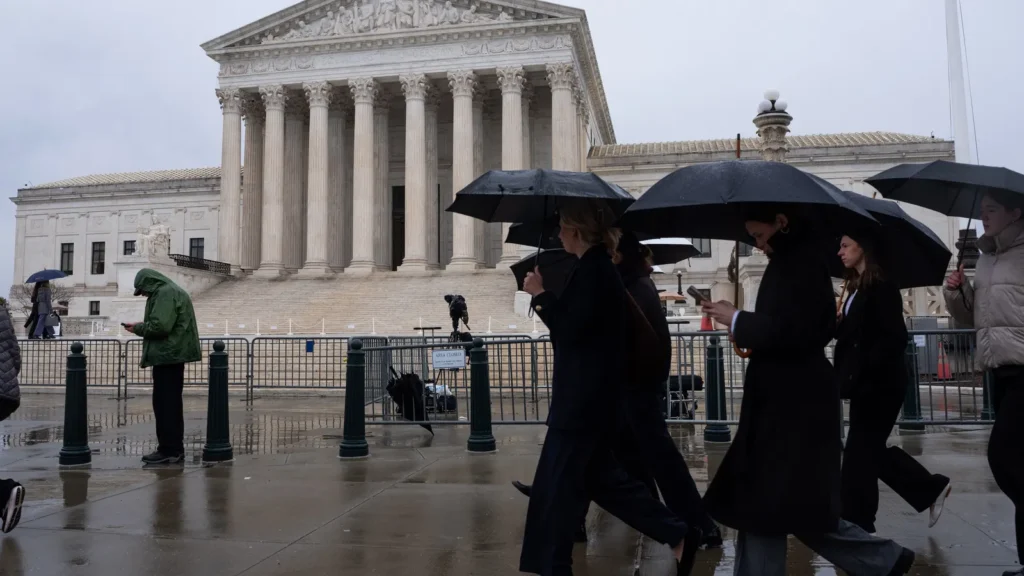
As the United States Supreme Court prepares to convene for its upcoming October 2026-2027 term, the nation’s highest judicial body stands poised to once again reshape the American educational landscape. Following several consecutive terms characterized by landmark rulings that fundamentally altered the boundaries between church and state, expanded parental rights, and addressed contentious student-athlete regulations, the justices have inherited another formidable docket. Education policy in the United States has increasingly become a battleground for constitutional interpretation, and the upcoming session promises to test core legal principles from early childhood education to higher education employment standards.
With oral arguments scheduled to begin on October 5, legal scholars, educators, advocacy groups, and policymakers are closely monitoring the petitions currently under review. While the Supreme Court typically receives upwards of 8,000 certiorari petitions annually, it grants full review to a tightly curated docket of roughly 80 cases. The education cases currently positioned for oral argument, alongside a swelling pool of high-profile appeals, indicate that the judicial branch will remain at the epicenter of cultural and legal debates surrounding public instruction.
Scheduled Arguments: Key Cases on the Docket
The Supreme Court’s educational docket for the autumn months features two distinct yet profoundly impactful disputes centering on First Amendment protections and federal employment law.
The first major education case slated for oral argument is St. Mary Catholic Parish v. Roy, scheduled for November 3. Originating in Colorado, this litigation addresses the complex intersection of school choice programs, public funding, and religious liberty. The plaintiffs—two Catholic parishes operating affiliated preschools—chose to participate in Colorado’s universal preschool initiative, which extends public financial support to eligible families. However, state administrators conditioned participation on the signing of a comprehensive nondiscrimination agreement.
The Catholic parishes argue that this agreement, which explicitly mandates that participating preschools enroll children irrespective of the sexual orientation or gender identity of their parents, infringes upon their First Amendment rights to free exercise and free speech. Legal analysts note that St. Mary Catholic Parish v. Roy is the latest in a line of evolving jurisprudence regarding state-funded educational programs and religious institutions, following closely behind prior rulings that dismantled traditional barriers against directing public funds to sectarian schools.
Later in November, the justices will hear Thomas Crowther v. Board of Regents of the University System of Georgia. This case arises from separate complaints filed by two former employees of the University System of Georgia who alleged sex-based discrimination following their respective terminations. One plaintiff, a former women’s basketball coach, alleged she faced retaliation and discrimination after filing internal grievances concerning resource disparities between men’s and women’s athletic programs. The second plaintiff, an art professor, had his contract non-renewed following a Title IX investigation into student allegations of inappropriate conduct and sexual harassment.
The central legal question before the high court in Crowther is whether employees of federally funded educational institutions possess an implied private right of action to sue their employers directly for sex discrimination under Title IX, given that Title VII of the Civil Rights Act of 1964 specifically addresses employment discrimination. A ruling either way could dramatically alter how staff and faculty at colleges and universities seek legal redress for workplace grievances.
Pending Petitions and High-Profile Appeals
Beyond the cases already accepted for oral argument, the justices are actively evaluating a diverse array of petitions that could define the court’s calendar for the remainder of the term. Among these are legal challenges concerning religious displays, special education access, and public school admissions policies.
In August, the Supreme Court was petitioned to review two joint cases—Nathan v. Alamo Heights Independent School District and Cribbs Ringer v. Comal Independent School District—which challenge the constitutionality of state laws mandating the prominent display of the Ten Commandments in public school classrooms. These petitions place the Establishment Clause squarely back into the judicial spotlight, testing the limits of historical tradition and religious expression within compulsory public education environments.
Simultaneously, the realm of special education is receiving rare but intense scrutiny through Hellman v. Craven. Filed in July, this case involves two Massachusetts families of children with disabilities who attend private Jewish day schools. The families are challenging a state regulation that permits private school students to access public special education services, but strictly mandates that these services be delivered exclusively at a public school or a designated "neutral" location. The petitioners argue that this policy unconstitutionally penalizes families who exercise their foundational right to enroll their children in private religious institutions while seeking publicly funded disability accommodations.
Admissions policies within public school systems continue to generate contentious litigation. In July, a petition challenging the race- and socioeconomic-conscious admissions policies of Maryland’s Montgomery County Board of Education reached the high court. Brought by parents invoking the 14th Amendment’s Equal Protection Clause, the lawsuit mirrors broader national resistance against diversity-focused enrollment criteria in selective K-12 institutions. While the Supreme Court has not yet signaled whether it will grant certiorari to these admissions challenges, the sheer volume of appeals underscores the ongoing legal uncertainty following the court’s landmark higher education affirmative action rulings.
Broader Policy Battlegrounds: Curricula and Religious Charters
Even as the justices deliberate on formal petitions, several lower-court developments and systemic disputes are bubbling beneath the surface, practically guaranteeing future trips to Washington.
Curriculum restrictions and the regulation of classroom content remain dominant cultural touchstones. In September, a federal appellate court cleared the path for the enforcement of Oklahoma’s "divisive concepts" law. The appellate panel determined that the statutory language was sufficiently clear and did not prohibit educators from discussing complex historical topics, race-related conflicts, or systemic oppression, provided they are addressed in the abstract or tied directly to historical figures and events. This ruling adds momentum to a nationwide wave of state-level statutes seeking to limit how race, gender, and equity are taught in public classrooms.
Furthermore, the legal viability of religious public charter schools looms large over the current educational landscape. Last year, a deadlocked Supreme Court left in place a state court ruling that blocked the establishment of St. Isidore of Seville Catholic Virtual School, which had been approved as the nation’s first religious public charter school. However, momentum shifted slightly last month when a federal court in Oklahoma ruled favorably for a separate Jewish-sponsored school seeking similar status.
This unfolding dynamic raises the distinct possibility that the Supreme Court will soon be forced to squarely address whether the First Amendment permits public funds to sustain religious charter schools—a constitutional frontier left partially open by earlier rulings such as Espinoza v. Montana Department of Revenue (2020) and Carson v. Makin (2022).
Background Context and Historical Chronology
To understand the weight of the 2026-27 term, it is helpful to review the trajectory of education jurisprudence over the past decade. The Roberts Court has systematically dismantled several longstanding legal doctrines governing the separation of church and state in education. Beginning with Trinity Lutheran Church of Columbia, Inc. v. Comer in 2017, the court established that excluding religious organizations from neutral public benefit programs solely because of their religious status violates the Free Exercise Clause.
This line of reasoning was expanded significantly in 2020 with Espinoza, which ruled that states cannot bar religious schools from participating in scholarship programs, and further reinforced in 2022 by Carson v. Makin, which mandated that if a state offers tuition assistance for private education, it cannot exclude schools that provide religious instruction. These precedents form the direct backdrop against which contemporary battles over universal preschool funding, like St. Mary Catholic Parish v. Roy, are being fought.
Simultaneously, the regulatory interpretation of Title IX has undergone profound transformations across successive presidential administrations. Originally enacted as part of the Education Amendments of 1972 to prohibit sex discrimination in educational programs receiving federal financial assistance, Title IX has increasingly become a battleground for disputes involving transgender student participation, sexual harassment adjudication procedures, and employment protections. The upcoming review of Thomas Crowther v. Board of Regents of the University System of Georgia highlights the persistent friction between statutory remedies available under Title VII versus Title IX in educational employment settings.
Implications for School Administrators and Policymakers
The cumulative effect of these pending cases and emerging legal trends places immense pressure on school district administrators, state legislators, and boards of education nationwide. Legal experts emphasize that educational leaders must navigate an increasingly complex matrix of federal constitutional mandates, evolving statutory interpretations, and polarized local communities.
If the Supreme Court rules in favor of the religious preschools in St. Mary Catholic Parish v. Roy, states administering universal pre-K or school choice programs may find themselves severely limited in their ability to impose nondiscrimination conditions that conflict with the religious tenets of participating institutions. Conversely, a ruling upholding the state’s requirements could empower government agencies to enforce uniform behavioral and operational standards across all entities accepting public subsidies.
In the realm of employment and civil rights, a decision in Thomas Crowther v. Board of Regents of the University System of Georgia will either clarify or complicate the legal avenues available to educational professionals seeking recourse against workplace discrimination. A restriction on direct employee lawsuits under Title IX would streamline institutional defense strategies, whereas a broad affirmation of employee rights could lead to an increase in federal litigation against colleges and universities.
As the Supreme Court’s October 2026 term commences, the eyes of the nation will remain fixed on Washington. The decisions rendered in the coming months will not only resolve specific legal controversies for the litigants involved but will also establish enduring structural frameworks for how public education, religious freedom, civil rights, and state authority intersect in the 21st century.








