




The architecture of effective education relies heavily on the structural integrity of unit planning, a foundational process that bridges the gap between abstract academic standards and tangible student learning outcomes. As school districts across the country grapple with fluctuating student performance metrics and the demand for more rigorous instructional alignment, pedagogical experts are increasingly returning to the fundamentals of backward design. This methodology, rooted in the principles popularized by Grant Wiggins and Jay McTighe in their seminal 1991 work, Understanding by Design, prioritizes the alignment of learning goals with summative assessments before individual daily lessons are constructed. By shifting the focus from "covering content" to "ensuring mastery," educators can create a more coherent, goal-oriented classroom experience.
The Evolution of Instructional Design
Historically, lesson planning was often approached through a linear, activity-based model. Teachers would select a textbook chapter or a list of topics, design daily activities to occupy class time, and develop an assessment at the conclusion of the unit based on the material covered. Research in instructional design suggests that this approach—often referred to as "forward design"—frequently leads to a lack of cohesion between standards and outcomes.
In contrast, the backward design model represents a strategic shift. According to recent data from education research centers, classrooms that utilize backward design exhibit a 15% to 20% increase in student retention of key concepts compared to those using traditional lecture-heavy planning. The process follows a tripartite structure: defining desired results (standards), determining acceptable evidence (assessment), and planning learning experiences (instruction).

Defining the Parameters: Standards, Curriculum, and Units
To successfully implement a unit, educators must first distinguish between the three primary tiers of instructional organization. Standards represent the state or local benchmarks that dictate what students must know and be able to do. These are the broad, foundational goals of a course. Curriculum acts as the roadmap, organizing these standards into logical sequences throughout the academic year. Finally, the unit serves as the tactical container, a cluster of related knowledge and skills that typically spans several days to a few weeks.
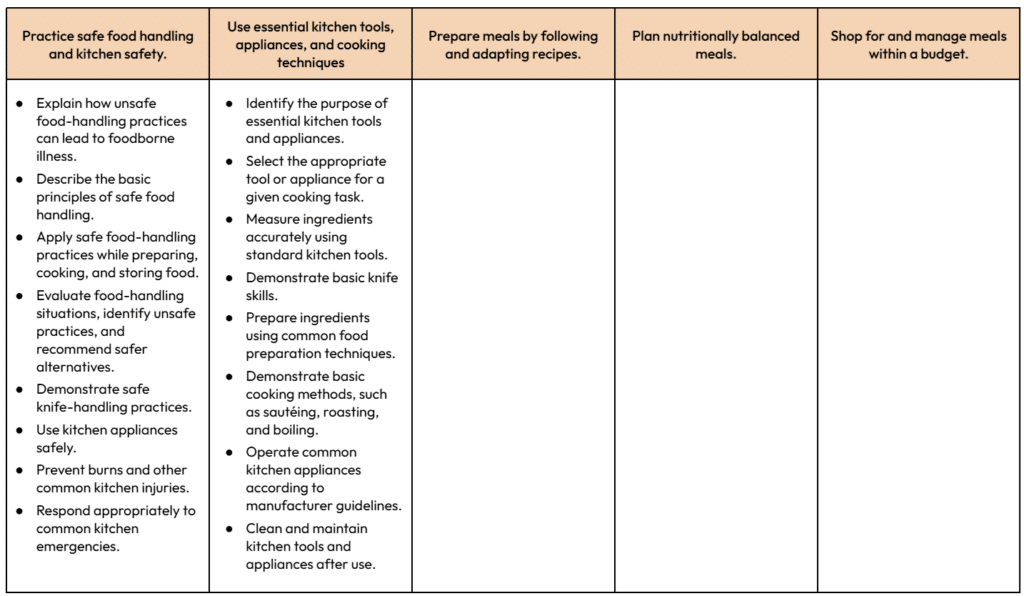
Consider the complexity of a vocational course, such as "Cooking Fundamentals." A single standard—"using essential kitchen tools and techniques"—could encompass over 30 specific sub-skills, ranging from knife safety to thermal regulation. Without a unit-based structure, attempting to teach these skills in isolation creates a fragmented learning environment. By grouping these skills into six thematic units—food safety, tool mastery, cooking techniques, meal preparation, nutrition, and financial budgeting—an educator transforms a sprawling list of requirements into a manageable, scaffolded learning path.
The Three-Step Chronology of Unit Construction
The construction of a unit follows a rigorous, three-stage chronology designed to minimize instructional drift.
Stage One: Objective Identification
The process begins by translating standards into measurable learning objectives. An objective is deemed measurable only if it describes an observable student action. Instead of using vague verbs like "understand" or "know," effective objectives utilize action-oriented language: "identify," "calculate," "demonstrate," or "classify." In the example of a food safety unit, the instructor identifies four core competencies, such as "distinguishing between cross-contamination risks in raw and cooked proteins." This step ensures that the instructor has a clear, non-negotiable target for every student.
Stage Two: Assessment Alignment
Once objectives are established, the educator must develop the summative assessment. This is the stage most prone to common pedagogical pitfalls. Critics of standardized testing often conflate "teaching to the test" with the backward design process. However, when the instructor creates their own high-quality, authentic assessment—such as a performance-based task or an open-response scenario—the "test" becomes a diagnostic tool for learning rather than a hurdle to be cleared. By designing the assessment before the lessons, the instructor identifies exactly what evidence is required to prove that learning has occurred.
Stage Three: Instructional Sequencing
Only after the goals and assessments are finalized does the teacher move to the actual design of daily lessons. This stage involves selecting the activities, resources, and instructional strategies that will facilitate the transition from the student’s current knowledge level to the proficiency required by the assessment. This might involve direct instruction, collaborative inquiry, or independent practice, all of which are now directly tethered to the unit’s final outcome.
Institutional Implications and Expert Perspectives
Education policy analysts note that the formalization of planning processes like these is a response to the increasing pressure on educators to provide data-driven instruction. When teachers have a clear, step-by-step framework, the variability in teaching quality across a single department is significantly reduced.
"The most effective educators do not plan in a vacuum," says Dr. Sarah Jenkins, an expert in educational administration. "They work from a blueprint. When teachers adopt a systematic approach to unit design, they are essentially creating a quality-control mechanism for their own instruction. It reduces the stress of ‘what to teach tomorrow’ because every lesson is already part of a larger, coherent narrative."
Furthermore, the implementation of essential questions—open-ended, thought-provoking prompts that frame the unit—provides students with the "why" behind their learning. For a unit on food safety, the essential question, "How do your choices in the kitchen affect the safety of the food you prepare?" elevates the content from a list of rules to a meaningful investigation of public health and personal responsibility.
Broader Impact on Student Success
The implications of robust unit planning extend beyond the individual classroom. Schools that require consistent, research-based unit planning models often see improved results in standardized assessments and higher student engagement rates. By standardizing the design process, districts can ensure that students receive a consistent level of quality, regardless of their specific instructor.
As the educational landscape continues to integrate new technologies—such as artificial intelligence in lesson planning and digital learning management systems—the core principles of backward design remain vital. Regardless of the tools used to deliver the content, the fundamental need for clear objectives, rigorous assessment, and intentional sequencing remains the cornerstone of professional teaching practice.
For the modern educator, the transition from activity-based planning to result-oriented design is not merely a change in methodology; it is a fundamental shift in professional identity. By treating the unit plan as a rigorous, iterative document, teachers can move toward a more confident, efficient, and effective classroom environment that serves the ultimate goal: the measurable success of every student. Through this systematic approach, the daunting task of planning an entire unit is transformed into a series of achievable, purposeful steps, ultimately fostering a culture of academic excellence.