



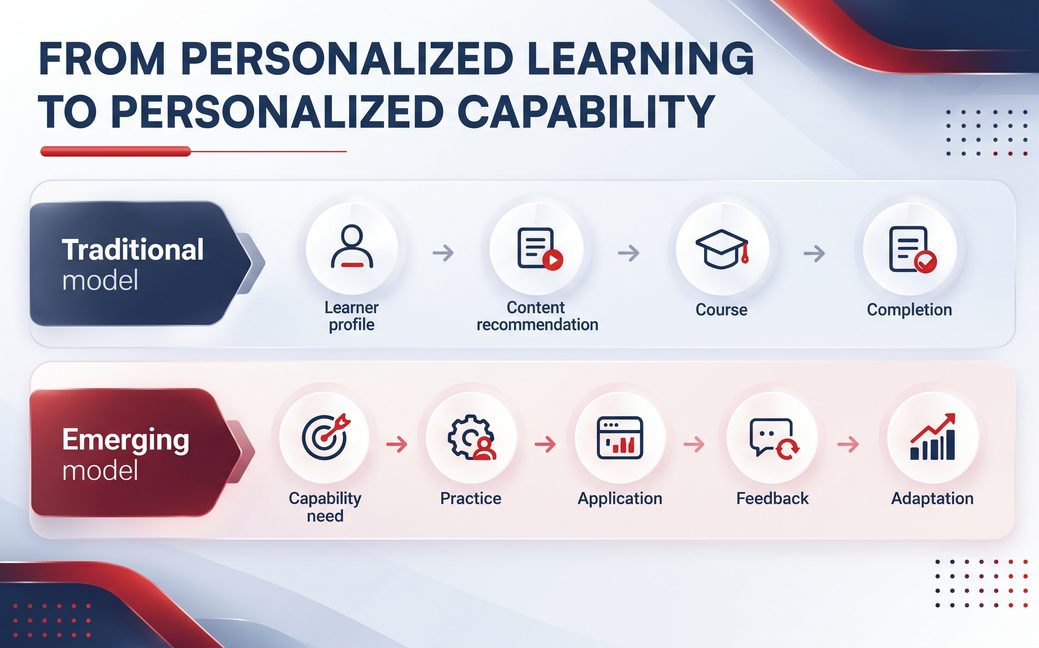
For years, the corporate learning and development (L&D) sector has been preoccupied with a singular, persistent challenge: how to deliver the right educational content to the right individual at the precise moment it is required. This pursuit has driven a technological evolution that began with rudimentary digital catalogs, progressed to sophisticated search functionality, matured into recommendation engines, and finally arrived at the current era of adaptive learning. The emergence of artificial intelligence has significantly accelerated this trajectory, streamlining the processes of course curation, content generation, and learner behavior analytics. However, as AI tools become ubiquitous in the workplace, L&D leaders are increasingly shifting their focus from content consumption to a more critical metric: readiness to perform.
The realization that content relevance does not inherently equate to workforce readiness has created a fundamental tension in modern professional development. While personalization has successfully reduced the friction of finding training materials, it has often failed to provide organizations with concrete evidence that employees can translate that knowledge into real-world application. As AI becomes the primary architect of the learning ecosystem, the industry is reaching a critical inflection point where the focus must shift from personalizing the consumption of information to personalizing the practice of skills.
A Chronology of Corporate Learning Evolution
The transformation of L&D technology can be categorized into four distinct phases over the past two decades. In the early 2000s, the primary focus was on the digitization of learning libraries, where the goal was to centralize training assets into accessible catalogs. By the mid-2010s, the focus shifted toward "Search and Discover" models, utilizing metadata to help employees navigate growing libraries.

The period between 2018 and 2022 marked the rise of recommendation engines, heavily influenced by consumer technology platforms. These systems utilized basic algorithms to suggest content based on peer behavior and self-identified interests. Since 2023, the industry has entered the "Agentic AI" phase, characterized by large language models (LLMs) that can generate, adapt, and assess content in real time. Despite this technical leap, the underlying success metric for most organizations remains remarkably stagnant: completion rates and engagement hours. This creates a disconnect between the technological sophistication of the tools and the tangible business outcomes they are meant to support.
The Readiness Gap: Why Content Isn’t Enough
The transition from knowledge to performance is not merely an incremental shift; it is a fundamental redesign of how capability is built. In professional settings, competence is not a binary state achieved by finishing a module; it is a complex intersection of theoretical knowledge, situational judgment, and behavioral execution.
Research indicates that the "forgetting curve"—a psychological concept popularized by Hermann Ebbinghaus—suggests that without application, as much as 70% of new information is forgotten within 24 hours. Consequently, L&D departments that prioritize content delivery over practice-based cycles are essentially fighting a losing battle against cognitive attrition. To bridge this gap, organizations are beginning to view practice as the new frontier of personalization. Instead of recommending a course on "Negotiation Skills," an AI-enabled environment can identify a specific gap in a manager’s decision-making process and provide a simulated environment to rehearse that specific conversation, receive immediate feedback on tone and strategy, and iterate until the behavior reaches the desired proficiency level.
Data-Driven Insights on Agentic AI Adoption
The shift toward performance-based development is being spurred by the rapid integration of AI agents into enterprise workflows. According to data released by Gartner in late 2025, the adoption of task-specific AI agents within enterprise applications is expected to climb from less than 5% in 2025 to 40% by the end of 2026. This data suggests that the next phase of the digital workplace will not be defined by general-purpose chatbots, but by domain-specific agents capable of supporting high-stakes tasks in real-time.
For the CLO (Chief Learning Officer), this creates a significant challenge: generic AI models trained on public data may lack the contextual nuance required for highly specialized roles. Therefore, the most successful organizations are moving toward "context-aware" learning systems. These systems pull signals from performance management data, role expectations, and historical project outcomes to determine if an employee is ready for a promotion or a new project, rather than relying solely on the completion of training certifications.
Implications for Organizational Strategy
The implications of this shift are profound for leadership. If the primary goal of the L&D function is to ensure organizational capability, then the traditional reliance on "vanity metrics" such as completion percentages must be abandoned. Instead, leaders must establish a new framework for evidence-based development.
This involves three strategic pillars:
- Defining Observable Capabilities: Before deploying AI, organizations must clearly define what "good" looks like in a given role. This requires the business to move beyond abstract job descriptions and toward specific, observable behaviors that can be measured during practice sessions.
- Integrating Practice into the Workflow: Development should not be a destination separate from work. By embedding practice simulations directly into the tools employees use daily, organizations can create a safe, low-stakes environment for employees to test their decision-making before facing high-stakes, real-world consequences.
- Establishing Trust in Non-Traditional Evidence: There must be a cultural shift in how organizations define "progress." If an employee demonstrates proficiency through consistent, high-quality performance in a simulated environment, the organization must be willing to count that as evidence of readiness, even if that employee never "completed" a traditional course.
The Role of Human Judgment
Despite the power of AI to scale practice and provide granular feedback, industry experts argue that technology cannot replace the role of the human mentor. Managers, subject-matter experts, and coaches remain essential for providing the accountability and developmental relationships that are vital for long-term career growth. AI acts as a diagnostic and rehearsal tool, but the human element remains the final arbiter of judgment and the primary driver of emotional intelligence.
In a recent industry roundtable, several Fortune 500 CLOs noted that the most significant barrier to this transition is not technological, but cultural. Organizations are often comfortable with the ease of tracking completions, as these numbers are easy to report to stakeholders. Moving toward a model of "demonstrated capability" requires more complex reporting and a higher degree of alignment between the L&D, HR, and Operations departments.
The Path Forward: Capability as the North Star
As the workplace continues to be transformed by AI, the definition of learning is being rewritten. The goal is no longer to ensure that employees have "consumed" enough content to satisfy a compliance requirement. The goal is to ensure that when a critical moment arrives—whether it is a complex negotiation, a technical repair, or a high-pressure management decision—the employee has the demonstrated capability to act effectively.
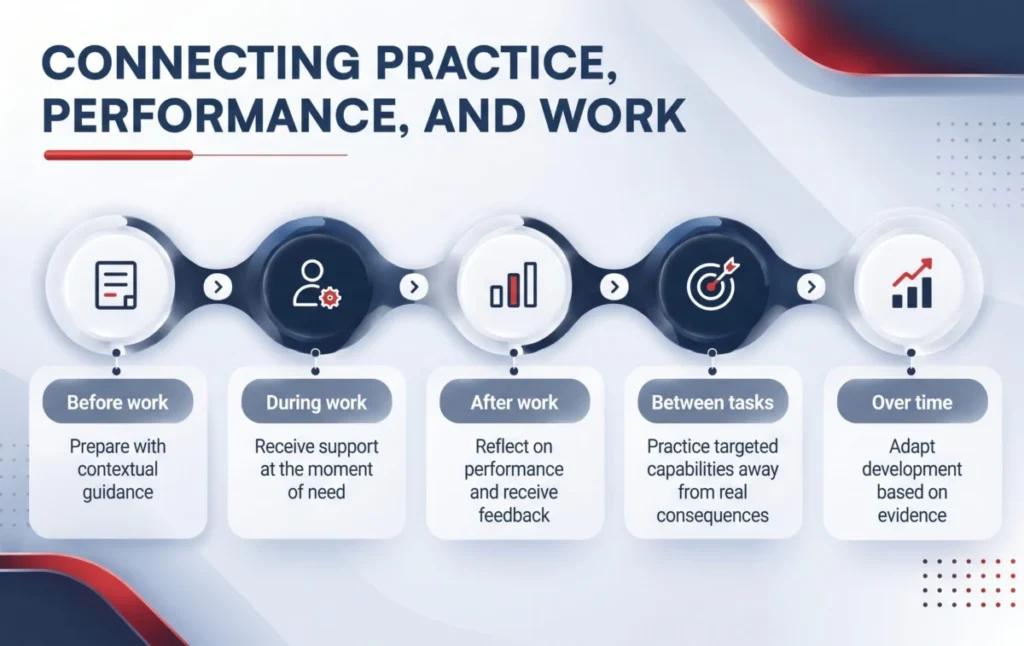
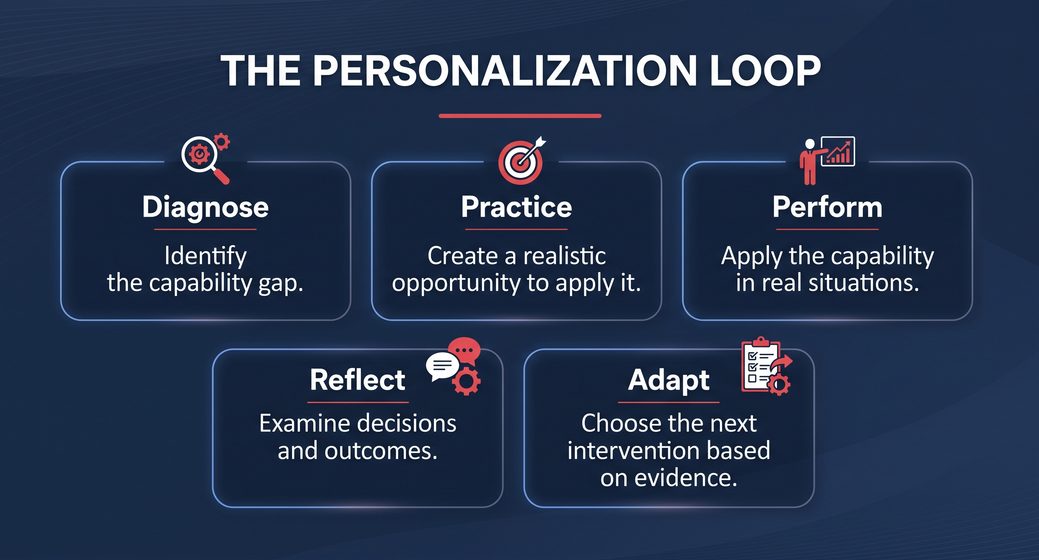
Personalization, therefore, is no longer the destination; it is merely the starting point. The true objective is the creation of a continuous feedback loop where practice informs performance, and performance informs future practice. In this model, the most "personalized" decision an AI system can make might be to recognize that a specific employee does not need a new training module at all, but rather an opportunity to apply their existing skills in a new context.
By pivoting from a focus on content to a focus on capability, L&D leaders can position their departments as essential drivers of business strategy. This shift turns the corporate learning function from a service provider that distributes information into a high-performance engine that builds the skills required to navigate an increasingly complex and automated professional landscape. The future of work is not about who knows the most; it is about who is most ready to perform when it matters most.