

The human struggle to manage an accelerating deluge of information and technological disruption is not a new phenomenon, but rather a recurring challenge that spans centuries. A recent deep dive into the intellectual practices of Nicolaus Steno, a prominent 17th-century anatomist and geologist, offers profound historical parallels to contemporary anxieties surrounding artificial intelligence and its potential impact on the white-collar workforce. Steno’s era, marked by the explosive growth of printed knowledge, necessitated innovative approaches to intellectual focus—strategies that resonate powerfully with modern discussions on "deep work" and "slow productivity" in an age increasingly dominated by digital distraction and algorithmic acceleration.
The Dawn of Information Abundance: Nicolaus Steno’s 17th-Century Predicament
The 17th century, often hailed as the crucible of the Scientific Revolution, was also a period of unprecedented intellectual ferment fueled by a technological breakthrough of the preceding centuries: the printing press. Invented by Johannes Gutenberg around 1440, movable type fundamentally democratized access to knowledge, shifting Europe from a manuscript-based culture to one of mass-produced books. By 1500, an estimated 20 million books had been printed, a number that swelled to hundreds of millions by the end of the 17th century. This explosion of printed material, coupled with the humanist revival of ancient philosophies and the burgeoning scientific inquiry, created a novel and daunting problem for scholars like Nicolaus Steno: information overload.
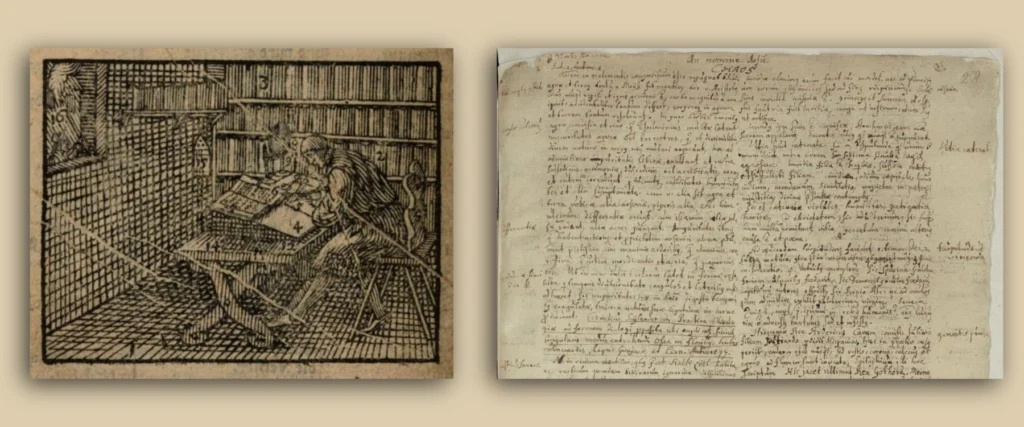
Born Niels Stensen in Copenhagen in 1638, Steno would become a pioneering figure in anatomy, geology, and crystallography, before eventually being ordained a Catholic Bishop. His early academic training unfolded against a backdrop where the sheer volume of available texts challenged traditional methods of scholarship. As one historian of science from All Souls College, Oxford, recently highlighted in an essay, "Books were a leading distraction in the early modern period—and how envious we should be of those times. From the 1500s onward, with the development of the printing press and the humanist revival of ancient philosophies, knowledge became available at a much greater pace than ever before." This new reality posed pressing questions for aspiring thinkers: "How do we decide what to read? How long should we read it for? Must every single chapter be excerpted?" These questions, echoing in the digital age, underscore the timeless nature of intellectual navigation.
Innovating for Focus: Steno’s Blueprint for Deep Work
In response to this burgeoning intellectual landscape, 17th-century scholars began to develop new methodologies for managing information. One prevalent solution was the refinement of "note-taking techniques," particularly the systematic copying of significant excerpts and observations into a master notebook known as a "book of commonplaces." This practice, meticulously documented in works like William Powell’s 2010 techno-history, Hamlet’s Blackberry, allowed scholars to curate, categorize, and readily access relevant information, effectively creating a personal, analog database of knowledge. This was a crucial step in externalizing and organizing the vast quantities of information available.
However, as the essay on Steno elaborates, even sophisticated note-taking proved insufficient to fully combat the relentless influx of knowledge. The sheer number of valuable books meant that a different kind of strategy was required – one that addressed not just information capture, but attention management itself. During his university studies in the 1650s, Steno innovated what we might now recognize as advanced strategies for intellectual focus and productivity. He recognized the pitfalls of superficial engagement, noting, "a ‘harmful hastening should be avoided’." His solution was simple yet profound: to "stick to one topic."
In practice, this meant a rigorous structuring of his scholarly life. Steno meticulously blocked out specific periods for his most demanding intellectual tasks. His personal notebooks reveal a strict regimen, such as the directive, "’before noon nothing must be done except medical things’." This early form of time-blocking ensured dedicated, uninterrupted focus on his primary field of study. Furthermore, when delving into theological works later in his life, Steno informed a friend that he devoted "almost all the morning hours" to reading the Church Fathers and ancient biblical manuscripts housed in the esteemed Medici library. These practices—the thematic focus, the avoidance of intellectual multitasking, and the dedicated allocation of prime mental hours to challenging tasks—represent a striking historical precursor to modern concepts like "slow productivity," "deep work," and "time blocking." They illustrate that the disciplined use of our cognitive faculties to engage deeply with meaningful ideas is not a recent invention, but a foundational element of scholarly success dating back to when sophisticated information first became widely accessible.
The Digital Deluge: Modern Parallels and the AI Revolution
Fast forward to the 21st century, and humanity finds itself grappling with a new, exponentially more complex form of information overload, amplified by the internet and the pervasive nature of digital technologies. This contemporary deluge is now compounded by the rapid ascent of Artificial Intelligence, which promises to reshape industries and redefine human labor. The parallels between Steno’s challenge and our own are striking: both eras demand a critical examination of how we process information, manage our attention, and adapt to technological shifts that fundamentally alter the landscape of work and knowledge.
The recent advancements in generative AI, particularly large language models, have sparked intense debate about their potential to automate a significant portion of white-collar jobs. While proponents argue for increased productivity and the creation of new roles, a pervasive undercurrent of anxiety suggests a future of widespread job displacement, particularly for tasks involving information processing, analysis, and creative output traditionally performed by human professionals. This climate of uncertainty has led to a proliferation of articles and analyses, some of which paint a stark picture of imminent economic disruption.
The AI Job Apocalypse Narrative: A Recent Case Study
A notable flashpoint in this ongoing discourse occurred approximately two weeks prior to this report, when a relatively small financial services firm, Citrini Research, published an essay outlining a bleak scenario for the white-collar job market. The firm’s "2028 Global Intelligence Crisis" report, dated in the original article as if published in early 2026, posited that advanced AI agents would systematically dismantle large segments of professional employment within the next few years. The essay quickly went viral, resonating with existing fears and capturing significant media attention.
The impact of the Citrini Research report was not merely theoretical; it reportedly had tangible consequences in financial markets. The essay was "cited as a factor" in a modest decline of the S&P 500 the very next day, highlighting the powerful influence of narratives, even speculative ones, on investor sentiment and market stability. This market reaction underscored the fragility of confidence in the face of perceived technological upheaval. The report’s success in capturing public imagination was further amplified by a series of "credulous articles and op-eds" in major publications like The Atlantic and The New York Times, which explored similar apocalyptic outcomes for professional jobs. These early reports, often focusing on the dramatic potential of AI, contributed to a growing sense of unease regarding the future of work.
Economists Push Back: Scrutiny on AI’s Economic Impact
However, the market’s reaction and the widespread, often uncritical, adoption of the AI job displacement narrative proved to be a turning point for "serious economists." A pushback began to emerge from established financial institutions and economic analysts, who challenged the underlying assumptions and methodologies of these "technological ghost stories." The critique often centered on the economic naivety embedded in many of the viral predictions, which frequently overlooked complex market dynamics, historical precedents of technological change, and the nuanced nature of human labor.
A Deutsche Bank analyst, for instance, offered a particularly pointed critique, describing the Citrini article as having a "vibes-to-substance ratio" that was "undeniably high." This observation, perhaps borrowing from terminology used by productivity author Cal Newport in his own critiques of AI hype, highlighted the tendency for emotionally resonant narratives to overshadow rigorous economic analysis. It pointed to a broader trend where sensationalism often gains more traction than sober, data-driven assessment in public discourse surrounding emerging technologies.
Further dismantling the more alarmist predictions was a detailed response article published by an analyst from the Global Macro Strategies group at Citadel. The Citadel report, beginning with a wry observation that "Despite the macroeconomic community struggling to forecast 2-month-forward payroll growth with any reliable accuracy, the forward path of labor destruction can apparently be inferred with significant certainty from a hypothetical scenario posted on Substack," systematically challenged the economic foundations of the viral essays. It underscored the inherent difficulty in predicting economic futures, especially concerning complex, multifaceted phenomena like technological transformation.
The Citadel analysis likely drew upon several key economic principles to counter the doomsday scenario. Historically, technological advancements, while causing short-term job displacement in certain sectors, have also been drivers of long-term economic growth, creating new industries and job categories previously unimaginable. The report would have emphasized the difference between task automation and job automation, arguing that while AI can automate specific tasks within a job, it rarely replaces an entire, complex professional role, which often requires human judgment, creativity, emotional intelligence, and complex problem-solving. Furthermore, it would have highlighted the significant hurdles to widespread, instantaneous AI adoption, including regulatory frameworks, infrastructure requirements, and the sheer cost of implementing and integrating advanced AI systems across diverse industries. These counter-arguments collectively served to "systematically destabilize the economic naivety" of the breathless op-eds, offering a more nuanced and historically informed perspective on AI’s true economic implications. This robust pushback from established economic analysis helped to temper the initial market panic and provided a more grounded perspective for investors and the public alike.
Historical Resilience and Future Adaptation: Lessons from the Past for the Age of AI
The convergence of these two narratives—Steno’s 17th-century intellectual strategies and the 21st-century debate on AI’s economic impact—offers critical insights. The lessons derived from Steno’s era are strikingly clear and remain profoundly relevant today. The human capacity to adapt to radical shifts in information availability and technological capability is a testament to our enduring ingenuity. The best practices developed centuries ago to navigate intellectual overwhelm continue to be the most effective strategies for modern knowledge workers: avoid overload by being selective, focus intensely on one thing at a time to achieve depth, and proactively block off specific hours for your most mentally demanding efforts.
These principles of "slow productivity" and "deep work" stand in stark contrast to the prevailing culture of constant connectivity, multitasking, and superficial engagement often fostered by digital environments. Just as Steno recognized the "harmful hastening" of his time, contemporary professionals are increasingly realizing the diminishing returns of a perpetually distracted and fragmented workflow. The historical perspective provided by Steno underscores that the challenge is not merely technological, but fundamentally cognitive and behavioral. Our brains, while adaptable, still operate best under conditions that foster sustained attention and deliberate practice.
The implications for individuals in the age of AI are significant. While AI may automate routine tasks, it is unlikely to fully replicate the unique human capacities for deep critical thinking, complex synthesis, ethical reasoning, and novel creation—precisely the faculties that Steno cultivated through his rigorous methods. Cultivating these "human-centric" skills, coupled with an ability to leverage AI as a tool rather than being overwhelmed by its output or perceived threat, will be paramount for future success. For institutions and policymakers, the lesson is to approach technological transitions with a balanced perspective, fostering innovation while also supporting workforce adaptation, education, and critical media literacy to distinguish between speculative hype and substantiated economic analysis.
Conclusion: Navigating the Future with Ancient Wisdom
The historical journey from Nicolaus Steno’s methodical scholarship in the 17th century to the present-day discourse on artificial intelligence reveals a continuous thread in the human experience: the ongoing quest to effectively manage information and harness technological change for intellectual and societal progress. The initial anxieties stirred by the printing press in the early modern period find a contemporary echo in the concerns surrounding AI. Yet, just as scholars like Steno devised robust strategies to thrive amidst a burgeoning knowledge base, so too can modern society navigate the complexities of the AI revolution. By embracing timeless principles of focused work, critical discernment, and thoughtful adaptation, individuals and institutions can leverage new technologies to deepen understanding and foster genuine innovation, rather than succumbing to the paralysis of information overload or the panic of unexamined technological predictions. The wisdom of the past, in this instance, offers a compelling blueprint for resilience in the face of future disruption.