

The pervasive frustration among educators regarding students’ perceived lack of "ownership" over their learning journey has found a compelling and actionable framework in the explicit teaching of "learn-to-learn" skills. This sentiment, often voiced in classrooms where students dutifully follow instructions but seemingly fail to internalize concepts or apply independent thought, underscores a critical gap in contemporary pedagogical practices. While popular and evidence-backed approaches like project-based learning (PBL), Universal Design for Learning (UDL), and makerspace learning are invaluable, they often fall short of explicitly equipping students with the cognitive tools necessary to truly leverage these opportunities. The onus of learning, fundamentally, rests with the learner; educators serve as orchestrators, but without students’ active engagement in the information processing cycle—from attention and elaboration to consolidation—genuine, sticky learning remains elusive.
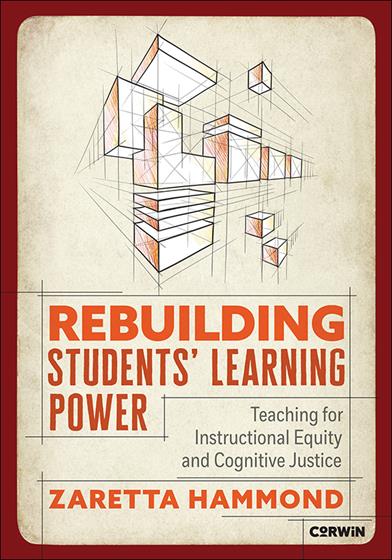
This challenge is at the heart of Zaretta Hammond’s forthcoming book, Rebuilding Students’ Learning Power (Corwin, 2025), which advocates for coupling motivational strategies and brain science insights with concrete techniques that transform students into proficient information processors. Hammond posits that by providing students with a specific set of learn-to-learn skills, educators can move beyond simply telling students about how their brains learn, to actively coaching them in the "trade secrets" of effective learning. This approach is not merely about enhancing academic performance; through an equity lens, it represents a "hidden curriculum" essential for bridging opportunity gaps and fostering more equitable academic outcomes for all students.
Understanding Learn-to-Learn Skills: Beyond Executive Functions
The concept of "learn-to-learn" skills, while seemingly novel, has roots in decades of cognitive science and educational psychology. David Perkins of Harvard’s Project Zero refers to it as the "game of learning," while Ron Berger of EL Education champions the "craftsmanship of learning." These skills are distinct from executive function skills, which primarily focus on organizational and planning aspects like time management, binder organization, or study schedules. While crucial for overall academic success, executive functions do not directly address the cognitive load management inherent in processing new information. Learn-to-learn skills, conversely, target the brain’s internal mechanisms for absorbing, integrating, and retaining knowledge, thereby directly improving a student’s capacity to handle complex cognitive tasks.
Hammond clarifies this distinction further by differentiating between a "move" and a "skill." A "move" is a specific, discrete action or technique executed in a particular moment—like a chess move. A "skill," on the other hand, is a broader, developed competency encompassing understanding, judgment, and the capacity to effectively deploy various moves. Learning how to learn, therefore, is a skill set built upon the flexible application of individual "moves." This dynamic interplay allows students to adapt their learning strategies based on the specific cognitive demands of a task, rather than adhering to a rigid, linear process.
The Five Foundational Learn-to-Learn Moves
The framework outlined by Hammond introduces five core learn-to-learn moves, designed to guide students through the critical stages of information processing:
Move 1: Size It Up and Break It Down
This initial move centers on strategic task analysis. Students are coached to engage in a structured cognitive routine to decipher the task’s requirements. This involves asking a series of decision-making questions that not only clarify the cognitive activity demanded but also help in adopting the appropriate emotional stance and formulating a preliminary plan. For instance, questions like "What exactly is this task asking me to do?" "What resources do I have?" "What emotions does this task evoke?" and "How can I break this into manageable parts?" are crucial. This systematic approach primes the brain, activating the prefrontal cortex for planning and problem-solving, thereby reducing cognitive overwhelm and fostering a sense of control before diving into the content. Research in metacognition consistently highlights the positive correlation between effective planning and improved task performance, especially in complex problem-solving scenarios.
Move 2: Scan the Hard Drive
Central to effective learning is the activation of prior knowledge, or "funds of knowledge." This move prompts the student’s brain to fire neural pathways holding existing schema, preparing it to connect new information with what is already known. Cognitive science confirms that new learning is most effective when it can be anchored to existing knowledge structures. When encountering novel or challenging content, the "Scan the Hard Drive" move sends the brain on a deliberate "scavenger hunt" through its internal database, searching for any related experiences, definitions, or concepts, however tangential. This process facilitates meaning-making during the attention phase of information processing, creating hooks for new data to attach to, thereby enhancing comprehension and retention. Educational psychologists like Jean Piaget and Lev Vygotsky underscored the importance of integrating new information with existing cognitive structures, a process central to constructivist learning theories.
Move 3: Chew and Remix
This move is the cornerstone of the elaboration phase of information processing. Once prior knowledge has been activated, students actively integrate new content with their identified schema. "Chewing" refers to the active mental process of dissecting, questioning, and synthesizing information, leading to a "remix" where new knowledge is interwoven with existing understanding. This is where productive struggle, within Vygotsky’s zone of proximal development (ZPD), becomes vital. Students are challenged to make sense of complex, conflicting, or competing information, pushing them beyond surface-level recall towards deeper learning characteristic of higher-order thinking skills on Bloom’s Taxonomy or Webb’s Depth of Knowledge wheel. Examples of "chewing" include explaining concepts in one’s own words, drawing connections, identifying discrepancies, or creating analogies.
Move 4: Engage in Skillful Practice
While "Chew and Remix" focuses on general meaning-making, "Skillful Practice" targets the deepening of understanding for core concepts and the development of automaticity in skills and procedures. This move emphasizes deliberate practice—a structured and purposeful approach to improving performance. It involves repetition with continuous refinement, where students strategically identify weaknesses in their execution of a skill or application of a concept and then focus on small, specific adjustments. This process is crucial for myelination, the insulation of neural pathways that speeds up information transmission and makes cognitive processes more efficient. Whether mastering a math formula, improving reading fluency, or understanding a historical event, skillful practice ensures that learning becomes ingrained and accessible, moving from conscious effort to automaticity. Research by Anders Ericsson on deliberate practice highlights its critical role in expertise development across various domains.

Move 5: Make it Sticky
The final move focuses on strengthening the consolidation phase of information processing and counteracting the brain’s natural pruning mechanism, which can delete fragile dendrites if new learning isn’t reinforced. The "Make it Sticky" move prompts students to apply newly acquired content in different settings within a crucial timeframe—typically within 12 to 48 hours after initial learning. This out-of-class application is vital for transforming fragile neural connections into robust pathways. Strategies include teaching the concept to someone else, explaining it to a parent, drawing a diagram from memory, creating a song or rhyme, or applying the learning to a real-world scenario. This active retrieval and application not only strengthens memory but also enhances the transferability of knowledge, ensuring that learning endures beyond the classroom setting and becomes a lasting asset. This move directly addresses the "forgetting curve" identified by Hermann Ebbinghaus, advocating for spaced repetition and active recall.
Cultivating Independent Learners: A Three-Pronged Approach
The true challenge lies not just in teaching these moves, but in fostering their consistent, independent application by students. This marks the transition to a cognitively independent learner. Hammond proposes three interconnected strategies for achieving this:
1. Initiate a Cognitive Apprenticeship
Drawing parallels with traditional apprenticeships in crafts like carpentry or cooking, educators can structure the classroom as a cognitive apprenticeship. This involves an explicit onboarding process, dedicated phases for skill-building, and habit formation, leading students towards mastery of learning how to learn. This initiation, ideally spanning 4-6 weeks, clearly outlines the path to becoming a proficient learner. During this period, the teacher acts as a master artisan, modeling the moves, thinking aloud through cognitive processes, and providing guided practice with decreasing scaffolding. The goal is to develop six key capacities of a good information processor: self-awareness, metacognition, self-regulation, resilience, curiosity, and strategic thinking. This structured approach moves beyond implicit expectations, making the learning process transparent and accessible to all students.
2. Invite Revision of Learner Identity
A student’s perception of themselves as a learner—their "learner identity"—is a powerful determinant of engagement and success. Many underperforming students struggle not only with content but also with a fundamental belief in their own capability, often manifesting as statements like, "I’m not a math person." A cognitive apprenticeship provides a safe space for students to critically examine and revise these self-limiting beliefs. By explicitly teaching them how to learn and demonstrating their agency in the process, educators empower students to see themselves as capable, growth-oriented learners. This aligns with Carol Dweck’s work on growth mindset, where believing intelligence can be developed through effort and strategy fosters resilience and a willingness to tackle challenges. Affirming students’ intellectual competence through tangible skill development is crucial for fostering a sense of belonging and academic self-efficacy.
3. Integrate Regular Opportunities for Reflection
Developing learning power is an iterative process requiring continuous reflection and feedback. Regular, structured instructional conversations are essential for students to process their learning journey, identify "choke points," and navigate "pitfalls." A "choke point" refers to a natural cognitive constraint, such as the limited capacity of working memory (typically 3-5 "chunks" of information) or the short duration information can be held before forgetting sets in. A "pitfall," conversely, is a self-sabotaging habit, like cramming by re-reading rather than employing spaced self-quizzing, or multitasking during new content acquisition. Through reflection, students gain metacognitive awareness—the ability to monitor and regulate their own learning. These conversations allow students to articulate their strategies, analyze mistakes, understand points of confusion, and identify the specific moves they employed or need to employ for correction. This cultivates self-monitoring and adaptive learning, moving them towards true independence.
Implications for Educational Equity and the Future of Learning
The systematic integration of learn-to-learn skills represents a profound shift in educational philosophy, moving beyond content delivery to the cultivation of cognitive mastery. For teachers, this necessitates a reimagining of their role from sole knowledge disseminators to skilled cognitive coaches, requiring significant professional development focused on metacognitive instruction and formative assessment practices that reveal students’ thinking processes. School leaders face the imperative of embedding these skills into curriculum design, adopting whole-school approaches, and fostering a culture that values the process of learning as much as the product.
The most significant implication, however, lies in instructional equity. The learn-to-learn framework serves as a vital "hidden equity curriculum." Students from diverse backgrounds, who may not have acquired these "trade secrets" through informal means, are explicitly empowered with the tools to navigate academic challenges effectively. This directly addresses the opportunity gap, ensuring that all students, regardless of their starting point, have access to the strategies needed to become independent, powerful learners.
In an increasingly complex and rapidly evolving world, the ability to learn continuously and adaptively is paramount. By equipping students with these fundamental learn-to-learn skills, educators are not just preparing them for the next test, but for a lifetime of intellectual curiosity, resilience, and self-directed growth. The craftsmanship of learning is not an inherent trait but a teachable, masterable skill set—one that every student deserves to acquire.