



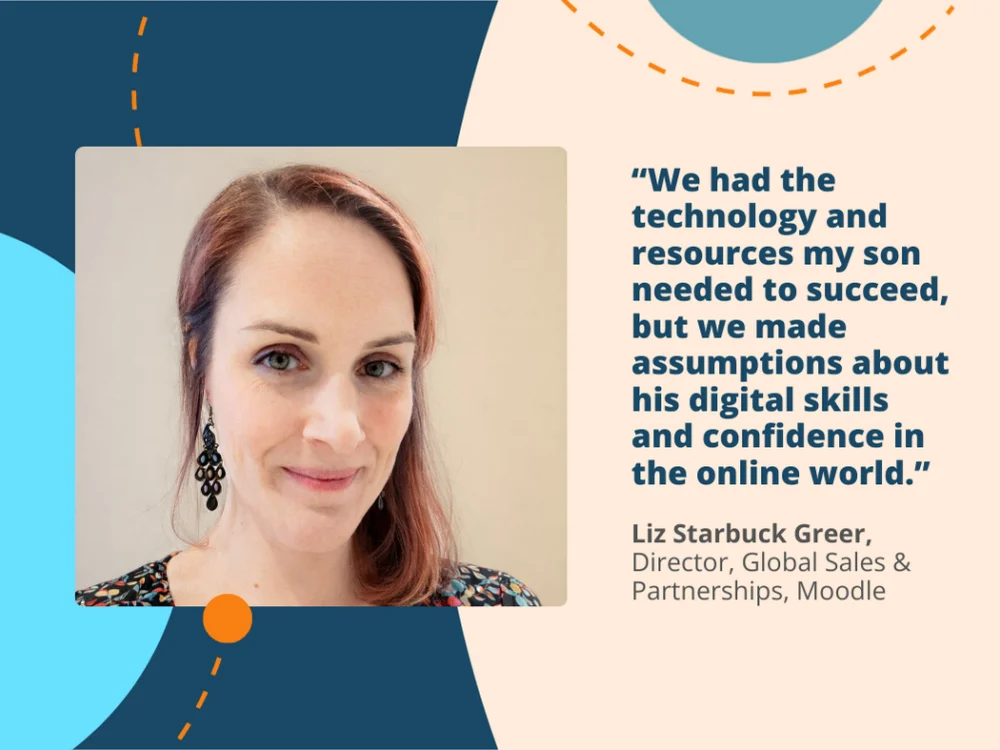
The COVID-19 pandemic, a global event that irrevocably altered the fabric of education, brought to light a nuanced challenge in digital learning: the distinction between digital confidence and digital competence. Liz Starbuck Greer, an educator and advocate for effective online learning, shared a deeply personal account of this realization, highlighting how assumptions about a student’s digital prowess can lead to significant learning gaps. Her experience, initially shared at MoodleMoot Global 2025 and later discussed on a Moodle podcast, underscores a critical need for educators and institutions to look beyond mere access to technology and consider the multifaceted nature of "digital capital."
The Premise: Digital Capital in Education
Greer’s work centers on the concept of digital capital, a framework that encapsulates an individual’s access to technology, their acquired skills, accumulated experience, and the social support systems available to them. This composite measure, she argues, is crucial for understanding why learners often experience the same digital learning environments in vastly different ways. While the initial push to bridge the "digital divide" focused on providing devices and internet access, Greer’s narrative demonstrates that this is merely a foundational step. True educational equity in the digital realm necessitates a deeper understanding of how learners can effectively leverage these tools for academic success.
The implications of this insight are far-reaching. In an era where online and blended learning models are increasingly prevalent, educators must move beyond the assumption that proficiency in social digital interactions translates directly to academic digital competence. This requires a more holistic approach to instructional design, one that acknowledges the diverse digital backgrounds and skill sets that learners bring to virtual classrooms.
A Son’s Struggle: When Access Wasn’t Enough
The catalyst for Greer’s personal reflection was her son’s experience during the initial months of the COVID-19 pandemic. He had recently transitioned to high school, a period already marked by the navigation of new social structures and academic expectations. The abrupt shift to emergency online learning, following the UK’s lockdown in early 2020, plunged him into an unfamiliar and ultimately disengaging academic environment.
This period was particularly challenging for Greer, who was simultaneously managing the demands of her professional role as a business school educator, supporting stressed faculty and staff, and overseeing the education of a younger child. Despite these personal and professional pressures, the family was, by many societal standards, well-equipped for the digital transition. They possessed a robust internet connection, multiple electronic devices, and a general familiarity with technology. Both Greer and her husband were professionals whose daily work relied heavily on digital tools, and they had engaged in online learning themselves. Greer, in fact, was actively involved in converting an entire MBA program into an online format, demonstrating a high level of expertise in digital pedagogy.
Furthermore, their children, having grown up in an international environment, were accustomed to using technology for maintaining long-distance relationships. Greer’s son was also an avid and skilled video game player, suggesting a high level of comfort and dexterity with digital interfaces. This confluence of factors placed the family in a strong position within the digital capital spectrum.
The Unseen Disconnect: From Gaming to "Untitled Documents"
The first indication that something was amiss came not from within the family, but from an external source: a teacher. The alert revealed that Greer’s son was falling behind on his coursework and had been absent from scheduled online classes. This news was met with disappointment, both for the academic lapse and for the realization that their assumptions about his digital capabilities had been misplaced. Greer acknowledged a critical oversight: attributing his social digital confidence to an inherent readiness for academic online learning.
The subsequent effort to rectify the situation exposed the depth of the problem. When asked to retrieve an assignment, her son presented a bewildering array of hundreds of "Untitled Documents" on his school drive. Further investigation revealed a stark absence of fundamental digital organizational skills. He lacked the ability to properly title documents, create folders for organization, or even locate his work effectively. His typing skills were basic and slow, and he was unfamiliar with the protocols for asking questions via email or navigating the disparate communication channels employed by different teachers for distributing and collecting assignments.
This revelation highlighted a critical disconnect: the skills and norms of using technology for social engagement and entertainment, such as gaming, did not automatically transfer to the structured and often complex demands of academic online learning. The inconsistencies in how teachers managed their online classrooms – varying methods for task submission, communication, and assignment delivery – compounded his confusion and diminished his motivation. Greer recognized that the school, while likely striving under difficult circumstances, had inadvertently created an environment that amplified her son’s lack of foundational digital organizational skills. This experience led her to a profound realization about the assumptions educators might make about their students’ digital readiness, mirroring the potential critiques her own students might have of her faculty.
The Broader Implications for Educational Design
Greer’s narrative serves as a potent case study for the broader implications of digital capital in educational settings. Her son’s experience, while stemming from an unplanned and unprecedented learning scenario, reflects ongoing challenges in contemporary online education. It is tempting for educators to assume that students who are active online, particularly younger generations, possess the necessary digital skills for academic success. However, as Greer’s story illustrates, social digital fluency does not automatically equate to academic digital competence. Learners often do not recognize what they don’t know until they encounter specific academic demands.
The inconsistency in the choices made by her son’s teachers – the varied approaches to technology use, expectation setting, and communication – created a suboptimal learning environment. While instructors value the autonomy to design their courses, a lack of standardization can inadvertently create significant barriers for learners, particularly those with lower levels of digital capital.
Strategies for Building Inclusive Digital Learning Environments
The path forward, Greer suggests, lies in designing online learning experiences with a clear understanding of the digital realities that learners bring. This involves prioritizing clarity and consistency in course structure, navigation, and expectations. Such an approach can significantly benefit all learners, but it is especially crucial for those who may struggle with digital literacy.
Key strategies for educators and learning designers include:
- Explicit Instruction: Providing clear, step-by-step instructions for all tasks, especially those involving digital tools or platforms. This might include tutorials on how to submit assignments, use specific software, or communicate effectively.
- Modeling Expectations: Demonstrating desired learner interactions and behaviors within the online environment. This can involve showcasing exemplary student work, providing examples of effective discussion forum participation, or outlining communication protocols.
- Proactive Support and Monitoring: Regularly checking in with students, particularly those who may appear disengaged or are falling behind. Identifying and addressing early signs of struggle can prevent students from becoming overwhelmed and disengaging entirely.
- Consistent Platform Use: Where possible, educators and institutions should aim for a degree of consistency in the technologies and platforms used for core learning activities. This reduces the cognitive load on students who might otherwise have to navigate multiple, disparate systems.
- Digital Skills Assessment and Development: Incorporating opportunities to assess and develop foundational digital skills as part of the curriculum, rather than assuming prior mastery.
Greer’s son, thankfully, navigated through this challenging period and has since moved on to further academic pursuits. Her experience, however, serves as a vital reminder for educators designing online learning experiences. The power of platforms like Moodle lies not only in their technical capabilities but also in their vibrant communities of educators who can share best practices and offer support. By acknowledging the complexities of digital capital and adopting inclusive design principles, educational institutions can foster learning environments where all students have the opportunity to succeed, regardless of their starting point in the digital landscape.
This deeper understanding of digital capital is not merely an academic pursuit; it is a practical imperative for ensuring equitable access to education in an increasingly digital world. As institutions continue to invest in online learning infrastructure, they must also invest in the pedagogical understanding and strategic design necessary to empower every learner.