



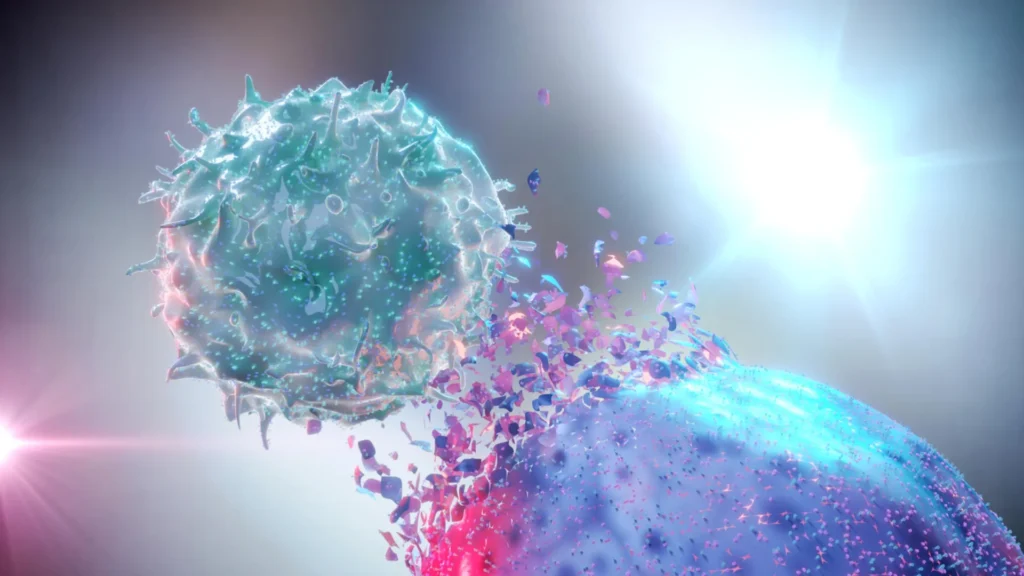
Natural killer (NK) cells stand as formidable sentinels within the sophisticated architecture of the human immune system. These critical lymphocytes play an indispensable role in maintaining health by swiftly identifying and neutralizing a broad spectrum of threats, including invading microbes, foreign particles, and aberrant cells such as those infected by viruses or displaying cancerous characteristics. Their prompt action in targeting these compromised elements is crucial for containing potential harm and preventing widespread dissemination throughout the body. NK cells exhibit remarkable mobility, circulating widely within the bloodstream and lymphatic system, but also establishing residency in specific tissues and organs, where they stand ready to respond to localized threats. A significant reduction in the numbers or functionality of these vital cells can severely compromise immune surveillance, leaving the individual more vulnerable to a range of illnesses, from recurrent infections to potentially more serious conditions like cancer.
The Interplay of Mental Health and Immune Function
In an era marked by escalating rates of mental health challenges, particularly among younger demographics, the intricate connections between psychological well-being and physiological health are garnering increased scientific scrutiny. Anxiety disorders and chronic insomnia are two prevalent conditions known to exert profound effects on various bodily systems, including the immune system. With these conditions becoming an increasingly pressing public health concern globally, researchers in Saudi Arabia embarked on a focused investigation into how anxiety and insomnia might specifically influence NK cell populations among young female university students. Their comprehensive findings, shedding new light on this crucial mind-body interface, were recently published in the prestigious journal, Frontiers in Immunology.
Dr. Renad Alhamawi, a leading immunologist and assistant professor of immunology and immunotherapy at Taibah University, and the study’s first author, articulated the key discoveries: "Our investigation revealed a significant decline in the total count and percentage of NK cells, as well as their specific sub-populations, in students exhibiting symptoms consistent with insomnia. Conversely, students reporting general anxiety symptoms demonstrated a lower percentage and absolute number of circulatory NK cells and their sub-populations when compared to their symptom-free peers." These observations underscore a direct physiological consequence of psychological distress, suggesting a potential mechanism through which mental health challenges could predispose individuals to impaired immune defenses.
Chronology of Emerging Concerns and Research
The understanding of the profound link between psychological stress and immune function, a field known as psychoneuroimmunology, has evolved significantly over several decades. Early research in the mid-20th century began to lay the groundwork, noting correlations between stressful life events and increased susceptibility to illness. However, it is in recent years, particularly with the global rise in mental health disorders among adolescents and young adults, that the urgency for detailed mechanistic studies has intensified. The period following the turn of the millennium has seen an exponential increase in reported cases of anxiety and insomnia among university students worldwide, driven by factors ranging from academic pressures and social media influence to economic uncertainties and global crises.
This Saudi Arabian study emerges within this broader context, addressing a critical gap in regional data and focusing on a demographic particularly susceptible to these modern stressors. The decision to focus on young female students reflects both the increasing prevalence of anxiety and sleep disturbances in this group and the need for culturally relevant data. The research, conducted in the mid-2020s, leverages contemporary immunological techniques to provide granular detail on specific immune cell populations, moving beyond broad correlations to identify specific cellular changes.
Methodology and Participant Profiles
The study engaged 60 female students, aged between 17 and 23 years, all enrolled in university programs. Each participant underwent a rigorous assessment protocol, which commenced with the completion of three distinct questionnaires. These surveys meticulously gathered sociodemographic data, alongside detailed self-reports pertaining to symptoms of anxiety and insomnia. The self-reported nature of these conditions, while a common method in epidemiological studies, provides valuable insight into the subjective experience of these psychological stressors.
The survey results painted a clear picture of the mental health landscape within the cohort: approximately 53% of the participating students reported sleep difficulties consistent with clinical insomnia, a condition characterized by persistent trouble falling or staying asleep, or waking too early and not being able to get back to sleep. Furthermore, a staggering 75% of the students indicated experiencing symptoms of anxiety. Within this anxious group, the severity varied, with approximately 17% falling into the moderate anxiety category and 13% reporting severe anxiety symptoms, highlighting the pervasive nature and varying intensity of these challenges among the student population. These figures, while specific to the study cohort, resonate with global trends indicating a significant burden of mental health issues among university students, often exacerbated by the unique demands of academic life.
Beyond the self-report questionnaires, blood samples were systematically collected from each participant. These samples were then subjected to advanced flow cytometry analysis to quantify and characterize different types of NK cells. The research specifically focused on two primary subgroups of NK cells. The first and most abundant subgroup, CD16+CD56dim cells, constitutes the majority of peripheral NK cells found circulating in the bloodstream and linking the central nervous system to the rest of the body. These cells are predominantly cytotoxic, meaning their primary function is to directly recognize and destroy infected or abnormal cells, acting as the immune system’s rapid-response assassins. The second subgroup, CD16+CD56high cells, is less common but plays a crucial role in immunoregulation. These cells are potent producers of various cytokines – proteins that act as chemical messengers – which modulate and support the broader immune response. Both CD16+CD56dim and CD16+CD56high populations are considered circulatory NK cells, integral to systemic immune surveillance.
Detailed Findings: Anxiety, Insomnia, and NK Cell Dynamics
The analytical results provided compelling evidence of a direct correlation between psychological distress and altered NK cell profiles. Students who reported symptoms of anxiety exhibited a statistically significant reduction in both the percentage and the absolute number of circulatory NK cells, encompassing both the primary cytotoxic and the immunoregulatory subtypes, when compared to their symptom-free counterparts. This finding suggests a generalized suppressive effect of anxiety on the availability of these critical immune defenders.
Crucially, the study also revealed a dose-dependent relationship between anxiety severity and NK cell depletion. Students classified with moderate or severe anxiety symptoms demonstrated a notably pronounced reduction in the percentage of circulatory NK cells. In stark contrast, those experiencing minimal or mild anxiety symptoms showed only a marginal decrease in NK cell percentages, a change that was not statistically significant. This gradient suggests that as anxiety deepens, its impact on the immune system, specifically NK cell populations, becomes more profound and clinically relevant.
Furthermore, the research uncovered an interesting interaction between insomnia and anxiety. Among students who reported symptoms of insomnia, higher anxiety scores were independently associated with a lower proportion of total peripheral NK cells. This suggests that the co-occurrence of these two conditions might synergistically amplify the negative impact on immune integrity, potentially leading to a more severely compromised immune state. This interaction is particularly pertinent given the high comorbidity rates of anxiety and insomnia, where individuals frequently experience both conditions simultaneously.
Broader Implications of Declining Immune Defenses
The observed decline in NK cell numbers and percentages carries significant implications for overall health and disease susceptibility. A reduction in NK cell activity and availability can critically weaken the body’s innate immune performance, consequently increasing the likelihood of developing a spectrum of health issues. These include, but are not limited to, a heightened vulnerability to various infectious diseases, as the body’s first line of defense against viruses and bacteria is compromised. More concerningly, a sustained reduction in NK cell surveillance is associated with an elevated risk of certain cancers, given their pivotal role in identifying and eliminating nascent tumor cells. Beyond physical health, there is growing evidence linking immune dysregulation, including altered NK cell function, to the pathophysiology of mental health conditions such as depression, suggesting a complex bidirectional relationship.
Dr. Alhamawi underscored the profound significance of these findings: "Understanding how these pervasive psychological stressors – anxiety and insomnia – intricately influence the distribution and activity of crucial immune cells, particularly peripheral NK cells, may provide invaluable insights into the underlying mechanisms that drive inflammation and tumorigenesis." This statement highlights the potential for this research to inform not just immediate immune health but also long-term chronic disease prevention strategies. The study’s contribution lies in solidifying the empirical evidence for the physiological pathways through which mental stress can translate into tangible biological vulnerability.
Study Limitations and Future Research Directives
While offering crucial insights, the researchers meticulously acknowledged certain limitations inherent in their study design. The most prominent limitation was the specific demographic focus: the research exclusively included young female participants, a group that has demonstrably experienced a disproportionate increase in both anxiety and sleep problems in recent years. This narrow focus, while justified for initial investigation, inherently limits the generalizability of the findings to broader populations. The team emphasized that for a truly comprehensive understanding of how anxiety and insomnia influence NK cell levels and function, future studies must involve a wider range of ages, include male participants, and encompass diverse geographic regions and cultural contexts. Such expanded research would help determine if these immune alterations are universal responses to psychological stress or if they exhibit demographic-specific variations.
Lifestyle Measures and the Pervasive Impact of Stress on Immunity
The findings of this study resonate with a substantial body of existing research that consistently highlights the profound influence of lifestyle on immune resilience. Previous studies have strongly suggested that the adoption and maintenance of healthy habits can significantly bolster NK cell levels and optimize their performance. Key among these are regular and consistent physical activity, which acts as a potent immune modulator; proactive strategies aimed at lowering and managing stress levels, thereby mitigating the physiological cascade of stress hormones; and adherence to a balanced and nutrient-rich diet, which provides the essential building blocks for robust immune function.
Despite the known benefits of these interventions, the pervasive nature of anxiety and insomnia means that these conditions often interfere with normal biological processes across the entire body. The immune system is particularly susceptible, with chronic psychological stress leading to persistent activation of the hypothalamic-pituitary-adrenal (HPA) axis and the sympathetic nervous system. This activation results in the sustained release of stress hormones like cortisol and catecholamines, which are known to suppress various immune functions, including NK cell activity. This chronic physiological dysregulation can contribute significantly to the development and progression of chronic and inflammatory diseases, exacerbating existing conditions and increasing susceptibility to new ones. "Such impacts ultimately compromise overall health and significantly diminish an individual’s quality of life," Dr. Alhamawi concluded, emphasizing the far-reaching consequences of unaddressed mental health challenges on physical well-being.
The Saudi Arabian study thus serves as a timely and important reminder of the critical need for integrated approaches to health, recognizing that mental and physical well-being are inextricably linked. It underscores the urgency for robust public health initiatives aimed at addressing the rising tide of anxiety and insomnia, particularly among vulnerable populations like university students, not just for their mental comfort but for the fundamental integrity of their immune defenses.