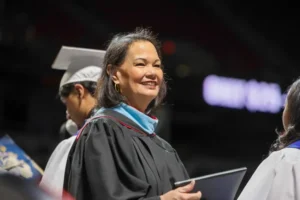

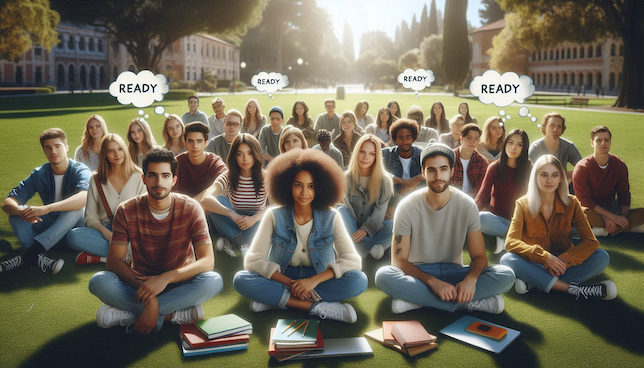
The long-standing discourse within higher education regarding the efficacy of academic curricula in preparing students for the dynamic demands of the job market has intensified, culminating in a pervasive concern now broadly characterized as a "readiness gap." This issue, which transcends traditional notions of knowledge or skills deficits, underscores a fundamental disconnect between the academic experience and the rapid evolution of professional landscapes. Melissa Loble, Chief Academic Officer at Instructure, a veteran of higher education with 24 years of experience and extensive research into student preparedness, advocates for a holistic understanding of "readiness" as the critical bridge from university to the workplace. Her insights highlight the urgency for educational institutions to cultivate in students not just what to learn, but fundamentally, how to learn, adapt, and thrive in an environment of constant change.
The Evolving Landscape of Work and Education
The concept of a gap between educational outputs and industry needs is not novel. For decades, discussions have revolved around "knowledge gaps" and "skills gaps," often spurring innovations such as competency-based learning, defined learning outcomes, and personalized educational pathways. However, the acceleration of technological advancements, globalization, and shifting economic paradigms has transformed this discussion, pushing the traditional "skills gap" into a more profound "readiness gap." The modern workforce demands more than just specific technical proficiencies; it requires adaptability, resilience, and a continuous learning mindset.
Historically, educational models were often designed to impart a fixed body of knowledge, preparing individuals for stable, predictable careers. The Industrial Revolution necessitated a workforce capable of specialized tasks, leading to an emphasis on vocational training and rote learning. The subsequent rise of the information age shifted focus towards critical thinking, problem-solving, and information literacy. Yet, even these shifts have struggled to keep pace with the exponential growth of new technologies like artificial intelligence, automation, and advanced data analytics, which continually redefine job roles and required competencies. According to a 2023 report by the World Economic Forum on the Future of Jobs, 44% of workers’ core skills are expected to change in the next five years, emphasizing the imperative for ongoing upskilling and reskilling. This rapid obsolescence of specific skills makes the ability to "learn to learn" paramount.
Melissa Loble’s extensive career in higher education, particularly her work observing and studying student knowledge and skills gaps over the past five years, positions her uniquely to address this challenge. She posits that focusing on "readiness" offers a more comprehensive framework for understanding how to design educational experiences that genuinely prepare students for future employment. This broader concept moves beyond simply accumulating facts or mastering specific tools, emphasizing the foundational capacities that enable individuals to navigate uncertainty and embrace continuous development.
Defining the Readiness Gap: More Than Just Skills
When asked about the "readiness gap" experienced by college students and graduates, Loble unequivocally confirms its existence and articulates its nuanced character. "Yes, we do see a readiness gap," she states, "And what we mean by readiness is having the skills needed to be successful in today’s working and learning environments, which are changing more rapidly than they have in the past." This definition expands the traditional view of preparedness to encompass a suite of metacognitive and adaptive attributes.
Loble elaborates on three concrete examples of readiness skills, illustrating their practical application in contemporary professional contexts:
-
Resilience: This is characterized as "the ability, as things change, to learn, adapt, and work through that change." In an era marked by unprecedented technological disruption and economic volatility, the capacity to recover from setbacks, adjust to new circumstances, and persist through challenges is indispensable. A recent survey by the National Association of Colleges and Employers (NACE) indicated that employers consistently rank attributes like problem-solving, teamwork, and adaptability—all facets of resilience—among the top skills they seek in new hires, often above specific technical knowledge. The gig economy and project-based work also demand individuals who can quickly pivot and manage ambiguity.

-
Appropriate Technology Skills (General Adoption and Digital Literacy): Loble moves beyond the mastery of specific software applications, like "how to use an Excel spreadsheet if you’re in accounting," to emphasize a more fundamental technological fluency. She advocates for the ability "to identify, adopt, and understand relevant technologies for the job, and how to apply digital literacy, such as staying safe in the ways you use technology." This encompasses not just operational proficiency but also critical thinking about technology’s role, ethical considerations, data privacy, and cybersecurity awareness. As new tools emerge at a dizzying pace, the ability to quickly assess, learn, and integrate novel technologies becomes a core competency. A 2022 LinkedIn report highlighted that digital literacy and technological fluency were among the most in-demand hard skills, underscoring the shift from tool-specific knowledge to broader technological adaptability.
-
Understanding Oneself as a Learner ("Learn to Learn"): Perhaps the most critical component of readiness, this skill involves "the ability to teach yourself the technical and professional skills needed for your job, along with necessary communications skills and an understanding of the culture of that job." This meta-skill is the bedrock of lifelong learning, empowering individuals to proactively seek out and acquire new knowledge and competencies independently. It moves beyond passive absorption of information to active, self-directed exploration and mastery. In a knowledge economy where information doubles at an accelerated rate, the capacity for autonomous learning is a distinct competitive advantage.
Perceptions of the Gap: A Shared Reality
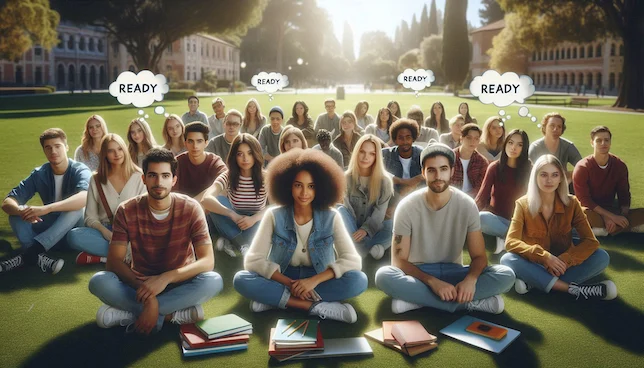
Crucially, the perception of this readiness gap is not confined to industry employers or higher education leadership; students themselves acutely feel this disconnect. Loble notes, "And yes, students themselves are saying that they feel they’re not ready. They don’t feel there are enough low-stakes opportunities to practice the skills they’re going to be using when they leave higher education and enter the workforce." This student perspective is corroborated by numerous surveys. For instance, a 2021 Strada Education Network study found that only 34% of college students strongly agreed that their education was relevant to their career goals, and many expressed concerns about their preparedness for the job market. This sentiment underscores a critical need for educational institutions to provide more experiential learning, internships, simulations, and project-based assignments that mimic real-world professional challenges, allowing students to apply and hone readiness skills in a supportive, formative environment.
Employers, too, consistently voice concerns about graduates’ lack of "soft skills" or "21st-century skills" that fall squarely within Loble’s definition of readiness. Reports from organizations like Burning Glass Technologies frequently highlight significant gaps in areas such as communication, collaboration, critical thinking, and problem-solving among entry-level candidates, even those with strong academic records. This confluence of perceptions—from students, employers, and academic leaders—signals a collective recognition of a systemic challenge that demands a strategic, institution-wide response.

Bridging the Gap: Educational Strategies and Implications
Addressing the readiness gap requires a multifaceted approach that re-evaluates curriculum design, pedagogical methods, and the overall educational experience. The goal is not merely to impart knowledge but to cultivate dynamic, adaptable learners equipped for an unpredictable future.
1. Curriculum Redesign and Integration of Readiness Skills:
Universities must move beyond siloed disciplines to integrate readiness skills across all academic programs. This means embedding resilience, technological adaptability, and self-directed learning into core courses, not just as standalone modules but as integral components of learning outcomes. For example, project-based learning, which simulates real-world challenges and requires students to collaborate, problem-solve, and adapt, can foster resilience and technological proficiency. Case studies, simulations, and role-playing exercises can provide the "low-stakes opportunities" students crave for practicing communication and cultural understanding in a professional context.
2. Emphasis on Experiential Learning:
Internships, co-ops, service-learning, and apprenticeships are vital pathways for students to gain practical experience and apply academic knowledge in professional settings. These experiences allow students to encounter real-world ambiguities, develop problem-solving skills, and understand workplace culture—all critical aspects of readiness. Expanding access to and requirements for such experiences can significantly bolster student preparedness.
3. Leveraging Technology for Adaptive Learning:
Educational technology plays a crucial role in fostering readiness. Learning management systems (LMS) like Instructure’s Canvas, when utilized effectively, can support personalized learning pathways, provide adaptive feedback, and facilitate collaborative projects that mirror professional workflows. Digital tools can also enable students to explore and master new technologies, fostering the general technological adaptability Loble emphasizes. AI-powered tutoring systems, virtual reality simulations, and online collaborative platforms can offer diverse avenues for practice and skill development.

4. Faculty Development:
Educators are central to this transformation. Faculty need support and training to integrate readiness skills into their teaching, moving beyond traditional lecture-based methods to more active, student-centered pedagogies. This includes understanding how to design assignments that promote critical thinking, collaboration, and self-reflection, and how to assess these complex skills effectively.
5. Robust Career Services and Industry Partnerships:
Closer collaboration between universities, career services, and industry partners is essential. Industry insights can inform curriculum development, ensuring that programs remain relevant to current and future workforce needs. Career services can evolve beyond job placement to offer comprehensive readiness coaching, helping students identify their learning styles, develop professional networking skills, and articulate their transferable competencies.
Broader Impact and Implications
The successful cultivation of student readiness has profound implications, not only for individual career trajectories but for the broader economy and societal well-being. A workforce equipped with resilience, technological adaptability, and a commitment to lifelong learning is better positioned to navigate economic shifts, drive innovation, and maintain global competitiveness. For educational institutions, embracing the readiness agenda can enhance their relevance, attract top talent, and strengthen their value proposition in an increasingly scrutinized higher education landscape.
Furthermore, fostering the ability to "learn to learn" democratizes opportunity. It equips individuals with the agency to continuously upskill and reskill, reducing the risk of technological displacement and promoting greater economic mobility. In an era where a single career path is becoming obsolete, the capacity for self-directed learning becomes a fundamental human right and a societal imperative.
Melissa Loble’s call to focus on "readiness" serves as a timely and crucial reminder that higher education’s mission extends beyond imparting static knowledge. It is about empowering individuals to become agile, lifelong learners capable of thriving in an ever-evolving world. By prioritizing resilience, general technological proficiency, and the profound ability to teach oneself, educational institutions can truly bridge the gap from university to workplace, ensuring that graduates are not just ready for their first job, but for a lifetime of learning and adaptation.