

Chinese clothing, known as fushi (服饰), represents a sophisticated system of cultural expression that has mirrored the nation’s socio-political transformations for over three millennia. From the structured silhouettes of the Han Dynasty to the high-fashion runways of the 21st century, attire in China has served as a visual language, communicating social hierarchy, philosophical values, and ethnic identity. The evolution of these garments reflects not only aesthetic shifts but also the broader narrative of China’s historical trajectory, encompassing periods of isolation, imperial expansion, and modern globalization.
The Foundation of Identity: The Han Dynasty and the Birth of Hanfu
The Han Dynasty (206 BCE–220 CE) established the foundational aesthetic for traditional Chinese dress, collectively referred to as Hanfu (汉服). During this era, clothing was intrinsically linked to Confucian ethics, which emphasized order, modesty, and the clear distinction of social roles. The standard attire consisted of the yi (衣), a narrow-sleeved, knee-length tunic, and the chang (裳), a narrow, ankle-length skirt.
Key structural elements of Hanfu included the cross-collar (jiaoling), which typically lapped the right side over the left, and the use of sashes (yaodai) instead of buttons. This period saw the codification of dress based on rank; the Emperor and high-ranking officials wore specific colors and patterns, such as the dragon motif, which was strictly reserved for the Son of Heaven. The materials used—primarily silk (sichou) for the elite and hemp or ramie for the peasantry—underscored the rigid economic stratification of the time.
The Cosmopolitan Shift: Tang Dynasty Aesthetics
The Tang Dynasty (618–907 CE) is frequently cited by historians as the "Golden Age" of Chinese civilization. This era was characterized by unprecedented economic prosperity and cultural exchange facilitated by the Silk Road. Consequently, Tang fashion became more flamboyant, diverse, and inclusive of foreign influences.
Unlike the conservative styles of previous eras, Tang clothing featured higher waistlines and lower necklines, particularly in women’s fashion. The "Hufu" (foreign dress) influence from Central and Western Asia introduced tighter sleeves and practical riding gear into the Chinese wardrobe. The development of advanced textile techniques allowed for the creation of lightweight, translucent silks and intricate floral patterns (huawen). This period also saw the rise of the "Ruqun," a wrap-around skirt paired with a short blouse, which remains a popular silhouette in modern Hanfu reconstructions.
Restoration and Refinement: The Ming Dynasty
Following the Mongol-led Yuan Dynasty, the Ming Dynasty (1368–1644 CE) sought to restore traditional Han Chinese customs. Ming attire was characterized by a return to more structured and formal silhouettes, though it retained some of the technical advancements of the Tang and Song eras.
The Ming period introduced the "Pipa" sleeve—a large, rounded sleeve shape—and the formalization of the Mandarin collar, a short, stand-up collar that would later become a defining feature of Chinese dress in the Western imagination. Official uniforms during this time were highly standardized, with "rank patches" (buzi) embroidered on the front and back of robes to denote an official’s specific grade within the imperial bureaucracy. These patches often featured birds for civil officials and animals for military officers.
Manchu Influence and the Evolution of the Qipao
The Qing Dynasty (1636–1912 CE), established by the Manchu people, fundamentally altered the trajectory of Chinese fashion. The Manchu authorities enforced the "Queue Order," requiring Han men to adopt Manchu dress and hairstyles, leading to the prevalence of the changshan (long robe).
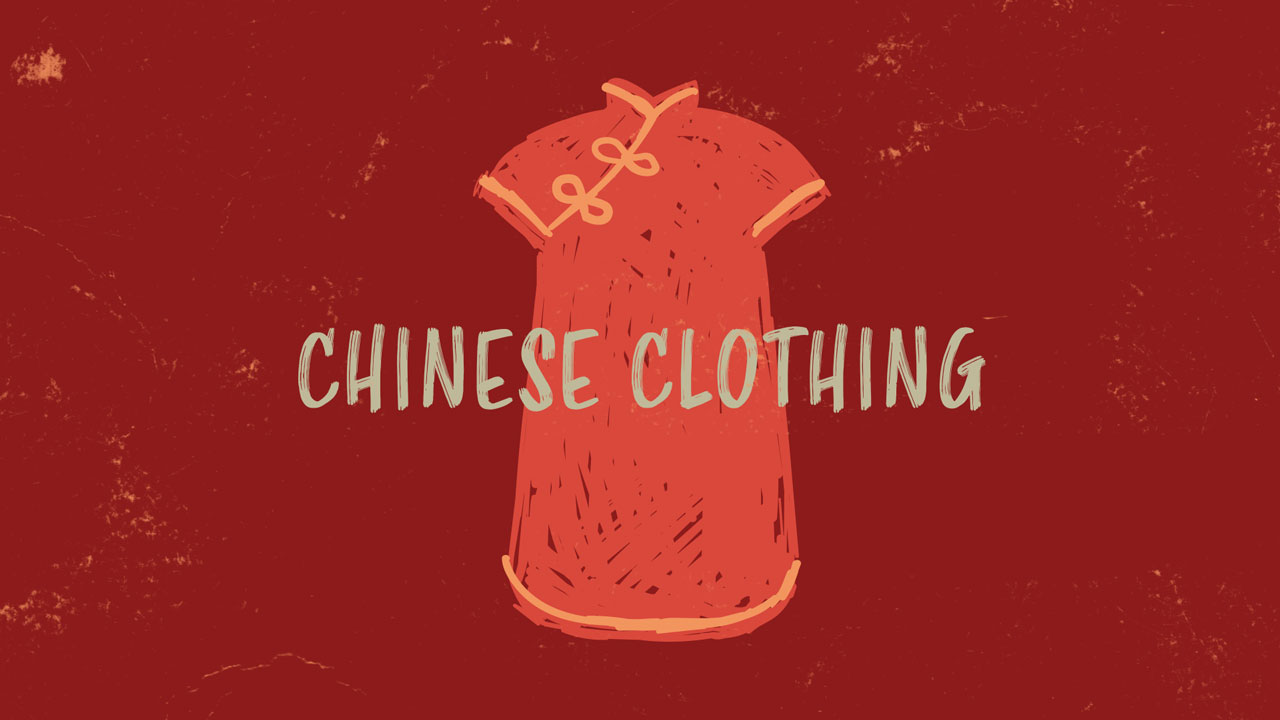
The most enduring legacy of this era is the qipao (旗袍), or cheongsam. Originally a loose, T-shaped silk robe designed to conceal the female form, the qipao underwent a radical transformation in 1920s Shanghai. Influenced by Western tailoring, it became form-fitting, featuring high side slits and shorter hemlines. By the mid-20th century, the qipao had become a global symbol of Chinese femininity and elegance, frequently worn by diplomats, socialites, and film stars.
Ethnic Diversity and Regional Variations
While Han Chinese styles dominate the historical record, China’s 55 ethnic minority groups maintain distinct sartorial traditions that reflect their unique environments and spiritual beliefs.
The Dai and Zhuang of the South
The Dai people (daizu) of Yunnan Province wear clothing adapted for a tropical climate. Women typically wear tight-fitting, short-waisted blouses paired with colorful, ankle-length sarongs (tongqun). Similarly, the Zhuang people—China’s largest minority group—are renowned for their "Zhuang brocade," featuring vibrant geometric patterns inspired by the natural world.
The Tibetan Plateau
Tibetan clothing, or Zangpao (藏袍), is designed for the extreme cold of the high-altitude plateau. These long, wide-sleeved robes are often made of sheepskin or heavy wool (yangmao) and are worn with one sleeve off the shoulder to regulate body temperature during the day. Jewelry (zhubao), particularly jade (yu) and turquoise, is a central component of Tibetan dress, serving as both decoration and a portable form of wealth.
Central Asian Influence: The Uyghurs
The Uyghur people (weiwu’erzu) of Xinjiang incorporate Central Asian aesthetics, characterized by the "Adras" or "Atlas" silk, which features bold, blurred-edge ikat patterns. Men and women alike often wear the "Doppa," a square or round skullcap embellished with intricate embroidery.
The Modern Revival: The Hanfu Movement and Guochao
In the 21st century, Chinese clothing is experiencing a significant cultural resurgence. The "Hanfu Movement" (hanfu yundong), which gained momentum in the early 2000s, has transitioned from a niche subculture to a multi-billion-dollar industry. Driven largely by Gen Z and Millennials, the movement seeks to reclaim traditional Han Chinese identity in a globalized world.
Data from iMedia Research indicates that the number of Hanfu enthusiasts in China surpassed 10 million in 2022, with the market value of the industry exceeding 10 billion yuan. This trend is part of a broader phenomenon known as Guochao (国潮), or "China Chic," which emphasizes the integration of traditional Chinese cultural elements into modern consumer products. Today, it is common to see young people wearing modified Hanfu or "Neo-Chinese" (xinzhongshi) outfits—which blend traditional collars and frog buttons with modern fabrics like denim (niuziku) or T-shirts—in metropolitan centers like Beijing, Shanghai, and Chengdu.
Symbolic Architecture: Colors and Motifs
In traditional Chinese culture, clothing was never merely a matter of personal preference; it was a reflection of the "Five Elements" theory. Each color carried profound symbolic weight:
- Red (hongse): Associated with fire, sun, and joy; the primary color for weddings and festivals.
- Yellow (huangse): Associated with the earth and the center; reserved exclusively for the Emperor during the later dynasties.
- White (baise): Associated with metal and the west; traditionally the color of mourning.
- Black (heise): Associated with water and the north; regarded as a dignified color in early dynasties like the Qin.
Motifs were equally significant. The crane symbolized longevity, the peony represented prosperity, and the lotus signified purity. These symbols were meticulously rendered through cixiu (embroidery), a craft that reached its zenith with the "Four Famous Embroideries" of Su, Xiang, Yue, and Shu.
Global Impact and Contemporary Haute Couture
The influence of Chinese aesthetics has extended far beyond its borders, impacting global haute couture. Chinese designers such as Guo Pei and Laurence Xu have gained international acclaim for merging imperial-era craftsmanship with Western structural silhouettes. Guo Pei’s "Yellow Queen" gown, worn by Rihanna at the 2015 Met Gala, served as a landmark moment for Chinese fashion on the world stage.
However, this global visibility has also led to debates regarding cultural appropriation versus appreciation. Recent controversies involving international luxury brands utilizing traditional Chinese designs, such as the Ming-style "mianqun" (horse-face skirt), highlight the increasing sensitivity and pride the Chinese public feels toward their sartorial heritage.
Future Outlook and Implications
The evolution of Chinese clothing from the Han Dynasty to the modern era demonstrates a remarkable resilience of cultural identity. As China continues to assert its influence as a global superpower, its clothing serves as a potent tool of "soft power." The transition from "Made in China" to "Designed in China" is heavily reliant on this rich historical vocabulary.
Observers note that the current trend toward traditional dress is not merely a nostalgic retreat but a forward-looking synthesis. By integrating ancient motifs with contemporary functionality, China is creating a unique fashion discourse that honors its past while catering to the demands of modern life. As the industry continues to grow, the fusion of traditional fushi with cutting-edge technology and sustainable materials is likely to define the next chapter of Chinese fashion history.