



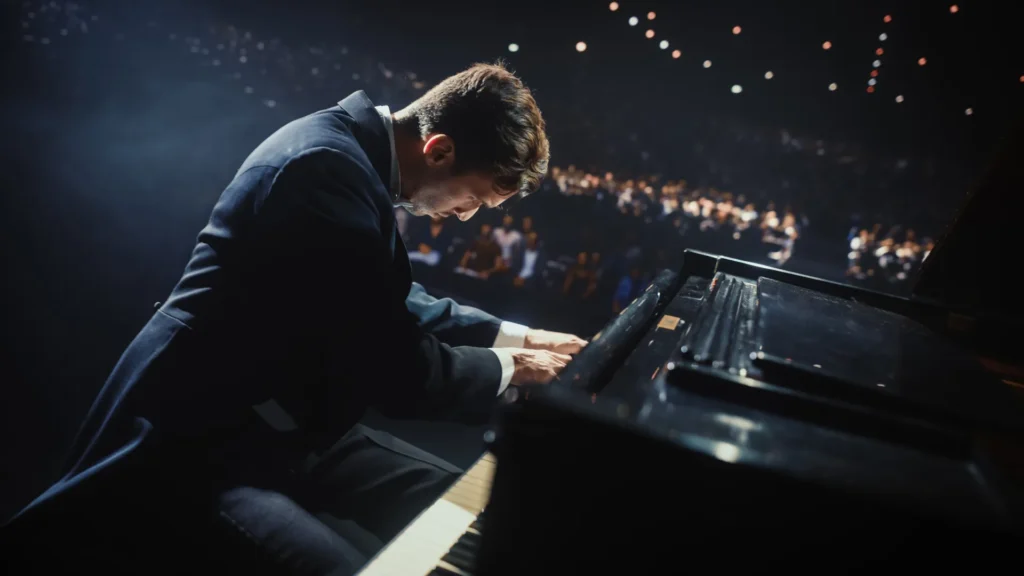
Tokyo, Japan – September 22, 2025 – A landmark study spearheaded by Dr. Shinichi Furuya of the NeuroPiano Institute and Sony Computer Science Laboratories, Inc. has definitively resolved a century-old enigma in music performance, presenting the first scientific evidence clarifying how pianists’ nuanced manipulations of piano keys directly alter the instrument’s timbre. Published today in the prestigious international scientific journal Proceedings of the National Academy of Sciences (PNAS), these findings move beyond anecdotal belief to establish a verifiable link between specific physical motor skills and the creation of diverse sonic palettes on the piano, promising profound implications for music education, rehabilitation, and human interface design.
A Century-Old Musical Mystery Solved
For generations, musicians, educators, and critics have debated whether a pianist could truly influence the quality or color of a piano’s sound—its timbre—beyond mere pitch and volume. While the ability to control dynamics (loudness) and articulation (note duration) through key strikes is self-evident, the notion that a pianist’s "touch" could impart a distinct timbral character, making a note sound "bright" or "dark," "mellow" or "percussive," was often dismissed by skeptics as a sensory metaphor or an illusion. This profound question, central to the artistry of piano playing, garnered significant discussion even in the pages of Nature magazine in the early 20th century, yet remained scientifically unaddressed due primarily to the lack of adequate measurement technologies and systematic analytical frameworks.
Creativity across various artistic disciplines, from painting to music, hinges on the artist’s capacity to evoke diverse perceptual experiences in their audience. However, the precise mechanisms by which performing artists achieve this, particularly the ability to subtly change sound quality during a performance, have largely remained in the realm of intuition and subjective experience. This scientific void meant that the methods for acquiring these highly specialized skills were often based on tradition rather than empirical evidence, leading to inefficiencies, potential mislearning, and even physical strain for aspiring artists. The research by Dr. Furuya’s team directly confronts this challenge, transforming a deeply ingrained artistic belief into a scientifically validated phenomenon.
Pioneering Methodology: Unveiling the Mechanics of Touch
To meticulously investigate this elusive phenomenon, the research group developed an innovative and highly sophisticated sensor system dubbed "Hackkey." This proprietary, non-contact system represents a significant leap in measurement technology, capable of recording the movements of all 88 piano keys simultaneously with extraordinary precision: a temporal resolution of 1,000 frames per second (1 millisecond temporal precision) and a spatial resolution of 0.01 millimeters. This unprecedented level of detail allowed researchers to capture the minute, dynamic nuances of key depression and release that were previously undetectable.
The study engaged 20 internationally renowned professional pianists, each instructed to perform a series of musical excerpts with the explicit intention of expressing a range of diverse timbral qualities. These included contrasting pairs such as "bright" versus "dark" and "light" versus "heavy" sounds, commonly used descriptors in the lexicon of piano pedagogy. The Hackkey system meticulously recorded every aspect of their key movements throughout these performances.
Following the data collection, the team conducted a rigorous psychophysical experiment involving 40 participants. This group was diverse, comprising both experienced pianists and individuals with no formal piano performance training. These listeners were tasked with identifying the intended timbres from the recorded performances. The results were remarkably consistent: listeners, irrespective of their musical background, could reliably distinguish the pianists’ intended timbres. Notably, participants with piano performance training demonstrated an even greater sensitivity and accuracy in discerning these subtle timbral differences, underscoring the cultivated auditory perception among trained musicians. Crucially, the experiment meticulously controlled for other factors traditionally thought to influence timbral perception, such as volume (loudness) and tempo (speed), thereby isolating the direct impact of key manipulation on perceived timbre. This control was vital in moving beyond confounding variables to establish a clear relationship.
Identifying the "Fingerprints" of Timbre
The extensive data collected from the Hackkey system and the psychophysical experiments underwent sophisticated analysis using a linear mixed-effects (LME) model. This powerful statistical tool allowed the researchers to identify specific key movement features that contributed most significantly to the perceived timbral differences. The analysis revealed that contributions to timbral distinctions were concentrated not in a myriad of variables, but in a limited, identifiable set of movement characteristics. These included, for instance, specific patterns of acceleration during the key’s escapement phase (the point at which the hammer disengages from the key, allowing it to strike the string unimpeded) and subtle deviations in hand synchronization across multiple fingers or notes.
To establish a definitive causal relationship—a critical step beyond mere correlation—the research team conducted further experimental verification. They synthesized piano notes by precisely varying only one of these identified key movement features while keeping all other parameters constant. When listeners perceived these artificially generated notes, they consistently reported distinct timbral differences. This groundbreaking empirical confirmation provides the first direct evidence of a causal link between specific key movement features and the resulting piano timbre, thereby conclusively answering the century-old question: pianists can alter timbre through touch, and the mechanism involves precise, identifiable physical motor control.
Expert Perspectives and Reactions
The implications of this discovery are resonating across the scientific and artistic communities. Dr. Shinichi Furuya, lead researcher, expressed profound satisfaction: "For too long, the idea of a pianist manipulating timbre through touch has been treated as an artistic abstraction, a ‘sensory metaphor.’ Our research unequivocally validates this skill as a scientifically quantifiable reality. This is a monumental step, not just for musicology, but for understanding the intricate relationship between human motor control and artistic expression. It brings scientific rigor to a domain long governed by intuition."
Music educators anticipate a paradigm shift in pedagogy. Professor Elena Petrova, a renowned piano pedagogue, remarked, "This research will revolutionize how we teach piano. Imagine being able to visualize the exact key movements that produce a ‘singing’ tone versus a ‘staccato’ one. This will enable more efficient practice, prevent mislearning, and empower both teachers and students with an evidence-based approach that removes much of the guesswork from mastering expressive touch. It validates what many great masters have intuitively known but could not articulate scientifically."
Professional pianists welcome the scientific affirmation of their craft. Acclaimed concert pianist, Dr. Hiroshi Tanaka, commented, "Every pianist knows the feeling of searching for a specific color or character in a piece, trying different touches until it ‘feels’ right. To have scientific data confirming that our efforts aren’t just subjective sensations, but are linked to precise physical actions, is incredibly validating. It opens up new avenues for self-analysis and perhaps even new tools for refining our artistry."
Representatives from the funding bodies also highlighted the significance. Dr. Akiko Aizawa, Research Supervisor for the JST Strategic Basic Research Program (CREST), noted, "This project exemplifies the kind of foundational research we aim to support – bridging disciplines and yielding insights with broad societal impact. The integration of advanced sensor technology, cognitive science, and artistic inquiry is truly commendable." Similarly, Dr. Norihiro Hagita, Research Supervisor for the Moonshot Research & Development Program, stated, "Our Moonshot initiative seeks to liberate humans from various limitations. This research, by clarifying the mechanisms of high-level motor control in artistry, directly contributes to this vision, offering pathways to enhance human capabilities and well-being through scientific understanding."
Broader Implications: Beyond the Keyboard
The ramifications of Dr. Furuya’s team’s findings extend far beyond the concert hall, suggesting transformative applications across various disciplines.
Revolutionizing Music Education: The most immediate impact will be on piano pedagogy. By visualizing and explicitly teaching the specific movement features responsible for different timbres, learning curves can be drastically shortened. This moves beyond abstract concepts like "play with more warmth" to concrete instructions like "adjust your acceleration during escapement by X milliseconds." This scientific grounding will pave the way for a new field of "dynaformics," the science of music performance, providing evidence-based methods for physical education in the performing arts.
Rehabilitation and Skill Transfer: The research demonstrates how high-level body motor control shapes artistic perception. This understanding holds immense potential for rehabilitation medicine, particularly for patients recovering from neurological injuries affecting fine motor skills. By identifying and training specific movement parameters, rehabilitation protocols could become more targeted and effective. Moreover, the principles of skill acquisition derived from this study could be transferable to other domains demanding exquisite motor control, such as sports, surgical procedures, and traditional crafts, offering methodologies for more efficient and injury-preventing training.
Human-Computer Interaction and Interface Design: The insights into precise motor control for expressive output can inform the design of more intuitive and responsive human interfaces. Imagine haptic feedback systems or virtual instruments that allow users to manipulate digital sounds with the same nuanced control that pianists exert over acoustic instruments. This could lead to richer, more expressive digital art forms and more ergonomic interaction with technology.
Understanding Brain Information Processing: From a cognitive neuroscience perspective, this research opens new avenues for exploring how the brain processes higher-level perceptual information like timbre, moving beyond traditional foci on pitch, loudness, and rhythm. Clarifying the underlying neural mechanisms that translate motor commands into complex sonic perception could yield profound insights into human cognition and sensory integration.
Addressing Artist Limitations: For too long, artists globally have grappled with physical and mental constraints in embodying their creative visions. The knowledge provided by this research regarding the foundational skills for producing diverse expressions contributes significantly to creating a future society where artists are liberated from these limitations. By offering evidence-based training methods, it empowers artists to fully realize their creative potential, fostering a new era of artistic freedom and innovation.
A New Era for Artistic Expression and Scientific Understanding
The publication of these findings marks a pivotal moment, bridging the often-separated worlds of artistic intuition and scientific rigor. The research, supported by the JST Strategic Basic Research Program (CREST) and the Moonshot Research & Development Program (MOONSHOT), represents a multi-year effort, with the CREST project running from October 2020 to March 2026 and the MOONSHOT project from October 2020 to March 2026. The findings not only validate a long-held belief among musicians but also provide a robust scientific framework for understanding, teaching, and enhancing human motor skills in the pursuit of artistic excellence and beyond. This profound interdisciplinary achievement is poised to generate ripple effects across numerous fields, promising a future where the thrill of using one’s body to achieve the once impossible is illuminated and accessible through the lens of science and technology.