



The innate human drive to visualize complex ideas often manifests in an immediate impulse to "show, not just tell." From sketching a simple machine diagram to outlining a garden plan, visual representation is a fundamental aspect of how we communicate and comprehend. Among the most effective and accessible visual tools for learning are concept maps, graphic organizers designed to illustrate the intricate relationships between different pieces of knowledge. These deceptively simple structures, composed of nodes (boxes or bubbles containing key concepts) linked by labeled lines or arrows, offer a profound pathway to deeper understanding and superior knowledge retention.
Despite their low-tech accessibility, requiring nothing more than pen and paper, concept maps are heralded by cognitive scientists as exceptionally powerful pedagogical instruments. Their efficacy stems from their ability to actively engage learners in the process of knowledge construction, moving beyond passive reception of information. A leading voice in this field is Dr. Kripa Sundar, a cognitive scientist specializing in concept mapping research. Her insights are prominently featured in "Smart Teaching Stronger Learning: Practical Tips from 10 Cognitive Scientists," a seminal work edited by Dr. Pooja Agarwal, which distills evidence-based classroom practices from prominent experts. Dr. Sundar’s contributions, recently highlighted in a podcast interview and transcript, underscore why concept maps are not merely a visual aid, but a cornerstone strategy for robust learning.
The Cognitive Science Behind Concept Maps: Unpacking Their Efficacy
Dr. Sundar unequivocally describes concept maps as a "packed strategy," a testament to their multifaceted engagement with cognitive processes critical for learning. Her research, echoed in an article for the American Federation of Teachers (AFT), points to multiple meta-analyses that robustly support the effectiveness of concept maps. These studies frequently indicate that concept mapping can yield greater learning impacts than traditional methods like lectures, discussions, or even text summaries. This superior performance is rooted in how concept maps meticulously engage all three critical stages of memory formation: encoding, storage, and retrieval.
-
Encoding: The process of initially learning information. When creating a concept map, learners are compelled to actively process information, identify core concepts, and articulate the relationships between them. This active construction, as opposed to passive reading or listening, fosters deep semantic encoding. It moves information from superficial processing to a meaningful integration within existing knowledge structures, making it more likely to be remembered. The act of selecting, arranging, and linking concepts forces a learner to truly grapple with the material, leading to a more robust initial imprint in memory.
-
Storage: How information is retained over time. Concept maps facilitate the organization of knowledge into coherent, interconnected networks, much like how our brains naturally store complex information. Instead of isolated facts, concept maps build a schema – a mental framework that integrates new information with prior knowledge. This rich, interconnected web of concepts is far more resilient to forgetting than fragmented pieces of information. The visual layout itself aids in creating a spatial memory of the information, adding another dimension to storage.
-
Retrieval: The ability to access stored information. A well-constructed concept map acts as a powerful retrieval cue. The visual pathways and labeled links serve as mental prompts, guiding learners through their knowledge network. The very act of recalling information to construct or elaborate on a map is a form of retrieval practice, a highly effective learning strategy known to strengthen memory traces and improve long-term retention. Regularly engaging with concept maps, whether creating them from scratch or reviewing existing ones, repeatedly exercises these retrieval pathways, making knowledge more accessible when needed.

Beyond these three memory stages, concept maps leverage other powerful cognitive principles. Dual coding theory, for instance, suggests that information is better remembered when presented both visually and verbally. Concept maps inherently do this by combining textual concepts within nodes with visual links and directional arrows. This dual representation creates redundant pathways for information storage and retrieval, significantly enhancing recall. Furthermore, the construction of a concept map demands elaboration – explaining and expanding upon ideas – and organization, structuring information hierarchically or thematically. Both are critical for deeper understanding and metacognitive awareness, allowing learners to reflect on their own thinking and identify gaps in their knowledge.
A Brief History of Concept Mapping in Education
While the human tendency to visualize is ancient, the formal pedagogical tool known as the "concept map" has a relatively recent origin. It was developed in the 1970s by Joseph D. Novak and his research team at Cornell University. Their work stemmed from a research program investigating children’s understanding of science concepts, particularly based on David Ausubel’s assimilation theory of learning. Ausubel’s theory emphasized the importance of prior knowledge in learning new concepts, and Novak sought a tool that could externalize a learner’s cognitive structure – how they organized and related concepts in their minds.
Concept maps emerged as a direct application of constructivist learning theories, which posit that learners actively construct their own understanding rather than passively receiving knowledge. Novak and his team recognized that by graphically representing their understanding, students could make their cognitive frameworks explicit, allowing both themselves and educators to identify existing knowledge, misconceptions, and the evolution of their understanding over time. Initially used primarily as a research tool to assess conceptual change, concept mapping quickly demonstrated its immense potential as a learning strategy in its own right, evolving into a widespread pedagogical technique across various disciplines and educational levels globally. Its journey from a theoretical construct to a practical classroom staple underscores its foundational alignment with how humans truly learn.
Mastering the Art of Concept Mapping: Expert Best Practices
To harness the full potential of concept maps, it is essential to employ them strategically. Dr. Sundar provides clear, actionable guidelines to maximize their effectiveness.
-
Be Clear About Your Motivation: The ‘Why’ Behind the Map
As with any instructional strategy, the initial question should always be "why?" The purpose behind creating a concept map dictates its structure, complexity, and ultimately, its utility. Are you using it for individual note-taking, a collaborative brainstorming session, a whole-class review, or as a formal assessment? Understanding the pedagogical goal is paramount. For instance, a map designed for a quick individual review might be less complex than one used for a summative assessment of an entire unit. If the goal is to foster collaborative learning, the map’s design might encourage shared contributions and debate. Conversely, for pre-assessment, it might focus on eliciting prior knowledge before instruction begins. This clarity of purpose prevents the activity from becoming a mere exercise and ensures it aligns with specific learning objectives. -
Have a Guiding Question: The Compass for Clarity
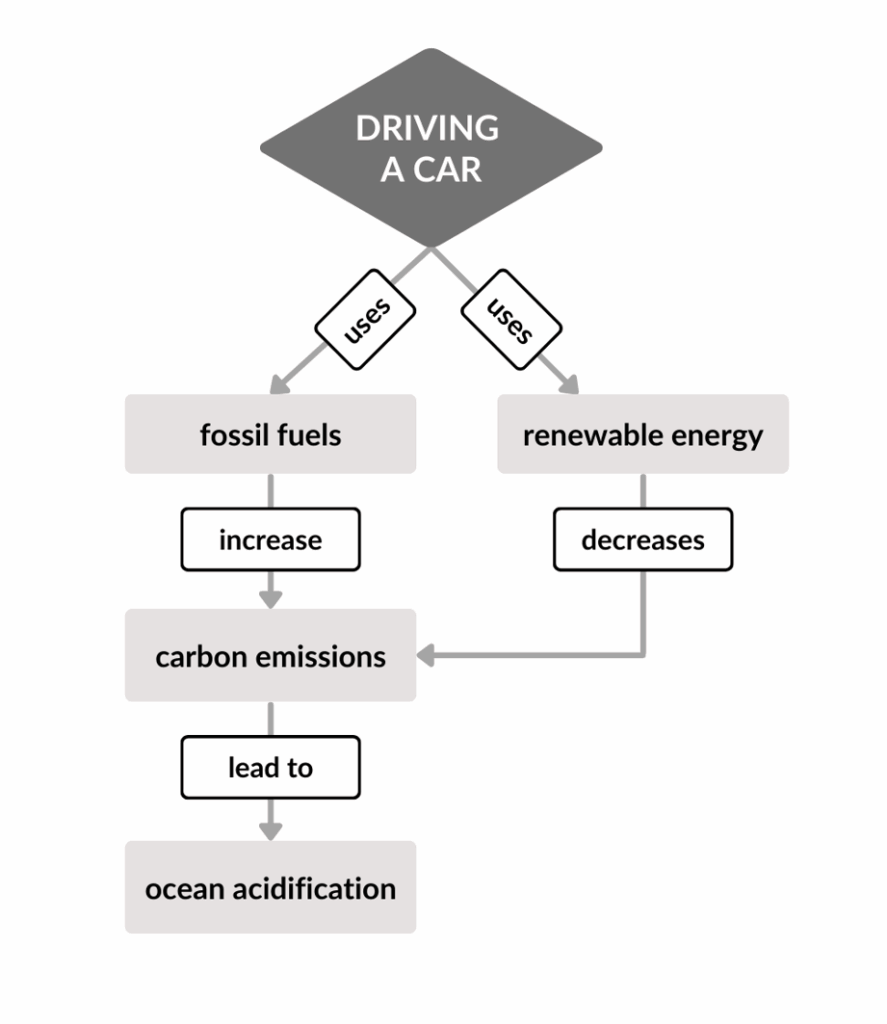
One of the most critical practices Dr. Sundar advocates is the use of a guiding question. This narrows the focus, limits the number of concepts, and prevents learners from becoming overwhelmed – a phenomenon she aptly terms "concept map shock." Without a clear question, students might attempt to include every conceivable detail, resulting in a cluttered, unmanageable map that obscures relationships rather than clarifies them.
Consider the illustrative examples related to ocean acidification. If the guiding question is "What is the relationship between driving a car and ocean acidification?", the map remains relatively focused, tracing a clear causal chain from fossil fuel combustion to carbon dioxide emissions, absorption by oceans, and subsequent acidification. This map provides a concise, direct answer. However, if the guiding question broadens to "What is the relationship between human activities and ocean acidification?", the resulting map becomes significantly more complex. It would need to encompass not just vehicular emissions, but also industrial pollution, deforestation, agricultural runoff, and their diverse pathways to influencing ocean chemistry. The guiding question thus acts as a vital filter, ensuring the map serves its intended purpose without becoming an impenetrable web of information. This principle is crucial for scaffolding learning, gradually introducing complexity as students’ understanding deepens.
-
Use Linking Words and Directional Arrows: Precision in Relationships
A fundamental distinction between a simple mind map and a robust concept map lies in the explicit labeling of connections. While mind maps often use lines to simply associate ideas, concept maps demand linking words and directional arrows. These labels articulate the precise nature of the relationship between concepts (e.g., "causes," "leads to," "is a type of," "is composed of," "requires").Dr. Sundar acknowledges that adding these linking words "is a pain in the beep," but she emphasizes that this effort is precisely what "pushes your learning harder." This rigor forces learners to move beyond superficial connections and articulate propositional knowledge – specific, meaningful statements about how concepts interact. For instance, instead of just connecting "driving a car" to "CO2 emissions," a link might state "driving a car releases CO2 emissions." This precise articulation deepens understanding, strengthens memory, and makes the map a far more robust learning tool. The directional arrows further clarify causality or flow, indicating whether "A causes B" or "B influences A," adding another layer of semantic precision that is invaluable for complex topics.
Integrating Concept Maps into Diverse Classroom Settings
The versatility of concept maps allows them to be seamlessly integrated into various stages of the learning process, from initial introduction of material to formative assessment and comprehensive review.
-
Expert Maps: Navigating the Learning Landscape
Teachers can leverage "expert maps" to provide students with a visual roadmap of a unit of study. These pre-constructed maps, created by the teacher, visually represent the key concepts and their interrelationships within a given domain. Expert maps serve as powerful "advance organizers," giving students a "big picture" overview from the outset. Dr. Sundar highlights their value in demonstrating how seemingly disparate topics will eventually connect, addressing potential confusion that arises when new information feels fragmented.A crucial caveat, however, is to prevent "concept map shock." Presenting an overly complex expert map at the beginning of a unit can overwhelm students. Instead, teachers can employ a strategy of progressive disclosure: start with a simplified expert map showing only the broadest, most central concepts. As the unit progresses and students acquire more detailed knowledge, additional layers of concepts and links can be gradually revealed or added to the map. This scaffolding approach helps manage cognitive load, allowing students to build their understanding incrementally within a coherent framework. Students can then use these expert maps as ongoing reference tools, revising their own understanding as they navigate the unit.
-
Dynamic Note-Taking: Beyond Linear Text
Traditional linear note-taking, while common, can often lead to passive transcription without deep processing. Concept maps offer a dynamic alternative, transforming note-taking into an active learning process. Rather than simply writing down information sequentially, students using concept maps must analyze, synthesize, and organize content as they listen or read. This forces them to identify main ideas, extract key concepts, and immediately consider their relationships.
Dr. Sundar points out that maps allow for "capturing more information in just a few words and diagrams," bypassing the need for lengthy explanations. The visual nature helps condense information, making notes more efficient and easier to review. A practical approach she recommends is maintaining a running list of key terms – either on a classroom wall or in student notebooks. Periodically, students can be tasked with constructing a concept map using these terms, demonstrating their evolving understanding of how the concepts interrelate. This not only serves as an effective note-taking method but also doubles as a spontaneous retrieval practice exercise.
-
Formative Assessment: Gauging Understanding in Real-Time
Concept maps are exceptional tools for formative assessment, providing teachers with invaluable insights into students’ comprehension and conceptual organization. By analyzing student-created maps, educators can quickly identify strengths, weaknesses, and common misconceptions.One highly effective technique is to provide students with a partially completed concept map and ask them to fill in the missing nodes or linking words. This assesses specific knowledge and relational understanding. Other methods include:
- Blank Canvas Mapping: Asking students to create a map from scratch on a given topic. This reveals their entire mental model.
- Concept Sorting and Mapping: Providing a list of concepts and asking students to arrange and connect them.
- Error Analysis: Comparing student maps against an expert map or a detailed rubric to pinpoint areas of misunderstanding. Incorrect links, missing crucial concepts, or inaccurate hierarchical structures all provide diagnostic data.
- Peer Assessment: Students evaluating each other’s maps can foster deeper discussion and critical analysis of content.
The diagnostic power of concept maps makes them superior to many traditional quiz formats, which might only assess factual recall. Maps, conversely, reveal the depth and interconnectedness of a student’s understanding, allowing teachers to tailor subsequent instruction more effectively.
-
Collaborative Learning: Constructing Shared Knowledge
Beyond individual use, concept maps excel as tools for collaborative learning. When students work in groups to construct a map, they are compelled to discuss, debate, and negotiate the meaning and relationships of concepts. This process externalizes their individual thinking, exposes diverse perspectives, and forces them to arrive at a shared understanding. The group mapping activity fosters critical thinking, communication skills, and the ability to synthesize information collectively. It can be particularly effective for tackling complex, multi-faceted problems or interdisciplinary topics, where integrating knowledge from various viewpoints is essential.
Broader Implications and Future Directions in Pedagogy
The growing body of evidence supporting concept maps, championed by cognitive scientists like Dr. Sundar and Dr. Agarwal, has significant implications for the future of education.
-
Teacher Professional Development: Widespread adoption of concept mapping requires robust professional development for educators. Teachers need to understand not only how to create maps but why they are effective from a cognitive science perspective, and how to integrate them meaningfully into curriculum design and assessment practices. Training should focus on the nuances of guiding questions, linking words, and adapting maps for diverse learners and subjects.
-
Curriculum Integration: Concept mapping should be integrated across the curriculum, not just as an isolated activity. From science to history, literature, and mathematics, the ability to visualize and connect concepts is universally beneficial. Curriculum designers can embed concept mapping activities at key junctures: at the beginning of units to activate prior knowledge, during instruction for active note-taking and processing, and at the end for review and synthesis.
-
Technological Advancements: While the core power of concept maps lies in their conceptual rigor, digital tools have made their creation and sharing more dynamic. Software like CmapTools, MindMeister, Miro, and various online diagramming platforms offer features for collaborative mapping, easy revision, and integration with digital learning environments. These tools can enhance accessibility, particularly for remote learning, and allow for the creation of more visually appealing and interactive maps, though the fundamental cognitive benefits remain rooted in the act of construction itself.
-
Empowering Learners for the 21st Century: In an age of information overload, the ability to organize, synthesize, and critically evaluate vast amounts of data is paramount. Concept mapping equips students with metacognitive skills that extend far beyond specific content knowledge. It fosters independent learning, critical thinking, problem-solving, and the capacity to build coherent mental models – skills that are indispensable for academic success and lifelong learning. By mastering concept mapping, students become more autonomous and effective learners, capable of navigating and making sense of an increasingly complex world.
In conclusion, concept maps stand as a testament to the profound impact of simple, evidence-based pedagogical strategies when applied thoughtfully. Far from being mere decorative visuals, these graphic organizers are powerful cognitive tools that align directly with how the human brain learns and remembers. By actively engaging learners in the encoding, storage, and retrieval of knowledge, and by fostering deep processing, elaboration, and organization, concept maps, as advocated by experts like Dr. Kripa Sundar and Dr. Pooja Agarwal, offer an accessible yet profoundly effective pathway to enhanced learning, robust knowledge retention, and the cultivation of critical thinking skills essential for navigating the complexities of the modern world. Their continued integration into educational practices represents a significant step towards truly smart teaching and stronger learning outcomes for all students.