



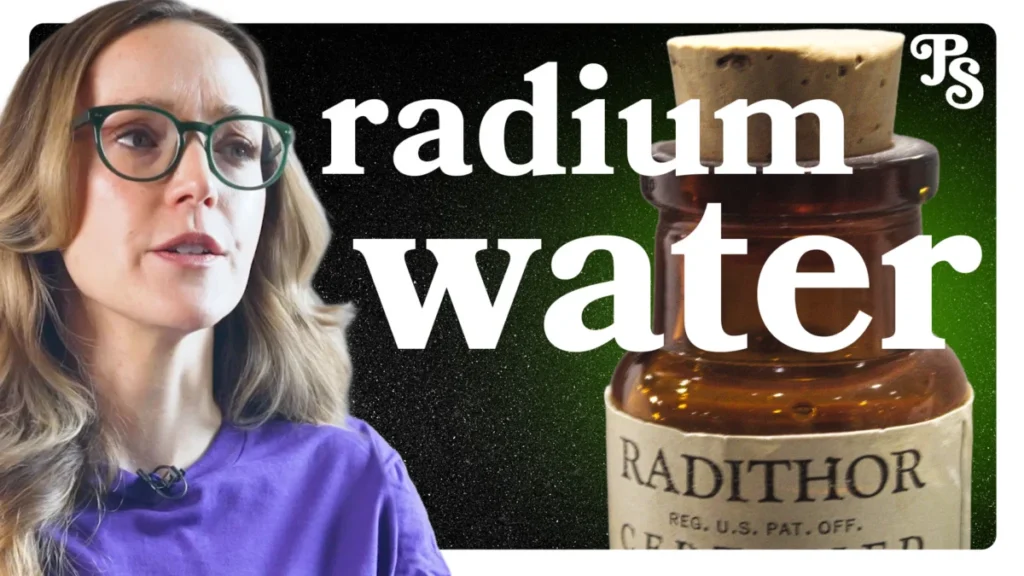
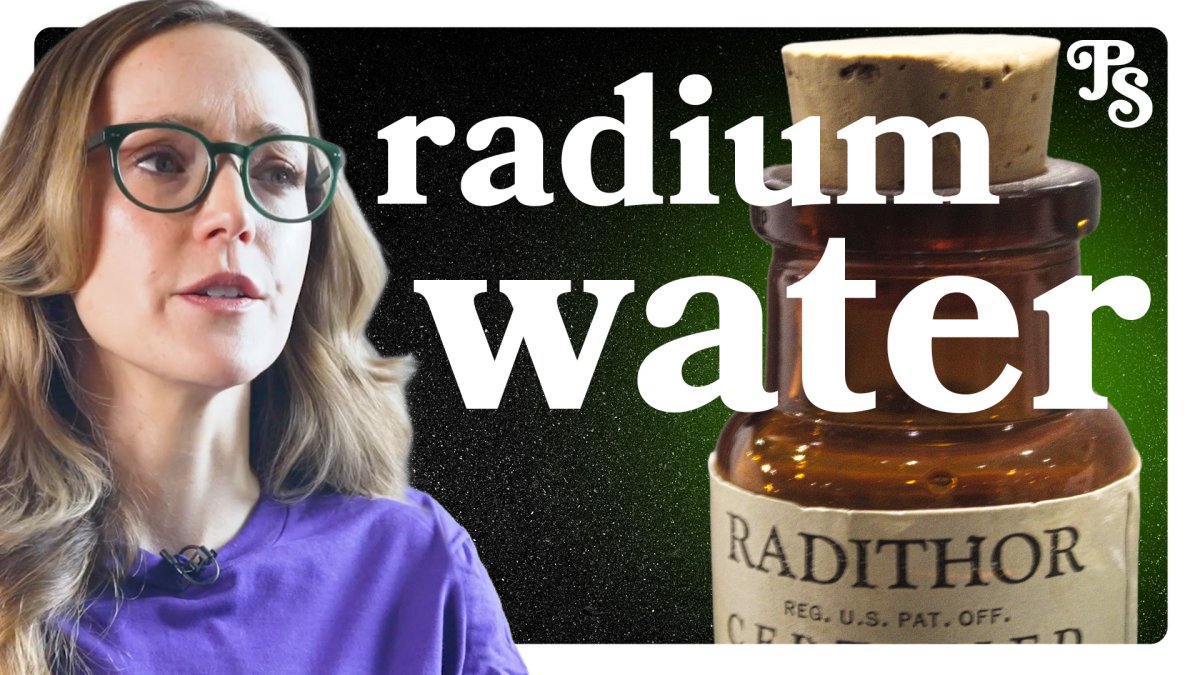
The early 20th century was defined by a profound and often dangerous sense of scientific optimism, an era where the discovery of new elements was frequently met with immediate commercial exploitation long before their biological impacts were understood. Among the most notorious examples of this phenomenon was Radithor, a patent medicine sold in the 1920s that promised to cure an exhaustive list of ailments ranging from minor cosmetic issues to chronic systemic diseases. Marketed as "Certified Radioactive Water" and "Perpetual Sunshine," Radithor was not merely a placebo; it was a lethal concoction of distilled water infused with two isotopes of radium. Its rise and fall represent a pivotal moment in the history of medical ethics, consumer protection, and the regulation of the American pharmaceutical industry.
The Architect of a Radioactive Empire
The history of Radithor is inextricably linked to its creator, William J. Bailey. Despite frequently styling himself as "Dr. Bailey," he was a Harvard University dropout with no formal medical degree. Bailey was a quintessential "quack" of the era—a man with a history of run-ins with the law and a talent for exploiting the public’s fascination with "modern" science. Before the Radithor venture, Bailey had been involved in various schemes, including the sale of fraudulent aphrodisiacs and questionable mechanical inventions.
In 1925, Bailey established the Bailey Radium Laboratories in East Orange, New Jersey. He understood that the public viewed radium, discovered by Marie and Pierre Curie in 1898, as a miraculous source of energy. If radium could provide light and heat, the logic of the time suggested it could surely provide "vitality" to the human body. Bailey claimed that Radithor could treat over 150 separate conditions, including anemia, arthritis, asthma, heart disease, impotence, and even wrinkles.
To give his product a veneer of scientific legitimacy, Bailey offered a 17% commission to physicians for every bottle of Radithor they prescribed. This kickback scheme was remarkably effective. At a time when a bottle of Radithor cost roughly $1.00—equivalent to nearly $18.00 today—the product became a luxury health tonic for the wealthy. Over the course of its production, Bailey Radium Laboratories sold upwards of 400,000 bottles, generating significant profit while systematically poisoning a segment of the American elite.
The Science of "Mild Radium Therapy"
The marketing of Radithor relied on a then-popular theory known as "mild radium therapy." Proponents of this theory argued that small doses of radiation acted as a stimulant to the endocrine system and the metabolic processes of the body. They believed that radiation "invigorated" the blood and prompted the organs to function at peak efficiency.
Chemically, Radithor consisted of triple-distilled water containing at least one microcurie each of Radium-226 and Radium-228. While these amounts may sound small, the biological reality was catastrophic. Radium is a "bone-seeker." Because it sits in the same column of the periodic table as calcium, the human body cannot distinguish between the two. When ingested, the body treats radium as calcium, transporting it directly into the bone structure and teeth.
Once lodged in the bone, the radium isotopes continue to decay, emitting alpha particles. These particles are heavy and highly ionizing; they act like microscopic cannonballs, relentlessly battering the surrounding bone tissue and marrow. This leads to a condition known as radiation necrosis, where the bone literally dies and disintegrates while the patient is still alive. Furthermore, the constant irradiation of the bone marrow frequently leads to leukemia and other forms of blood cancer.
The Tragic Case of Eben Byers
The dangers of Radithor remained largely hidden from the public eye until the high-profile death of Eben Byers, a prominent industrialist and amateur golf champion. Byers was the quintessential target for Bailey’s marketing. After injuring his arm in a fall in 1927, Byers was recommended Radithor by his physician to aid in his recovery.
Byers became an enthusiast, reportedly consuming as many as three bottles a day for several years. Initially, he claimed to feel a sense of renewed vigor and "glow," likely a result of the radiation’s initial stimulation of the marrow to produce more red blood cells—a temporary effect before the inevitable collapse. By 1930, the "glow" had faded, replaced by severe weight loss, debilitating headaches, and excruciating pain in his jaw.
The physical decline of Eben Byers was horrific and widely documented by the press. His teeth began to fall out, and eventually, his entire lower jaw had to be surgically removed as the bone had disintegrated. By the time he reached the end of his life, holes had formed in his skull, and his entire skeletal structure was crumbling. Byers died on March 31, 1932. His death was so significant that the Wall Street Journal ran a headline that became legendary in the annals of medical history: "The Radium Water Worked Fine Until His Jaw Came Off."
Because of the long half-life of radium, Byers’ body remained highly radioactive even after death. He was buried in a lead-lined coffin to prevent radiation from leaching into the surrounding soil. When his body was exhumed for study in 1965, more than 30 years later, his remains were still dangerously radioactive.
Chronology of the Radithor Scandal
The timeline of the Radithor era illustrates a slow awakening of regulatory bodies to the dangers of unregulated medical products:
- 1898: Marie and Pierre Curie discover radium, sparking global fascination.
- 1906: The Pure Food and Drug Act is passed in the U.S., but it primarily regulates labeling rather than safety or efficacy.
- 1910s-1920s: "Radium mania" leads to the creation of radioactive chocolates, toothpastes, and cosmetics.
- 1925: William J. Bailey launches Radithor through Bailey Radium Laboratories.
- 1927: Eben Byers begins his heavy consumption of Radithor.
- 1930: The Federal Trade Commission (FTC) begins investigating Bailey’s claims, not because the product was dangerous, but because of "unfair competition" and false advertising.
- 1931: The FTC issues a "cease and desist" order to Bailey, effectively ending the legal sale of Radithor.
- 1932: The death of Eben Byers shocks the nation and prompts a demand for stricter medical oversight.
- 1938: The Federal Food, Drug, and Cosmetic Act is passed, significantly expanding the power of the FDA to require safety testing before a drug can be marketed.
Regulatory Failure and the Legal Loophole
One of the most frustrating aspects of the Radithor saga was the inability of the government to intervene earlier. At the time, the Food and Drug Administration (FDA) had very limited jurisdiction. Under the 1906 Pure Food and Drug Act, the government could only prosecute a company if they lied about the ingredients on the label.

Because Bailey’s Radithor actually contained the radium it claimed to have, he was technically in compliance with the labeling laws of the era. He was not selling a "fake" product in the eyes of the law; he was selling exactly what he advertised. The fact that the product was inherently lethal was, legally speaking, secondary to whether the label was accurate.
It was the Federal Trade Commission (FTC) that eventually brought Bailey down. The FTC focused on the "false and misleading" claims regarding the curative powers of the water. In the end, the government did not stop Radithor because it was killing people; they stopped it because Bailey could not prove it cured impotence or wrinkles.
Broader Impact and Modern Implications
The legacy of Radithor is a somber reminder of the necessity of rigorous clinical trials and independent regulatory oversight. The death of Eben Byers and the subsequent public outcry were instrumental in the passage of the 1938 Federal Food, Drug, and Cosmetic Act. This landmark legislation changed the burden of proof, requiring manufacturers to demonstrate that their products were safe for human consumption before they could be sold to the public.
Furthermore, the Radithor incident helped dismantle the "radium craze" that had gripped the early 20th century. It forced the medical community to re-evaluate "mild radium therapy" and led to a more cautious, evidence-based approach to the use of radioactive materials in medicine. Today, radiation is a cornerstone of cancer treatment, but its application is precisely controlled, targeted, and monitored—a far cry from the "swig-and-hope" method promoted by William Bailey.
Despite the lessons of the 1920s, the underlying psychology that allowed Radithor to flourish remains present in the modern "wellness" industry. The allure of a "miracle cure" or a "secret" scientific breakthrough continues to drive consumers toward unregulated supplements and alternative therapies. While modern regulations prevent the sale of radioactive water, the Radithor story serves as a permanent warning against the marriage of scientific illiteracy and predatory entrepreneurship.
William Bailey, for his part, never expressed remorse for the deaths he caused. He continued to defend his product until his own death from bladder cancer in 1949—a condition likely exacerbated by his own exposure to the radioactive materials he sold. His laboratory in New Jersey remained a Superfund site for decades, a silent, glowing monument to one of the most dangerous instances of medical quackery in American history.