


The consumer electronics accessory market is currently experiencing a significant shift as high-wattage charging and Gallium Nitride (GaN) technology become the standard for mobile productivity. In a move to capture the seasonal travel and "spring cleaning" market, INIU has launched an extensive Spring Sale across its entire product catalog, offering discounts of up to 30 percent on portable power banks, wall chargers, cables, and automotive charging solutions. This promotional event, which combines direct product markdowns with tiered checkout incentives, highlights the growing demand for versatile power solutions capable of supporting a wide range of devices, from high-end laptops to handheld gaming consoles.
Strategic Pricing and Tiered Incentives
The INIU Spring Sale is structured to reward bulk purchases through a multi-layered discount system. Beyond the individual price cuts on specific SKUs, the company has implemented an automated "stacked" discount model at the point of sale. Under this framework, orders exceeding $50 receive an additional $5 deduction, while orders over $80 and $100 trigger $10 and $20 discounts, respectively. This strategy appears designed to encourage consumers to bundle essential accessories—such as high-wattage cables and wall bricks—with larger investments like high-capacity power banks.
Industry analysts note that this pricing model is becoming increasingly common among third-party peripheral manufacturers. As major smartphone OEMs like Apple and Samsung have transitioned away from including charging bricks in retail packaging, the market for reliable, third-party Power Delivery (PD) solutions has expanded. By offering tiered discounts, brands like INIU are positioning themselves as comprehensive "one-stop-shop" solutions for consumers entering new device ecosystems.
High-Performance Power Banks: The P64 and P512
At the center of the sale are two flagship portable chargers that cater to different segments of the mobile market. The INIU Cougar P64, a 140W power bank with a 25,000mAh capacity, represents the upper echelon of portable power technology. Currently priced at approximately $76.49 after applying the promotional code P64EXTRA15, the device is designed to meet the rigorous energy requirements of the Power Delivery 3.1 protocol.
The P64’s 140W output is a critical benchmark for modern professionals. It is capable of charging a 16-inch MacBook Pro at full speed, a feat previously reserved for bulky wall-tethered bricks. Furthermore, the 25,000mAh capacity sits just below the 100-watt-hour limit (approximately 27,000mAh) mandated by the Federal Aviation Administration (FAA) and other international aviation bodies for carry-on luggage. This makes the P64 a strategic tool for international travelers and digital nomads who require laptop-level power without violating airline safety regulations.
Conversely, the INIU Carry P512 targets the everyday commuter and smartphone user. With a 20,000mAh capacity and a 22.5W output, it balances high energy density with a slim form factor. During the sale, the application of the code P512SPRING reduces the price to roughly $25.89. While it lacks the wattage to charge a high-performance laptop, its 22.5W output is optimized for fast-charging the latest iPhone and Android devices, as well as smaller peripherals like tablets and wireless headphones.
The Rise of Gallium Nitride (GaN) in Wall Charging
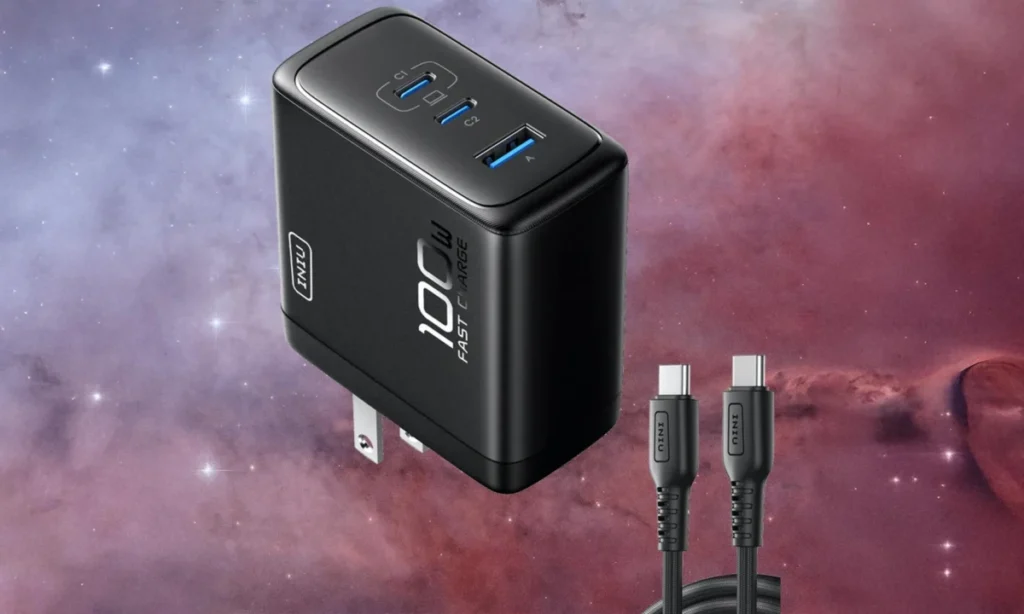
Another focal point of the promotion is the INIU A11 100W GaN Charger, which has been reduced from its MSRP of $45.10 to $32.99. The transition from traditional silicon-based components to Gallium Nitride represents one of the most significant technological leaps in the charging industry over the last decade.
GaN is a semiconductor material that is significantly more efficient than silicon. In the context of wall chargers, this efficiency translates to two primary benefits: heat reduction and miniaturization. Because GaN components lose less energy to heat, they can be packed more tightly together. This allows a 100W GaN charger like the A11 to be roughly 40 to 50 percent smaller than the original equipment manufacturer (OEM) bricks that typically accompany laptops.
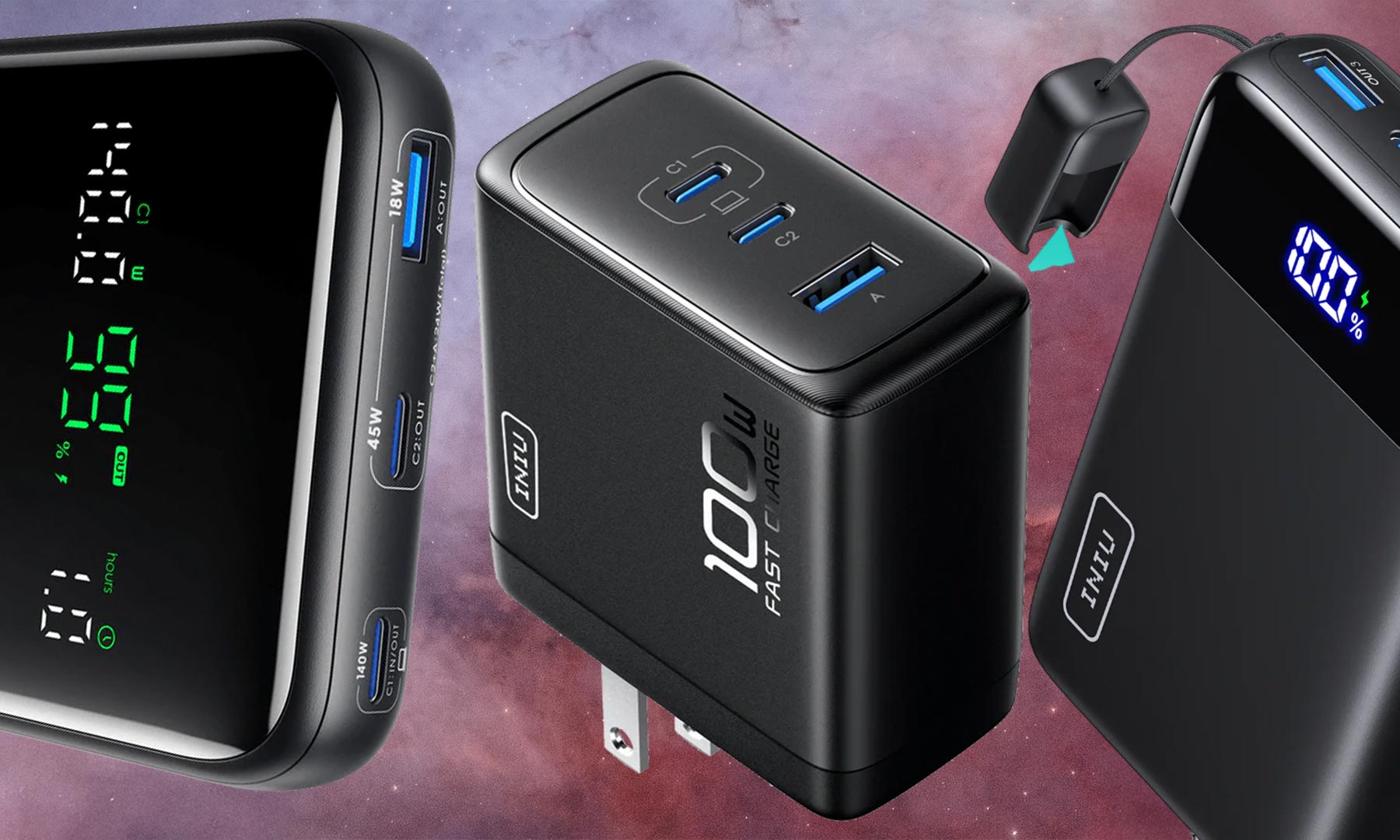
The A11’s single USB-C port delivery of 100W makes it a universal solution for the modern workspace. As the industry moves toward a "single cable" standard, a 100W brick can theoretically power a user’s entire arsenal of devices—including ultrabooks, tablets, and smartphones—provided they use a high-quality, E-marker-equipped USB-C cable.
Chronology of the Portable Power Market
The current landscape of portable power is the result of a decade-long evolution in battery chemistry and charging protocols.
- 2014–2016: The early market was dominated by 5W and 10W chargers. Power banks were bulky and often relied on micro-USB for input, leading to recharge times that could exceed 12 hours.
- 2017–2019: The introduction of USB-C and the Power Delivery (PD) 2.0/3.0 standards began to normalize 18W and 30W charging. During this period, brands like INIU and its competitors began focusing on "fast charging" as a primary marketing pillar.
- 2020–2022: The widespread adoption of GaN technology allowed for 65W and 100W chargers to become pocket-sized. Simultaneously, the rise of "handheld PCs" like the Steam Deck created a new niche for high-wattage portable banks.
- 2023–Present: The implementation of PD 3.1 has pushed the ceiling to 140W and beyond. The current INIU sale reflects this peak, offering consumers access to "desktop-class" power in portable formats at prices previously reserved for mid-range accessories.
Technical Data: Capacity and Efficiency Realities
When evaluating the deals offered in the Spring Sale, it is essential to understand the technical metrics involved. A 25,000mAh power bank, such as the P64, does not deliver a full 25,000mAh to the target device. Energy is lost during the voltage conversion process (from the internal 3.7V battery cells to the 5V, 9V, or 20V required by the device) and through heat dissipation.
Typically, high-quality power banks operate at an efficiency rate of 65% to 80%. Therefore, a 25,000mAh bank provides roughly 16,000mAh to 20,000mAh of actual usable charge. In practical terms, this allows for:
- Approximately 4.5 to 5 full charges of an iPhone 15.
- Roughly 1.2 to 1.5 full charges of a MacBook Air.
- About 2.5 charges of a standard Nintendo Switch.
The inclusion of intelligent "TempGuard" technology in INIU’s latest lineup is a response to these efficiency challenges. By monitoring temperature thousands of times per hour, the hardware prevents the thermal throttling that often slows down charging speeds in cheaper, uncertified alternatives.
Market Implications and Consumer Trends
The breadth of the INIU sale—covering car chargers, magnetic wireless mounts, and high-wattage cables—points to a broader trend in consumer behavior: the desire for an integrated "power ecosystem." With the European Union’s mandate for a universal USB-C charging port taking effect, consumers are increasingly looking to consolidate their cables and bricks.
Furthermore, the rise of the Qi2 wireless charging standard is represented in the sale’s wireless category. Qi2, which incorporates magnetic alignment similar to Apple’s MagSafe technology, promises to bring standardized, efficient wireless charging to both Android and iOS users. By discounting these items now, INIU is positioning itself as an early adopter of the next generation of charging standards.
Official responses from industry watchdogs suggest that the proliferation of high-quality third-party chargers is also a win for environmental sustainability. When a single 100W GaN charger can replace three or four separate bricks for a laptop, phone, and tablet, the total volume of electronic waste (e-waste) generated by the consumer electronics industry can be significantly reduced.
Conclusion
The INIU Spring Sale serves as more than just a retail event; it is a snapshot of the current state of mobile technology. As devices become more powerful and portable, the infrastructure required to support them must become equally sophisticated. The availability of 140W portable power and 100W GaN wall chargers at discounted rates indicates that high-performance power is moving out of the enthusiast niche and into the mainstream consumer market. For users looking to upgrade their tech kits for the coming year, the combination of hardware innovation and aggressive pricing provides a compelling entry point into the modern USB-C ecosystem.