



In a crucial period for American education, where traditional metrics like standardized test scores continue to stagnate and student engagement faces unprecedented challenges, a burgeoning movement is advocating for a fundamental shift: placing student voice and agency at the heart of school improvement. This paradigm shift, rooted in the "Street Data" methodology, proposes that genuine educational reform must originate from the lived experiences and perspectives of students themselves, particularly those often marginalized. The recent publication of Pedagogies of Voice: Street Data and the Path to Student Agency, co-authored by Shane Safir, Marlo Bagsik, Crystal Watson, and Sawsan Jaber, marks a significant evolution in this movement, offering practical, classroom-level strategies to empower learners and foster a more equitable and responsive educational ecosystem.
The Current Landscape: A Call for Reassessment
The state of education in the United States has been a subject of ongoing concern, particularly in the wake of the global pandemic. For decades, the emphasis has largely been on quantifiable outcomes, such as standardized test scores, and the implementation of top-down curricula designed to meet these metrics. However, this approach has consistently fallen short of its goals, failing not only to consistently elevate academic performance but also to address the holistic development and well-being of students.
Recent data underscores the urgency of this reevaluation. Reports from sources like Education Week in early 2025 indicated a troubling decline in reading scores on the National Assessment of Educational Progress (NAEP), with significant dips among struggling students (Schwartz, 2025). This trend is not isolated, reflecting broader concerns about academic proficiency across various subjects. Compounding these academic challenges are significant issues related to student behavior and morale. A survey conducted in 2025 revealed that nearly half of educators reported student behavior had worsened since before the pandemic, a notable increase from just two years prior (Stephens, 2025). These statistics paint a picture of an educational system grappling with disengagement, frustration, and a pervasive sense that the "humanity of our students" has been sidelined in the relentless pursuit of narrow, quantifiable success.
The prevailing top-down strategies, often accompanied by substantial financial investments in programs and technologies, have largely failed to produce sustainable improvements. Many schools, despite their best intentions, continue to miss the mark because they overlook a critical resource: the direct input from the very individuals most affected by the educational environment—the students.
The Genesis of Street Data: Listening to the Margins

Against this backdrop of systemic challenges, the "Street Data" methodology emerged as a powerful counter-narrative. Introduced in the seminal book Street Data: A Pathway Toward Equitable, Anti-Racist Schools by Shane Safir and Jamila Dugan, this approach posited a radically different pathway to school improvement. Unlike traditional "sky data" (standardized test scores, attendance rates) or "map data" (demographics, program participation), street data emphasizes qualitative, nuanced information gathered through "slow, thoughtful listening sessions" with students. Crucially, it prioritizes the voices of students at the margins—those whose experiences are often overlooked, whose needs are consistently unmet, and whose perspectives hold invaluable insights into systemic failures and potential solutions.
The core principle of Street Data is iterative: collect rich qualitative data from student conversations, collaboratively develop solutions based on these insights, pilot these solutions, refine them through further iteration, and then return to listening sessions to gauge their impact and inform subsequent changes. This cyclical process stands in stark contrast to many existing educational reform efforts, which often involve expensive, pre-packaged programs implemented without deep contextual understanding or student input. The promise of Street Data lay in its organic, responsive, and deeply human-centered approach, offering a potentially more effective and cost-efficient path to meaningful change.
A Chronology of Impact and Expansion
The Cult of Pedagogy, a prominent platform for educators, played a pivotal role in amplifying the Street Data message. The journey began four years ago with an interview featuring authors Shane Safir and Jamila Dugan on episode 178 of its podcast. This initial exposure generated significant interest among educators seeking alternatives to conventional improvement models.
Recognizing the need for practical demonstrations, the Cult of Pedagogy further committed to the methodology by producing a mini-documentary. This documentary captured Safir and Dugan as they guided two distinct schools through the Street Data process, offering educators an intimate, real-world glimpse into its implementation. The visual narrative demystified the approach, showcasing how authentic student engagement could lead to actionable insights. A year later, this commitment deepened with an eight-episode video series, allowing for a more comprehensive exploration of the process. Participants from these initiatives subsequently joined the podcast on episode 203 to share their experiences and the tangible impacts of integrating Street Data into their school communities.
As the methodology gained traction, a recurring question emerged from educators: "What does it truly look like when teachers center student voice and student agency in their daily pedagogy?" While Street Data provided a macro-level framework for school-wide improvement, teachers sought concrete, classroom-level strategies. This critical question served as the impetus for the next evolution of the movement.
Pedagogies of Voice: Translating Theory into Classroom Practice
To address the demand for practical, classroom-based applications, Shane Safir collaborated with three distinguished educators: Marlo Bagsik, Crystal Watson, and Sawsan Jaber. Their collective expertise culminated in the new book, Pedagogies of Voice: Street Data and the Path to Student Agency. This publication is not a rigid curriculum but rather a "seed store" of practices—a comprehensive collection of adaptable strategies designed to empower educators to cultivate student voice and agency within their learning environments.
The book structures its classroom practices around an "Agency framework," comprising four interconnected domains: Identity, Belonging, Inquiry, and Efficacy. This framework provides a holistic approach to student development, recognizing that true agency is built upon a strong sense of self, connection to community, intellectual curiosity, and the belief in one’s capacity to effect change.
Delving into the Four Domains:
-
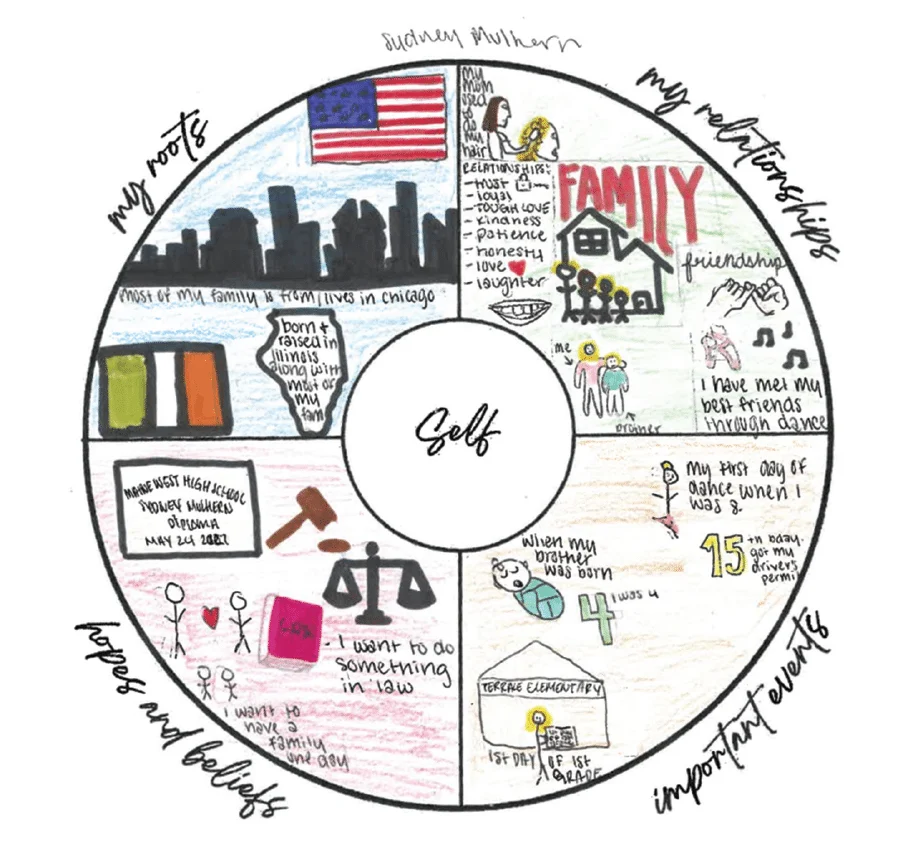
Practices that Awaken Identity: This domain focuses on creating learning spaces where every student feels that "My ways of being, knowing, and learning are valued here." Sawsan Jaber, a co-author, highlights the power of storientation, a practice that leverages storytelling as a springboard for both learning and identity development. For instance, an "Identity Mandala" exercise, as depicted in the book, invites students to visually represent aspects of their identity, culture, and experiences, fostering self-reflection and mutual understanding within the classroom. These practices help students connect their personal narratives to academic content, making learning more relevant and affirming.
-
Practices that Awaken Belonging: The core of this domain is ensuring every student feels seen, valued, and connected within the classroom community. Crystal Watson emphasizes the profound impact of circling up. This seemingly simple act—rearranging classroom seating into a circle—fundamentally alters classroom dynamics. As Watson explains, "When you circle up, you’re all equidistant from the center. At any given time, an identity, an idea, a person can be centered. We’re not centering one or two identities or thoughts or ideals. We can center them all at any given time in our time together." This physical arrangement promotes equitable participation and deepens connections. Watson particularly champions its use in math education, challenging the traditional silent, problem-solving model by encouraging conversation and argumentation, thereby fostering a sense of shared intellectual exploration.
-
Practices that Awaken Inquiry: This domain is dedicated to empowering students to ask profound questions, critically analyze information, and construct knowledge in increasingly complex ways. Shane Safir laments the suppression of inquiry in many learning environments, noting, "The ability for young people to wrestle with big questions about the world, to be curious, to stay curious, to develop not just literacy, but critical literacy about text, about media, about the world." Practices within this domain might involve student-led research projects, Socratic seminars, or problem-based learning scenarios where students genuinely grapple with ambiguous questions and develop their own lines of investigation.
-
Practices that Awaken Efficacy: The final domain centers on cultivating learning spaces where every student genuinely believes in their capacity to make a tangible difference on issues that matter to them. Marlo Bagsik illustrates this with two complementary practices that frame a week: "Weekend Wins" and "Weekly Wishes." "Weekend Wins" begins the week by inviting students to share personal accomplishments or positive experiences from their time outside of school, affirming their lives beyond academics and building self-esteem. "Weekly Wishes" concludes the week by asking students to articulate their goals or aspirations for the upcoming week, fostering a sense of proactive agency and future orientation. These bookending activities instill a sense of accomplishment, self-direction, and purpose.
Broader Implications: Fostering Democracy in Challenging Times
The release of Pedagogies of Voice arrives at a particularly critical juncture in education and society. Across the United States, debates surrounding curriculum content, book bans, and teacher censorship have intensified, creating an environment where marginalized voices, which had begun to gain recognition, face aggressive pushback. In this climate of heightened political and ideological tension, the book offers a compelling and urgent response.
By emphasizing the amplification of student voice, Pedagogies of Voice directly counters forces that seek to restrict dialogue and suppress diverse perspectives. It provides educators with a powerful framework to cultivate spaces where students can reflect critically, articulate their thoughts, and engage in meaningful action. These practices are not merely academic exercises; they are foundational to nurturing democratic citizenship. When students learn to listen respectfully to differing opinions, challenge ideas constructively, collaborate effectively, and advocate for what they believe in, they are developing the essential skills needed to navigate a complex world and contribute to a more just and equitable society.
The authors’ collective message is clear: in times of uncertainty and frustration, investing energy in empowering student voice is perhaps the most impactful action educators can take. By fostering environments where identity is affirmed, belonging is ensured, inquiry is celebrated, and efficacy is cultivated, schools can equip the next generation with the critical thinking, empathy, and agency required to reshape the world for the better. The ongoing dialogue, as highlighted by the podcast interviews with the book’s four authors, continues to provide actionable strategies and inspiration for educators committed to this transformative vision.