
The Hellenic Republic continues to solidify its position as a primary pillar of global tourism, with the Bank of Greece reporting record-breaking visitor numbers exceeding 32 million annually in recent fiscal cycles. As international travel to the Mediterranean basin reaches unprecedented levels, the demand for functional linguistic competency among non-native speakers has transitioned from a niche academic pursuit to a vital component of successful travel logistics and cultural diplomacy. Linguistic experts and hospitality industry analysts suggest that while English proficiency remains high in urban centers like Athens and Thessaloniki, the mastery of fundamental Greek phrases serves as a critical bridge to "Philoxenia"—the ancient Greek concept of hospitality toward strangers. This report provides a comprehensive analysis of the essential Greek lexicon required for modern navigation, social integration, and emergency preparedness within the Greek archipelago.
The Socio-Linguistic Hierarchy of Greetings and Formalities
In the structure of Modern Greek communication, the distinction between formal and informal address remains a cornerstone of social etiquette. This "T-V distinction," common in many European languages, is particularly pronounced in Greece, where age and social standing dictate the choice of pronouns and verb conjugations.
For formal interactions, such as those with service personnel, elders, or in professional settings, the phrase "Yassas" (Γεια σας) serves as the standard greeting. It is plural in its grammatical form, conveying a level of respect that transcends a simple "hello." Conversely, "Ya sou" (Γεια σου) is reserved for peers, children, and close acquaintances. The refusal to acknowledge these boundaries can often result in a perceived lack of decorum, though Greeks are historically lenient with foreign visitors attempting the language.
Beyond the initial greeting, the temporal nature of Greek social life dictates specific salutations. "Kalimera" (Καλημέρα), or "good morning," is strictly utilized until the midday hours, typically until 12:00 PM or 1:00 PM. As the afternoon progresses, "Kalispera" (Καλησπέρα) becomes the dominant evening greeting. In high-traffic tourist zones, these phrases act as more than mere pleasantries; they are markers of a traveler’s intent to engage with the local culture beyond a transactional level.
Navigation and Survival: The Logistics of Travel Linguistics
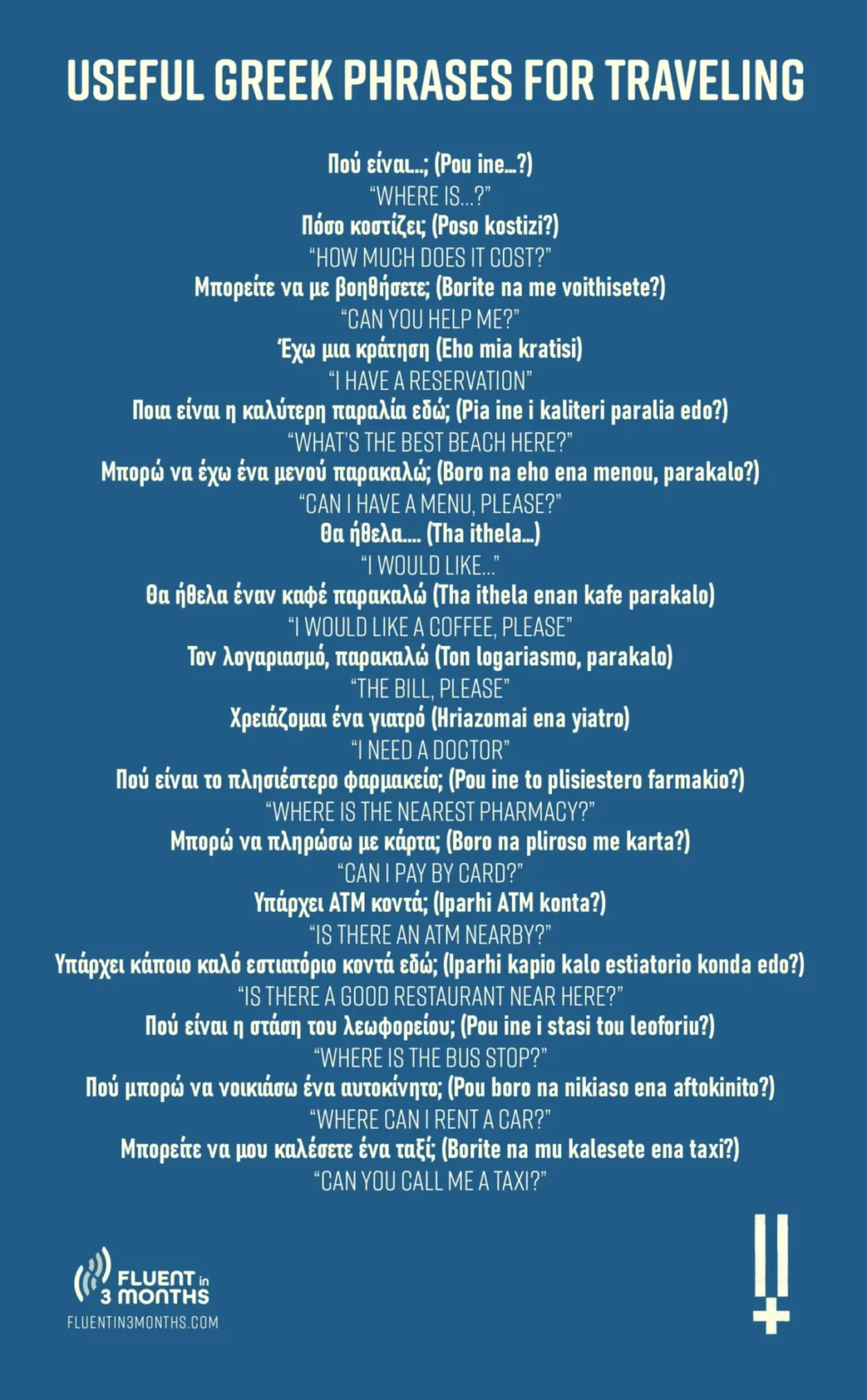
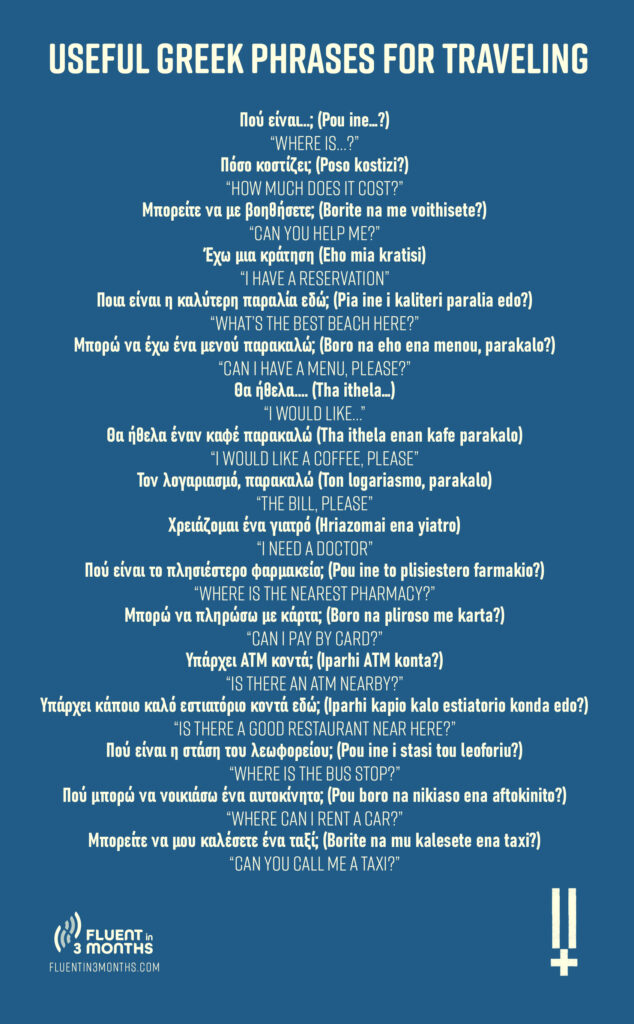
The logistical challenges of navigating a foreign country are significantly mitigated by the acquisition of "Survival Greek." According to data from international travel agencies, the most frequent friction points for tourists involve dining, transportation, and emergency services.
In the culinary sector, which accounts for a substantial portion of Greece’s GDP, the ability to request "Ton logariasmo, parakalo" (The bill, please) or ask "Boro na eho ena menou?" (Can I have a menu?) is essential. Furthermore, the phrase "Kali orexi" (Enjoy your meal) is a ubiquitous social lubricant found in every taverna from Crete to Corfu.
Emergency and health-related communication constitutes a separate, critical tier of the traveler’s lexicon. The phrase "Hriazomai ena yiatro" (I need a doctor) and the ability to locate a "farmakio" (pharmacy) are indispensable for safety. In the context of the Greek islands, where infrastructure can be localized and less centralized than in mainland Europe, knowing how to ask "Pou ine i stasi tou leoforiu?" (Where is the bus stop?) can be the difference between successful transit and total isolation.
Chronology of the Greek Language: From Antiquity to Demotic Modernity
To understand the current linguistic landscape, one must view the Greek language through a chronological lens. Modern Greek, or "Demotic," is the result of a multi-millennial evolution that survived the Roman, Byzantine, and Ottoman eras. In the late 19th and early 20th centuries, Greece experienced a "Diglossia" crisis—a conflict between the "Katharevousa" (a purist, archaizing form of the language) and "Demotic" (the language of the people).
The resolution of this conflict in 1976, when Demotic was officially adopted as the primary language of the state and education, paved the way for the streamlined, phonetic language used today. For the modern traveler, this means that while the alphabet remains the same one used by Plato and Aristotle, the spoken rhythm and vocabulary are highly accessible once the basic phonetic rules are mastered. The persistence of the Greek alphabet, however, continues to present a barrier to entry, necessitating a reliance on transliteration for the majority of Western tourists.
Economic Implications of Linguistic Engagement
Economic analysis suggests a direct correlation between linguistic effort and the quality of the consumer experience in Greece. A 2022 study on Mediterranean tourism patterns indicated that travelers who utilized even five to ten basic local phrases reported a 15% higher satisfaction rate regarding their interactions with local residents.
From a macroeconomic perspective, the Greek government has invested heavily in digital tools to assist this transition. The "Digital Transformation" initiative has seen the rise of localized apps that provide real-time translation and pronunciation guides. However, the human element remains paramount. In the retail sector, particularly in artisanal markets, the phrase "Poso kani?" (How much is it?) followed by "Efcharisto" (Thank you) establishes a rapport that automated systems cannot replicate.
Slang, Informalism, and the Nuance of "Malaka"
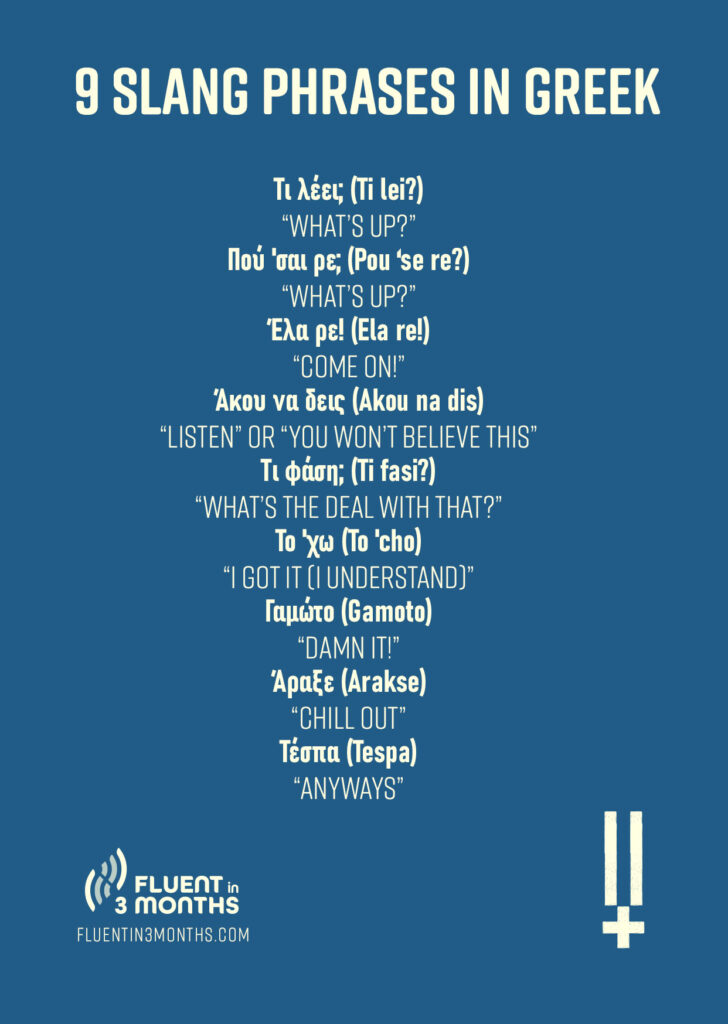
No analysis of the Greek lexicon is complete without addressing the complexities of informal slang. The term "Malaka" (μαλάκα) is perhaps the most internationally recognized Greek word, yet it remains one of the most misunderstood. While technically a profanity, its usage among friends is nearly universal, serving as a synonym for "dude" or "friend."
However, linguistic experts warn that the use of such slang by foreigners is a high-risk endeavor. Without the correct intonation and established social context, informal terms like "Ti lei?" (What’s up?) or "Ela re!" (Come on!) can be misinterpreted. The safer route for the uninitiated is the use of "Yamas!" (Cheers!), a phrase used during libations that is universally welcomed and carries no social stigma.
Cultural Wisdom through Proverbs: Comprehension and Analysis
The depth of the Greek identity is perhaps best captured in its proverbs, which provide a window into the national psyche. These phrases are more than idioms; they are philosophical residues of the classical era adapted for modern life.
- "I archi ine to imisi tou pantos" (The beginning is half of the whole): This reflects the Greek emphasis on the importance of taking the first step in any endeavor, including language learning.
- "Kathe empodio gia kalo" (Every obstacle is for the best): A testament to the resilience of the Greek people through centuries of economic and political upheaval.
- "Ta polla logia ine ftochia" (Too many words are poverty): An ironic proverb in a culture known for its loquaciousness, emphasizing the value of meaningful action over empty rhetoric.
For the advanced learner, these proverbs offer a way to practice complex syntax while gaining a deeper appreciation for the values of "Metron" (moderation) and "Logos" (reason).
Official Responses and Educational Initiatives
The Greek Ministry of Education and the Ministry of Tourism have recently launched joint initiatives to promote the Greek language abroad. Through platforms like "LearnGreek.org" and various university exchange programs, the state is attempting to move beyond the "sun and sea" marketing strategy toward a "knowledge-based" tourism model.
Official statements from the Ministry of Tourism emphasize that "Language is the ultimate souvenir. While a physical object may break or be lost, the ability to communicate with the people of Greece creates a permanent bond between the visitor and our land." This sentiment is echoed by the Hellenic Chamber of Hotels, which has begun encouraging staff to offer brief linguistic "primers" to guests upon check-in.
Broader Impact and Global Implications
The global influence of the Greek language extends far beyond the borders of the Hellenic Republic. With approximately 13 million speakers worldwide and a massive diaspora in the United States, Australia, and Germany, the language remains a vital global link. In the scientific and medical communities, Greek roots provide the foundation for nearly 80% of technical terminology.
As the world becomes increasingly homogenized through globalization, the preservation and promotion of unique linguistic frameworks like Greek serve as a defense against cultural erosion. For the individual traveler, the effort to learn "Pou ine i tualeta?" (Where is the bathroom?) or "Boro na pliroso me karta?" (Can I pay by card?) is a small but significant act of cultural preservation.
In conclusion, the mastery of the Greek language, even at a foundational level, is an investment in the travel experience. It transforms a visitor from a passive observer into an active participant in one of the world’s oldest continuous cultures. As the 2024 tourism season approaches, the message from Athens is clear: the most valuable tool in a traveler’s arsenal is not a map or a credit card, but the willingness to say "Yassas."