



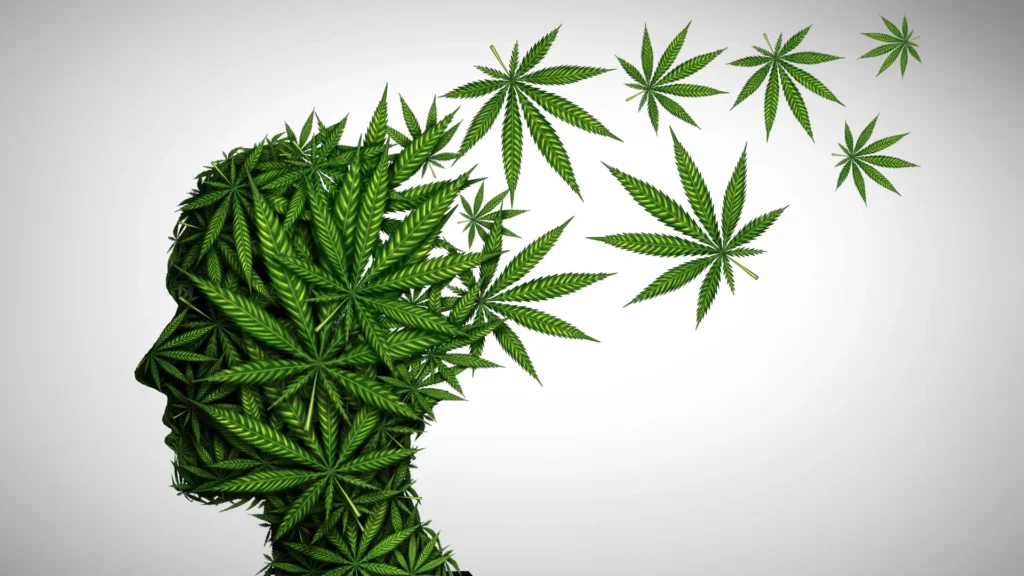
A groundbreaking study from Washington State University (WSU) has unveiled compelling evidence that smoking cannabis does more than merely induce temporary cognitive fogginess; it actively alters the intricate processes by which memories are formed, stored, and retrieved. Published in the prestigious Journal of Psychopharmacology, the research represents one of the most comprehensive examinations to date of how acute cannabis intoxication, specifically from tetrahydrocannabinol (THC), influences a wide array of human memory functions, extending far beyond simple recall to impact critical daily cognitive tasks.
The WSU team’s findings indicate that individuals who consumed THC were significantly more prone to recalling words that were never presented to them, a phenomenon known as false memory, and experienced greater difficulty with everyday memory tasks. These tasks included vital functions like remembering to perform an action later (prospective memory) or accurately identifying the origin of learned information (source memory). Remarkably, the study also revealed that there were no meaningful differences in memory impairment between participants who consumed 20 milligrams of THC and those who consumed 40 milligrams, suggesting that even moderate amounts of THC can profoundly interfere with memory processes. This particular observation underscores a critical public health implication: a dose-response relationship may not be linear for certain cognitive effects, meaning even seemingly lower doses could carry significant risks.
A Comprehensive Look at Memory Systems
Previous research into cannabis and memory has often been limited, typically focusing on one or two isolated aspects, such as the recall of word lists or simple facts. However, the WSU study distinguishes itself through its unprecedented breadth. Dr. Carrie Cuttler, the senior author of the study and an associate professor of psychology at WSU, emphasized this distinction: "Most previous studies have only looked at one or two types of memory, like recalling lists of words. This is the first study to comprehensively examine many different memory systems at once, and what we found is that acute cannabis intoxication appears to broadly disrupt most of them." This comprehensive approach allowed researchers to paint a far more detailed and concerning picture of cannabis’s acute cognitive impact than previously available.
To achieve this detailed understanding, Dr. Cuttler and co-author Ryan McLaughlin, an associate professor in the Department of Integrative Physiology and Neuroscience at WSU, meticulously designed a double-blind, placebo-controlled experiment. They recruited 120 regular cannabis users, a crucial demographic for understanding real-world effects. Participants were randomly assigned to vaporize either a placebo cannabis, 20 milligrams of THC, or 40 milligrams of THC. Following the consumption of their assigned substance, participants engaged in approximately an hour of rigorous memory tests. These assessments were designed to measure an extensive range of memory types, including verbal memory (recalling spoken words), visuospatial memory (remembering locations and visual patterns), prospective memory (remembering to do things in the future), source memory (remembering where information came from), false memory (recalling something that didn’t happen), episodic content memory (recalling personal experiences), and temporal order memory (remembering the sequence of events).
The results were striking: individuals who consumed cannabis performed significantly worse than those who received the placebo across the vast majority of these tests. In total, cannabis acutely affected 15 of the 21 memory measures assessed, indicating a widespread disruption across diverse cognitive domains essential for daily functioning. This extensive impairment profile highlights the nuanced and pervasive nature of cannabis’s influence on the brain’s memory architecture.
Cannabis-Induced False Memories and Source Confusion
Among the most pronounced effects observed were impairments in false memory and source memory. These two memory systems are fundamental for accurate recall and for discerning the reliability and origin of information, skills critical in countless daily scenarios. The study’s findings on false memory are particularly concerning. In one specific test, participants listened to lists of thematically related words, but the central keyword linking them was intentionally omitted. For instance, a list might include "bed," "rest," "dream," and "snore," all related to "sleep," but "sleep" itself would not be spoken. Later, individuals who had consumed THC were significantly more likely to confidently state that they remembered hearing the central, unspoken keyword.
Dr. Cuttler elaborated on this phenomenon: "I found it was really common for people to come up with words that were never on the list. Sometimes they were related to the theme of the list, and sometimes they were completely unrelated." This susceptibility to creating and internalizing false memories has profound implications, particularly in contexts where accurate recall is paramount, such as eyewitness testimony in legal proceedings or in distinguishing factual information from misinformation in an increasingly complex media landscape.
Equally significant were the observed difficulties in source memory. Participants under the influence of cannabis struggled to identify where previously learned information originated. This impairment could manifest in real-world scenarios as an inability to distinguish whether a piece of information came from a trusted news source, a casual conversation with a friend, or an unverified post encountered online. In an era grappling with the spread of misinformation, compromised source memory could exacerbate vulnerabilities to inaccurate or misleading narratives. Such distortions could have serious ramifications, impacting personal decision-making, public discourse, and even the integrity of legal and investigative processes. For instance, suggestive questioning during an eyewitness interview, when combined with cannabis-induced source memory impairment, could inadvertently lead an individual to "remember" details that were never truly present, fundamentally altering their account of an event.
Impacts on Everyday Memory Tasks and Public Safety
Beyond the more abstract concepts of false and source memory, the WSU study also identified significant impairments in prospective memory – the ability to remember to perform intended actions in the future. This form of memory is a cornerstone of daily functionality, underpinning myriad responsibilities from the mundane to the critical. Examples include remembering to take prescribed medication, attending scheduled meetings or appointments, making a crucial stop at the grocery store on the way home, or returning a phone call.
Dr. Cuttler succinctly highlighted the practical implications: "These are things we rely on constantly in our day-to-day lives. If you have something you need to remember to do later, you probably don’t want to be high at the time you need to remember to do it." The disruption of prospective memory carries substantial public health and safety concerns, potentially increasing risks in professional settings, educational environments, and especially when operating vehicles or heavy machinery. Impaired prospective memory could lead to forgotten safety checks, missed deadlines, or a diminished capacity to react appropriately to unexpected situations.
Interestingly, one specific form of memory, episodic content memory – which involves recalling personal experiences and the ‘what, where, and when’ of events – did not show a statistically significant effect in this particular study. However, Dr. Cuttler cautioned that additional research is necessary before drawing firm conclusions about this type of memory, as the acute nature of the study might not fully capture subtle or long-term effects.
The Evolving Landscape of Cannabis Use and Research Gaps
This pivotal study emerges at a critical juncture, as cannabis use continues to become increasingly prevalent across numerous jurisdictions in North America and globally. States like Washington, where the research was conducted, have legalized recreational cannabis, leading to wider public access and shifting social norms around its consumption. Despite this expanding legality and normalization, there remains a substantial deficit in scientific understanding regarding the full spectrum of its short-term and long-term cognitive effects. The WSU study helps to fill some of these crucial gaps, particularly concerning acute intoxication.
One primary reason for this persistent knowledge gap has been the historical classification of cannabis as a Schedule I substance under federal law in the United States. This classification, which designates substances as having a high potential for abuse and no accepted medical use, has severely restricted scientific research by imposing stringent regulatory hurdles, limiting access to research-grade cannabis, and creating an environment of scientific apprehension. While some progress has been made in recent years to facilitate research, the lingering effects of these restrictions mean that scientific inquiry has lagged behind public policy and market trends. Consequently, many of the acute cognitive effects, such as the broad memory impairments identified by WSU, have not been comprehensively explored until now.
Broader Implications and a Call for Informed Decision-Making
The findings from Washington State University carry significant implications for public health, safety, and policy. As cannabis becomes more integrated into daily life for many adults, understanding its precise impact on cognitive functions like memory is paramount. Public health officials are likely to underscore the importance of these findings in crafting responsible consumption guidelines and public awareness campaigns. The data provides concrete evidence that "being high" is not merely a subjective experience but one that demonstrably compromises critical cognitive faculties.
Policymakers, particularly those in states with legalized cannabis, may find these results influential when considering regulations related to public consumption, impaired driving laws, and product labeling. The lack of a significant dose-response difference between 20mg and 40mg of THC suggests that even products marketed as "moderate" in potency could still induce significant memory deficits, complicating current dosage recommendations and consumer education efforts.
From a societal perspective, the study reinforces the need for individuals to make informed decisions about their cannabis consumption, especially when engaging in activities that require unimpaired cognitive function. This includes tasks such as driving, operating machinery, studying, working on complex projects, or engaging in important conversations. The identified impairments in false memory and source memory, in particular, highlight potential vulnerabilities in situations requiring high fidelity recall or critical evaluation of information, such as educational settings, professional environments, or even personal interactions where misremembering details could lead to misunderstandings.
Moreover, these findings serve as a crucial reminder for the medical community, emphasizing the importance of counseling patients about the potential acute cognitive side effects of cannabis, especially for those with pre-existing memory conditions or who are concurrently taking other medications that might interact. The ongoing scientific pursuit, as exemplified by the WSU research, is vital for providing the public with accurate, evidence-based information that empowers them to understand the risks and benefits associated with cannabis use. As Dr. Cuttler concluded, "We’re living in a state where cannabis use is very common, but there’s still a lot we don’t know about its acute effects. The goal is to help people make informed decisions about the risks and benefits."
This comprehensive WSU study represents a significant stride forward in demystifying the acute cognitive effects of cannabis. By meticulously examining a broad spectrum of memory systems, it provides compelling evidence that THC-induced intoxication broadly disrupts critical cognitive functions, underscoring the imperative for continued rigorous scientific inquiry in an evolving legal and social landscape. The insights gleaned from this research will undoubtedly inform future public health initiatives, policy debates, and individual consumption choices as society continues to navigate the complexities of cannabis legalization and integration.