

Discipline in educational settings, often perceived as a challenging and punitive aspect of school life, is undergoing a profound re-evaluation, moving towards a human-centered approach that prioritizes skill development over mere control and compliance. This paradigm shift, championed by educational expert Nathan Maynard in his forthcoming book, The Science of Discipline, posits that most student misbehaviors stem from identifiable skill gaps rather than inherent character flaws. This perspective fundamentally reframes how educators can effectively address disruptive conduct, fostering environments of belonging, accountability, and genuine growth.
Historically, school discipline models have largely focused on a system of rules, consequences, and control. In the mid-20th century, the emphasis was often on maintaining order through strict enforcement and immediate removal from the classroom for infractions. This approach, while appearing efficient in the short term, frequently failed to address the root causes of misbehavior, leading to cycles of repeated offenses and disengagement among students. Critics of purely punitive models have long pointed to their disproportionate impact on marginalized student populations, contributing to the school-to-prison pipeline and exacerbating educational inequities. Recent data from various educational research bodies consistently highlight the limitations of exclusionary discipline practices, showing that suspensions and expulsions often correlate with lower academic achievement and higher dropout rates. For instance, a 2018 report by the U.S. Government Accountability Office found that Black students, students with disabilities, and male students were disproportionately subjected to disciplinary actions, indicating systemic biases that a punitive-only system fails to mitigate.
Maynard’s insights draw heavily from his extensive background in youth work, where intervention strategies are intrinsically linked to understanding underlying behaviors and equipping individuals with necessary life skills. He contrasts this with traditional school discipline, which he experienced as a "different universe" upon transitioning into education. In residential care, the focus was on diagnosing the reasons behind a child’s actions, identifying missing skills, and then systematically teaching and measuring the development of those skills for successful reintegration. This integrated, systemic approach, prioritizing rehabilitation and skill-building, achieved remarkably low recidivism rates in settings like Indiana’s residential care facilities. However, in many schools, discipline often defaulted to swift, standardized responses like immediate removal or written reports, which rarely yielded long-term behavioral change because the foundational skill deficits remained unaddressed.
Over the past seven years, working across complex school environments in numerous U.S. states and over 30 countries, Maynard observed recurring patterns in disciplinary breakdowns. These consistent challenges, irrespective of diverse cultural and socioeconomic contexts, underscored the universal need for a more effective framework. His research culminated in The Science of Discipline, which advocates for consistency in disciplinary practices, accountability mechanisms linked with genuine repair and skill acquisition, and a system of progressive consequences that spans from the classroom to school administration. The book emphasizes that sustained student behavior change is driven by a blend of intrinsic and extrinsic motivations, thriving best within a school culture that actively cultivates a sense of belonging. Maynard’s methodology, rooted in 17 years of educational experience and personal journey, centers human connectedness, aligns with youth development principles, and builds robust accountability, ultimately leading to more cohesive school communities.
The cornerstone of Maynard’s philosophy is the understanding that most common misbehaviors in schools are typically the result of skill gaps, not character flaws. This fundamental shift in perspective is transformative. Instead of the reactive question, "How do I stop this behavior?" educators are encouraged to ask, "What skill is this student potentially missing, and how can I effectively teach it?" This approach fosters empathy and moves beyond labeling students as "disruptive" or "defiant," recognizing their actions as communicative signals of unmet needs or undeveloped competencies.
Defining and Implementing Replacement Skills
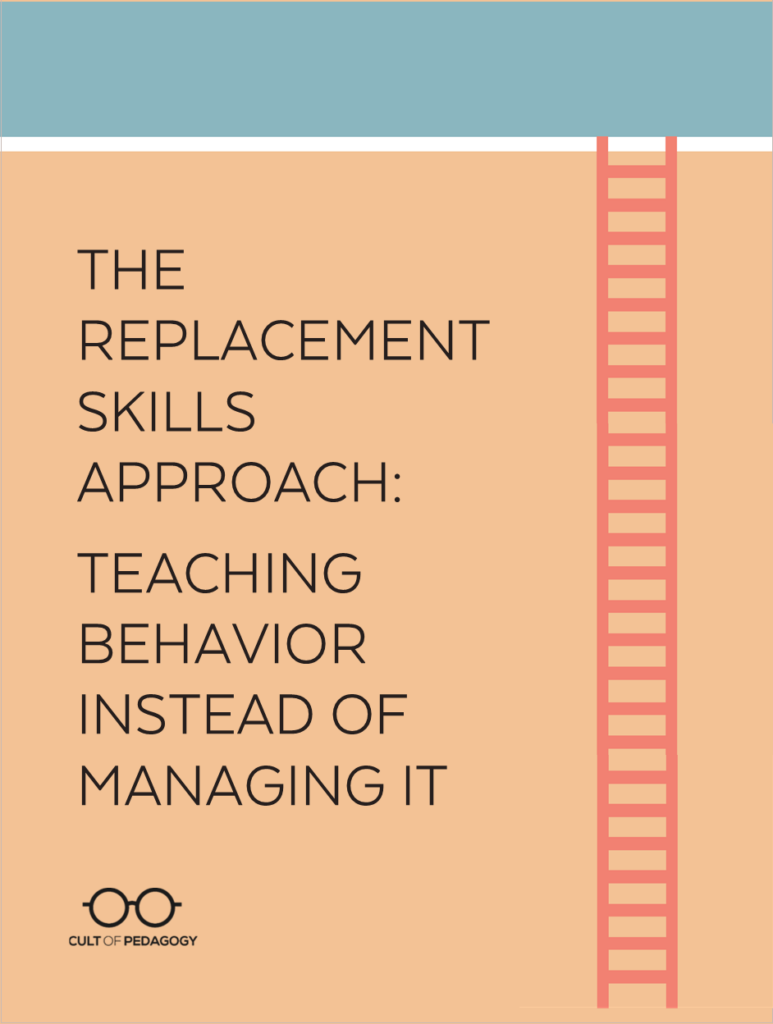
A "replacement skill" is a constructive behavior taught to a student to substitute a problematic one. It involves identifying the underlying skill deficit that leads to undesirable behavior, teaching a more appropriate alternative, and then guiding the student through actionable steps toward repairing any harm caused. For example, if a student yells out, shuts down, skips class, or becomes aggressive, these actions are not merely infractions but critical data points indicating a lack of skills in areas such as emotional regulation, effective communication, time management, or conflict resolution. Just as a student struggling with reading receives phonics instruction rather than detention, a student exhibiting behavioral challenges requires targeted instruction in the missing social or emotional skills.

Scenario 1: Addressing Persistent Interruptions
Consider the student who frequently talks while the teacher is giving directions. Traditional responses often involve immediate verbal reprimands like "stop talking," which only indicate what not to do. The replacement skill approach targets impulse control and patience – the ability to hold a thought and await an appropriate moment to share it. To cultivate this, teachers can implement a three-pronged strategy. First, establish a silent signal – a private, non-verbal cue (e.g., a subtle hand gesture or a tap on one’s own shoulder) that communicates "I see you, but please hold that thought." This avoids public correction, which can escalate situations for sensitive students. Second, facilitate a talking buddy system, pairing the student with a peer for structured discussions during designated times like group work or transitions. This provides a legitimate outlet for their social energy. Third, integrate a designated share time. Students can be instructed to jot down their thoughts on a sticky note during instruction, with the promise of a brief sharing opportunity in a few minutes. This explicitly teaches the executive functioning skill of thought-holding. Immediate positive reinforcement, such as "Thanks for being patient and writing that down; let’s hear your thought now," solidifies the new, desired behavior.
Scenario 2: Supporting the Disengaged Student
When a student shuts down, refusing to work or putting their head down, the common reaction is often a directive like "Get your head up" or "You need to start working." However, this behavior often signals a skill gap in asking for help or communicating needs. Instead of defiance, it can indicate a student feeling overwhelmed and unable to articulate their struggle. The teacher’s initial approach should be one of curiosity, not correction. A quiet, empathetic inquiry like, "If you’re stuck on something, show me where, and I’d like to help," models the precise language the student needs to learn. Providing concrete scaffolds is crucial. This includes teaching sentence stems such as "I don’t understand the part where…" or "I need help with…" or even "Can I have a minute?" These can be displayed visibly in the classroom or provided on a personal card. To normalize the act of seeking assistance, a class-wide signal system can be implemented, like colored cups (green for "I’m good," yellow for "I’m slowing down," red for "I’m stuck"). This collective approach reduces the perceived risk for individual students who might otherwise shut down. When the student eventually uses a signal or verbalizes their need, a prompt and warm response reinforces the efficacy of asking for help, gradually replacing the learned behavior of withdrawal.
Scenario 3: Navigating Violent or Highly Disruptive Outbursts
A student who argues with a teacher, raises their voice, pushes over a chair, and exits the classroom demonstrates a significant deficit in self-regulation – the ability to recognize and manage their emotional state before it escalates into harmful actions. Such behavior necessitates a structured intervention that occurs outside the immediate heat of the moment, with a school administrator or counselor. Maynard proposes a "Trigger → Cue → Coping Skill → Act → Evaluate" cycle to guide students toward real self-regulation. This involves helping students process:
- Trigger: What typically initiates their emotional escalation?
- Cue: What physical or emotional sensations indicate a building emotional state?
- Act: What problematic actions occur at peak escalation, and what alternative, constructive actions could be taken instead?
- Evaluation: How can they recognize de-escalation, and what does success look like after applying a coping skill?
Once students grasp this cycle, they can develop a personalized coping skill. Common effective strategies include deep breathing exercises, pleasant imagery, or visualization. The goal is for every student to articulate: "When I feel , I do ." Crucially, regulation must be taught in calm moments, not during chaos. Integrating brief (e.g., 60-second) mindfulness or deep breathing exercises into daily classroom routines, such as before transitions, trains the brain to shift from reactive to reflective modes, preparing students to utilize these skills when genuinely needed. This proactive approach helps normalize emotional self-management across the student body.
Scenario 4: Tackling Chronic Tardiness
Chronic tardiness, often met with punitive measures like detention or disciplinary marks, frequently masks underlying challenges in time management and transition planning. These are vital executive functioning skills, particularly challenging for students with ADHD or other organizational difficulties. Instead of simply punishing lateness, the focus shifts to teaching these skills. Collaborating with the student to establish a personal alarm system – perhaps a phone reminder one minute before class (for secondary students where phone use is permitted in hallways) or a buddy system – provides a tangible tool. Another effective strategy is to help students map their transition. By identifying bottlenecks (e.g., locker stops, social conversations), a micro-plan can be developed: "Hit your locker between second and third period, giving you an extra three minutes before my class." This teaches practical planning and sequencing. Finally, implementing a tardiness tracker that recognizes improvement shifts the focus from punishment to positive reinforcement. Acknowledging a streak of five on-time arrivals with "Five days on time. The plan is working," celebrates progress and reinforces the new behavior.
Systemic Support and Foundational Prerequisites
While classroom strategies are fundamental, their efficacy is amplified when integrated into a school-wide, consistent, and actionable discipline plan. Maynard emphasizes that individual teacher efforts are step one; persistent behavioral challenges necessitate a tiered system of support. This involves counselors, administrators, and mentors aligning on the same skill-building approach, ensuring that replacement skills continue to be taught and reinforced outside the classroom. This systemic conversation is crucial for creating a truly cohesive and supportive educational environment.
Two prerequisites are critical for the successful implementation of this approach. First, educators must separate the behavior from the identity of the student. Labeling a student as "disrespectful" or "lazy" can lead to internalization of these negative identities, diminishing their motivation for change. When behavior is viewed as a tool to meet a need, even if maladaptive, and addressed as a skill gap, students perceive themselves as capable of growth. This distinction is vital for fostering a growth mindset and openness to understanding the impact of their actions on others. Second, the principle of regulate before you reason is paramount. A student flooded with emotion cannot effectively process new information or learn a new skill. The adult must first help the student achieve a state of regulation, whether through a calm voice, a brief break, or guided breathing. This also extends to the educator’s own emotional state, as Dr. Bruce Perry wisely states, "A dysregulated adult can never regulate a dysregulated child." An adult’s calm and grounded presence naturally co-regulates the student, modeling the very self-regulation skill being taught.
Broader Implications and a Vision for the Future
The shift towards teaching replacement skills in school discipline represents more than just a change in classroom management; it signifies a profound redefinition of the educational mission. By moving beyond fear-based punishment and embracing a developmental perspective, schools can humanize the disciplinary process, fostering environments where students are seen, understood, and equipped with the essential social-emotional competencies needed for success in academics, careers, and life. This approach aligns with broader educational trends advocating for social-emotional learning (SEL), restorative justice practices, and trauma-informed care, which recognize the intricate link between a student’s emotional well-being and their capacity to learn and thrive.
Advocates for this model contend that consistently applied, logical, and tiered discipline that teaches empathy, encourages forgiveness, and cultivates belonging can transform school culture. Such an environment prepares students not merely for academic achievement but for responsible citizenship. As institutions that shape millions of young lives annually, schools hold a unique responsibility to cultivate citizens who are not only knowledgeable but also emotionally intelligent, self-regulated, and capable of constructive interaction and conflict resolution. Embracing the science of discipline and the power of replacement skills offers a compelling pathway towards a future society built on empathy, accountability, and genuine human connection.