

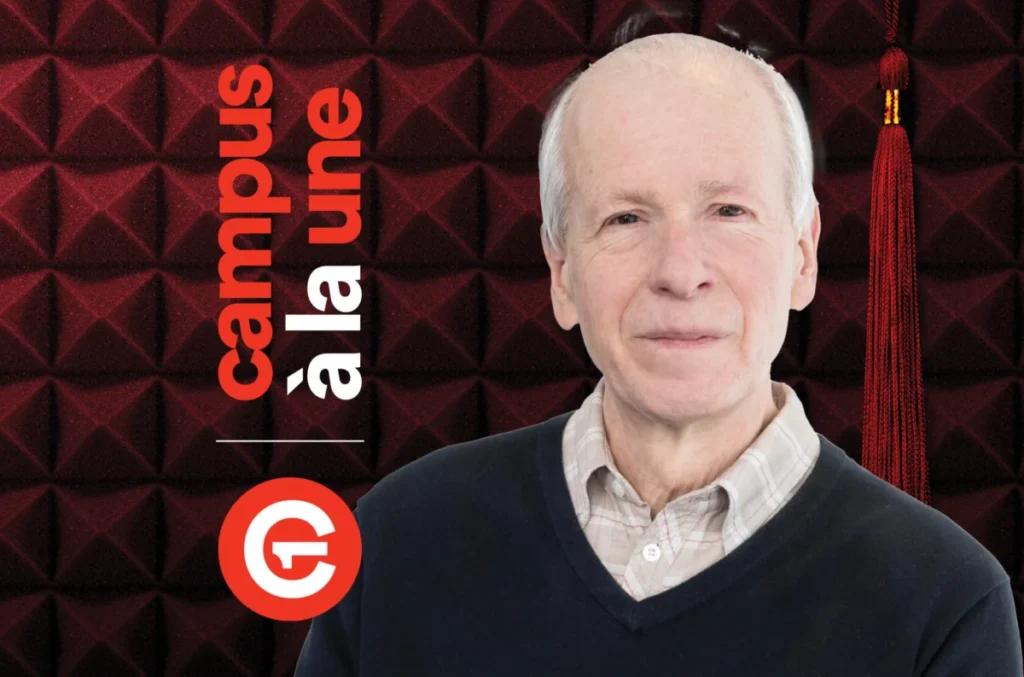
The Université de Montréal campus is steadily regaining its rhythm a few days after a severe freezing-rain storm encased the city in a treacherous layer of ice. Within the hushed halls of the law faculty library, a few dedicated students have already returned to their study carrels, seizing the relative quiet of the weekend for focused academic pursuits. It was in this serene yet resilient environment that University Affairs had the opportunity to engage in a conversation with Stéphane Dion, a figure whose lifelong passion for reading, a theme that recurred throughout the discussion, was evident as he, characteristically, carried a book.
Dr. Dion, a distinguished academic and former public servant, has returned to his alma mater, the Université de Montréal, assuming the role of Diplomat-in-Residence. His distinguished career includes prior experience as a professor of political science, service as Canada’s federal Minister of Foreign Affairs, and significant diplomatic postings as Ambassador to Germany and France. He holds a PhD from the prestigious Institut d’études politiques de Paris. This new appointment positions him to leverage his extensive experience and unique perspective to foster a closer connection between the academic world and the practical realities of international diplomacy.
The interview, conducted as part of an episode of University Affairs‘ French-language podcast Campus à la une, delved into Dr. Dion’s insights on contemporary world affairs and the evolving role of universities in the 21st century. The conversation quickly gravitated towards his perception of the university’s fundamental purpose. "A university is, and always will be, a forum for debate," Dr. Dion stated emphatically. "When ideas collide, knowledge and science move forward." This foundational principle, he believes, underpins the institution’s enduring relevance.
Bridging the Gap: Academia and the Practice of Diplomacy
Dr. Dion expressed his satisfaction at being back on campus after an extensive period engaged in Canadian diplomacy. He views his current role as a valuable resource for students, researchers, and academic departments seeking to gain a deeper understanding of the intricate workings of international relations. "I have experience and expertise. I’m eager to see how that responds to the interests of students, researchers and teachers," he explained, articulating his eagerness to share his practical knowledge.
A key objective of his mandate, as outlined by the university president, is to facilitate a more robust link between academic discourse and the day-to-day realities of diplomacy. Reporting to the Dean of the Faculty of Arts and Sciences, Dr. Dion aims to serve as a vital conduit, connecting scholars with seasoned diplomats and the operational aspects of international engagement. "If the university offered me this position, no doubt it’s because they think I can be a resource person for connecting the academic world to actual hands-on diplomacy," he remarked.
He underscored the critical role universities play in cultivating specialists adept at comprehending and negotiating the complex web of rules and agreements that govern international relations. Despite the prevailing atmosphere of global tension and escalating crises that frequently dominate headlines, Dr. Dion firmly rejects the notion that international law has become obsolete. "There are thousands of international and bilateral agreements that continue to govern relations between countries," he asserted. "We need jurists and other experts who can understand, improve and negotiate those agreements." This highlights a persistent need for specialized expertise in navigating the legal and regulatory frameworks of global interactions.
Navigating the Digital Frontier: Universities and Technological Evolution
Dr. Dion acknowledged the significant transformations universities have undergone since his time as a professor, particularly in light of the pervasive influence of new technologies. The integration of digital tools has fundamentally altered pedagogical approaches and assessment methodologies. While he recognizes the potential benefits these advancements offer, he also stressed the necessity of thoughtful adaptation. "The danger is that students will start letting the machines do all the work," he mused, articulating a concern about the potential for passive learning.
To mitigate this risk, Dr. Dion suggested that evaluation methods must evolve in tandem with technological integration. He proposed, for instance, that written assignments be complemented by oral examinations to ensure that students have genuinely internalized and can articulate the concepts they are presenting. This approach aims to foster deeper comprehension rather than superficial engagement.
Despite these shifts, Dr. Dion remains convinced that certain fundamental teaching practices will endure. "A good lecture given by a knowledgeable professor, with students taking notes and having a discussion afterwards – I think it’s an old method with a lot of staying power," he stated, affirming the timeless value of direct engagement and intellectual exchange.
Cultivating Critical Minds: The Power of Comparison and Deep Reading
At the core of a university’s mission, according to Dr. Dion, is the imperative to cultivate minds capable of rigorous analysis. This includes the development of a skill he deems paramount: comparison. The act of comparing countries, political systems, and societies, he argues, provides an essential lens through which to understand the multifaceted forces shaping the contemporary world. Without this comparative framework, he explained, the effective evaluation of public policies or economic decisions becomes considerably more challenging.
"Saying you can’t compare apples to oranges is nonsense," he countered, emphasizing the analytical value of discerning differences and similarities. "It’s precisely the fact that things are different, which allows us to compare them." This assertion champions the intellectual rigor required to draw meaningful insights from diverse contexts.
As the conversation neared its conclusion, Dr. Dion returned to a practice he considers indispensable for students: reading. In an era dominated by fleeting digital content such as tweets and short-form videos, he expressed concern about a potential decline in the appetite for sustained, long-form reading, a habit he views as crucial for intellectual development. "Stay home and engage with a writer’s work," he advised. "Tell your friends you can’t go out tonight; you have to read another chapter." This advocacy for immersive reading underscores its role in fostering critical thinking and expanding intellectual horizons.
Dr. Dion views reading, international travel, and immersion in other cultures as complementary avenues for global understanding. As the world grapples with increasing instability and geopolitical tensions, he believes that universities must steadfastly uphold their vital function of training individuals to analyze complex issues, engage in robust debate, and actively seek solutions.
For this enduring and essential task, he concluded with a smile, one habit remains unequivocally indispensable: the dedicated practice of reading books. This emphasis on deep engagement with texts, he suggests, is a foundational element for developing the analytical and critical faculties necessary to navigate an increasingly complex global landscape.
The Impact of the Ice Storm: A Symbol of Resilience and Reawakening
The freezing-rain storm that preceded Dr. Dion’s return to the Université de Montréal campus, while disruptive, serves as a potent metaphor for the challenges and eventual resurgence inherent in both natural events and societal progress. The city, coated in ice, presented a stark image of temporary paralysis. However, the subsequent thawing and the gradual return to normalcy on campus underscore a broader theme of resilience and adaptation. The storm, which began on [Insert Date of Storm if known, e.g., Monday, January 15th] and lasted for approximately [Insert Duration if known, e.g., 24 hours], led to widespread power outages affecting an estimated [Insert Number if known, e.g., 300,000] households across the Greater Montreal area. Transportation networks were severely impacted, with [Insert details on transportation impact, e.g., public transit disruptions and road closures] causing significant inconvenience. The Université de Montréal itself announced the suspension of classes and non-essential services on [Insert Dates of Closure if known, e.g., Tuesday, January 16th], prioritizing the safety of its students and staff.
The university’s decision to reopen and the students’ prompt return to study spaces in the wake of such widespread disruption highlight a commitment to the continuity of academic life and the pursuit of knowledge, even in the face of adversity. This resilience is mirrored in the ongoing efforts of international diplomacy, which, despite periods of intense crisis and disagreement, continues to function through established agreements and the dedicated efforts of individuals like Dr. Dion. The campus, much like the international arena, is a space where challenges are met, lessons are learned, and progress, however incremental, is pursued.
Broader Implications for Higher Education and Global Engagement
Dr. Dion’s return to academia and his stated mission carry significant implications for the future of higher education and its role in shaping global leaders. In an era characterized by rapid technological advancement and complex geopolitical challenges, the need for institutions that can foster critical thinking, promote nuanced debate, and equip students with the skills to navigate international complexities is more pronounced than ever.
His emphasis on the enduring value of debate and the collision of ideas directly addresses the growing concerns about intellectual polarization and the challenges of fostering constructive dialogue in increasingly fragmented societies. By positioning the university as a "forum for debate," Dr. Dion reinforces its essential function as a space for the open exchange of diverse perspectives, a prerequisite for societal progress.
Furthermore, his role as a bridge between academia and diplomacy speaks to a broader trend in higher education towards greater experiential learning and the integration of practical application into academic curricula. As global challenges demand increasingly sophisticated and interdisciplinary solutions, the ability of universities to connect theoretical knowledge with real-world practice becomes paramount. This approach not only enriches the student learning experience but also contributes to the development of more effective and adaptable professionals capable of contributing meaningfully to both national and international endeavors. The university, therefore, is not merely a repository of knowledge but an active participant in shaping the future of global governance and understanding.