



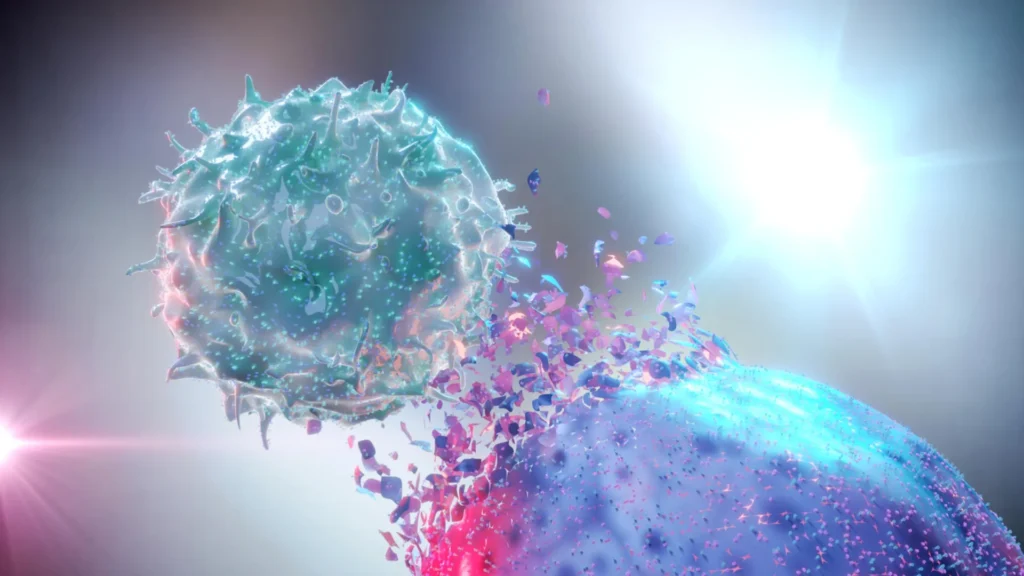
Natural killer (NK) cells, crucial components of the innate immune system, play an indispensable role in safeguarding the body against a myriad of threats. These specialized lymphocytes are vigilant defenders, programmed to identify and eliminate invading microbes, foreign materials, and cells that have become damaged or infected. Their rapid response mechanism is vital for containing potential threats early, thereby limiting their ability to spread and cause more severe pathology. NK cells operate both within the circulatory system, patrolling the bloodstream, and as resident populations in specific tissues and organs, providing localized immune surveillance. A decrease in the numbers or functionality of these critical cells can significantly compromise immune integrity, leading to an elevated risk of various illnesses, including infections, certain cancers, and even contributing to the progression of autoimmune or inflammatory conditions.
The modern era has seen a worrying rise in mental health challenges, with anxiety disorders and insomnia becoming increasingly prevalent, particularly among younger demographics. These conditions are not merely psychological burdens; growing evidence suggests they exert profound physiological effects, including interference with healthy immune activity. Recognizing this complex interplay, a team of researchers in Saudi Arabia embarked on a study to meticulously investigate the relationship between symptoms of anxiety, insomnia, and the levels of NK cells in a cohort of young female university students. Their significant findings, which underscore a concerning link between psychological distress and immune compromise, were subsequently published in the esteemed scientific journal Frontiers in Immunology.
Unpacking the Immune System’s Frontline Defenders: Natural Killer Cells
To fully appreciate the implications of the Saudi Arabian study, it is essential to understand the multifaceted role of NK cells. These lymphocytes are a primary line of defense, acting without prior sensitization, unlike adaptive immune cells such as T and B cells. Their ability to swiftly detect and destroy target cells, often those lacking ‘self’ markers or expressing stress ligands, makes them invaluable in immediate defense. This includes virally infected cells, certain tumor cells, and other intracellular pathogens.
NK cells are broadly categorized into two main subgroups based on the expression levels of surface markers CD16 and CD56:
- CD16+CD56dim cells: Constituting the vast majority (around 90%) of NK cells found in the peripheral blood, this subtype is renowned for its potent cytotoxic capabilities. These cells are highly efficient at inducing apoptosis (programmed cell death) in target cells through the release of perforin and granzymes. Their primary function is direct cell killing, making them critical for immediate containment of infections and early tumor surveillance.
- CD16+CD56high cells: While less abundant in the peripheral circulation, these cells are more prevalent in lymphoid tissues and are characterized by their robust cytokine-producing capacity. They release a variety of proteins, such as interferon-gamma (IFN-$gamma$) and tumor necrosis factor-alpha (TNF-$alpha$), which act as crucial chemical messengers to orchestrate and support other immune responses, contributing significantly to immunoregulation and shaping adaptive immunity.
Both these subgroups are considered circulatory NK cells, constantly patrolling the body for threats. A decline in either their numbers or their functional capacity can create vulnerabilities in the immune system’s protective shield, paving the way for a host of health problems.
The Rising Tide of Anxiety and Insomnia: A Global Health Crisis
The decision by the Saudi Arabian researchers to focus on anxiety and insomnia is particularly pertinent given the global rise in these conditions. According to the World Health Organization (WHO), anxiety disorders are the most common mental disorders worldwide, affecting millions. Similarly, insomnia, characterized by difficulty falling or staying asleep, is a widespread problem, with prevalence rates ranging from 10% to 30% in the general population, and even higher in specific demographics. Among university students, these rates are often disproportionately elevated due to academic pressures, social adjustments, and future uncertainties.
In the Middle East and North Africa (MENA) region, studies have also indicated a significant burden of mental health conditions among youth, with anxiety and sleep disturbances frequently reported. The unique socio-cultural context, combined with universal stressors of young adulthood, can exacerbate these challenges. The chronic nature of both anxiety and insomnia means that individuals are subjected to prolonged physiological stress, which has long been hypothesized to impact immune function. This study provides direct empirical evidence supporting that hypothesis within a specific vulnerable population.
Study Design: Illuminating the Link in Young Saudi Females
The research team carefully designed their investigation to explore the intricate relationship between psychological well-being and immune status. The study involved 60 young female students, aged between 17 and 23 years, a demographic known to experience elevated rates of anxiety and sleep disturbances. The selection of this specific cohort was deliberate, aiming to understand the impact of these stressors during a critical developmental period marked by significant academic and personal transitions.
Each participant underwent a comprehensive assessment process. This included the completion of three detailed questionnaires: one gathering essential sociodemographic information, and two others specifically designed to screen for symptoms related to anxiety and insomnia. It is important to note that reports of anxiety and sleep disturbance were self-described by the participants, a common methodology in epidemiological and psychological research. The self-reported data revealed a substantial prevalence of these conditions within the student group: approximately 53% reported sleep difficulties consistent with insomnia, and a striking 75% indicated experiencing anxiety symptoms. Alarmingly, within the anxiety group, about 17% and 13% of students fell into the moderate and severe categories, respectively, underscoring the significant mental health burden carried by these young individuals.
Beyond the psychological assessments, blood samples were meticulously collected from each participant. These samples were then subjected to sophisticated laboratory analysis, specifically flow cytometry, to accurately quantify and characterize the different types of NK cells present in the circulatory system. This included measuring the total count and percentage of NK cells, as well as their main subgroups: the cytotoxic CD16+CD56dim cells and the cytokine-producing CD16+CD56high cells. This dual approach, combining self-reported psychological states with objective biological markers, provided a robust framework for investigating the hypothesized connections.
Key Findings: A Direct Impact on Immune Surveillance
The analysis of the collected data yielded compelling results, clearly demonstrating a tangible link between psychological distress and immune cell profiles. The study’s lead author, Dr. Renad Alhamawi, an assistant professor of immunology and immunotherapy at Taibah University, articulated the core discoveries: "We found that in students with insomnia symptoms, count and percentage of total NK cells and their sub-populations were declined." This indicates that chronic sleep deprivation or disturbance directly correlates with a reduction in the sheer number of these vital immune defenders.
Further elaborating on the anxiety aspect, Dr. Alhamawi added, "Students with general anxiety symptoms, on the other hand, had a lower percentage and number of circulatory NK cells and their sub-populations, compared to symptom-free students." This finding is particularly significant as it points to a diminished pool of actively circulating NK cells available for immune surveillance in individuals experiencing anxiety. The implications are substantial, suggesting that anxious individuals may have a reduced capacity for immediate immune responses against emergent threats.
A deeper dive into the anxiety findings revealed a dose-dependent relationship between symptom severity and NK cell reduction. Students reporting moderate or severe anxiety symptoms exhibited a notably reduced percentage of circulatory NK cells. In contrast, those with minimal or mild symptoms showed only a small, statistically insignificant decrease. This gradient effect underscores that the more pronounced the psychological distress, the more profound its impact on immune cell populations. Interestingly, the study also uncovered an interplay between the two conditions: among students already grappling with insomnia symptoms, higher anxiety scores were associated with an even lower proportion of total peripheral NK cells, suggesting a potential synergistic negative effect when both conditions are present.
Broader Implications: Weakened Defenses and Systemic Health Risks
The decline in NK cell numbers and percentages, as observed in this study, carries significant implications for overall health. A weakened immune performance translates to an increased likelihood of developing a range of health issues. This includes heightened susceptibility to infectious diseases, as the body’s immediate defense against pathogens is compromised. Moreover, NK cells are vital in tumor surveillance, meaning a reduction in their activity can potentially increase the risk of certain cancers, as the immune system’s ability to detect and eliminate nascent cancer cells is diminished. The connection also extends to mental health conditions like depression, where immune dysregulation is increasingly recognized as a contributing factor.
Dr. Alhamawi emphasized the critical nature of these insights: "Understanding how these psychological stressors influence the distribution and activity of immune cells, especially peripheral NK cells, may provide valuable insights into the mechanisms underlying inflammation and tumorigenesis." This statement highlights the potential for these findings to bridge the gap between psychological well-being and physical health, offering new avenues for understanding chronic diseases. Chronic inflammation, often linked to a dysregulated immune response, is a known precursor to various non-communicable diseases, including cardiovascular disease, metabolic syndrome, and neurodegenerative disorders. The impairment of NK cell function could be a key pathway through which chronic stress and mental health issues contribute to these systemic inflammatory states.
From a public health perspective, these findings serve as a stark reminder of the interconnectedness of mental and physical health. "These results underscore the urgent need for integrated health strategies in educational settings," noted Dr. Sarah Al-Faisal, a Riyadh-based public health specialist, commenting on the broader impact of such studies. "Addressing student anxiety and insomnia is not just about mental well-being; it’s fundamental to preserving their long-term physical health and academic productivity."
Navigating Limitations and Charting Future Research
The researchers candidly acknowledged certain limitations within their study, which are crucial for interpreting the results and guiding future investigations. The most prominent limitation was the specific demographic included: only young female participants were recruited. While this allowed for a focused examination within a group experiencing disproportionately high rates of anxiety and sleep problems, it inherently restricts the generalizability of the findings to other populations. The observed associations might differ in males, older adults, or individuals from diverse geographical and socio-economic backgrounds.
The team unequivocally emphasized the necessity for broader, more inclusive studies. Future research should involve a wider range of ages, both sexes, and participants from varied geographic regions to achieve a more complete and nuanced understanding of how anxiety and insomnia influence NK cell levels and function across the global population. Furthermore, the cross-sectional design of this study, which captures data at a single point in time, means that it can identify correlations but cannot establish direct causality. Longitudinal studies, which follow individuals over time, would be invaluable in determining whether anxiety and insomnia directly cause NK cell decline, or if other underlying factors are at play. Such studies could also explore whether interventions targeting anxiety and insomnia lead to a restoration of healthy NK cell profiles.
Lifestyle Measures and the Holistic Impact of Stress on Immunity
The intricate relationship between psychological stress, mental health, and immune function is a well-established field of study known as psychoneuroimmunology. Chronic stressors, such as those experienced during prolonged anxiety or insomnia, activate the body’s stress response systems, including the hypothalamic-pituitary-adrenal (HPA) axis and the sympathetic nervous system. This activation leads to the release of stress hormones like cortisol and catecholamines, which, while beneficial in acute situations, can exert profound immunosuppressive effects when sustained. Cortisol, for instance, can reduce the proliferation of lymphocytes, alter cytokine production, and diminish the cytotoxic activity of NK cells, creating a fertile ground for immune dysregulation.
Against this backdrop, previous research consistently suggests that adopting healthy lifestyle habits can serve as potent countermeasures, potentially improving NK cell levels and overall immune performance. Regular physical activity, for instance, has been shown to enhance NK cell activity and numbers, contributing to a more robust immune surveillance system. Stress reduction techniques, such as mindfulness meditation, yoga, and cognitive behavioral therapy (CBT) for anxiety and insomnia, can mitigate the physiological impact of chronic stress, thereby supporting immune homeostasis. A balanced diet, rich in essential vitamins, minerals, and antioxidants, provides the necessary building blocks and protective compounds for optimal immune cell function. Specific nutrients like Vitamin D, Zinc, and Vitamin C are particularly known for their roles in immune modulation.
However, the very nature of anxiety and insomnia often interferes with an individual’s ability to consistently engage in these beneficial practices. The debilitating effects of these conditions can disrupt normal biological processes throughout the body, including crucial immune responses. This disruption, if chronic, can contribute significantly to the development and progression of chronic and inflammatory diseases. "Such impacts ultimately compromise overall health and quality of life," concluded Dr. Alhamawi, underscoring the far-reaching consequences of unaddressed mental health challenges.
In light of these findings, the study from Saudi Arabia serves as a powerful call to action. It highlights the critical importance of early identification and effective management of anxiety and insomnia, not just for mental well-being but as a fundamental strategy for preserving immune health and preventing a cascade of related physical ailments. Educational institutions, healthcare providers, and public health initiatives must collaborate to implement comprehensive programs that support the mental and physical resilience of young adults, ensuring that these vital immune defenders remain robust and ready to protect.