

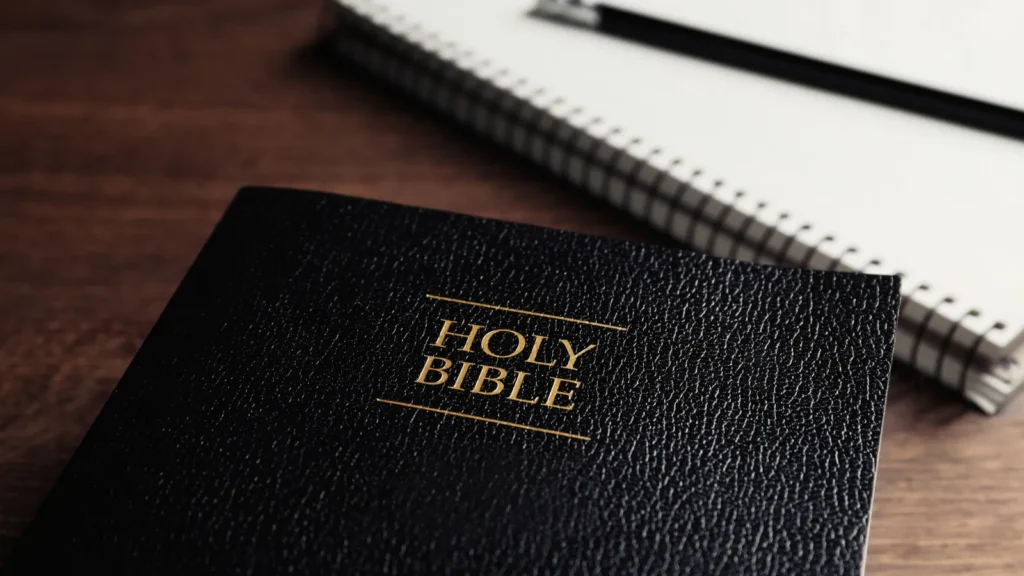
Policymakers in several Republican-led states are actively pursuing legislation and curriculum changes aimed at integrating the Bible into public school coursework, spanning subjects like social studies, civics, and English. This movement, described by some as a "soft wave," signals a potential expansion of conservative educational policies across the nation, sparking debate about the separation of church and state and the role of religious texts in public education.
This push for Bible instruction in public schools has gained momentum in recent years, building on a broader trend of Republican-backed educational initiatives focused on parental rights and curriculum control. While proponents argue for the historical and cultural significance of the Bible, opponents raise concerns about potential constitutional violations and the promotion of specific religious viewpoints over others.
State-Level Initiatives: A Closer Look
The integration of biblical studies into public education is manifesting in various forms across different states, often through legislative action and curriculum board approvals.
In Utah, Governor Spencer Cox signed a law in late March that empowers school districts to adopt "a thorough study of historical documents." This legislation, set to take effect for the 2028-29 school year, explicitly includes the Bible’s Hebrew Scriptures and New Testament within the scope of permissible historical texts. This move allows for the academic study of these religious texts within the public school system, framing them as influential historical documents.
Texas has also seen significant developments in this area. The State Board of Education recently gave preliminary approval to new social studies standards and required reading lists that incorporate biblical references and stories. This tentative endorsement, which awaits a final approval process in June, follows the passage of House Bill 1605 in 2023. This law mandated the creation of such a curriculum and incentivized its adoption by school districts. Furthermore, Texas law Senate Bill 11, enacted last year, permits schools to allocate daily time for prayer and the reading of religious texts, including the Bible, with districts needing to opt into this practice by a March 1 deadline.
Kentucky experienced legislative action that allows for a distinct form of religious instruction. In 2025, the Republican-controlled legislature passed Senate Bill 19, overriding a veto by Democratic Governor Andy Beshear. This bill permits school boards to allow students to leave campus for up to an hour during school hours to attend "moral instruction," provided parental permission is obtained. This legislation has paved the way for LifeWise Academy, an Ohio-based non-profit that offers Bible education to public school students during school hours, to seek partnerships with Kentucky school boards. While some districts have accepted LifeWise’s proposals, others have rejected them. A subsequent bill, introduced in March, aims to mandate district approval for such programs and could extend the duration of instruction, potentially allowing it to occur on school campuses.
In Tennessee, lawmakers introduced House Bill 1491 and a related Senate bill in January. These proposals seek to establish a dedicated period within the school day for prayer and the reading of religious texts, allowing parents to opt their children in. Crucially, the legislation also mandates that public schools incorporate parts of the Bible into their curriculum. According to a statement by Republican State Rep. Gino Bulso, who sponsored the "Protecting Religious Liberty and Expression in Public Schools Act," this age-appropriate instruction would encompass "the history of Israel, stories and ethical teachings from the Old and New Testaments, the life of Jesus, early Christian church history, and the Bible’s impact on Western civilization."
Historical Context and Educational Frameworks
The current wave of legislative efforts to incorporate the Bible into public education is not entirely new. The National Council on Bible Curriculum in Public Schools reports that at least 3,500 schools across 41 states already offer Bible courses as high school electives for credit. The organization actively advocates for the nationwide adoption of its state-certified elective Bible courses in public high schools.
However, the recent surge in legislative proposals to allocate curriculum resources, school time, or other resources toward Bible instruction or prayer has been amplified under recent Republican leadership at both state and federal levels. This trend follows a broader conservative movement in education that has emphasized parental rights and challenged curricula perceived as controversial or divisive, particularly concerning LGBTQ+ issues and race.
A notable precedent occurred in Oklahoma in 2024, when the then-state Superintendent Ryan Walters mandated that schools teach the Bible and keep a copy in every classroom. This directive, which has since been rescinded, also required the incorporation of the Bible, including the Ten Commandments, as instructional support for grades 5-12. Walters and the Oklahoma State Board of Education also championed controversial social studies standards that included lessons on the Bible. These standards, which would have been implemented for the 2025-26 school year, were ultimately struck down by the state Supreme Court late last year.
Arguments for Inclusion and Constitutional Considerations
Proponents of integrating biblical instruction into public schools often cite its historical and cultural significance. Republican state leaders in Oklahoma and elsewhere argue that the Bible is an essential component of American history, having influenced the nation’s founders. Ryan Walters, before his resignation to lead the Teacher Freedom Alliance, defended his initiatives by stating, "It is not possible for our students to understand American history and culture without understanding the Biblical principles from which they came."
Similarly, Tennessee lawmaker Gino Bulso has framed his proposal as an opportunity for students to learn the Bible "as literature in a historical context," emphasizing that it would be taught "Not as inspired word or as devotional." Utah’s legislation similarly categorizes the Bible as part of "literary and historical texts that have influenced American constitutional history, civic thought, and cultural development."
However, opponents of these measures, such as Nik Nartowicz, lead policy counsel for Americans United for Separation of Church and State, argue that such initiatives risk violating the Establishment Clause of the First Amendment. Nartowicz contends, "There is a way to teach about the Bible in public schools that is constitutional. Schools can teach about religion, they can’t teach religion." He further elaborates that the constitutionality of Bible-related instruction hinges on its context, the age group, the nature of discussions, and the legislative process itself.
The core of the legal and constitutional debate lies in the distinction between teaching about religion, which is generally permissible in an academic context, and teaching religion itself, which is seen as an endorsement of a particular faith and a violation of church-state separation.
Broader Trends and the Ten Commandments Movement
The recent push for Bible instruction in schools appears to be part of a larger movement that includes the widespread adoption of Ten Commandments laws in several states. Louisiana, Texas, and Arkansas have enacted such measures since 2024, with Alabama recently following suit by signing Senate Bill 99. This Alabama bill mandates the display of Ten Commandments posters in public school classrooms (grades 5-12 where U.S. history is taught) and in common areas.
These Ten Commandments laws, like the Bible curriculum initiatives, are often justified by proponents as reflecting foundational Judeo-Christian principles that shaped Western civilization and the United States. The text of Alabama’s SB 99 states, "The Ten Commandments are a key part of the Judeo-Christian religious and moral tradition that shaped Western Civilization and ultimately the founding of the United States. Teaching students about the Ten Commandments promotes historical understanding and helps to foster a common cultural heritage and awareness."
Civil rights organizations, however, have raised strong objections, arguing that these laws violate the separation of church and state. Lawsuits have been filed challenging these measures, and decisions in some cases are pending, with the expectation that the issue may eventually reach the U.S. Supreme Court.
Implications and Future Outlook
The increasing number of states considering or enacting legislation to incorporate the Bible into public school curricula raises significant implications for the educational landscape.
- Legal Challenges: The constitutionality of these measures is likely to face continued legal scrutiny. Past Supreme Court rulings, such as Abington School District v. Schempp (1963) and Stone v. Graham (1980), have established precedents against mandatory Bible reading and the posting of the Ten Commandments in public schools. Future legal battles will likely center on how these new laws are implemented and whether they can be framed as academic study rather than religious endorsement.
- Educational Impact: The integration of religious texts into academic subjects could reshape curriculum content and pedagogical approaches. It raises questions about teacher training, the development of unbiased instructional materials, and the potential for creating an inclusive learning environment for students of diverse religious and non-religious backgrounds.
- Societal Debate: These legislative actions are fueling a national conversation about the role of religion in public life and the interpretation of the Establishment Clause. The debate involves differing views on religious freedom, historical interpretation, and the purpose of public education in a pluralistic society.
- Political Alignment: The trend appears to be strongly aligned with the platform of the Republican party, reflecting a desire to promote conservative values and historical narratives within the educational system. This could lead to further policy debates and political mobilization around educational issues in upcoming election cycles.
As this "soft wave" continues to gain momentum, the coming years will likely see further legislative action, legal challenges, and intensified public discourse surrounding the place of the Bible and religious instruction in American public schools. The outcomes of these efforts will have a profound impact on the educational experience of millions of students and the ongoing interpretation of the separation of church and state.