



The global fashion industry has long faced scrutiny for its significant ecological footprint, characterized by intensive water consumption, chemical pollution, and a massive waste crisis. According to recent environmental assessments, textile manufacturers consume approximately 200 million liters of water annually, while the production of animal leather contributes to methane emissions and involves toxic tanning processes. However, within the realm of apparel, footwear remains one of the most problematic categories regarding sustainability. Industry data suggests that as much as 95 percent of all footwear produced globally eventually ends up in landfills. Because modern shoes are typically constructed from a complex mix of synthetic rubbers, plastics, and petrochemical-based foams, they can take hundreds of years to decompose, often leaching microplastics into the soil and groundwater during the process.
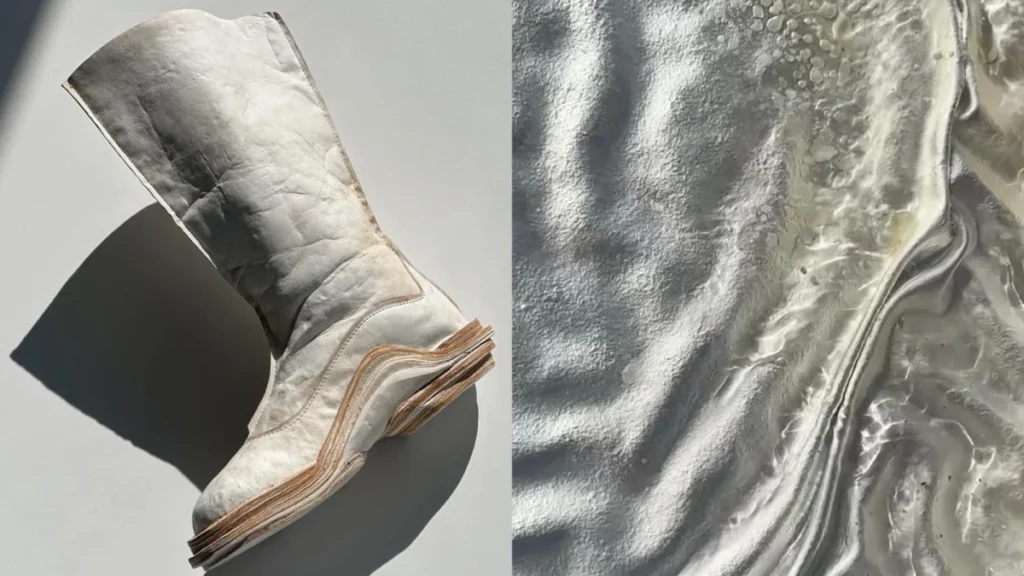
In a landmark attempt to address this environmental stagnation, researchers at Vrije Universiteit Brussel (VUB) in Belgium have collaborated with the prestigious La Monnaie/De Munt opera house to create a potential solution rooted in mycology. The partnership, which combined high-level microbiological research with traditional artisanal craftsmanship, has resulted in the unveiling of the world’s first boot crafted entirely from mycelium. This prototype, presented ahead of the internationally renowned Milan Design Week, represents a significant departure from previous "mushroom leather" products, which often rely on synthetic reinforcements or traditional rubber outsoles to maintain their structure.
The Ecological Crisis of Modern Footwear
To understand the importance of the VUB mycelium boot, one must first examine the structural complexity of the modern shoe. A standard sneaker can be composed of more than 65 individual parts, ranging from ethylene-vinyl acetate (EVA) foam in the midsoles to polyester mesh and nylon stitching. These components are often bonded with permanent adhesives that make disassembly and recycling nearly impossible. Consequently, the "circular economy" in footwear has remained largely aspirational.
The environmental burden of leather is equally daunting. Beyond the ethical concerns of animal husbandry, the conversion of hides into leather requires chromium and other heavy metals that pose severe risks to local ecosystems and human health. While "vegan leathers" have gained popularity as an alternative, many of these materials are simply plastics, such as polyurethane (PU) or polyvinyl chloride (PVC), which do not biodegrade. The VUB project aims to bypass these issues by utilizing a material that is not only carbon-neutral during its growth phase but is also entirely biodegradable at the end of its functional life.
The Biological Blueprint: Understanding Mycelium
The secret to this innovation lies beneath the forest floor. While mushrooms are the visible, reproductive organs of fungi, they represent only a small portion of the organism’s total mass. Mycelium is the vegetative part of a fungus, consisting of a dense, branching network of thread-like filaments called hyphae. These networks act as a biological communication and nutrient-transport system, often referred to by scientists as the "Wood Wide Web."
In nature, mycelium is a master of structural engineering. It can bind soil, decompose organic matter, and create incredibly resilient mats. Recent breakthroughs in mycology have demonstrated that these networks are capable of processing environmental information—such as moisture levels, pH changes, and nutrient availability—leading some researchers to categorize fungal behavior as a form of "organic intelligence." This inherent adaptability makes mycelium an ideal candidate for "bio-fabrication," a process where materials are grown rather than manufactured.
In recent years, mycelium has been explored for its potential in unconventional computing and even ecological sanitation solutions, such as mushroom-powered toilets. However, the VUB team, led by a group of dedicated microbiologists, sought to push the boundaries of what these fungal roots could achieve in the context of wearable technology and high-end fashion.
Overcoming the Three-Dimensional Structural Barrier
The journey to creating a fully fungal boot was fraught with technical hurdles. While several companies have successfully produced flat sheets of mycelium "leather" for handbags or watch straps, creating a three-dimensional object with varying densities—such as a rigid sole and a flexible upper—presented a much greater challenge.
The development process spanned over two years of intensive trial-and-error. The research team had to solve the fundamental problem of structural integrity: how to grow a material that is soft enough to be comfortable but durable enough to support the weight of a human body. Mycelium, by its nature, tends to grow in erratic, organic patterns. Controlling this growth to fit a specific footwear mold required a precise calibration of temperature, humidity, and substrate nutrients.
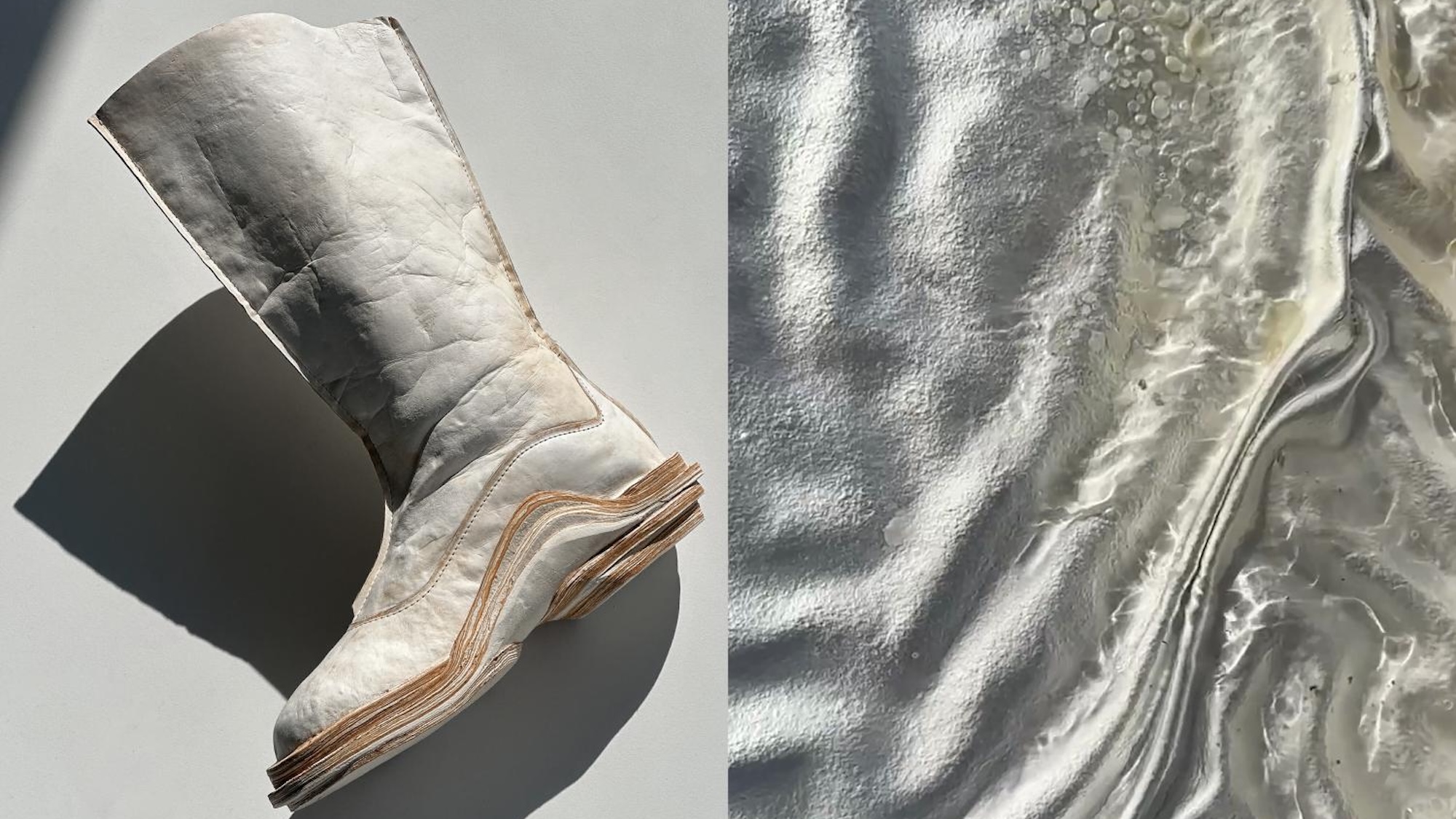
Ultimately, the breakthrough came through the use of two distinct species of fungi. The designers selected one type of fungus to grow the sole, utilizing a growth process that resulted in a foam-like, shock-absorbent material capable of mimicking the properties of synthetic midsoles. A second species was utilized for the upper section of the boot, engineered to possess the tensile strength and aesthetic texture of traditional animal leather. By "growing" these components into their final three-dimensional shapes, the team eliminated much of the waste associated with cutting and stitching traditional materials.
The Intersection of Science and Artisanship
The success of the project was not due to microbiology alone. The collaboration with Marie De Ryck, the head shoemaker at the La Monnaie/De Munt opera house, provided the necessary expertise in footwear construction and ergonomics. In the world of opera, footwear must be durable enough for rigorous stage performances while maintaining a high aesthetic standard. De Ryck’s involvement ensured that the fungal material was treated with the same respect and technical scrutiny as fine calfskin or satin.
Lars Dittrich, a designer at VUB, emphasized that the boot is currently a "conceptual object" designed to demonstrate the feasibility of the technology. "This project frames what is currently possible with the material," Dittrich stated. "It reflects our progress in addressing how we grow and craft this material, made from a microorganism, into a functional three-dimensional form."
Marie De Ryck acknowledged the steep learning curve involved in working with a living material. "While the initial material samples posed a real challenge and did not immediately meet the technical requirements of a complex shoe construction, the progress we have made is truly inspiring," she remarked. Her comments highlight a critical reality in bio-fabrication: the transition from lab-grown samples to a wearable product requires a bridge between the sterile environment of the laboratory and the practical demands of the workshop.
Chronology of the Mycelium Boot Development
The timeline of this innovation reflects a steady progression from basic science to applied design:
- Year 1: Material Selection and Cultivation. The VUB team tested dozens of fungal strains to identify those with the best growth rates and mechanical properties. They focused on finding substrates—often agricultural waste like sawdust or hemp—that the fungi could consume to create the mycelial mat.
- Year 1.5: Prototype Testing. Initial samples were flat and brittle. The team experimented with natural additives to increase flexibility and water resistance.
- Year 2: 3D Growth and Sole Development. Researchers developed specialized molds that allowed the mycelium to grow into the shape of a shoe sole. This phase involved perfecting the "foam" density of the fungal structure.
- Final Phase: Assembly and Finishing. Under the guidance of Marie De Ryck, the upper and lower fungal components were joined. The final boot was then prepared for its public debut at Milan Design Week.
Broader Impact and the Future of Bio-Fabricated Goods
The unveiling of the mycelium boot comes at a time when the fashion world is desperate for "deep green" innovations. While the prototype is not yet ready for mass production, its existence proves that the footwear industry can move beyond petroleum-based components.
The implications of this research extend far beyond boots. If mycelium can be engineered to replace both foam and leather, it could revolutionize the packaging, automotive, and construction industries. Unlike traditional manufacturing, which is subtractive (cutting pieces out of a larger whole), mycelium growth is additive. It only uses the energy and nutrients required to create the final shape, drastically reducing waste.
Furthermore, the carbon sequestration potential is significant. As fungi grow, they lock away carbon from their organic substrate. A footwear industry powered by fungi could theoretically become a carbon sink rather than a carbon source.
However, challenges remain before mycelium boots become a common sight on city streets. Durability in wet conditions, long-term wear resistance, and the scalability of the growth process are all areas requiring further research. Currently, growing a pair of shoes takes weeks, whereas a factory can pump out thousands of synthetic shoes in a single day.
Despite these hurdles, the VUB and La Monnaie project serves as a beacon for the future of "living" fashion. It challenges the notion that shoes must be permanent, non-degradable objects. Instead, it proposes a future where our clothing is grown in harmony with nature, used for its functional life, and then returned to the earth to nourish the next generation of growth. As the prototype moves from the laboratory to the design gallery, it marks a promising step toward a truly circular and sustainable fashion economy.