


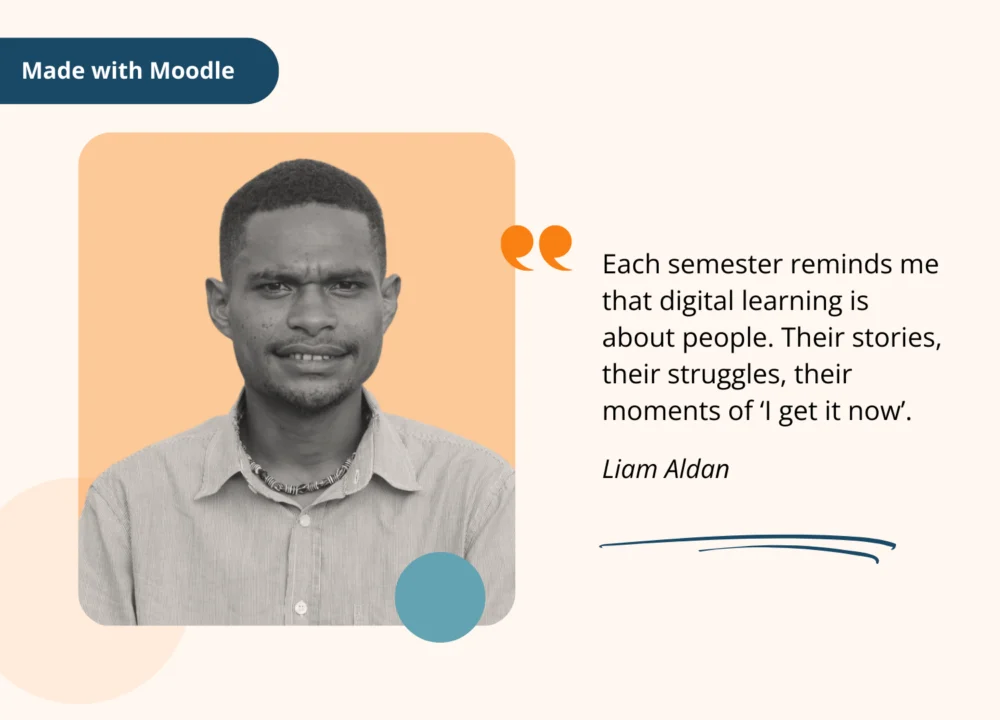
The journey of a learning designer is often less about following a predetermined map and more about navigating evolving needs with curiosity and a commitment to impactful education. Liam Aldan, a Moodle Learning Designer at Divine Word University (DWU) in Papua New Guinea, embodies this philosophy. In a candid account of his four-year tenure, Aldan shares how a deliberate shift in focus from simply "designing courses" to "designing meaningful learning experiences" has fundamentally reshaped the digital learning landscape at the institution. His work, deeply rooted in understanding both student and educator challenges, highlights the profound impact of thoughtful instructional design on engagement, accessibility, and ultimately, student success.
The Genesis of a Learning Design Philosophy
Aldan’s entry into the realm of learning design at DWU was not part of a grand, pre-conceived plan. Instead, it was a response to observed needs and a burgeoning desire to enhance the educational journey for students. "When I look back, it’s hard to believe that this year marks my fourth year as a Moodle Learning Designer at Divine Word University," Aldan remarks. His initial experiences revealed a digital learning environment that, while functional, often felt impersonal and disorienting for students. He likens early digital courses to "long corridors with closed doors," where information was present but its purpose and the path forward remained unclear.
This observation was compounded by the realities faced by faculty. Many lecturers, already burdened by demanding teaching schedules and administrative duties, had limited time and resources to dedicate to crafting engaging online courses or optimizing their existing Moodle setups. Aldan recognized that a superficial approach to course creation would not suffice. To foster genuine learning and empower both students and educators, he understood the necessity of a paradigm shift. This involved moving beyond the mechanics of course construction to the art of creating rich, intuitive, and supportive learning experiences.
A Collaborative Approach to Transformation
Aldan’s strategy was rooted in deep collaboration and active listening. He began by engaging directly with academic staff, dedicating time to understand their unique teaching methodologies, pedagogical goals, and the specific challenges they encountered in the digital space. This empathetic approach allowed him to gain crucial insights into the practicalities of teaching at DWU and the diverse learning needs of its student body.
"I began working with academic staff – listening to their challenges and learning their teaching styles," Aldan explains. This foundational work enabled him to translate these understandings into the design of digital environments that were not only functional but also inherently navigable and supportive for students. Concurrently, Aldan initiated a proactive effort to equip his colleagues with the knowledge and skills to leverage Moodle LMS effectively. Through targeted training sessions and ongoing support, he demystified the platform’s capabilities, empowering lecturers to design and refine their courses with greater confidence and creativity.
The Moodle Platform: From Corridors to Open Spaces
The impact of Aldan’s focused approach began to manifest progressively. The university’s Moodle site gradually transformed from a repository of static content into a dynamic and welcoming learning ecosystem. This evolution was particularly crucial for DWU’s diverse student population, many of whom navigate varying levels of digital literacy and access. The emphasis on intuitive design ensured that these learners could engage with the material more effectively, reducing the friction often associated with online learning.
Aldan describes this transformation with vivid imagery: "Each course I redesigned felt like opening a window – more light, more structure, more room for engagement." This metaphor encapsulates the shift from closed-off content to open, accessible learning opportunities. He notes the tangible difference this made for students: "First-year students who once felt lost now knew exactly where to begin. Lecturers who’d been overwhelmed by technology suddenly felt inspired, empowered."
Fostering Engagement and Richer Learning
The enhanced Moodle environment fostered a palpable increase in student interaction and engagement. Course forums, previously underutilized, evolved into vibrant hubs for genuine discussion and peer-to-peer learning. The integration of multimedia elements, such as videos, interactive quizzes, and presentations, injected dynamism into the courses, making the learning experience more immersive and stimulating. This move away from text-heavy modules towards a more varied and engaging content delivery strategy directly addressed the need for diverse learning modalities.
Evolution and the Human Element of Digital Learning
Aldan’s work has continued to evolve beyond initial course redesigns. His remit has expanded to encompass the development of consistent design templates, the strategic integration of multimedia resources, the refinement of assessment strategies, and, crucially, guiding faculty to reimagine the potential of online learning. He emphasizes that the core of his mission remains deeply human-centric: "And each semester reminds me that digital learning is about people. Their stories, their struggles, their moments of ‘I get it now.’"
Divine Word University, like many institutions, has a history of courses developed over time by various individuals, each bringing their own teaching style and approach. Aldan’s role has been one of careful stewardship, respecting the existing foundation while facilitating its evolution into a more cohesive and effective whole. This iterative process of enhancement, rather than wholesale replacement, has been key to building institutional buy-in and ensuring sustainability.
The Ripple Effect: Impact and Future Outlook
The profound impact of Aldan’s dedication was underscored by a memorable interaction with a first-year student. "There was a moment – one I still think about – when a first-year student told me, ‘I actually understand where everything is now,’" he recounts. This seemingly simple statement carries immense weight, validating the principle that effective instructional design, though often invisible, is instrumental in shaping the learning experience. "Thoughtful design really does change the learning experience – in ways people don’t always see," Aldan concludes.
The implications of Aldan’s work at Divine Word University extend beyond individual courses. By creating a more accessible, engaging, and supportive digital learning environment, DWU is better positioned to achieve its educational objectives. This improved learning experience can lead to higher student retention rates, better academic outcomes, and a more positive perception of online learning within the university community.
Supporting Data and Context
The global landscape of online learning has seen exponential growth, particularly in recent years. According to a 2023 report by the Digital Learning Compass, over 80% of higher education institutions worldwide now offer at least some form of online learning. However, the success of these programs is heavily contingent on their design and implementation. A study published in the Journal of Educational Technology & Society in 2022 found a strong positive correlation between well-designed online courses and student satisfaction and learning achievement. Specifically, courses that incorporate clear navigation, engaging content, and opportunities for interaction tend to yield superior results.
Divine Word University, established in 1970, is a prominent institution in Papua New Guinea, known for its commitment to education in the fields of health, education, business, and arts and sciences. The university has been an active user of the Moodle Learning Management System for several years, recognizing its potential to expand access to education and enhance teaching methodologies. The challenges Aldan identified – limited faculty time for course development, and varying student digital literacy – are not unique to DWU but are common hurdles faced by educational institutions globally as they integrate digital technologies.
The Moodle platform itself, an open-source LMS, offers a robust framework that can be customized to meet specific institutional needs. Its flexibility allows for the integration of various plugins and features, supporting diverse pedagogical approaches. However, realizing the full potential of Moodle requires dedicated expertise in instructional design, something that Aldan has brought to the forefront at DWU.
Broader Implications for Higher Education
Aldan’s story serves as a compelling case study for other universities grappling with the complexities of digital learning. It underscores the importance of investing in skilled learning designers who can act as bridges between technology and pedagogy. The focus on "experience design" rather than mere "course construction" highlights a critical shift in understanding what constitutes effective online education.
The emphasis on human connection, even within a digital framework, is paramount. Aldan’s approach demonstrates that technology is a tool, and its effectiveness is amplified when wielded with an understanding of human psychology, learning preferences, and the social aspects of education.
The long-term implications of this kind of thoughtful design extend to fostering a culture of continuous improvement in online education. By empowering faculty and providing students with intuitive and engaging learning environments, institutions can build a more resilient and adaptable educational system, better equipped to meet the evolving demands of the 21st century. The success at Divine Word University, driven by Liam Aldan’s vision and dedication, offers a blueprint for how strategic learning design can unlock the transformative power of digital education.